
Disclaimer: This guide is for general information only. Improper drain or plumbing work may cause injury or property damage. When in doubt, consult a licensed professional.
A backed-up sink ranks among the most frustrating plumbing problems homeowners face. Your first clues might include slow drainage, strange gurgling sounds, or air bubbles appearing as water drains. These warning signs deserve immediate attention.
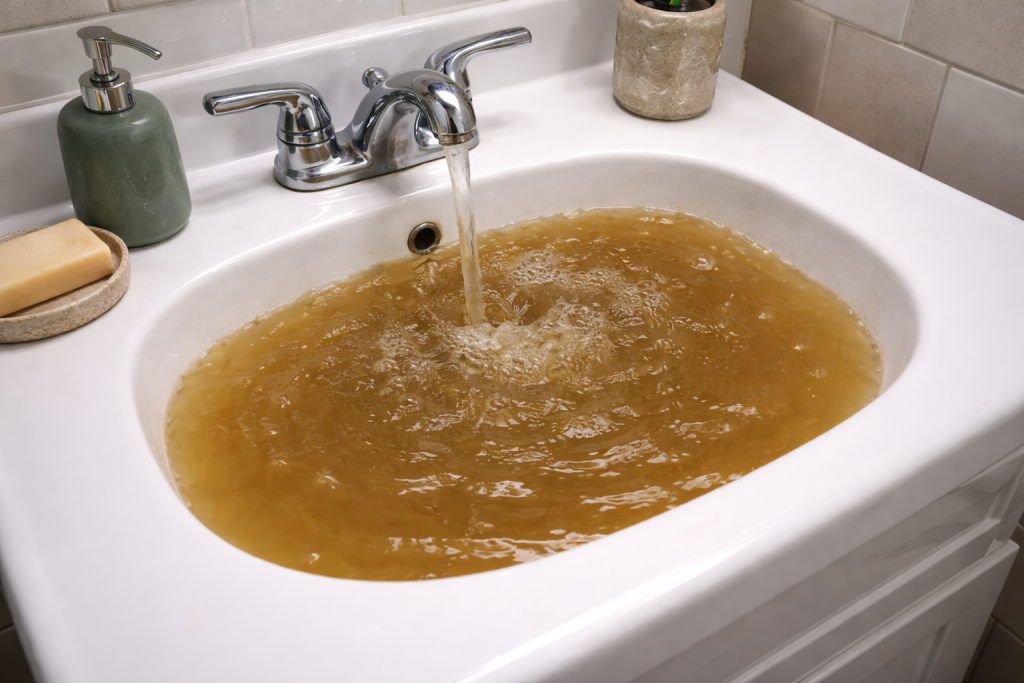
Your kitchen sink’s backup or water rising from the drain typically points to a clog or blockage in your plumbing system. The problem goes beyond mere inconvenience. Sink backflow could signal serious issues like damaged sewer lines or major blockages if you ignore it. Your sink’s problems, whether they involve dirty water emerging or constant bathroom backups, need proper diagnosis to fix them effectively.
This piece explains why your sink misbehaves, offers quick fixes you can handle today, and helps you decide when a professional plumber’s expertise becomes necessary. Your drains will soon flow smoothly again.
What It Means When Your Sink Is Backing Up
A backed-up sink means more than just a daily hassle. Your plumbing system sends you urgent messages about problems lurking beneath the surface. These signals help you tackle problems before they turn into pricey emergencies.
Water backs up when it has nowhere else to go. Water normally flows through your pipes and exits through the sewer line. But once an obstruction forms, water chooses the easiest path—which means coming back up through your drain.
The warning signs start quietly. Water might drain slower than usual. You could hear gurgling noises from air trapped in the pipes. Bad smells coming from drains show organic material is rotting somewhere in your plumbing system. These warning signs don’t appear without giving you a heads up first.
Most homeowners brush off these original symptoms until they can’t ignore them anymore. Blockages build up over time as cooking fats, food bits, soap film, and debris stick to pipe walls until water has no choice but to back up. Hair mixes with soap scum in bathrooms and creates thick buildup that makes pipes narrower.
Backed-up sinks create serious risks for your home beyond just being annoying. Clogged drains strain your plumbing system. Pressure builds behind blockages and can make pipes burst or shift out of place. On top of that, standing water becomes a perfect spot for bacteria and germs to grow, which puts your family’s health at risk.
When several drains back up at once, you likely have deeper problems in your main sewer line. This usually points to a major blockage that disrupts your whole plumbing system instead of just one clog. Water coming up in your shower after flushing the toilet suggests serious drain line problems that need quick attention.
Quick action on sink backups saves you from water damage and protects your pipes. These problems get worse over time and lead to big repairs that mess up your daily routine and hurt your wallet.
Top Reasons Water Is Coming Up From Your Sink
Let’s look at why water backs up in your sink and how to fix it faster. Here are the most common causes:
1. Clogged drain line
A clogged drain line is the biggest reason your sink backs up. Grease, food particles, soap scum, and debris build up inside the drain and narrow the water passage. You might notice slow drainage or gurgling sounds at first. The clog gets worse and water has nowhere to go but back into your sink. Cooking oils and fats create real problems because they get solid when cool. This creates sticky surfaces where other debris sticks.
2. Blocked or jammed garbage disposal
Your sink can back up when the garbage disposal gets clogged. This happens if you put the wrong items in it, overload it, or don’t use enough water while grinding waste. The usual suspects are coffee grounds, potato peels, pasta, rice, and grease. You’ll know there’s a problem if water stands in the sink, bad smells emerge, or strange noises come from the unit. The clog might sit deeper in the connecting pipes if the disposal runs but your sink won’t drain.
3. Clogged or dirty P-trap
Your sink’s P-trap – that curved pipe section underneath – has two vital jobs. It creates a water seal to keep sewer gases out of your home and catches debris before it goes deeper into your plumbing. The design makes it a natural collection point for hair, grease, soap scum, and other materials. These materials can form a blockage and water backs up because it can’t flow through this important pipe section.
4. Blocked vent pipe
Your plumbing system has vent pipes that let air flow in and maintain proper pressure for drainage. These pipes usually exit through your roof and can get blocked by leaves, bird nests, or other debris. A clogged vent pipe creates negative pressure in your system and stops water from flowing smoothly. You might hear gurgling sounds, see slow drainage in multiple fixtures, notice bubbles in toilet water, or smell unpleasant odors as sewer gases escape through other routes.
5. Main sewer line obstruction
A main sewer line obstruction could be your worst-case scenario since it affects your home’s entire plumbing system. Watch for warning signs like multiple drains backing up at once, water backing up in odd places (like shower water rising during a toilet flush), sewage smells throughout your home, or sewage coming up through floor drains. Tree roots, built-up debris, or collapsed pipes can block the main line. This situation needs professional help.
Quick Fixes You Can Try at Home
Is your sink backing up with water? You can try several DIY fixes before you need a professional plumber. These solutions will get your sink draining properly again.
1. Use boiling water or baking soda and vinegar
A simple pour of boiling water down the drain can dissolve minor clogs. Stubborn blockages need the baking soda and vinegar method. Pour ½ cup of baking soda down the drain and add ½ cup of vinegar. The drain needs a plug cover for 15-30 minutes. This fizzing reaction breaks down grease and debris. A final flush with boiling water will clear the loosened material.
2. Plunge the sink properly
Block the overflow holes with wet rags to create suction. Add enough water to cover the plunger cup. A flat-bottomed cup plunger works best – don’t use a toilet plunger. The plunger should seal completely over the drain. Quick, short thrusts for about 20 seconds should do it. Check if water drains after plunging.
3. Clean the P-trap manually
Set a bucket under the P-trap – that U-shaped pipe under your sink. Remove the trap by unscrewing connectors on both sides. Clean out the contents and any debris, then give it a good rinse. The connections need to be tight when you put it back to avoid leaks.
4. Use a drain snake or auger
The snake goes into the drain opening. Push forward as you turn the handle clockwise until you feel resistance. Keep turning when you hit the clog to break it up or hook it. The debris should come out as you pull the snake back slowly.
5. Reset or unjam the garbage disposal
The power must be off first! Find the hole at the disposal’s bottom and insert an Allen wrench. Turn it both ways to free stuck blades. Use tongs to remove visible debris – never your hands. The red reset button sits on the unit’s bottom. Hit that button, turn the power back on, and test it with running water.
When to Call a Plumber
Some plumbing issues need professional expertise despite your best DIY efforts. You can save yourself from water damage and health hazards by knowing when to call an expert.
1. Water backs up in multiple drains
Two or more drains backing up at the same time likely signal a main sewer line problem. This becomes clear when toilet backups flow into tubs or showers. Water appearing in random fixtures after using others in your home indicates a blockage in your main sewer line. DIY fixes might make things worse at this stage.
2. You smell sewage or hear gurgling
A main sewer line blockage often causes foul sewage odors from your sink, bathtub, or floor drain. Gurgling noises from drains after flushing or using other fixtures show trapped air can’t escape through blocked pipes. These sounds happen because water, air, and waste don’t flow properly through your sewer line. Both symptoms need a professional to check right away.
3. DIY fixes don’t work
Multiple failed solutions mean it’s time to ask for expert help. Ongoing issues usually point to deeper problems that DIY methods don’t deal very well with. Professional plumbers use specialized tools like cameras and powerful snakes to identify and clear obstructions beyond your reach.
4. You suspect a main line issue
Main sewer clogs need immediate professional attention to prevent sewage overflow inside your home. Look for warning signs like sewage standing in your yard or draining from your cleanout pipe. These symptoms could lead to cracked sewer lines and dangerous mold growth if ignored.
Conclusion
Sink backups signal more than a minor hassle in your home. Your plumbing system warns you that something’s wrong beneath the surface. What starts as slow drainage or gurgling noises can quickly turn into serious problems that affect your entire plumbing network.
The good news is you can fix many common sink drainage issues with simple DIY methods. A mix of boiling water, baking soda and vinegar, or proper plunging techniques often clears minor clogs. More stubborn blockages might need P-trap cleaning or a drain snake, and you can handle these without calling a professional.
Some warning signs need immediate professional attention. Multiple backed-up drains, constant sewage smells, or clogs that keep coming back point to deeper issues in your plumbing system. These symptoms suggest main sewer line problems that DIY fixes don’t deal very well with.
Ignored sink backups put huge pressure on your pipes and can lead to burst pipes, water damage, and costly repairs. Standing water creates health risks by breeding bacteria and pathogens that endanger your family’s health.
Quick action when you spot drainage problems prevents these complications. DIY solutions work for minor clogs, but qualified plumbers should handle persistent or complex issues. A professional plumber’s specialized tools and expertise can fix problems before they get worse.
The next time your sink backs up, start with the recommended home remedies. If the problems continue or other drains start backing up, call Transit & Flow at (614) 333-8092 to schedule quick, professional service. Our team delivers expert plumbing solutions throughout Columbus, Ohio and nearby areas to get your drains flowing freely without complications.
Dealing with this in your Columbus home right now?
Transit & Flow provides professional drain cleaning in Columbus, OH, and when a backup turns urgent, our 24/7 emergency plumbers respond fast. Same-day availability, flat-rate pricing approved before work begins, and no hidden fees. Bonded, insured, and trusted by Columbus homeowners.
