
Disclaimer: This article is for general informational purposes only and does not replace professional leak detection or repair. Plumbing leaks can involve electrical, structural, and health risks, including mold. If you’re unsure how to proceed safely, notice active leaking, or see signs of mold or water damage, contact a experienced, insured plumber for inspection.
Your home in Columbus, Ohio could have a hidden plumbing leak causing damage long before any obvious signs appear. According to the EPA, leaks waste an average of 90 gallons of water per day in about 10% of U.S. homes, and many of those losses happen quietly behind walls, under floors, or beneath concrete slabs common in Central Ohio homes.
Many Columbus homeowners first realize something is wrong when their water bill suddenly increases, even though daily habits haven’t changed. However, identifying a plumbing leak requires more than checking monthly statements. If left unaddressed, hidden leaks can lead to structural damage, mold growth—especially in Ohio’s humid climate—and costly repairs that could have been avoided with early detection.
Understanding the warning signs of leaking pipes in walls and beneath your home can save thousands of dollars in repairs. This article outlines seven clear signs every Columbus homeowner should know to identify hidden plumbing leaks before they turn into major emergencies.
Unexplained Spike in Water Bills
Your water bill suddenly jumps up. This could be the first sign that something’s wrong with your plumbing system. The monthly statement shows much higher usage even though nothing has changed in your household routines. Time to break down what’s happening.
What a spike in water bills means
A sudden increase in your water bill usually points to several issues happening out of sight. The high numbers might worry you at first, but knowing what it all means helps you tackle the problem right away.
Here’s what could be causing your water bill to spike:
- Hidden plumbing leaks within your walls or foundation
- A continuously running toilet wasting up to 200 gallons daily
- Dripping faucets that can waste 20 gallons or more each day
- Seasonal changes affecting water usage
- Changes in household size or visitors staying over
- Malfunctioning water-using appliances
- Problems with your irrigation system
A typical family of four uses between 160-200 gallons of water per day. This is a big deal as it means that usage above this baseline without explanation likely points to a problem in your plumbing system.
Why it indicates a hidden plumbing leak
Hidden leaks create special problems, especially when you have leaks that can stay hidden for weeks or months while wasting water. Small drips add up to big waste over time. American households lose about 180 gallons weekly from leaks – enough to wash over 300 loads of laundry.
These hidden leaks waste nearly 9,500 gallons annually per home if left unchecked. On top of that, it rarely shows up as obvious puddles or water damage at first. That unexpected spike on your water bill often serves as the first warning sign.
Hidden leaks usually show up in places like:
- Behind walls or under floorboards
- In your foundation or basement
- Along underground supply lines
- Within ceiling cavities
- Inside fixtures like toilets that silently run
Toilets (27%), clothes washers (20.9%), and showers (17.3%) use the most water in most homes, so check these areas first. Leaks account for about 13.8% of a typical family’s water usage.
How to detect a water leak using your meter
Your water meter gives you the best way to confirm hidden leaks. A simple water meter test takes little time but tells you exactly if you’re losing water.
Here’s how to check for leaks using your water meter:
- Turn off all water sources on your property. Nobody should use water during this test. Make sure to shut down appliances that might use water, including dishwashers, washing machines, ice makers, and irrigation systems.
- Locate your water meter. You’ll usually find it near the street or in your basement where the main water line enters your home.
- Check for movement indicators on your meter:
- Modern meters often have a small triangular blue or red “leak indicator” dial
- A spinning indicator while all water is off suggests a leak
- Digital meters might show flow rate in gallons per minute (gpm) – it should read zero when water isn’t being used
- Record the current reading, then wait at least 30-60 minutes without using any water.
- Check the meter again after waiting. Changes in the reading or indicator movement confirm water flow somewhere in your system.
- Determine the leak location by shutting off your home’s main water valve (usually where the water line enters your house). Check the meter again:
- A stopped meter means the leak is inside your home
- Continued movement suggests a leak between the meter and your house, possibly underground
Digital meters might flash between the reading and flow rate in gallons per minute, showing exactly how much water you’re losing. Some even track continuous flow over 24 hours, shown as a water droplet symbol.
The test might confirm a leak you can’t find yourself. A professional plumber becomes your best option then. They have specialized equipment to find and fix hidden leaks, particularly those buried in walls or underground.
Musty or Moldy Smells Indoors
That musty smell in your home means more than just stale air. This distinct odor points to a hidden plumbing problem you need to fix right away. Your nose picks up these concealed issues before your eyes can spot them, which makes smell detection a vital skill for every homeowner.
What musty odors suggest about your plumbing
The earthy, mushroom-like smell filling your space rarely means anything good. Musty odors are often the first sign that warns you about hidden water damage or plumbing leaks. These smells start when water leaks from pipes and meets organic materials in your home such as:
- Wood framing and structural elements
- Drywall and insulation
- Carpet padding and flooring
- Dust and debris in wall cavities
Microorganisms break down these materials as moisture builds up. They release gases that create that familiar musty scent. You might smell a plumbing leak days or weeks before any visible damage shows up.
The smell gets stronger in spaces without much airflow. Closets, bathrooms with closed doors, and poorly ventilated rooms often give away the first signs of hidden plumbing problems. The odor hits you harder when you walk into a room that’s been sealed for hours because these volatile organic compounds build up in still air.
Why mold and mildew are red flags
Mold and mildew need three things to grow: moisture, organic material, and moderate temperatures. Homes with plumbing leaks offer all these conditions. These fungi start growing as soon as water escapes from pipes and soaks the surrounding materials.
Mold spreads quickly:
- Spores start growing within 24-48 hours after getting wet
- You can see colonies after about 18 days
- The musty smell appears before you see any growth because mold releases microbial compounds
Mold and mildew do more than just smell bad – they can damage your property and health. These fungi can trigger allergies and breathing problems. People with asthma or weak immune systems face higher risks. Their presence also shows ongoing moisture damage that could weaken your home’s structure over time.
Keep in mind that air fresheners or scented candles won’t solve anything. As one plumbing professional notes, “lighting a scented candle won’t fix the underlying issue” when mold grows from a plumbing leak.
How to tell if pipes are leaking behind walls
Finding hidden plumbing leaks takes more than just following your nose. While musty odors raise the first alarm, you should look for other signs too:
The smell’s location matters most. You’ll notice the strongest odor near the leak source. Pay attention to when and where the smell peaks—after rain, in specific spots, or when water runs through your pipes.
Watch for visible signs of moisture. Even tiny leaks eventually show up as:
- Dark spots or discoloration on walls or ceilings
- Peeling paint or bubbling wallpaper
- Warped or stained walls
- Unexplained damp spots
Your health can signal mold growth too. New allergies, headaches, or breathing problems often come with hidden mold. People who are sensitive to mold notice these symptoms first.
Strange sounds can give away leaks. Listen for dripping, especially when no one uses water. These subtle sounds become clearer at night when everything else is quiet.
Don’t ignore these warning signs. Small leaks grow into big problems that damage your structure, pollute your air, and cost lots to fix. A professional plumber can find hidden leaks with special tools before you need major repairs.
Visible Water Stains on Walls or Ceilings
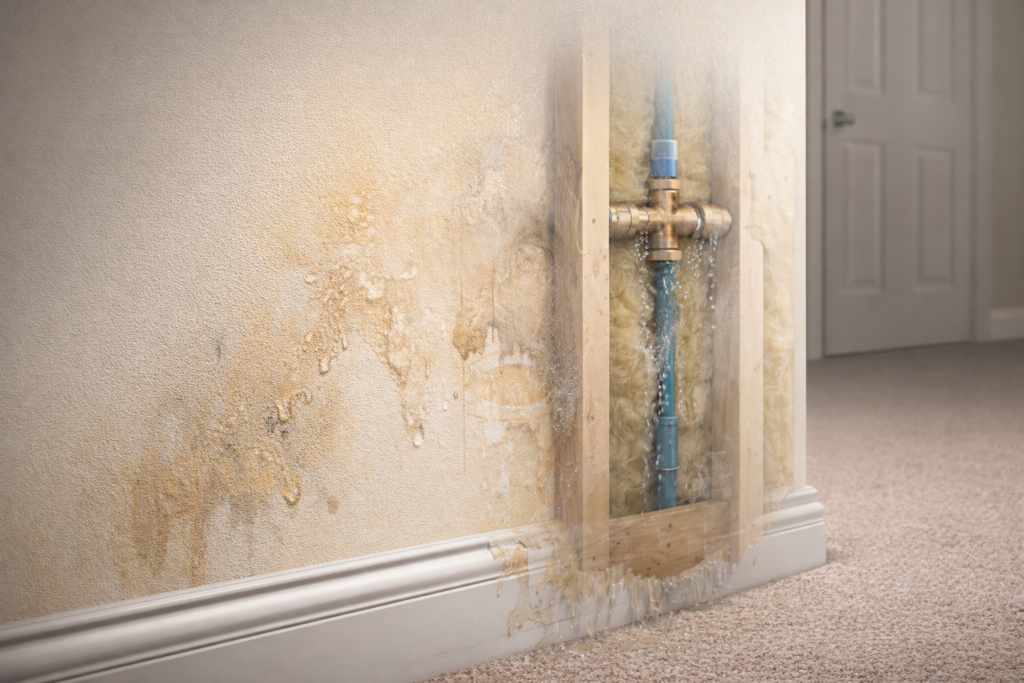
Water stains on walls or ceilings represent one of the most visible and telling indicators of hidden plumbing problems. These discolored patches serve as silent messengers, revealing what’s happening inside your home’s network of pipes and joints. Identifying these marks early can save you from extensive water damage and costly repairs.
What water stains look like
Water stains typically appear as yellowish to brownish discolored patches on your ceiling or walls. These marks vary in appearance depending on several factors:
- Color variations: Fresh water stains often appear darker and may feel damp to the touch, while older stains might be dry but leave persistent discoloration behind.
- Shape patterns: Circular patterns generally suggest drips from a leaky pipe or plumbing fixture, whereas larger blotches might indicate a more serious problem with your plumbing.
- Location significance: Stains commonly appear:
- Directly below bathrooms on upper floors
- Near chimney bases where flashing can fail
- Around air vents where condensation forms
- Under attic spaces or directly beneath plumbing fixtures
Some stains develop irregularly shaped streaks or water marks that flow downward, suggesting a leak flowing from above. The pattern and development of these stains often provide valuable clues about the source and severity of the underlying issue.
Why stains often mean hidden leaks
Water stains are rarely cosmetic issues—they almost always indicate an active plumbing problem lurking behind your walls or above your ceilings. These visible marks mean that water has already escaped its intended pathway and is infiltrating your home’s structure.
There are several common culprits behind ceiling and wall stains:
Plumbing pipe issues: Deposits and corrosion inside pipes make them vulnerable to dripping, often resulting in ceiling stains below bathroom fixtures. These leaks frequently start small and worsen gradually over time.
Internal plumbing leaks: Problems with loose fittings, overflowing fixtures, or drain pipes in bathrooms or kitchens can cause hidden water accumulation that eventually manifests as stains.
Ongoing moisture exposure: Even without a burst pipe, consistently high humidity or improper ventilation can lead to condensation problems, especially in areas like bathrooms or laundry rooms.
The danger with water stains stems from what they reveal—by the time a stain appears, the leak has typically been active long enough to cause deeper damage to materials not immediately visible. This makes prompt investigation essential, as ignoring these signs can lead to structural weakening, electrical hazards, and unhealthy mold growth.
How to detect plumbing leak behind wall
Confirming a suspected plumbing leak behind walls requires systematic investigation. Start with these practical detection steps:
- Examine the stain thoroughly: Note whether it appears to be growing, if it feels damp to the touch, or if it’s developing a circular pattern—all signs of an active leak.
- Check surrounding areas: Look for additional warning signs such as:
- Bubbling or peeling paint and wallpaper
- Soft or soggy drywall sections
- Warped or stained wall materials
- Puddles of water near the wall
- Listen carefully: Sometimes, subtle dripping sounds can be heard, particularly during quiet nighttime hours when water moves through pipes that should be inactive.
- Feel for moisture: Gently touch the wall near the stain to check for dampness, which indicates a current leak rather than an old, resolved issue.
- Look for patterns: If the stain worsens after using specific fixtures like sinks, showers, or toilets, this helps pinpoint the source.
Professional plumbers typically use specialized equipment for definitive leak detection without causing unnecessary damage. These methods include moisture meters to determine the wall areas with highest moisture levels and infrared cameras that reveal the coolest (and wettest) spots behind walls.
Remember that water damage often appears directly below the actual leak source, sometimes far from the original problem. While DIY detection methods can help identify potential issues, addressing the root cause generally requires professional expertise to prevent recurring damage.
If you notice water stains developing in your Columbus home, acting quickly can prevent minor leaks from becoming major repairs.
Low Water Pressure in Fixtures
When water pressure drops unexpectedly, especially in multiple fixtures, it often points to a problem within your plumbing system rather than the municipal supply. The issue may start subtly, with weaker shower flow or faucets that take longer to fill sinks and tubs.
Common signs associated with low water pressure include:
- Weak or inconsistent flow from faucets and showerheads
- Toilets that take longer to refill
- Pressure that worsens when multiple fixtures are in use
- A gradual decline rather than a sudden, system-wide outage
If only certain fixtures or areas of the home are affected, the problem is likely localized within your plumbing lines.
Why it indicates a hidden plumbing leak
Hidden leaks reduce the amount of water that actually reaches your fixtures. Instead of flowing to faucets and appliances, water escapes through cracks, pinholes, or failed joints behind walls, under floors, or beneath the slab.
Unlike pressure regulator failures or city supply issues, leaks tend to cause uneven or progressively worsening pressure loss. Over time, even a small leak can significantly affect water delivery while quietly damaging surrounding materials.
Supply line leaks are especially problematic because they often remain unnoticed until pressure loss becomes obvious or structural damage appears.
How to narrow down the source
To determine whether low pressure is caused by a hidden leak:
- Test multiple fixtures at once to see if pressure drops further
- Note whether the issue affects only one area or the entire home
- Check your water meter with all fixtures off for unexpected movement
- Observe whether pressure worsens over time rather than remaining constant
If pressure loss cannot be explained by fixture issues or a regulator problem, professional leak detection is the next step.
Peeling Paint or Bubbling Wallpaper
Paint and wallpaper are often the first visible materials affected by moisture inside walls. When water escapes from plumbing lines and saturates drywall, it weakens adhesives and breaks down surface finishes.
You may notice:
- Paint that bubbles, blisters, or peels away from the wall
- Wallpaper that lifts, wrinkles, or separates at seams
- Soft or spongy areas beneath the surface
- Discoloration forming around the damaged areas
These signs usually develop slowly, mirroring the pace of a hidden leak.
Why it’s a red flag for hidden leaks
Moisture trapped behind walls rarely comes from surface humidity alone. In most cases, peeling or bubbling finishes point to an ongoing leak from a nearby pipe, fitting, or drain line.
Bathrooms, kitchens, laundry rooms, and shared plumbing walls are common locations. The damage often worsens after using nearby fixtures, which helps distinguish plumbing leaks from condensation issues.
Cosmetic repairs won’t solve the problem. As long as the leak continues, moisture will keep spreading, increasing the risk of mold growth and structural damage.
How to confirm a leak behind the wall
To investigate further:
- Press gently on the affected area to check for softness or dampness
- Look for additional signs like musty odors or water stains nearby
- Note whether damage worsens after running water
- Listen for dripping or movement sounds inside the wall
If moisture is present, a plumber can locate the leak precisely before major wall damage occurs.
Unusual Sounds of Running or Dripping Water
Hearing water when no fixtures are in use is one of the clearest indicators of a hidden plumbing issue. These sounds are often subtle and easiest to notice late at night or early in the morning.
Common noises include:
- Dripping or tapping sounds behind walls
- A faint hissing or rushing noise
- Toilets refilling without being flushed
- Water movement sounds when all fixtures are off
These sounds suggest water is flowing somewhere it shouldn’t be.
Why it points to a hidden plumbing leak
Leaks inside walls, ceilings, or floors allow water to move continuously through pipes or framing. Because these spaces amplify sound, leaks may be heard far from their actual source.
Unlike normal plumbing use, these noises persist even when no one is using water. Over time, the constant flow increases water waste and accelerates damage to surrounding materials.
If ignored, these leaks often lead to visible damage that could have been prevented with early intervention.
How to verify the source of the sound
To confirm whether the noise is caused by a leak:
- Turn off all fixtures and appliances using water
- Listen carefully near walls, ceilings, and floors
- Check your water meter for movement while water is off
- Shut off the main water valve to see if the sound stops
If the noise continues or the meter shows activity, professional leak detection is recommended.
Warped Flooring or Damp Carpets
Flooring reacts quickly to moisture, making it a strong indicator of leaks below the surface. Damage may appear gradually and worsen over time.
Common signs include:
- Wood floors that warp, cup, or buckle
- Laminate or vinyl lifting at seams
- Loose or hollow-sounding tiles
- Carpets that feel damp or develop persistent odors
These symptoms often appear without visible spills or surface water.
Why flooring damage suggests hidden leaks
Leaks beneath slabs, subfloors, or crawl spaces allow moisture to rise into flooring materials. By the time warping or dampness becomes noticeable, water has often been present for an extended period.
This prolonged exposure can damage subflooring, weaken structural components, and create ideal conditions for mold growth. Flooring issues near bathrooms, kitchens, or exterior walls are especially suspicious.
Ignoring these signs increases the scope and cost of repairs.
How to identify a plumbing-related cause
To determine whether plumbing is the source:
- Check whether the affected area worsens after using nearby fixtures
- Look for musty odors or discoloration along baseboards
- Feel for temperature differences or dampness underfoot
- Monitor the area for spreading or progressive damage
A plumber can assess whether the leak is coming from supply lines, drain lines, or underground piping.
Conclusion
Hidden plumbing leaks rarely present as obvious emergencies at first. Instead, they reveal themselves through consistent warning signs like unexplained water usage, odors, stains, pressure changes, sounds, and material damage.
Recognizing these indicators early allows homeowners to address problems before they escalate into major repairs, mold issues, or structural failures.
If any of these signs appear in your home, prompt professional inspection is the most effective way to protect your property, health, and long-term costs.
Dealing with this in your Columbus home right now?
Transit & Flow provides expert leak detection and repair in Columbus, OH before a hidden leak becomes costly damage. Same-day availability, flat-rate pricing approved before work begins, and no hidden fees. Bonded, insured, and trusted by Columbus homeowners.
