
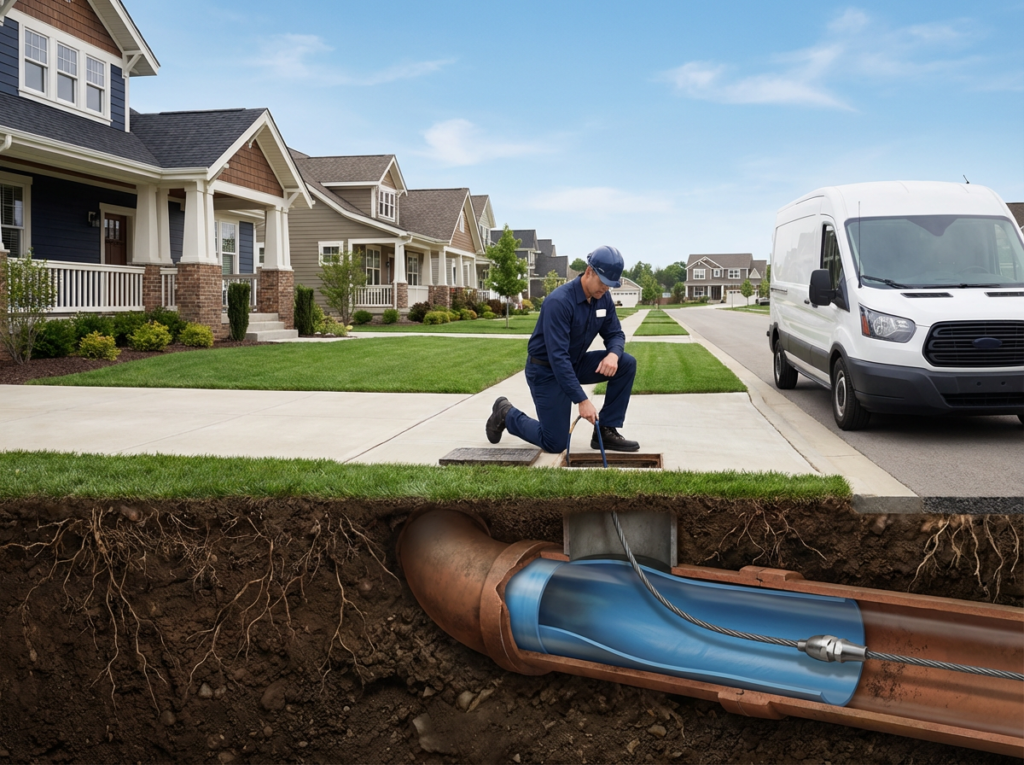
Your sewer line is one of the most important parts of your home. When it fails, most homeowners picture torn-up yards, heavy equipment, and a bill that makes them wince. But there is a better way. Trenchless sewer repair lets plumbers fix or replace damaged sewer lines with little to no digging. If you have slow drains, sewage smells, or soggy patches in your yard, this post will show you exactly how trenchless repair works and why it may be the smartest call you can make.
How Trenchless Sewer Repair Works
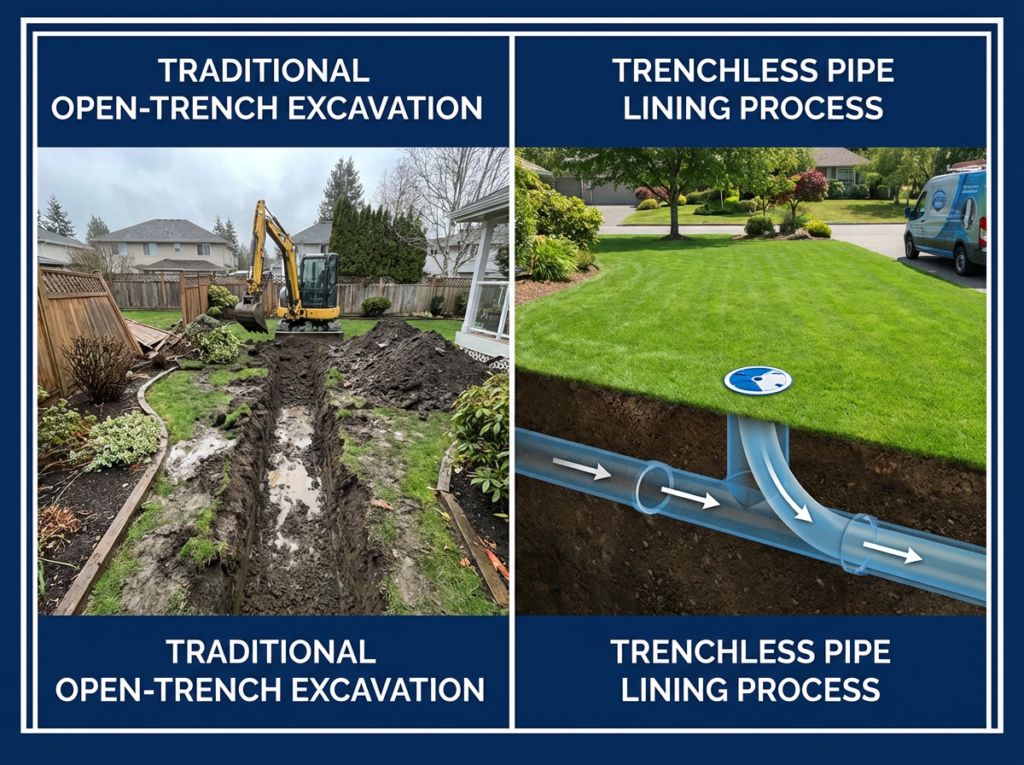
Traditional sewer repair means digging a trench the full length of your sewer line. That can mean ripping out landscaping, driveways, and sidewalks. Trenchless sewer repair skips most of that.
There are two main methods plumbers use.
Pipe Lining (also called CIPP — Cured-In-Place Pipe)A plumber inserts a flexible, resin-coated liner into your existing pipe. The liner inflates and presses against the inside of the old pipe. The resin hardens and creates a smooth, new pipe inside the old one. The damaged pipe becomes the mold. The result is a pipe within a pipe, sealed tight and built to last.
Pipe Bursting This method works when the old pipe is too far gone for lining. A plumber pulls a bursting head through the old pipe. The head breaks apart the old pipe and pulls a brand-new pipe into place behind it. You get a completely new line without a full trench.
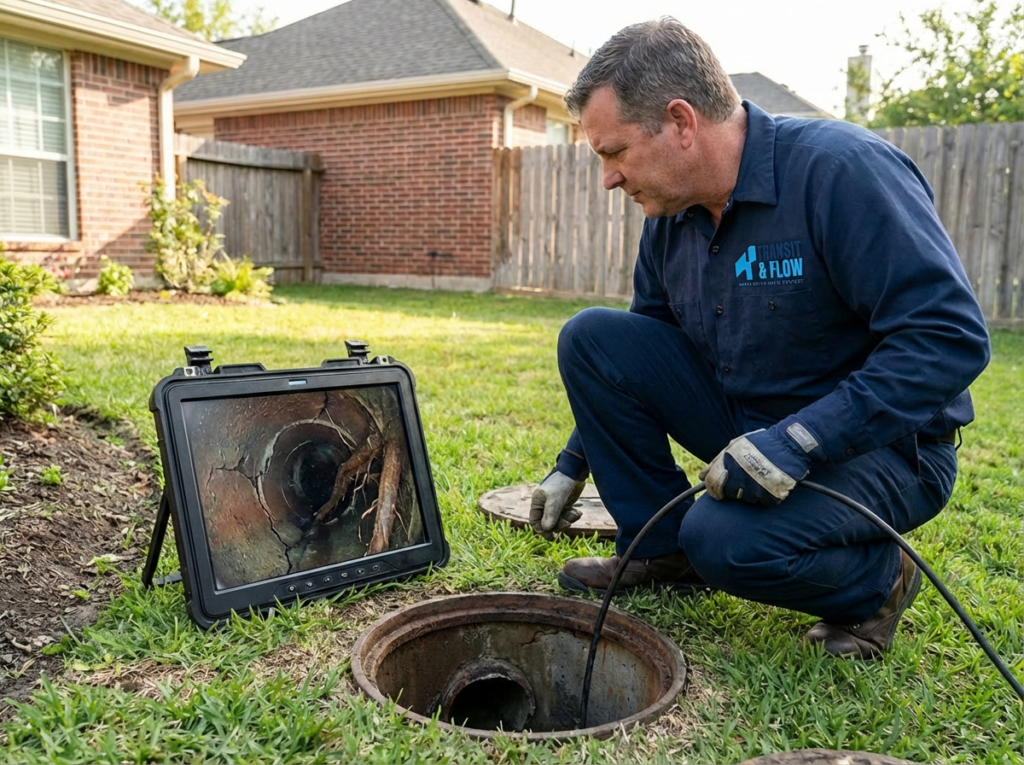
Both methods start the same way. A plumber runs a sewer camera through your line to see exactly what is going on. Cracks, root intrusion, bellied pipe sections, and buildup all show up clearly on camera. That inspection drives every decision after it.
Most trenchless jobs require only one or two small access points. One at the cleanout near your home, and one near the street or the end of the line. That is it.
Real-world example: A homeowner in Columbus notices slow drains throughout the house. A camera inspection reveals a cracked clay pipe with root intrusion 40 feet from the house. Instead of digging up the backyard, a plumber uses pipe lining to seal the damage in a single visit.
Why This Matters
Sewer problems do not fix themselves. A small crack becomes a collapse. Root intrusion gets worse every season. The longer you wait, the more it costs.
Here is why trenchless repair is worth understanding:
- Cost savings on restoration: Traditional excavation means paying to fix the sewer line AND paying to restore your yard, driveway, or landscaping. Trenchless repair cuts most of that restoration cost out entirely.
- Faster completion: Most trenchless jobs wrap up in one day. Traditional excavation can take several days or longer depending on the length of the line and what gets in the way.
- Less disruption to your property: Your grass, your garden beds, your concrete, your driveway. Trenchless repair protects all of it. You keep your property intact while the problem gets solved underground.
Trenchless repair also adds real value to your home. A new or relined sewer pipe is a selling point. Buyers and inspectors notice it. A failed or aging sewer line, on the other hand, can stall a sale or drop your asking price fast.
For Columbus homeowners, this matters even more. Many homes in the Short North, Clintonville, and older Columbus neighborhoods have original clay or cast iron sewer lines. Those pipes are aging out. Trenchless repair gives homeowners a modern solution without tearing apart a yard that took years to build.
Safety is another factor. Open trenches create hazards, especially in yards with kids or pets. Trenchless methods keep the work underground and the surface safe.
How Trenchless Sewer Repair Works: What to Look For
Knowing the warning signs early saves you money. Here is what to watch for:
- Multiple slow drains at once. One slow drain is usually a clog. Multiple slow drains throughout the house point to a main line issue. [Check out our post on slow drains]( https://transitflowplumbing.com/sink-is-draining-slowly-causes/ )
- Gurgling sounds from toilets or drains. Air trapped in a damaged or blocked line makes noise. If your toilet gurgles after you run the sink, pay attention.
- Sewage odors inside or outside. A properly functioning sewer line is sealed. If you smell sewage, something is broken or cracked. Check out our blog here for more quick fixes when your hot water starts to have an odor.
- Soggy or unusually green patches in your yard. Leaking sewage acts like fertilizer. A suspiciously lush or wet patch of grass above your sewer line is a red flag.
- Frequent backups. One backup can be a fluke. Recurring backups mean something is wrong with the line itself.
- Foundation cracks or sinkholes near the home. Serious sewer leaks can erode soil under your foundation. This is a structural issue and needs immediate attention.
If you see any of these signs, a sewer camera inspection is the right first step. It gives you a clear picture of what is happening before any work begins.
If this sounds like something you are dealing with, do not wait. Transit & Flow® serves Columbus, Ohio and the surrounding area. Call us today or book online. No surprises. No guesswork. Just results.
What You Should Do
If you suspect a sewer line problem, take these steps.
Step 1: Stop ignoring the signs. Slow drains and gurgling sounds are your home talking. Do not wait for a backup or a collapse to act.
Step 2: Schedule a sewer camera inspection. This is the only way to know for certain what is happening inside your line. A camera inspection removes all guesswork. You see the problem. You understand the options. You make an informed decision. Call 614-333-8092 or visit https://transitflowplumbing.com/estimate/ to book your appointment!
Step 3: Ask about trenchless options. Not every situation qualifies for trenchless repair. But many do. Ask your plumber directly whether pipe lining or pipe bursting is an option for your line. If your pipe has severe bellying or total collapse, traditional excavation may still be necessary. A good plumber will tell you the truth either way.
Step 4: Get flat-rate pricing before any work starts. You should never agree to sewer work without knowing the full cost upfront. Ask for a written estimate. Understand what is included. Transit & Flow® uses flat-rate pricing so you know exactly what you are paying before the job begins.
Step 5: Act before it becomes an emergency. Emergency sewer repairs cost more and cause more disruption than planned repairs. If you catch the problem early, you have options. If you wait until the line fails completely, your options shrink fast. We offer 24/7 emergency plumbing services in Columbus, OH. https://transitflowplumbing.com/plumbing/24-hour-emergency-plumbing/
How Transit & Flow® Handles Trenchless Sewer Repair
At Transit & Flow®, every sewer job starts with a camera inspection. We do not guess. We look.
Once we see the problem, we walk you through your options in plain language. No jargon. No pressure. If trenchless repair fits your situation, we explain exactly how it works and what it costs before we touch anything.
We use flat-rate pricing on every job. You approve the price before work begins. No surprises at the end.
Our team serves Columbus, Ohio and most communities within 30 miles of downtown. We are fully licensed and insured for residential and commercial plumbing in Ohio. When you call Transit & Flow®, you get a local team that treats your home with respect and does the job right the first time.
Your home deserves professional plumbing from people who care. Transit & Flow® is the premium choice for homeowners in Columbus, Ohio. We are licensed, insured, and ready when you need us. Book your service today. Call us or schedule online.
