
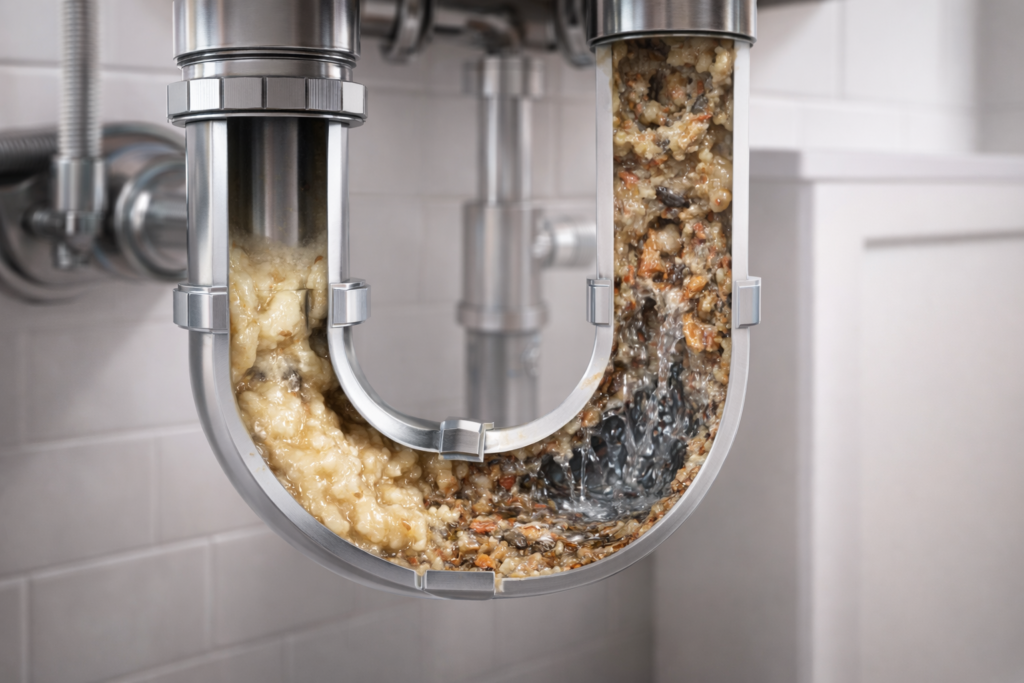
A sink that’s draining slowly in your Columbus, Ohio home may seem like a small inconvenience, but it can be an early warning sign of more serious plumbing issues. What starts as minor standing water in the sink can quickly point to underlying problems that need professional attention. A slow draining sink is often your plumbing system’s first signal that something isn’t working as it should.
Both bathroom and kitchen sinks in Columbus homes are prone to drainage issues, though for different reasons. Bathroom drains commonly clog from hair, soap scum, and everyday debris that restrict water flow. Kitchen drains tend to build up grease, food particles, and residue that harden over time. When multiple drains throughout the house begin slowing down at the same time, the issue may be more severe—such as tree roots intruding into sewer lines, mineral buildup from Central Ohio’s hard water, or biofilm coating the inside of drain pipes. This sticky buildup narrows the pipe interior and steadily worsens drainage if left untreated.
Common Reasons Your Sink Is Draining Slowly
Several common culprits may be quietly sabotaging your plumbing system. Let’s examine these hidden troublemakers.
Hair and soap scum buildup
When soap combines with minerals in hard water, it creates a sticky residue known as soap scum that coats the inside of your pipes. This residue is particularly problematic because it traps hair, skin flakes, and other debris that wash down your drain during daily use. Over time, this combination creates a significant blockage that restricts water flow. You might notice a white or grayish film around your drain – a telltale sign of this buildup. Installing a mesh trap or drain strainer is one of the most effective ways to prevent this issue, as it catches hair before it enters your plumbing.
Food particles in kitchen sinks
Even with a garbage disposal, food debris remains one of the most common causes of kitchen sink clogs. Starchy foods like pasta and rice swell with water, making blockages worse. Fibrous vegetables such as celery and carrots are especially problematic as they can tangle together and create stubborn clogs. Furthermore, these particles often stick together as they travel through your pipes, gradually forming a mass that restricts water flow. Using a sink strainer helps catch food fragments before they reach your plumbing system.
Grease and oil residue
Perhaps the most insidious kitchen drain clogger is cooking grease and oil. Though they pour down easily when hot, these substances solidify as they cool, creating a sticky coating along pipe walls. This residue then traps additional food particles and debris, leading to increasingly restricted water flow. Eventually, these layers build up enough to cause complete blockages. You might notice gurgling noises or unpleasant odors – both warning signs of grease accumulation. The solution? Never pour cooking fats down your drain; instead, collect them in containers for disposal.
Toothpaste and cosmetic products
Daily bathroom routines often contribute to slow drains. Toothpaste contains ingredients that create a thick, sticky film inside sink drains. Consequently, this film traps hair and other debris, worsening existing clogs. Besides toothpaste, beauty products like lotions, shaving cream, and cosmetics can mix with soap scum, creating stubborn blockages. These products are especially problematic in bathroom sinks where they’re used most frequently. Running hot water after using these products helps prevent buildup.
Hidden Plumbing Issues You Might Be Overlooking
Most people know about common drain clogs, but your plumbing system might hide several serious issues under the surface. These deeper problems need professional help and can get worse if you ignore them.
Blocked or damaged vent pipes
Your plumbing system needs vent pipes to keep proper air pressure. Clogged or damaged vents create negative pressure that stops water from draining well. You might hear gurgling sounds from drains, notice multiple fixtures draining slowly at once, or smell sewage in your home. Poor venting builds back pressure that slows drainage and forces water back into sinks and tubs. On top of that, it traps sewer gases inside your home, which creates those awful smells.
Biofilm buildup inside old pipes
That slime in your drains? It’s probably biofilm—colonies of bacteria and their waste products that stick to pipe walls. Old plumbing systems face this problem because their pipes corrode over time. This sticky substance makes your pipes narrower and creates more places for debris to stick. Biofilm can hide dangerous bacteria like E. coli, Salmonella, and Legionella. Regular cleaning methods don’t work well because biofilm creates a protective layer, so you’ll need professional help.
Tree roots invading sewer lines
Tree roots’ attention is drawn to the moisture and nutrients in sewer lines. These roots can squeeze through tiny cracks or joints in pipes and create blockages that get worse. Slow drainage usually shows up first when roots invade. Roots grow fast inside pipes and damage them enough to let sewage leak into your yard. You might notice unusually green patches of grass or standing water in your yard because of these leaks.
Corroded or misaligned drain pipes
Old pipes corrode inside, which creates rough surfaces that catch debris and slow water flow. This corrosion makes pipes narrower over time, so your whole house drains slowly. Pipes that don’t line up also create spots where waste builds up. Older homes with cast iron pipes don’t deal very well with these problems. Small issues can turn into complete blockages, water damage, and maybe even structural problems if left alone.
How to Fix a Slow Draining Sink at Home
You can try several DIY fixes before calling a plumber to fix your slow draining sink.
Use a plunger or drain snake
A simple cup plunger can work wonders on minor clogs. Put it right over the drain opening to create a tight seal and pump it firmly up and down for about 20 seconds. Stubborn blockages need a drain snake that reaches deeper. Push the snake into the drain and turn its handle clockwise until you feel it hit something. Keep turning to break up the clog instead of pushing it further down.
Clean the P-trap manually
Your sink’s curved pipe underneath – the P-trap – tends to collect debris. You can clean it by putting a bucket below, unscrewing the slip nuts at both ends, and taking out the trap. Remove any gunk inside, give it a good rinse, and put it back carefully. This quick fix often gets your drain flowing right away.
Try baking soda and vinegar flush
Start by pouring half a cup of baking soda down your drain. Add half a cup of vinegar next. Cover it with a cloth or drain plug to boost the foaming action. The natural chemical reaction needs 30-60 minutes to break down the blockage. Hot water works great to flush it all away afterward.
Avoid chemical drain cleaners
Chemical cleaners might be popular, but they can harm your pipes and create dangerous fumes. They sometimes make grease harder instead of removing it. These cleaners can be really harsh on older plumbing systems and might burn your skin if they splash.
When to call a plumber
Professional help becomes necessary if several drains run slow at once, your DIY fixes keep failing, or you smell something bad. Multiple clogs usually point to deeper problems like tree roots or damaged pipes that need special equipment to find and fix.
Tips to Prevent Future Drainage Problems
Your plumbing system stays in top condition with regular maintenance. This saves you money on expensive repairs later. The best solution? Stop problems before they start.
Install a drain strainer
A quality drain strainer serves as your first defense against clogs. These simple devices catch food debris, hair, and soap scum before they reach your pipes. Mesh strainers excel at trapping even the smallest particles, while silicone models work gently on sink surfaces. The numbers tell the story – a good strainer prevents up to 90% of common drain blockages and saves you between $75 – $150 in service calls.
Flush with hot water regularly
A weekly hot water flush melts away soap residue and breaks up early grease buildup. Kitchen sinks benefit from using the handheld sprayer to blast away stuck food particles. This quick habit reduces buildup by a lot over time.
Avoid pouring grease down the drain
FOG (fats, oils, and grease) causes about 47% of reported sewer blockages. The “Cool it, Can it, Trash it” method works best. Let grease cool in the pan first. Then pour it into a sealable container. Last, toss it in your household trash. You should wipe greasy pans with paper towels before washing them.
Use enzyme-based cleaners monthly
Enzyme-based cleaners work better than harsh chemicals. They use beneficial bacteria to break down organic buildup without harming your pipes. These biodegradable solutions work best as a preventive measure. Monthly use keeps drains clear by breaking down oils, fats, and food waste. Plus, they’re safe for septic systems and eco-friendly.
Switch to low-residue soaps
Low-residue soaps leave minimal buildup in your plumbing system. These products, combined with regular maintenance, cut down soap scum buildup that often clogs bathroom drains. Your drains might keep having issues if you skip this step, even with other preventive measures in place.
Conclusion
A slow draining sink signals more than a minor nuisance. This piece reveals many hidden culprits behind this common household problem. Hair and soap scum buildup can cause issues, and tree root invasions and damaged vent pipes might create serious problems. Your daily habits like rinsing food particles or letting grease solidify in pipes make drainage problems worse by a lot.
Plungers, drain snakes, and baking soda flushes can fix minor clogs. But slow drains that keep coming back usually point to deeper plumbing issues that need a professional’s touch. You risk complete blockages, water damage, or even structural problems in your home by ignoring these warning signs.
Your plumbing system stays healthy with good prevention. Quality drain strainers, regular hot water flushing, and proper grease disposal save time, money, and frustration. Low-residue soaps work great, and monthly enzyme-based cleaners keep pipes clear without harsh chemicals.
You should know at the time to ask for professional help. Multiple slow drains, stubborn clogs that won’t go away, or foul odors point to why serious problems happen. Professional plumbers have specialized tools and expertise to diagnose and fix these issues right the first time.
Don’t let slow drains mess up your daily routine or get pricey with home damage. Transit & Flow’s trusted plumbing experts in Columbus, Ohio can quickly spot and fix your drainage problems before they get worse. Call (614) 333-8092 to schedule service today.