
How to Keep Your Drains Clear Without Harsh Chemicals
If your sink starts to drain slow, you might feel tempted to grab a strong chemical cleaner. Many people do. But those harsh products can damage older pipes, irritate your skin, and stink up your whole house. You can keep things flowing with safer habits and simple tools you already own. Keeping your drains clear comes down to what you put down the drain, how often you clean it, and how fast you act when you notice trouble.
How to Keep Your Drains Clear Without Harsh Chemicals
Keeping your drains clear without harsh chemicals starts with one truth: drains clog from buildup, not bad luck. Grease, soap scum, hair, and food scraps stick to the inside of your pipes. Then they grab more gunk as water runs by. Over time, your drain turns into a sticky tunnel.
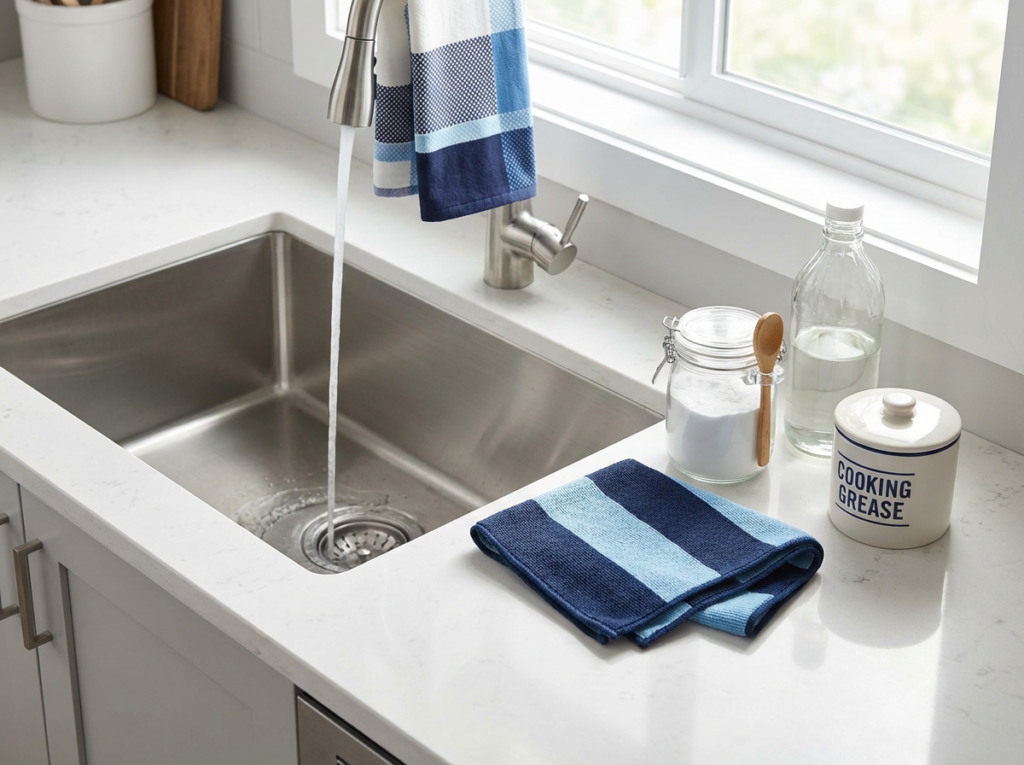
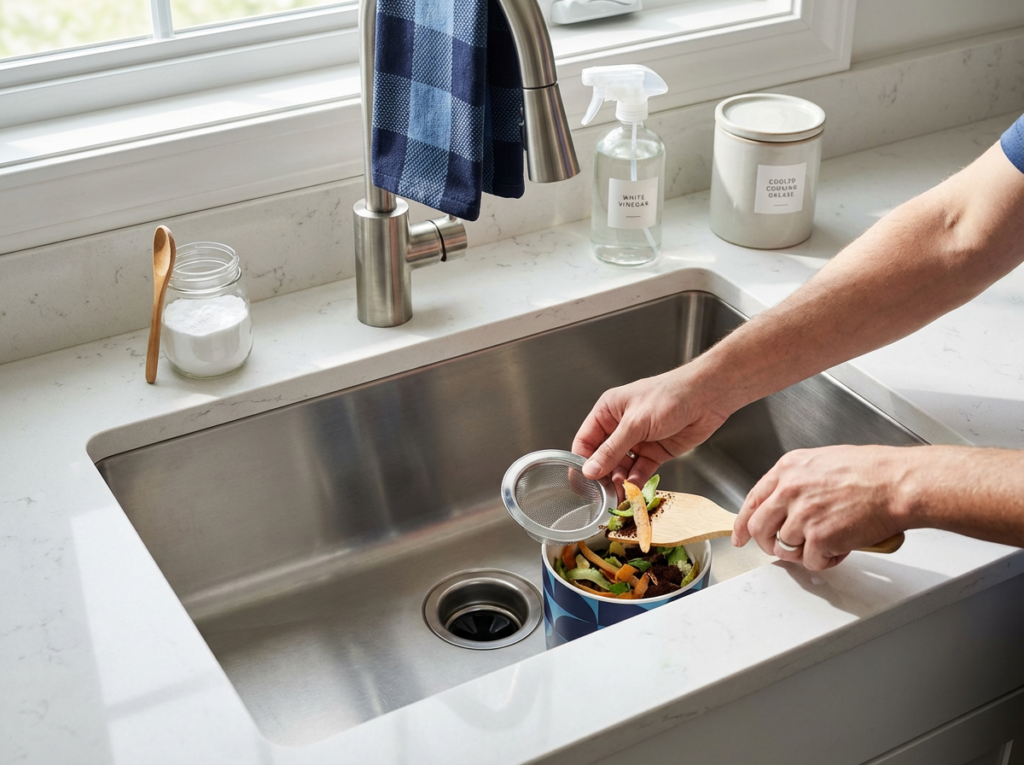
Start in the kitchen. Never pour cooking grease down the sink. Even if it looks like liquid, it cools fast and coats the pipe. Wipe greasy pans with a paper towel first. Then wash them. Use a sink strainer to catch rice, coffee grounds, and food bits. Those small scraps swell and clump.
In the bathroom, hair causes most clogs. Put a simple hair catcher over the drain. Clean it after showers. Also watch what you rinse. Thick lotions, heavy shaving cream, and “flushable” wipes can build up fast.
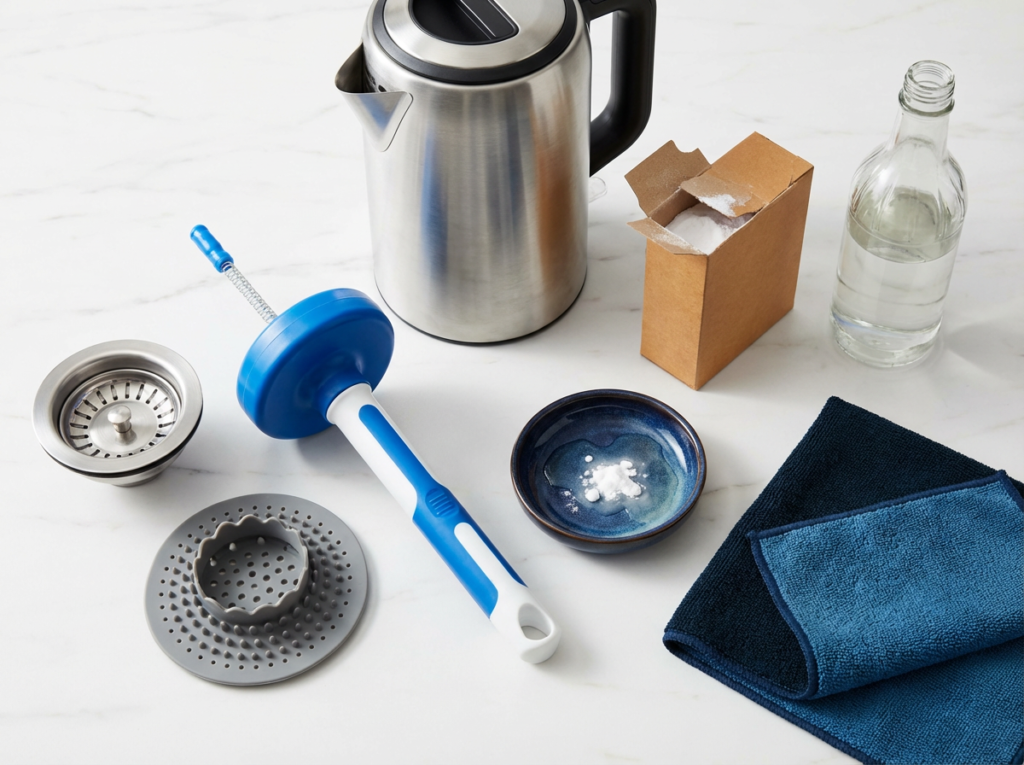
For chemical-free drain cleaning, use hot water as a habit. Run hot tap water for 15 to 30 seconds after you use the sink. It helps move soap and oils before they stick. Once a week, flush your kitchen drain with a kettle of hot water, not boiling, just hot. Then follow with a quick rinse.
You can also use a simple baking soda and vinegar routine for eco-friendly drain care. Pour baking soda in first, then vinegar, then hot water after it stops fizzing. This helps break up light buildup and freshen the drain. It will not fix a hard clog, but it supports natural drain maintenance.
- For more information on why your drains keep clogging, check out this blog next: “Why your kitchen sink keeps clogging” — https://transitflowplumbing.com/kitchen-sink-keeps-getting-clogged/
Why This Matters
A slow drain feels like a small problem, until it turns into a backup. When water sits in a sink or tub, it can bring smells, bacteria, and mess. It can also hide a bigger issue in the line. If you keep using harsh chemicals, you can create new problems while you chase the old one.
Strong drain cleaners can heat up inside the pipe. They can soften older PVC and stress joints. They can also eat at metal pipes over time. If you ever need a plumber to snake the line, leftover chemicals can splash and burn skin or eyes. That puts you and your home at risk.
Clear drains also protect your budget. Small clogs often turn into bigger clogs. Bigger clogs can lead to leaks, water damage, and ruined cabinets or flooring. In Columbus, OH, many homes have older plumbing in parts of the system. That makes gentle habits even more important.
Here is what you protect when you focus on safer, steady drain care:
- Your wallet: You avoid emergency calls and water damage repairs.
- Your pipes: You reduce wear from heat and harsh reactions.
- Your home comfort: You cut down on odors, gurgling, and slow sinks.
If you already notice slow draining, do not ignore it. That early warning gives you the best chance to fix it fast with simple steps, before it turns into a full blockage.
- Learn the common causes of slow drains — https://transitflowplumbing.com/sink-is-draining-slowly-causes/
What to Look For
You can spot drain trouble early if you know what to watch. Use this checklist and act fast.
- Slow draining water
If the sink takes longer to empty, buildup has started. Start with a strainer cleanup and a hot water flush. - Gurgling sounds
Gurgling often means air struggles to move past buildup. It can also point to a venting issue. Track which fixtures make noise. - Bad smells that keep coming back
Odors often come from trapped food, grease, or biofilm. Clean the drain opening and the stopper area. Then run hot water. - Water backing up in another fixture
If you run the washer and the tub bubbles, the clog may sit deeper in the line. Stop using water and get help. - You need a plunger more than once
A plunger can clear a small blockage. If the problem returns, you likely have buildup farther down. - You see fruit flies or drain flies
These pests feed on grime in the drain. That signals you need better routine cleaning and possibly a professional service.
For light maintenance, stick with natural drain maintenance steps like strainers, hot water, and safe fizzing cleanouts. For stubborn clogs, skip harsh chemicals. Use a small hand snake or call a pro. A pro can clear the line without damaging the pipe.
- Book professional drain cleaning by visiting our website — https://transitflowplumbing.com/plumbing/drain-cleaning-service/
For more information on safer cleaning products, check out the EPA’s Safer Choice Program — https://www.epa.gov/saferchoice
If this sounds like something you are dealing with, do not wait!
Transit & Flow® serves Columbus, OH and the surrounding area.
Call us today at 614-333-8092 or book online at transitflowplumbing.com. No surprises. No guesswork. Just results.
Transit & Flow® serves Columbus, OH and the surrounding area.
Call us today at 614-333-8092 or book online at transitflowplumbing.com. No surprises. No guesswork. Just results.
What You Should Do
Start with prevention, then move to simple fixes. Do not jump to harsh chemicals.
First, stop feeding the clog. Use a strainer in every sink. Use a hair catcher in every shower. Scrape plates into the trash, not the disposal. Pour grease into a container and toss it once it cools.
Next, build a weekly routine. Run hot water after heavy use. Do a weekly hot water flush. Use a baking soda and vinegar cleanout once or twice a month for eco-friendly drain care, especially in bathroom sinks.
If the drain already runs slow, try these steps in order:
- Pull and clean the stopper. Remove hair and slime.
- Plunge with a tight seal. Use short, strong pushes.
- Use a small hand snake. Go slow and pull debris out.
- Test with running water for a full minute.
If you see backups, leaks, or repeated clogs, stop DIY work and call a plumber. A deeper clog can sit in the main line. You do not want that turning into a sewage backup.
How Transit & Flow® Handles This
Transit & Flow® treats drain issues like a system problem, not a quick patch. We start by asking the right questions and checking the fixture behavior. We use professional tools that remove buildup without relying on harsh chemicals. When it makes sense, we recommend a camera inspection to find the real cause, like grease buildup, root intrusion, or a damaged section of pipe. We explain your options and offer upfront, flat rate pricing you approve before we start.
Your home deserves professional plumbing from people who care.
Transit & Flow® is the premium choice for homeowners in Columbus, OH.
We are bonded, insured, and ready when you need us.
Book your service today. Call 614-333-8092 or schedule online.
Transit & Flow® is the premium choice for homeowners in Columbus, OH.
We are bonded, insured, and ready when you need us.
Book your service today. Call 614-333-8092 or schedule online.
