
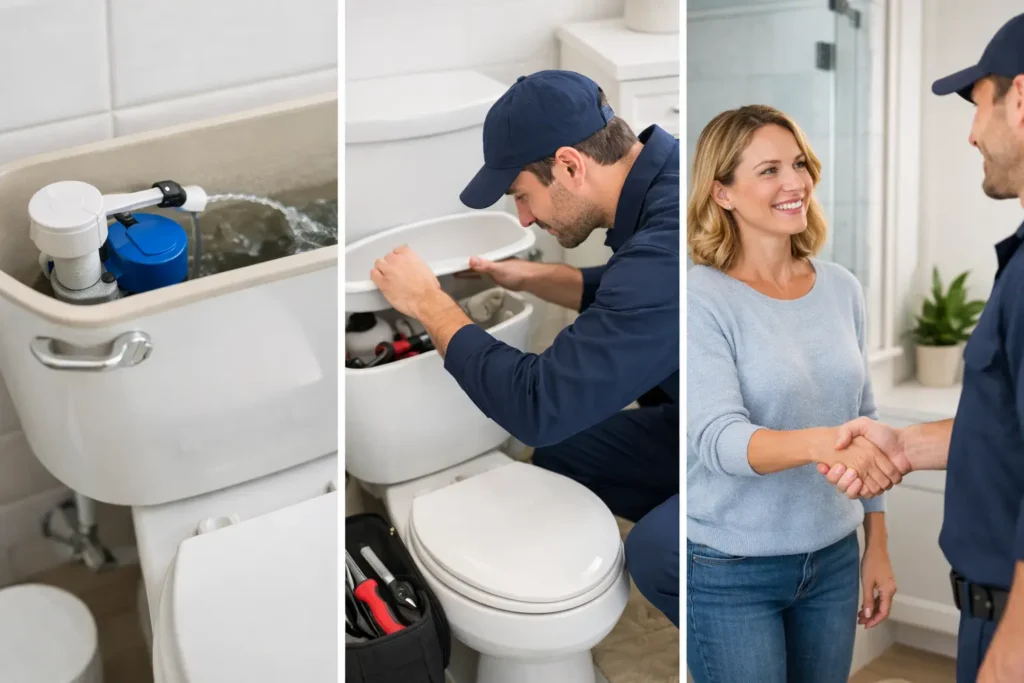
That steady sound of water moving through the tank is easy to ignore for a day or two. Then the water bill shows up, or the bathroom starts making noise all night, and suddenly a toilet keeps running fix moves to the top of the list.
A running toilet usually points to a problem inside the tank, not the bowl itself. In many homes, the issue comes down to a flapper that is not sealing, a fill valve that is not shutting off fully, a float that is set too high, or a chain that is getting in the way. The good news is that the cause is often straightforward. The better news is that once you know what to look for, you can usually tell whether this is a quick adjustment or a repair that needs professional service.
Why a toilet keeps running fix matters
A toilet that runs constantly wastes more than peace and quiet. It can add a surprising amount to monthly water use, especially in a busy home, rental unit, office restroom, or apartment building. For property managers and business owners, one small toilet issue can turn into repeat complaints, higher utility costs, and avoidable wear on plumbing components.
There is also a timing issue. What starts as an occasional refill cycle can become a nonstop run with very little warning. If the toilet is older or parts inside the tank are already worn, delaying repair tends to make the diagnosis less simple, not more.
Start with the simplest check
Take the tank lid off carefully and set it somewhere stable. Flush the toilet once and watch what happens as the tank refills. You are looking for the moment when the water should stop.
If the water never shuts off, the fill valve or float may be the main issue. If the tank fills and then slowly loses water into the bowl, the flapper is a more likely cause. If the toilet runs only sometimes, the problem may still be the flapper, but the leak is smaller and happens in cycles.
This first look can tell you a lot without getting too deep into the repair.
The most common toilet keeps running fix problems
The flapper is not sealing
The flapper is the rubber piece at the bottom of the tank that lifts during a flush and then settles back down to hold water in the tank. Over time, it can warp, harden, or collect buildup along the sealing surface. When that happens, water slowly leaks from the tank into the bowl, and the fill valve turns on again to replace it.
Sometimes the fix is as simple as making sure the flapper is sitting flat. Other times, the rubber has worn out and the part needs to be replaced. In older toilets, the flapper may technically still move, but it no longer creates a reliable seal.
The chain is too short or tangled
If the chain from the handle to the flapper is too tight, it can keep the flapper slightly lifted after each flush. That small gap is enough to let water escape continuously. If the chain is twisted or snagged under the flapper, you get the same result.
A proper chain length leaves a little slack when the flapper is closed. Too much slack is not ideal either, because it can interfere with flushing. This is one of those small details that can cause a lot of water waste.
The float is set too high
The float tells the fill valve when to stop adding water to the tank. If it is adjusted too high, the water level rises above where it should be and spills into the overflow tube. Once that happens, the toilet can keep running even though nothing appears obviously broken.
Most tanks have a marked water line or a clear point where the level should stop just below the top of the overflow tube. If the tank is overfilling, a float adjustment may solve it. If the adjustment does not hold, the fill valve itself may be wearing out.
The fill valve is failing
The fill valve controls the refill process after each flush. When it starts to wear down, it may run continuously, shut off only partway, or make a hissing sound long after the tank should be full.
Fill valves do not always fail all at once. In many cases, they become inconsistent first. That is why some toilets run constantly while others seem to act up only every few hours.
The overflow tube has a related issue
If water is entering the overflow tube because the tank is overfilled, the float or fill valve is usually the root cause. But if the refill tube is installed incorrectly inside the overflow tube, it can also contribute to odd refill behavior. This is less common, but it is something a plumber will check when the obvious fixes do not solve the problem.
What you can check safely before calling
If you are comfortable lifting the tank lid and observing the parts, there are a few safe checks that can help narrow things down. Listen for running water, look for water entering the overflow tube, and test whether pressing lightly on the flapper makes the sound stop. If it does, that points strongly to a seal issue.
You can also shut off the toilet supply valve near the base of the toilet. If the sound stops and the toilet stays quiet, the issue is likely isolated to the tank components rather than a broader plumbing problem. That does not fix the toilet, but it can limit water waste until service is scheduled.
What you do not want to do is force plastic parts, overtighten adjustments, or start disassembling the tank if you are unsure what you are looking at. Toilet parts are not especially complicated, but they can crack or shift if handled too aggressively. A simple running-toilet issue is better than a cracked tank or a leak onto the bathroom floor.
When the problem is bigger than a basic adjustment
Sometimes a toilet keeps running fix is not really about one loose part. In older toilets, multiple components may be worn at the same time. The flapper may be degraded, the fill valve may be slow to shut off, and the handle assembly may not be moving cleanly. In that situation, replacing one part may improve the symptom without solving the full problem.
There are also cases where the toilet has recurring issues because of age, hard water buildup, poor past repairs, or low-quality replacement parts. If you have already adjusted the chain or float and the problem keeps coming back, that is a sign to stop treating it as a minor nuisance and get a proper diagnosis.
For multi-unit properties and commercial spaces, speed matters even more. A constantly running toilet can quietly waste water for weeks between inspections. That is why many property owners prefer to have the issue handled quickly, with a clear explanation of what failed and what needs approval before work begins.
Repair or replace?
If the toilet is otherwise in good condition, repairing the tank components is often the practical move. A flapper or fill valve problem does not automatically mean the whole fixture needs to go.
But replacement can make sense if the toilet is older, has repeated internal failures, rocks at the base, uses excessive water, or has visible wear in multiple areas. For homeowners planning updates, and for landlords trying to reduce repeat service calls, a replacement may be the more efficient long-term choice. It depends on the age of the unit, the condition of the fixture, and whether the current toilet has become a pattern rather than a one-time repair.
What to expect from professional service
A professional toilet repair visit should be simple and clear. The technician should inspect the tank components, confirm why the toilet is running, and explain whether the issue is a straightforward repair or part of a larger fixture problem. From there, you should know what the recommended next step is, what work is included, and what needs your approval before anything starts.
For Columbus-area homes and properties, that kind of clarity matters. When a bathroom fixture is wasting water or creating tenant complaints, most people are not looking for a long lesson in toilet mechanics. They want an honest recommendation, up-front pricing, and a repair done correctly.
Transit & Flow works with that same mindset across Columbus and surrounding communities – clear communication, practical recommendations, and service that helps property owners move from frustration to a real fix.
If your toilet has been running for more than a day, making intermittent refill noises, or refusing to shut off completely, trust what it is telling you. Small plumbing problems have a way of getting more expensive when they are allowed to sound normal.
