
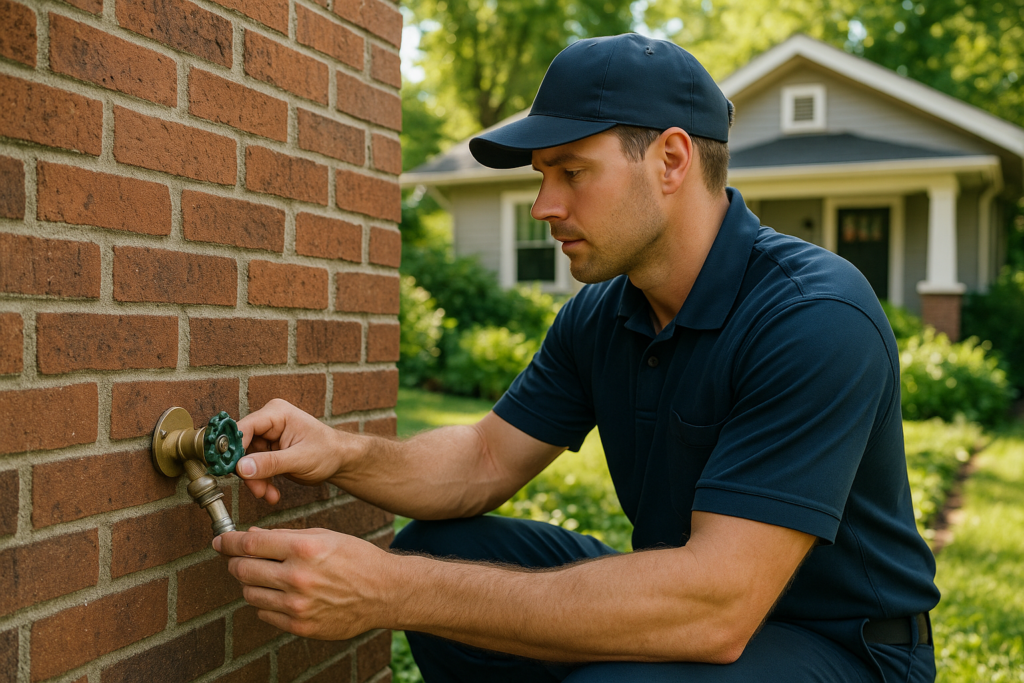
Quick Answer: Hose Bib Repair in Grandview Heights and Columbus OH
If your outdoor faucet is leaking, dripping when turned off, or showing signs of frost damage, you likely need a hose bib repair or replacement. A damaged hose bib can waste hundreds of gallons of water per month and cause hidden water damage to your home’s foundation or interior walls. For Grandview Heights and Columbus OH homeowners, the best course of action is to shut off the interior shutoff valve supplying your outdoor faucet and contact a professional plumber for diagnosis and repair.
Introduction: Why Hose Bib Problems Demand Attention in Columbus
Summer in Grandview Heights means garden hoses, car washes, kiddie pools, and weekend yard projects. Your outdoor hose bib gets more use between May and September than during the rest of the year combined. But that heavy seasonal use is exactly when hidden damage from Ohio’s freeze-thaw winters reveals itself. A hose bib that seemed fine in November may now be dripping, spraying from the handle, or leaking behind the exterior wall where you cannot see it.
Left unaddressed, a failing hose bib can lead to mold growth inside wall cavities, foundation erosion, and costly water damage repairs. Columbus-area homes, especially the charming older builds in Grandview Heights, are particularly susceptible because many still have older, non-frost-free spigots that are prone to freeze damage and corrosion.
If you notice any sign of trouble with your outdoor faucet, call Transit & Flow at 614-333-8092 right away. Early diagnosis almost always saves money and prevents secondary damage.
Key Takeaways
- A leaking hose bib can waste significant water and cause hidden structural damage to your Grandview Heights home.
- Ohio’s freeze-thaw cycles are the leading cause of hose bib failure in the Columbus area.
- Frost-free hose bibs offer superior protection but still require proper winterization.
- Homeowners can safely perform visual inspections but should never attempt in-wall plumbing repairs without professional help.
- Transit & Flow provides professional hose bib repair and replacement throughout Columbus OH and Grandview Heights.
Warning Signs and Symptoms of a Failing Hose Bib
Catching a hose bib problem early is the difference between a straightforward repair and a major water damage restoration project. Here are the warning signs every Grandview Heights homeowner should know.
Visible Water Leaks
The most obvious sign is water dripping or streaming from the spigot when the handle is fully closed. Even a slow drip can waste over 3,000 gallons per year according to EPA estimates. Check around the base of the faucet where it meets the exterior wall as well. Water pooling at the foundation is a red flag for a cracked pipe behind the wall.
Reduced Water Pressure
If your hose stream has weakened noticeably, the issue may be internal corrosion, mineral buildup, or a partially closed shutoff valve. Columbus municipal water contains moderate mineral content that can contribute to sediment buildup inside older brass and galvanized fittings over time.
Handle That Spins Freely or Feels Loose
A handle that no longer grips or turns without resistance indicates a stripped stem or worn packing nut. This means the internal valve mechanism has degraded and the hose bib can no longer create a watertight seal.
Water Stains on Interior Walls
This is the most serious warning sign. If you notice discoloration, bubbling paint, or damp drywall on the interior wall behind your outdoor faucet, water is leaking inside the wall cavity. Stop using the faucet immediately and call a professional.
Rust or Green Corrosion
Visible rust on a steel bib or green patina and white mineral crusting on a brass bib indicates advanced corrosion. While cosmetic corrosion is not always urgent, it signals that the fitting is aging and replacement may be more cost-effective than repair.
Root Causes of Hose Bib Damage in Columbus OH
Understanding why hose bibs fail helps Grandview Heights homeowners make smarter decisions about repair versus replacement.
Freeze-Thaw Cycles
Columbus OH experiences an average of over 80 freeze-thaw cycles per winter season. When water remains trapped in a hose bib or the short pipe connecting it to your home’s plumbing, it expands as it freezes. This expansion can crack the pipe, split the hose bib body, or rupture internal seals. The damage often goes undetected until the homeowner turns the water on in spring or summer.
Failure to Winterize
Leaving a garden hose connected through winter is one of the most common causes of hose bib failure. Even a frost-free hose bib cannot drain properly if a hose is still attached, trapping water inside the stem and creating conditions for a freeze rupture.
Age and Corrosion
Many Grandview Heights homes were built in the 1920s through 1960s. Original hose bibs in these homes may be 60 to 100 years old. Brass degrades, rubber washers dry out, and packing material deteriorates over decades of use.
Improper Installation
A hose bib that was not pitched slightly downward toward the exterior cannot drain properly, making it more vulnerable to freeze damage. Incorrect thread sealant or soldering can also create slow leaks that worsen over time.
Hard Water and Mineral Deposits
Columbus water, supplied primarily from the Griggs and O’Shaughnessy reservoirs, has moderate hardness levels. Over years of use, calcium and magnesium deposits can accumulate inside hose bib stems and valve seats, preventing a proper seal and accelerating internal wear.
What a Professional Hose Bib Repair Looks Like
When you call Transit & Flow for a hose bib repair in Grandview Heights or anywhere in the Columbus area, here is what the process typically involves.
Inspection and Diagnosis
A trained technician inspects the exterior faucet, tests for leaks under pressure, checks the interior shutoff valve, and examines the wall penetration for signs of hidden water damage. If needed, a moisture meter can detect dampness behind drywall without requiring demolition.
Determining Repair or Replacement
Based on the diagnosis, the technician will recommend either repairing the existing hose bib or replacing it entirely. Repairs typically involve replacing the stem washer, packing nut, or vacuum breaker. Replacements involve removing the old unit, installing a new frost-free hose bib at the correct pitch, and ensuring a watertight connection to the interior supply line.
Testing and Verification
After the repair or installation, the technician runs water through the system, inspects for leaks at every connection point, and verifies proper drainage. If a frost-free model was installed, the technician confirms the correct downward pitch for self-draining.
Winterization Guidance
Before leaving, the technician provides guidance on proper seasonal winterization, including when to disconnect hoses and how to shut off and drain the line before the first freeze. This is especially important in Grandview Heights where many homes have hose bibs on north-facing walls that freeze earlier in the season.
Cost Variables for Hose Bib Repair and Replacement
Transit & Flow does not publish fixed prices because every home and every situation is different. However, the following variables affect the overall cost of a hose bib repair or replacement in Columbus OH.
- Type of repair: A simple washer replacement costs less than a full hose bib replacement with in-wall pipe work.
- Hose bib type: Standard hose bibs are less expensive than frost-free or anti-siphon models, though frost-free bibs offer superior long-term protection.
- Accessibility: If the supply pipe runs through a finished basement, crawl space, or behind cabinetry, additional labor is required to access the connection point.
- Extent of water damage: If a burst pipe has caused damage to drywall, insulation, or framing, remediation adds to the total project scope.
- Pipe material: Connecting a new hose bib to copper, PEX, CPVC, or galvanized pipe each requires different fittings and techniques.
- Code compliance: Ohio plumbing code may require the addition of a vacuum breaker or backflow preventer, which adds a small material cost but protects your potable water supply.
For a personalized estimate, call Transit & Flow at 614-333-8092 or request one online at https://transitflowplumbing.com/estimate/.
When to Call a Professional
Some hose bib issues are straightforward, but many require professional intervention. Call a professional immediately if you encounter any of the following situations.
- Water is leaking inside your wall or at the foundation.
- You cannot shut off the water to the hose bib using the interior shutoff valve.
- The pipe behind the hose bib appears cracked or split.
- You see mold, mildew, or water stains on the interior wall near the outdoor faucet.
- The hose bib is old, corroded, and you want to upgrade to a frost-free model.
- You are unsure whether your hose bib is properly winterized and want a professional assessment before next winter.
Do not attempt to cut into walls, solder pipes, or modify plumbing connections on your own. These tasks require professional training, proper tools, and knowledge of local code requirements. Call Transit & Flow at 614-333-8092 to schedule a visit from a trained technician who can resolve the problem safely.
Safe Homeowner Checks
While major repairs should be left to professionals, there are a few safe checks you can perform on your own to assess the condition of your hose bib.
- Visual inspection: Look at the hose bib for visible cracks, rust, corrosion, or mineral buildup. Check where the faucet meets the exterior wall for gaps or deteriorating caulk.
- Drip test: Turn the faucet on fully, then shut it off. Watch for drips from the spout or leaks around the handle for at least 60 seconds.
- Interior wall check: Go inside and look at the wall directly behind the outdoor faucet. Feel for dampness and look for water stains or discoloration.
- Shutoff valve test: Locate the interior shutoff valve for the outdoor faucet and confirm it turns smoothly and stops water flow completely when closed.
- Hose disconnection: Make sure no hoses are left connected when not in use, even during summer. Trapped water in a connected hose can cause backpressure and mask leaks.
Repair vs. Replace: Making the Right Decision
A simple washer or packing nut replacement is a cost-effective repair when the hose bib body is in good condition. However, replacement is the better investment when any of the following apply.
- The hose bib is more than 20 years old and showing corrosion.
- The unit is a standard, non-frost-free model and you want to prevent future freeze damage.
- The pipe behind the hose bib has cracked or shows signs of previous freeze damage.
- Repeated repairs have been needed over the past few seasons.
- You want to add an anti-siphon or vacuum breaker feature for backflow protection.
Upgrading to a frost-free hose bib during a replacement is strongly recommended for all Columbus OH homes. These units feature a long stem that keeps the valve seat inside the heated envelope of your home, dramatically reducing freeze risk.
Local Columbus and Grandview Heights Context
Grandview Heights is a tight-knit community with a housing stock that ranges from 1920s-era bungalows to mid-century colonials and modern infill construction. Many of these homes still have original plumbing fixtures, including hose bibs that predate modern frost-free designs.
The neighborhood’s mature tree canopy and dense lot spacing mean that some outdoor faucets are in shaded areas that stay colder longer during transitional seasons. North-facing hose bibs on homes along First Avenue, Northwest Boulevard, and Grandview Avenue are particularly vulnerable to early-season freezes in October and November and late-season cold snaps in March and April.
Columbus’s clay-heavy soil also contributes to poor drainage around foundations. When a hose bib leaks at the wall penetration, water can pool against the foundation and seep into basements, a common complaint among Grandview Heights homeowners.
Transit & Flow serves Grandview Heights and the greater Columbus OH area with professional plumbing services tailored to the specific challenges of central Ohio homes.
Frequently Asked Questions
What should I do first if my hose bib is leaking?
Shut off the interior shutoff valve that supplies water to your outdoor faucet. This stops the flow and prevents further water waste or damage. Then disconnect any attached hoses and inspect the area for signs of water damage. If the leak is significant or you cannot locate the shutoff valve, call Transit & Flow at 614-333-8092 for immediate assistance.
What should I avoid doing with a damaged hose bib?
Do not attempt to force a stuck handle, overtighten a leaking connection, or cut into your exterior wall to access the pipe. Forcing components can cause a full pipe break, and improper wall access can damage wiring, insulation, or structural framing. Leave in-wall work to a trained professional.
What factors affect the cost of hose bib repair?
Cost depends on the type of repair needed, the style and material of the hose bib, accessibility of the supply line, pipe material, whether an upgrade to a frost-free model is desired, and whether water damage remediation is required. Contact Transit & Flow for a personalized estimate based on your specific situation.
When is a leaking hose bib considered an emergency?
A leaking hose bib becomes an emergency when water is flowing uncontrollably, leaking inside wall cavities, pooling against your foundation, or when you cannot shut off the water supply. In these cases, call a professional immediately to prevent structural damage and mold growth.
When should I call a professional for hose bib repair?
Call a professional any time you see water leaking behind the wall, notice foundation pooling, cannot stop the leak with the shutoff valve, or want to upgrade from a standard to a frost-free hose bib. A trained plumber can diagnose hidden damage, ensure code compliance, and complete the repair safely.
How can Transit & Flow help with my hose bib problem?
Transit & Flow provides professional hose bib repair, replacement, and winterization services throughout Columbus OH and Grandview Heights. Our trained technicians diagnose the root cause, recommend the most cost-effective solution, and complete the work with quality materials backed by professional service standards.
Maintenance Tips to Extend the Life of Your Hose Bib
- Disconnect all garden hoses before the first freeze, typically mid to late October in Columbus.
- Close the interior shutoff valve and open the outdoor faucet to drain any remaining water from the line each fall.
- Inspect the exterior caulking around the hose bib wall penetration annually and reseal if cracked or missing.
- Test the hose bib each spring by turning it on slowly and checking for leaks at the spout, handle, and wall connection.
- If you have a standard non-frost-free hose bib, consider upgrading to a frost-free model before next winter to reduce freeze damage risk.
- Never use a hose bib to supply a permanent irrigation system without a proper backflow prevention device.
Glossary
Hose Bib
An outdoor water faucet, also called a spigot or sillcock, designed for attaching a garden hose. Hose bibs are typically mounted on the exterior wall of a home and connected to the interior water supply.
Frost-Free Hose Bib
A type of outdoor faucet with an extended stem that places the valve seat inside the heated wall of the home, allowing water to drain out of the exposed portion and reducing the risk of freeze damage.
Shutoff Valve
An interior valve, usually located in the basement or crawl space, that controls water flow to a specific fixture or section of plumbing. Closing the shutoff valve to your hose bib is the first step when you suspect a leak or before winterizing.
Vacuum Breaker
A device installed on a hose bib to prevent backflow, which occurs when contaminated water is siphoned back into the potable water supply. Many local codes require vacuum breakers on outdoor faucets.
Backflow Preventer
A mechanical device designed to prevent water from flowing in the reverse direction through a plumbing system. Backflow preventers protect the public water supply from contamination and may be required by Columbus-area plumbing codes.
Schedule Your Hose Bib Repair in Grandview Heights Today
A leaking or damaged hose bib is not just an inconvenience. It is an active risk to your home’s foundation, walls, and water bill. Whether you need a quick repair, a full replacement, or a seasonal winterization consultation, Transit & Flow is ready to help homeowners in Grandview Heights and throughout Columbus OH.
Call Transit & Flow today at 614-333-8092 to schedule your hose bib inspection and repair. You can also request an estimate online at https://transitflowplumbing.com/estimate/. Our trained technicians will diagnose the issue, explain your options clearly, and get the job done right the first time.
