
Running out of hot water halfway through a shower gets old fast. A tankless water heater review usually starts there – with a homeowner trying to decide whether endless hot water is worth the higher upfront cost and whether the upgrade will actually fit the home.
For many Columbus-area households, the answer is maybe, not automatically. Tankless systems can be an excellent fit, but they are not the right choice for every property, every plumbing setup, or every budget. The smartest decision comes from looking at performance, installation realities, maintenance, and long-term value instead of marketing claims.
Tankless water heater review: what homeowners actually get
A tankless water heater heats water on demand instead of storing it in a large tank. When you open a hot water tap, the unit activates and heats water as it moves through the system. That means you are not paying to keep 40 or 50 gallons hot all day.
The biggest selling point is steady hot water. If the unit is sized correctly, a tankless system can keep showers, sinks, and laundry moving longer than a standard tank water heater. That is especially appealing for larger families or homes with staggered morning routines.
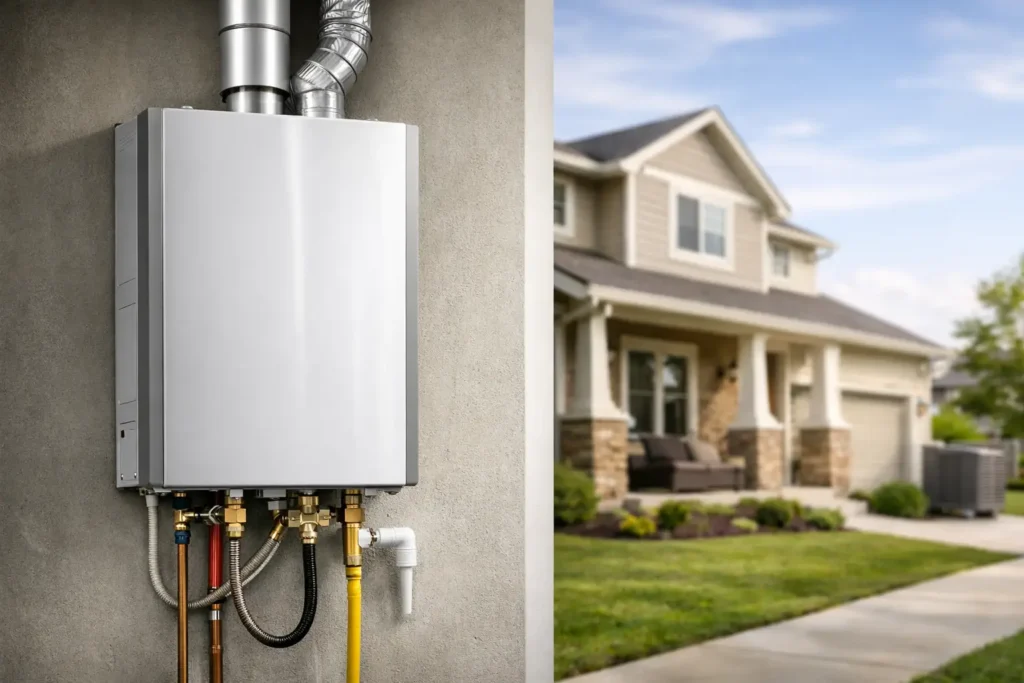
You also gain wall-mounted, space-saving equipment. In utility rooms, basements, and mechanical closets where every inch matters, that smaller footprint can be a real advantage.
Still, this is where a balanced tankless water heater review matters. Endless hot water does not mean unlimited output. Tankless units have flow-rate limits. If multiple fixtures are calling for hot water at the same time, performance depends on the unit size, incoming water temperature, and the home’s demand pattern.
Where tankless systems perform well
Tankless water heaters tend to work best in homes where hot water use is predictable and the unit is properly matched to that demand. A household with one or two bathrooms, efficient fixtures, and a desire for energy savings may see strong results. Homes where people shower back-to-back also tend to appreciate the on-demand setup.
They can also be a good option when an older water heater is failing and the homeowner plans to stay in the house long enough to value efficiency and service life. Many tankless systems can last longer than traditional tanks when maintained properly.
Another strong use case is a home where storage space matters. Reclaiming floor space from a bulky tank is not the main reason most people switch, but it is often a welcome bonus.
Where the trade-offs show up
The higher upfront investment is the first reality check. A tankless installation can require changes to gas lines, venting, electrical service, drainage, or water line configuration. The equipment itself often costs more than a tank model, and installation can be more involved depending on the house.
That does not mean the upgrade is a bad value. It means the value depends on the property. In some homes, installation is straightforward. In others, the work needed to support the new unit changes the budget significantly.
There is also the issue of simultaneous demand. If two showers, a dishwasher, and a washing machine are all competing for hot water, one undersized unit may struggle. This is not a product flaw as much as a sizing problem, but homeowners often experience it as disappointment after installation.
Cold-weather performance matters too. In winter, incoming water temperatures are lower, so the unit has to work harder to raise the water temperature to a comfortable level. That affects output. In Central Ohio, that seasonal factor should be part of the recommendation, not an afterthought.
Tankless water heater review: gas vs. electric
For most whole-home applications, gas tankless systems tend to be the stronger choice. They generally deliver higher flow rates and are better suited for households with multiple fixtures in use at once. If the home already has gas service, that can make the path more practical, although venting and gas capacity still need to be checked.
Electric tankless units can work in certain situations, but they are not always ideal for whole-home demand. They may fit smaller properties, point-of-use needs, or specific layouts, but they often require significant electrical capacity. That can become a limiting factor fast.
This is one of the most common areas where homeowners need clear guidance. On paper, both options may look simple. In the field, the home decides what makes sense.
Installation matters more than the brochure
A tankless system is only as good as the installation behind it. Proper sizing, correct venting, water quality considerations, gas or electrical capacity, and fixture demand all affect performance. If those factors are missed, the owner may end up with temperature swings, poor flow, short cycling, or higher-than-expected costs.
That is why the best review is not just about the unit. It is about the full replacement plan. A clear inspection should cover how many bathrooms the home has, how many people live there, what the peak hot water demand looks like, and whether the utility connections support the equipment.
For homeowners in Columbus and nearby suburbs, water quality and seasonal temperature swings should be part of the conversation as well. Those details influence maintenance needs and real-world output.
What maintenance looks like
Tankless systems are not maintenance-free. That point gets skipped too often. These units typically need periodic service, especially in areas where mineral buildup can affect performance. Flushing the system helps remove scale and protects efficiency.
Ignoring maintenance can shorten equipment life and reduce heating performance over time. Homeowners who want a lower-maintenance, simpler replacement sometimes prefer a standard tank for that reason alone.
That said, routine maintenance is manageable when it is planned for. The key is knowing ahead of time that the system will need attention and budgeting for it instead of assuming it can be installed and forgotten.
Cost, savings, and the return question
If you are comparing a tankless unit to a standard tank, the conversation usually comes down to upfront cost versus long-term efficiency. Tankless units can reduce energy use because they do not store and reheat water all day. Over time, that may help offset part of the installation cost.
But savings are not identical from one home to the next. A smaller household with modest hot water use may see a different return than a larger family using significant hot water throughout the day. The age of the current system, utility rates, and how long the owner plans to stay in the home all matter.
A fair recommendation should not treat tankless as the automatic premium option. It should weigh whether the added investment fits the household’s goals. Sometimes it does. Sometimes a high-quality tank water heater is the more sensible move.
Who should strongly consider tankless
A tankless system is worth a serious look if your household regularly runs out of hot water, you want to free up space, and you are prepared for a higher initial investment in exchange for efficiency and a longer-term equipment strategy. It also makes sense when the home’s layout and utility setup can support the installation without major complications.
It may be less appealing if your priority is the lowest replacement cost, if your current usage is modest, or if the home would require extensive upgrades to make the installation work. In those cases, a traditional tank may offer better value and fewer variables.
What to ask before making the switch
Before approving a replacement, ask how the unit is being sized, whether any gas, venting, drainage, or electrical updates are needed, and what maintenance will be expected after installation. You should also ask how the system will perform during winter conditions and during peak household demand.
That kind of conversation is where trust gets built. Clear communication matters more than sales language. A good recommendation explains what the system will do well, where the limits are, and what the installation really involves before work begins.
For Columbus homeowners, the right choice is the one that matches the house, the household, and the budget without surprises. Transit & Flow approaches water heater replacements that way – with practical recommendations, up-front pricing, and customer approval before any work starts.
If you are weighing a tankless upgrade, the best next step is not guessing from product labels. It is getting a clear assessment of your home’s hot water demand and what the installation would actually require, so the decision feels straightforward instead of risky.
