
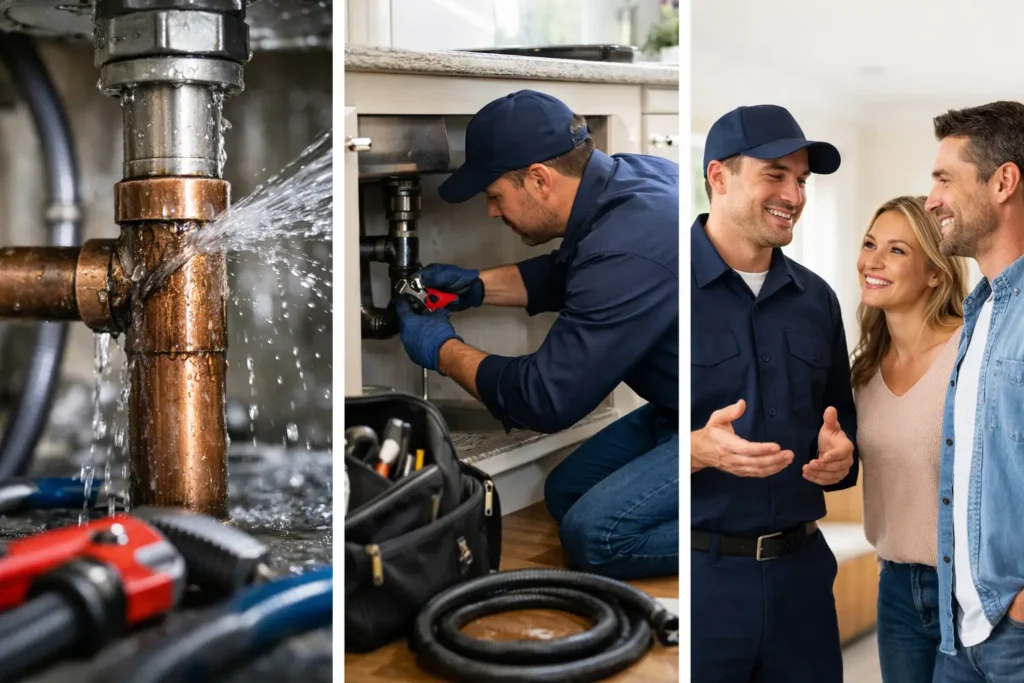
A pipe bursts at 2:10 a.m., and within minutes water is running across the floor, into drywall, and toward anything you hoped to keep dry. That is why a clear burst pipe repair example matters. In a real emergency, most homeowners are not looking for plumbing theory. They want to know what happens next, what a technician will look for, and how to make a smart repair decision without added confusion.
This article walks through a realistic residential scenario so you can see how a burst pipe problem is usually handled from first response to final repair approval. Every home is different, but the process tends to follow the same logic – stop active damage, locate the failure, confirm the full scope, and recommend a repair that fits the condition of the system.
A real-world burst pipe repair example
Picture a two-story home during a cold snap. The homeowner notices a drop in water pressure late in the evening, then hears water behind a wall near an upstairs bathroom. A small crack in a copper line inside an exterior wall has opened enough to release a steady stream. By the time the leak is discovered, water has already reached the ceiling below.
The first step is not the repair itself. It is damage control. The water supply to the home needs to be shut off quickly. If the leak is near electrical fixtures or soaked outlets, power to the affected area may also need attention from the homeowner or the appropriate trade before work continues safely. Towels, buckets, and moving furniture can help limit spread, but the key move is stopping water flow fast.
Once a plumbing technician arrives, the visit usually starts with confirmation. Homeowners often know where they see water, but the visible damage is not always where the pipe actually failed. In this example, the stained ceiling downstairs points to a problem above, but the actual burst is in a cold wall cavity where insulation coverage was poor.
What a plumber checks before repairing a burst pipe
A careful burst pipe repair example should include diagnosis, not just the fix. Rushing straight to a patch can create a second service call if the real issue is larger than one split section of pipe.
First, the technician identifies the material involved. Copper, PEX, CPVC, and older galvanized piping all behave differently under stress. A burst in one material may suggest age-related weakness, while another may point to freezing, pressure issues, poor support, or previous repair problems.
Next comes access. If the failed section is hidden behind drywall or above a finished ceiling, the repair may require opening the area to reach the damaged line. That is one reason responsible plumbing companies avoid quoting final work without seeing site conditions. A pipe repair inside an open basement is a different job than one behind a tiled shower wall.
The technician also checks for secondary damage and system condition. If one pipe burst because of freezing, nearby sections may be at risk too. If corrosion is present, replacing only one small portion may not be the best long-term choice. The goal is not to oversell the job. It is to avoid recommending a repair that solves tonight’s leak but leaves you with another one next month.
Repair options in this burst pipe repair example
In the example above, the damaged copper section is less than a foot long and the surrounding pipe is still in workable condition. That opens the door to a localized repair. The failed section can be removed and replaced, pressure can be restored, and the line can be tested before the wall is closed back up.
That sounds simple, but there are trade-offs. A spot repair is often the practical choice when the problem is isolated and the rest of the line is sound. It keeps cost and disruption more controlled. On the other hand, if the technician finds thinning pipe, multiple weak points, or signs of recurring freeze exposure, a larger replacement may make more sense.
For some homes, rerouting a vulnerable section away from an exterior wall is the better recommendation. That can mean more work up front, but it may reduce the chance of repeat issues during the next cold stretch. This is where clear communication matters. Homeowners should understand not only what can be done, but why one option is more durable than another.
How approval and pricing should work
When people search for a burst pipe repair example, they are often really asking, “Will I know what I am agreeing to before work starts?” That is a fair question.
A professional service process should explain the problem in plain language, outline the recommended repair, and provide pricing for approval before work begins. Flat-rate pricing helps many homeowners because it creates clarity around the repair scope instead of leaving them guessing about a running clock. Final cost still depends on actual conditions, access, materials, and the approved solution, but there should be a clear conversation before the work moves forward.
This matters even more during an emergency. Water damage creates pressure, and pressure leads to rushed decisions. Good service slows the decision just enough to make it informed. You should know whether the technician is recommending a repair, a partial replacement, or a broader pipe update, and what problem that choice is intended to solve.
What happens after the pipe is fixed
The plumbing repair is only part of the event. In this burst pipe repair example, water restoration concerns still need attention after the line is secured and tested. Wet drywall, insulation, flooring, and trim may need drying or replacement depending on how long the leak ran and where the water traveled.
That is why documentation matters. Homeowners should take photos, note when the leak was discovered, and keep records of the plumbing diagnosis and completed repair. Even if the pipe issue is resolved quickly, moisture left behind can create a separate problem later.
It is also smart to ask one practical question before the technician leaves: what likely caused this, and what should be done to reduce the risk of it happening again? Sometimes the answer is better insulation. Sometimes it is sealing a draft path, adjusting indoor heat patterns, replacing an aging shutoff valve, or addressing pressure concerns. The best repair visit does not end with the leak stopped. It leaves the homeowner with a clearer plan.
When a burst pipe is not really a simple burst pipe
Not every “burst pipe” turns out to be a dramatic split from freezing weather. In homes around Columbus, a pipe leak can also come from corrosion, poor previous workmanship, movement in older plumbing, or high-stress sections near fittings and valves. That distinction matters because the long-term fix changes with the cause.
A freeze-related crack may point to insulation or airflow problems. A failed fitting may point to installation quality or vibration. An older, repeatedly repaired section may suggest the system is reaching the stage where piecemeal fixes stop being cost-effective. The repair itself may be straightforward, but the recommendation around it should reflect the bigger picture.
That is one reason homeowners often benefit from same-day availability when a leak starts. Speed helps limit damage, but organized diagnosis helps prevent repeat damage. Both matter.
What homeowners should do right away
If you suspect a burst pipe, shut off the water supply as soon as possible and avoid using plumbing fixtures until the issue is assessed. If water is near electrical hazards, keep safety first and do not step into standing water near powered areas. Then call for professional plumbing service.
You do not need to figure out the full repair on your own. What helps most is being ready to share what you noticed first, where the water is showing up, whether pressure changed, and how long the leak may have been active. That information can help speed up the diagnosis when the technician arrives.
For homeowners who want a practical takeaway from this burst pipe repair example, it is this: the right repair is not just the fastest patch. It is the one that matches the pipe condition, access, and likely cause, with clear approval before work begins. In a stressful moment, calm communication and a well-organized process can make the difference between a one-time fix and an ongoing headache.
If a pipe ever lets go in your home, focus on the next correct step, not all ten steps after that. Stop the water, get the problem assessed, and make the repair decision with a full picture of what your home actually needs.
Related Plumbing Services in Columbus, OH
- emergency plumber Columbus OH
- drain cleaning Columbus OH
- water heater repair Columbus OH
- sump pump service Columbus OH
- sewer line repair Columbus OH
- ProCare plumbing membership Columbus
A burst pipe can cause thousands in damage within hours. Save our number and call your 24-hour emergency plumber Columbus the moment water starts flowing.
