
How Much Does Drain Cleaning Cost in Columbus and Gahanna?
Drain cleaning in Columbus and Gahanna, Ohio typically ranges from $125 to $500 or more depending on the severity of the clog, the location of the blockage, and the method required to clear it. Main sewer line cleaning and complex blockages involving tree root intrusion or collapsed pipe sections will fall on the higher end of that range, while a single fixture drain clearing usually costs less.
Introduction: Why Drain Cleaning Cost Matters to Gahanna Homeowners
A slow drain might seem like a minor inconvenience, but left unaddressed, it can escalate into sewage backups, water damage, and costly emergency repairs. For homeowners across Columbus and Gahanna, understanding what drives drain cleaning costs helps you budget wisely and avoid overpaying. Summer is a particularly active season for drain problems in central Ohio. Heavy rainstorms saturate the soil, shift tree roots toward your sewer lateral, and expose weaknesses in aging clay and cast-iron pipes that are common throughout Franklin County neighborhoods.
Transit & Flow serves Gahanna, Columbus, and the surrounding communities with professional drain cleaning that puts transparency and quality first. If you are dealing with a slow drain, a backed-up main line, or foul odors coming from your plumbing, call Transit & Flow at 614-333-8092 to speak with a trained technician and get fast answers before a small problem becomes a big expense.
Key Takeaways
- Drain cleaning in the Columbus and Gahanna area generally costs between $125 and $500 or more, depending on several variables.
- The location and severity of the clog, pipe material, and cleaning method all influence the final cost.
- Main sewer line cleaning is typically more expensive than clearing a single fixture drain.
- Tree root intrusion is one of the most common causes of drain blockages in central Ohio.
- Calling a professional early prevents escalation to emergency-level repairs with higher costs.
- Transit & Flow provides upfront assessments with no hidden charges for Columbus and Gahanna homeowners.
Primary Service: Drain Cleaning in Columbus and Gahanna
Drain cleaning is one of the most frequently requested plumbing services in the Columbus metro area. Whether the blockage is in a kitchen sink, bathroom shower, floor drain, or the main sewer line running beneath your yard, professional drain cleaning restores flow and protects your home from water damage and health hazards.
Types of Drain Cleaning Services
Not every clog is the same, and neither is the method used to clear it. Professional drain cleaning services generally fall into three categories:
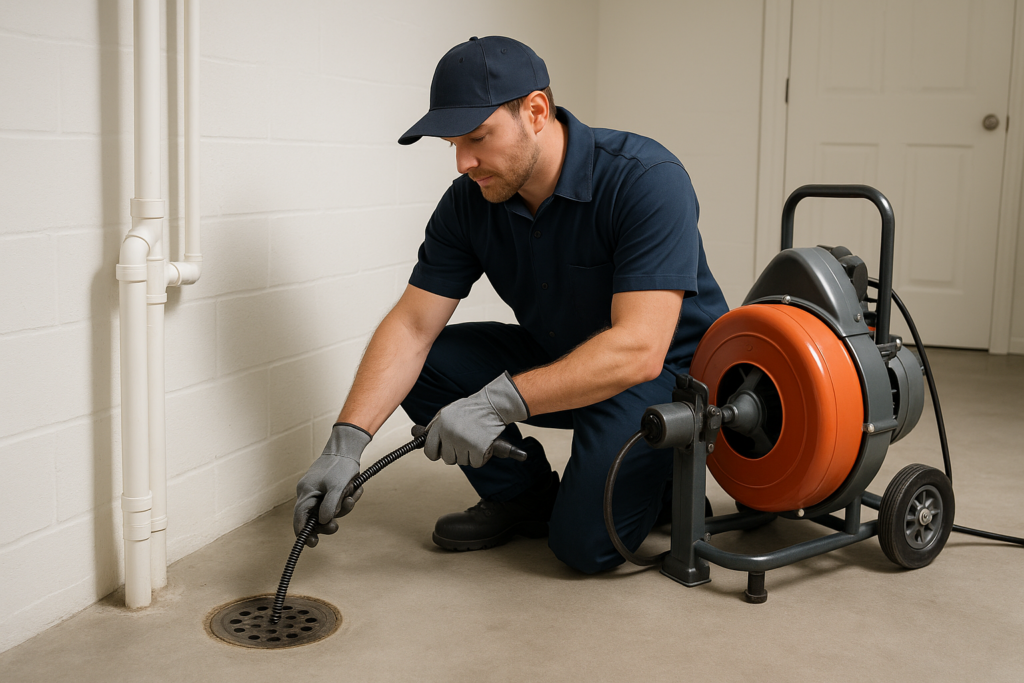
- Single-fixture drain clearing: Addresses clogs localized to one sink, tub, shower, or toilet. Technicians typically use a cable machine or hand snake to break through or retrieve the blockage.
- Main drain and sewer line cleaning: Targets the primary drain line that connects your home to the municipal sewer system. This service usually requires a larger motorized auger or hydro jetting equipment, and the technician may need to access the line through a cleanout fitting.
- Hydro jetting: Uses high-pressure water to scour the interior walls of the pipe, removing grease buildup, mineral scale, and root intrusions. Hydro jetting is the most thorough cleaning method and is commonly recommended for recurring blockages or older pipe systems.
In Gahanna and the broader Columbus area, many homes built before the 1980s have clay or cast-iron sewer laterals. These pipe materials are more susceptible to root infiltration and joint failure than modern PVC, which means professional cleaning may be needed more frequently. A trained plumber can assess your pipe condition with a camera inspection and recommend the most cost-effective cleaning approach.
Warning Signs and Symptoms of a Clogged Drain
Recognizing the early signs of a clogged drain helps you act before the problem worsens and the cost increases. Watch for these common symptoms in your Gahanna or Columbus home:
- Water draining slowly from sinks, tubs, or showers
- Gurgling sounds coming from drains or toilets after flushing
- Foul or sewage-like odors near floor drains, basement drains, or bathroom fixtures
- Water backing up into a tub or shower when you run the washing machine
- Multiple fixtures draining slowly at the same time, which often indicates a main line issue
- Wet spots, pooling water, or unusually green patches of grass in your yard near the sewer line path
- Frequent need to plunge a toilet or unclog the same drain repeatedly
If you notice more than one of these symptoms at once, the blockage is likely in the main sewer line rather than in a single fixture. This situation warrants prompt professional attention.
Root Causes of Drain Blockages
Understanding why drains clog helps homeowners take preventive action and gives important context for the cost of cleaning. The most common causes of drain blockages in Columbus and Gahanna include:
Tree Root Intrusion
Central Ohio yards are filled with mature maples, oaks, and other deep-rooted trees. Roots naturally seek moisture and nutrients, and they can find both inside your sewer lateral through tiny cracks or joint separations. Once inside, roots grow into dense mats that trap debris and eventually block the pipe entirely. Root intrusion is the single most common cause of main line backups in Gahanna.
Grease and Organic Buildup
Cooking grease, fats, oils, soap residue, and food particles accumulate on the interior walls of drain pipes over time. In kitchen drains, this buildup can narrow the pipe diameter significantly. Columbus water, while generally considered moderate in hardness, can contribute mineral deposits that compound organic buildup.
Foreign Objects and Non-Flushable Items
Items such as wipes labeled flushable, feminine hygiene products, cotton swabs, and excessive toilet paper are frequent causes of blockages. These items do not break down in water the way toilet paper does and can create stubborn clogs deep within the drain system.
Pipe Deterioration
Older homes in Gahanna subdivisions and established Columbus neighborhoods may have clay, cast-iron, or Orangeburg pipes that have deteriorated over decades. Cracks, bellied sections, and joint separations create low points where debris collects and blockages form. In these cases, cleaning alone may be a temporary fix, and pipe repair or replacement may be necessary.
What a Professional Drain Cleaning Process Looks Like
When you call Transit & Flow for drain cleaning, here is what you can expect from our trained technicians:
- Initial assessment: The technician discusses your symptoms, inspects accessible drains, and identifies whether the issue is localized to one fixture or affecting the main line.
- Camera inspection (when recommended): A waterproof camera is fed into the drain to visually inspect the interior of the pipe. This reveals the exact location, nature, and severity of the blockage, as well as the condition of the pipe itself.
- Cleaning method selection: Based on the findings, the technician selects the appropriate cleaning method, whether that is a cable machine, hydro jetter, or another tool suited to the specific blockage.
- Drain clearing: The blockage is removed or broken apart. The technician confirms restoration of full flow and checks for any secondary issues.
- Post-cleaning assessment: A follow-up camera pass may be conducted to verify the line is clear and to document any pipe damage that may require future attention.
- Recommendations and documentation: The technician provides a clear summary of what was found, what was done, and any recommendations for ongoing maintenance or pipe repair.
Cost Variables: What Affects Drain Cleaning Prices
Drain cleaning cost in Columbus and Gahanna is not a one-size-fits-all number. Several factors influence the final price, and understanding these variables protects you from surprise charges.
- Location of the clog: A blockage in an accessible kitchen sink drain costs less to clear than one deep within a main sewer line beneath your yard.
- Cleaning method required: Basic cable snaking is typically the least expensive option. Hydro jetting, which provides a more thorough cleaning, carries a higher cost due to specialized equipment.
- Severity and type of blockage: A simple hair and soap clog clears quickly. Heavy root intrusion or hardened grease deposits require more time, equipment, and expertise.
- Pipe condition and material: Older clay or cast-iron pipes may require more careful handling to avoid damage during cleaning. Fragile pipes may also necessitate camera inspection before any mechanical cleaning.
- Access point availability: Homes with a readily accessible cleanout fitting are easier and faster to service. If no cleanout exists, the technician may need to pull a toilet or access the line through another entry point.
- Time of service: Emergency or after-hours drain cleaning may carry additional charges compared to standard business-hour appointments.
- Additional services: Camera inspections, root treatment applications, and descaling add to the total but provide significant long-term value.
Transit & Flow provides honest assessments before work begins so you understand exactly what is needed and why. For a personalized estimate, call 614-333-8092 or request an estimate online.
When to Call a Professional
Some drain issues can wait a day or two. Others demand immediate professional attention. Call a professional plumber right away if you experience any of the following:
- Sewage backing up into your home through floor drains, tubs, or toilets
- Standing water in your basement or crawl space
- Multiple drains clogging simultaneously
- Foul sewage odors that persist despite surface cleaning
- Water damage visible on walls, floors, or ceilings near drain lines
- Any situation involving contact with raw sewage, which presents serious health risks
Do not attempt to resolve main sewer line blockages yourself. Improper use of motorized drain equipment can cause pipe damage, personal injury, or sewage exposure. This is a situation where professional training and proper equipment make a critical difference.
Safe Homeowner Checks
Before calling a professional, there are a few safe, non-hazardous steps you can take to assess the situation:
- Check multiple fixtures: Run water in several sinks, tubs, and toilets to determine if the issue is isolated to one drain or affecting the whole house.
- Locate your cleanout: If you know where your sewer cleanout is located, check whether the cap is wet or if sewage is visible around it. Do not attempt to open or clear it yourself.
- Look for exterior signs: Walk your yard along the path of your sewer lateral and check for wet spots, sunken ground, or unusually lush grass.
- Remove visible surface debris: If a sink or tub drain has a removable strainer, check for and remove hair or soap buildup at the surface level only.
- Avoid chemical drain cleaners: Over-the-counter chemical drain cleaners can corrode older pipes and create hazardous conditions for the technician who services your line. They also rarely resolve the underlying problem.
Repair vs. Replace: Making the Right Decision
Drain cleaning resolves most blockages, but sometimes the underlying pipe condition makes cleaning a temporary fix. Here is how to think about repair versus replacement:
- Cleaning is sufficient when: The pipe is in good structural condition and the clog is caused by normal buildup, hair, grease, or minor root intrusion that can be cleared and treated.
- Repair may be needed when: A camera inspection reveals a localized crack, offset joint, or small section of pipe damage. Spot repairs or pipe lining can address these issues without replacing the entire line.
- Replacement is recommended when: The pipe has extensive deterioration, multiple bellied sections, widespread root damage, or is made of Orangeburg material that has reached the end of its functional life. In these cases, continued cleaning becomes a recurring expense that exceeds the cost of a one-time replacement.
Transit & Flow technicians will show you the camera inspection footage, explain your options clearly, and let you make an informed decision without pressure.
Local Columbus and Gahanna Context
Gahanna sits just east of Columbus along Big Walnut Creek, and the area’s clay-heavy soil and mature tree canopy create specific challenges for residential sewer lines. Many Gahanna neighborhoods were developed in the 1960s through 1980s, meaning the original clay or cast-iron sewer laterals are now 40 to 60 years old and approaching or past their expected service life.
Summer in central Ohio brings heavy thunderstorms that saturate the soil and increase hydrostatic pressure on underground pipes. This pressure can accelerate root intrusion and cause joints to shift. The City of Columbus and the City of Gahanna both maintain the public sewer mains, but homeowners are responsible for the sewer lateral that runs from the house to the main. Understanding this boundary is important because it determines who pays for repairs.
Columbus-area water is treated by the City of Columbus Division of Water and is generally considered moderately hard. While not as aggressive as extremely hard water, mineral deposits still contribute to gradual pipe scaling over time, particularly in galvanized or cast-iron drain lines.
Frequently Asked Questions
What should I do first if my drain is clogged?
Start by checking whether the problem affects one fixture or multiple drains throughout your home. If only one drain is slow, the clog is likely localized. If multiple fixtures are affected, the issue is probably in your main sewer line and you should call a professional. Contact Transit & Flow at 614-333-8092 for a prompt assessment.
What should I avoid when dealing with a clogged drain?
Avoid using chemical drain cleaning products, which can damage older pipes and create safety hazards. Do not attempt to use a motorized drain snake without training, as improper use can crack pipes or cause injury. Never ignore a sewage backup, as raw sewage presents serious health risks.
What factors affect the cost of drain cleaning?
The main cost variables include the location and severity of the clog, the cleaning method required such as cable snaking versus hydro jetting, the condition and material of your pipes, accessibility of the drain line, and whether the service is performed during standard hours or as an emergency call.
When is a clogged drain an emergency?
A clogged drain becomes an emergency when sewage is backing up into your home, when standing water threatens to cause structural damage, or when you can smell persistent sewage odors. Multiple simultaneous drain failures also indicate an urgent main line issue that requires immediate professional service.
When should I call a professional for drain cleaning?
You should call a professional when a drain remains slow after removing surface-level debris, when you experience recurring clogs in the same line, when multiple fixtures are affected, or when you notice signs of a sewer line problem such as yard wetness or sewage odors. Early professional intervention almost always costs less than waiting for a full backup.
How can Transit & Flow help with my drain cleaning needs?
Transit & Flow provides comprehensive drain cleaning services throughout Columbus and Gahanna, including camera inspections, cable cleaning, and hydro jetting. Our trained technicians assess your situation honestly, explain your options, and complete the work efficiently. Call 614-333-8092 or visit our website to get started.
Maintenance Tips to Prevent Costly Drain Clogs
- Use drain strainers in all sinks, tubs, and showers to catch hair and debris before they enter the drain.
- Never pour cooking grease, fats, or oils down any drain. Allow them to cool and dispose of them in the trash.
- Flush only toilet paper. Even products labeled as flushable should go in the trash.
- Run hot water through kitchen drains for 30 seconds after each use to help prevent grease accumulation.
- Schedule professional drain maintenance every one to two years, especially if your home has older pipes or mature trees near the sewer line.
- Know where your sewer cleanout is located so you can direct a technician to it quickly if needed.
Glossary of Plumbing Terms
Drain Cleaning
The process of removing blockages, buildup, and debris from residential or commercial drain and sewer pipes using professional equipment such as cable machines, hydro jetters, or manual tools to restore proper water flow.
Sewer Line
The underground pipe that carries wastewater from your home to the municipal sewer main. Homeowners are typically responsible for the section of sewer line, called the lateral, that runs from the house to the property line or the main connection point.
Hydro Jetting
A professional drain cleaning method that uses a specialized nozzle to direct high-pressure water streams against the interior walls of a pipe, removing grease, scale, roots, and other buildup more thoroughly than mechanical snaking alone.
Flat-Rate Pricing
A pricing model in which the cost of a service is quoted as a single price before work begins, rather than being billed by the hour. This approach gives homeowners cost certainty and eliminates surprises on the final invoice.
Shutoff Valve
A valve that controls the flow of water to a specific fixture, appliance, or the entire home. Knowing the location of your main shutoff valve allows you to stop water flow quickly in an emergency to minimize damage.
Schedule Your Drain Cleaning with Transit & Flow Today
Whether you are dealing with a slow shower drain in Gahanna or a main sewer line backup in Columbus, Transit & Flow is ready to help. Our trained technicians bring the right equipment, provide honest assessments, and get your drains flowing properly without unnecessary upselling or surprise charges.
Do not wait for a small clog to become a major backup. Call Transit & Flow today at 614-333-8092 to schedule your drain cleaning service. You can also request a free estimate online at your convenience. We proudly serve homeowners throughout Columbus, Gahanna, and the surrounding central Ohio communities.
