
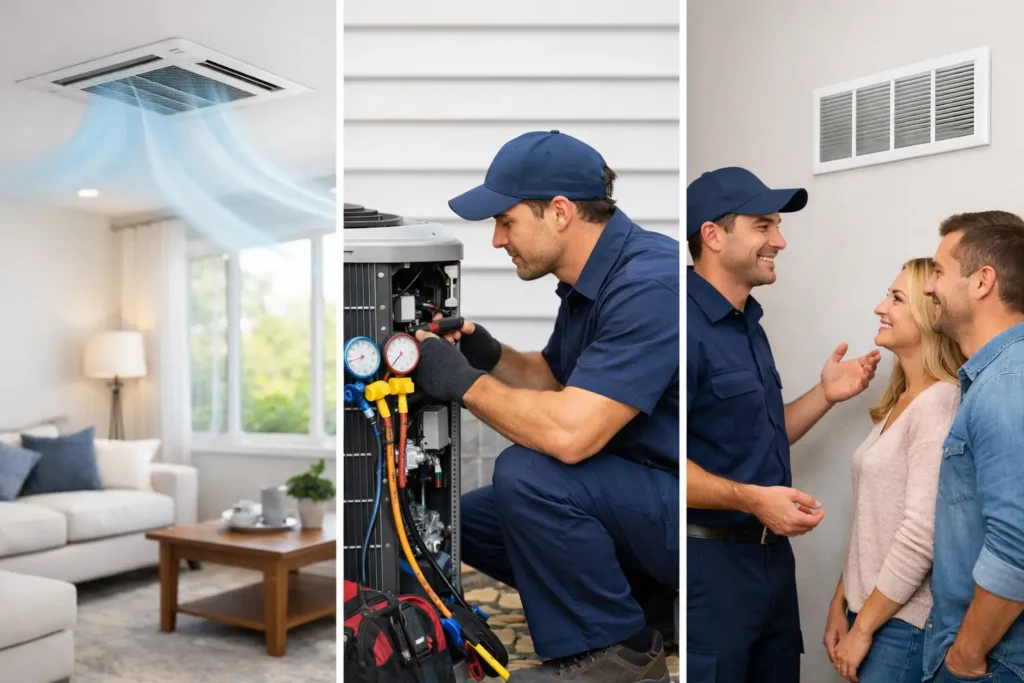
A room that stays warm while the rest of the house feels comfortable is more than an annoyance during a Columbus summer. Weak airflow can make your AC run longer, raise utility costs, and leave you wondering whether the system is actually cooling. Knowing how to improve AC airflow starts with a few safe, practical checks, then knowing when the problem needs a professional diagnosis.
Start With the Easiest Airflow Checks
Before assuming the air conditioner has failed, look at the parts of the system that affect air movement every day. Many airflow issues develop gradually, so homeowners may not notice them until one bedroom, upper floor, or living area becomes consistently uncomfortable.
Check and Replace the Air Filter
A dirty air filter is one of the most common causes of reduced AC airflow. As the filter collects dust, pet hair, and household debris, the blower has to work harder to pull air through it. Less air reaches the supply vents, and the system may run longer than it should.
Check the filter monthly during the cooling season. If it looks gray, visibly dusty, or clogged, replace it with the correct size and type for your system. Most standard filters need replacement every one to three months, but homes with pets, allergies, frequent open windows, or more occupants may need more frequent changes.
Avoid choosing the most restrictive filter just because it sounds more effective. High-efficiency filters can be useful in the right system, but a filter that is too dense for your equipment may reduce airflow. If you are unsure which filter is appropriate, ask an HVAC professional for a practical recommendation based on your system and household needs.
Open and Clear Supply Vents
Walk through the home and check every supply vent, including those in rarely used rooms. Make sure vents are open and not blocked by furniture, curtains, rugs, storage bins, or beds. Air needs a clear path into the room to circulate properly.
It is tempting to close vents in unused rooms to send more cooling elsewhere. In most central HVAC systems, that can create pressure problems and reduce overall performance instead. Keep most vents open, then use thermostat settings, ceiling fans, window coverings, and professional balancing solutions to address rooms that run warmer than others.
Keep Return Vents Unobstructed
Return vents pull indoor air back to the HVAC system to be cooled again. They are often larger than supply vents and may be located on walls, ceilings, or in hallways. A blocked return vent can restrict the entire system, even if the supply vents appear to be blowing normally.
Keep furniture and other items several inches away from return grilles. Vacuum dust from the grille surface as part of regular cleaning, but do not remove panels or reach into ductwork. If you see heavy buildup, loose insulation, or signs of moisture around a return, schedule an inspection.
Improve Air Movement Inside the Home
Good AC airflow depends partly on the HVAC equipment and partly on how air moves through the house. Layout, room doors, sunlight, insulation, and floor level all affect comfort.
Use Ceiling Fans the Right Way
A ceiling fan does not lower the room temperature, but it can make people feel cooler by moving air across the skin. In summer, set the fan to rotate counterclockwise when viewed from below. The fan should push air downward rather than pull it upward.
Use fans in occupied rooms and turn them off when the room is empty. This helps improve comfort without asking the AC to compensate for every warm spot on its own. Portable fans can help in some rooms as well, particularly while you are waiting for a service visit, but they do not correct a central airflow problem.
Check Doors, Curtains, and Heat Sources
A closed bedroom door can limit the path air needs to return to the system, especially in homes with a single central return. If a room gets noticeably warmer with the door shut, try leaving it open during the day and see whether comfort improves.
Close blinds and curtains on sunny windows during the hottest part of the day. Keep lamps, electronics, and appliances that produce heat away from the thermostat when possible. A thermostat influenced by direct sun or nearby heat may read the room incorrectly and cause uneven cooling cycles.
When a Thermostat Setting Is Part of the Problem
Thermostat settings will not fix a mechanical issue, but they can affect how consistently your home feels cooled. Set the fan mode to “Auto” for most homes. In this setting, the blower runs when the AC is actively cooling, helping manage energy use and humidity.
The “On” setting keeps the blower running continuously. It can help circulate air between cooling cycles, but it may also make some rooms feel less comfortable if warmer air from ducts is pushed through the home when the AC is not cooling. It can also increase electricity use. The best setting depends on your equipment, humidity level, and comfort concerns.
If the thermostat uses batteries, replace them as needed. Also confirm that its schedule has not been changed accidentally. A system set several degrees warmer during afternoon hours may be working exactly as programmed, even though the house feels too warm.
Signs the Airflow Problem Is Beyond a Simple Fix
Some AC airflow problems are caused by equipment or duct issues that should be evaluated by a trained technician. Continuing to run the system when airflow is severely restricted can place extra strain on components and may lead to a more involved repair.
Call for service if you notice weak air from multiple vents, rooms that remain warm after basic checks, ice on the indoor or outdoor equipment, unusual humming or rattling, water around the indoor unit, or a sudden increase in cooling costs. A burning smell, electrical odor, or repeated breaker trip needs prompt attention. Turn the system off if you notice these signs and arrange professional service.
Ductwork May Be Leaking, Damaged, or Disconnected
Ducts carry conditioned air from the HVAC system to each room. If sections are leaking, crushed, poorly connected, or damaged, cooled air may escape before it reaches the living space. Duct problems can be especially noticeable in rooms farthest from the equipment, finished additions, and upper floors.
Ductwork is not always easy to inspect safely because much of it is located in attics, basements, crawl spaces, or behind walls. A professional can assess the system, identify accessible issues, and explain whether sealing, repair, redesign, or other steps make sense. The right recommendation depends on the age of the home, duct layout, equipment size, and the location of the comfort problem.
The Blower, Evaporator Coil, or Drain System May Need Attention
The indoor blower is responsible for moving air through the system. A failing blower motor, capacitor issue, dirty blower assembly, or control problem can reduce airflow. A dirty indoor evaporator coil may also restrict air movement and affect cooling performance.
These are not homeowner maintenance tasks. AC equipment contains electrical components, moving parts, and refrigerant-related systems that require careful diagnosis. A service technician can determine whether the issue is maintenance-related, repairable, or connected to a larger system concern.
Do Not Ignore Uneven Cooling Between Floors
Many Central Ohio homes naturally feel warmer upstairs because heat rises and upper levels receive more sun exposure. That does not automatically mean the AC is undersized or failing. However, a significant temperature difference can point to airflow imbalance, insulation gaps, attic heat, duct issues, or thermostat placement.
Start with the basic steps: clean filter, open vents, clear returns, ceiling fan use, and window coverings. If the difference remains substantial, a technician can evaluate airflow at the vents and review the system’s operation. In some cases, targeted adjustments are enough. In others, the home may benefit from duct modifications, added returns, zoning options, or improvements that reduce heat gain. Recommendations should be based on an on-site assessment, not a guess.
Prevent Airflow Problems With Seasonal Maintenance
Regular maintenance gives you the best chance of catching airflow restrictions before they affect comfort during a heat wave. At a cooling tune-up, a technician can inspect components that homeowners cannot reasonably assess, verify system operation, and identify wear or buildup that may affect performance.
Between appointments, make filter checks routine, keep the outdoor unit clear of leaves and vegetation, and pay attention to changes in sound, runtime, and room temperatures. The sooner you notice a pattern, the easier it is to describe the issue clearly when scheduling service.
If basic checks have not improved comfort, Transit & Flow can evaluate AC airflow concerns in Columbus and nearby communities, explain the findings in plain language, and provide clear options before work begins. A comfortable home should not depend on guessing which room will cool down next.
