
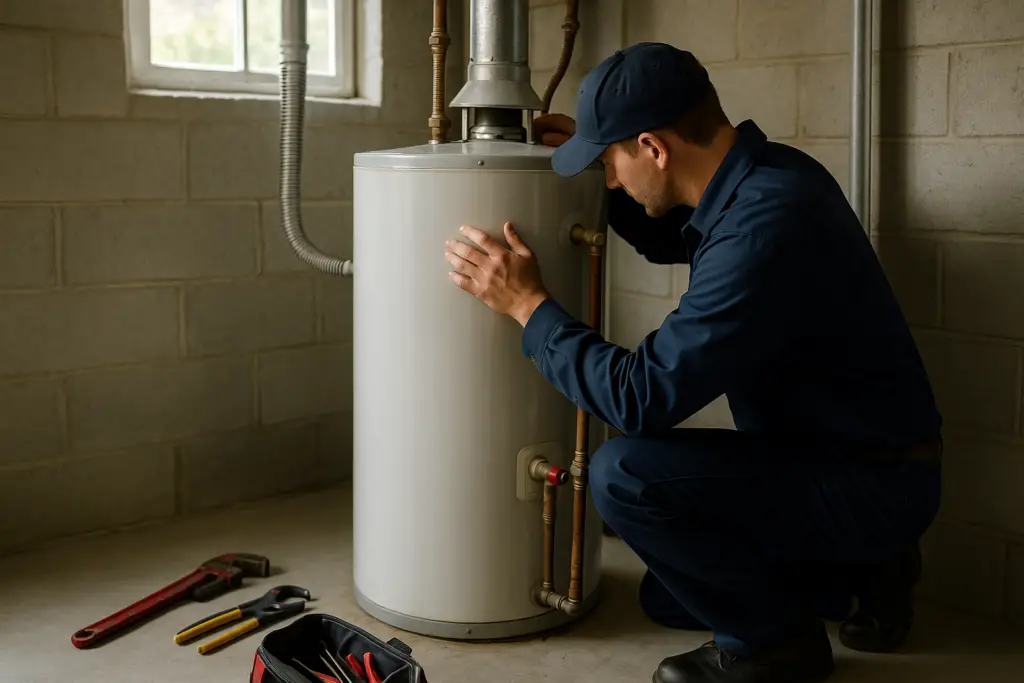
What Should I Do If My Water Heater Breaks in Columbus?
If your water heater breaks in Columbus, turn off the power supply (electric breaker or gas shutoff valve), stop using hot water fixtures, and call a professional plumber immediately. A broken water heater can lead to flooding, water damage, and even safety hazards if left unaddressed. Contact Transit & Flow at 614-333-8092 for same-day emergency water heater service in the Columbus, Ohio area.
Introduction: Why Columbus Homeowners Face Water Heater Problems in Summer
Most Columbus homeowners assume summer is a break from plumbing problems, but water heater failures are surprisingly common during the warmer months. Increased household water usage from guests, vacations that leave units sitting idle, and the cumulative toll of hard water sediment buildup throughout Central Ohio all contribute to mid-summer breakdowns. When you suddenly have no hot water for showers, dishwashing, or laundry, it disrupts your entire household routine.
Whether you are dealing with a leaking water heater, inconsistent water temperatures, or a unit that has stopped working entirely, fast professional attention prevents small issues from becoming expensive emergencies. Transit & Flow provides water heater repair in Columbus OH with trained technicians who respond quickly to restore your hot water. If your water heater is giving you trouble right now, call 614-333-8092 to speak with our team and get a technician dispatched to your home.
Key Takeaways
- A broken water heater in Columbus requires immediate action: shut off power, stop water flow if leaking, and call a professional.
- Warning signs like discolored water, strange noises, and inconsistent temperatures signal the need for water heater repair.
- Columbus hard water accelerates sediment buildup, which is a leading cause of premature water heater failure.
- Repair costs depend on the type of unit, the nature of the failure, and the age of the system.
- Transit & Flow offers emergency water heater service across the Columbus OH metro area.
Water Heater Repair: The Complete Service Overview
Water heater repair encompasses the diagnosis and correction of any malfunction that prevents your unit from producing, storing, or delivering hot water safely and efficiently. In Columbus OH, the most common water heater types in residential homes are traditional tank-style units (gas or electric) and tankless (on-demand) models. Each type has its own set of common failure points, but all require professional attention when something goes wrong.
Tank-Style Water Heater Repairs
Traditional tank water heaters store between 40 and 80 gallons of hot water and rely on either a gas burner or electric heating elements. Common repairs for these units include replacing failed heating elements, thermostat adjustments or replacements, anode rod replacement, and addressing leaks from the tank body, fittings, or pressure relief valve. A professional technician will assess whether the tank itself has corroded beyond repair or whether a component replacement can extend the unit’s lifespan.
Tankless Water Heater Repairs
Tankless units heat water on demand using high-powered burners or electric coils. While they typically last longer than tank-style heaters, they are not immune to failure. Columbus homeowners with tankless systems commonly experience issues with mineral scale buildup in the heat exchanger, ignition failures on gas-powered models, error codes related to flow sensors or venting, and electrical control board malfunctions. These repairs require specialized knowledge, and attempting them without proper training can void the manufacturer warranty or create safety hazards.
Emergency Water Heater Service
Some water heater problems cannot wait. Active leaks that are flooding your basement, the smell of gas near a gas-fired unit, or any situation involving standing water near electrical components qualifies as an emergency. Transit & Flow provides emergency water heater service in Columbus to address these urgent situations before they cause structural damage or pose a safety risk to your family.
Warning Signs and Symptoms of Water Heater Failure
Knowing the warning signs of a failing water heater can help you act before a minor issue escalates into a full breakdown or water damage event. Watch for these symptoms in your Columbus home.
- No hot water or inconsistent temperatures — The most obvious sign that something has failed. This could indicate a burned-out heating element, a faulty thermostat, or a gas supply issue.
- Discolored or rusty water — Brown or rusty hot water often means the anode rod has deteriorated and the tank interior is corroding.
- Rumbling, popping, or banging noises — Sediment has hardened at the bottom of the tank and is interfering with the heating process.
- Water pooling around the base of the unit — This could be a leaking water heater caused by a failed valve, loose fitting, or cracked tank.
- Reduced water pressure from hot water taps only — Mineral deposits may be restricting flow within the unit or connected pipes.
- Higher-than-normal utility bills — An inefficient water heater works harder and uses more energy to produce the same amount of hot water.
- Age of the unit exceeding 10 to 12 years — Tank-style water heaters in Central Ohio typically last 8 to 12 years due to hard water conditions. A unit approaching or exceeding this range is at elevated risk for failure.
Root Causes of Water Heater Problems in Columbus
Understanding why water heaters fail helps homeowners make informed decisions about repair versus replacement and about preventive maintenance.
Sediment Buildup
Columbus and surrounding Franklin County communities receive water with moderate to high mineral content. Over time, calcium and magnesium deposits settle at the bottom of tank-style water heaters, insulating the water from the heating element or burner and forcing the unit to work harder. This is the single most common cause of premature water heater failure in Central Ohio.
Corrosion and Anode Rod Depletion
Every tank water heater contains a sacrificial anode rod designed to attract corrosive elements in the water and protect the tank lining. When this rod is fully consumed, the tank itself begins to corrode from the inside out. In areas with harder water, anode rods deplete faster, and many Columbus homeowners are unaware that this component needs periodic inspection and replacement.
Thermostat and Heating Element Failure
Electric water heaters use one or two heating elements controlled by thermostats. These components can fail due to electrical surges, mineral buildup on the element surface, or simple age-related wear. A failed lower element is the most common single-component failure that results in no hot water.
Pressure Relief Valve Issues
The temperature and pressure relief valve, commonly called the T&P valve, is a critical safety device. If it begins leaking or fails to operate properly, it can indicate excessive pressure inside the tank, which is a serious safety concern that requires immediate professional attention.
Gas Supply and Ignition Problems
Gas-fired water heaters can experience thermocouple failures, pilot light issues, or gas valve malfunctions. These are never safe for homeowners to diagnose or repair on their own. If you smell gas near your water heater, leave your home immediately and call your gas utility, then contact a professional plumber.
What a Professional Technician Does During Water Heater Repair
When a Transit & Flow technician arrives at your Columbus home for a water heater service call, the process follows a thorough and systematic approach designed to identify the root cause and present clear options.
- Safety assessment — The technician checks for gas leaks, electrical hazards, water damage, and proper venting before touching the unit.
- Visual and physical inspection — Examining the tank exterior, connections, valves, flue, and surrounding area for visible damage or corrosion.
- Diagnostic testing — Using multimeters to test heating elements and thermostats on electric units, checking gas pressure and ignition components on gas units, and measuring water temperature at multiple points.
- Root cause identification — The technician explains what has failed, why it failed, and whether the issue is isolated or part of a larger pattern of wear.
- Repair or replacement recommendation — Based on the unit’s age, condition, repair history, and the nature of the current failure, the technician presents options with transparent cost information.
- Repair execution and testing — If repair is the recommended path, the technician completes the work, tests the system, and verifies safe operation before leaving.
Cost Variables for Water Heater Repair in Columbus OH
The cost of water heater repair in Columbus varies based on several factors. Transit & Flow does not quote fixed prices without a diagnosis because every situation is different, but understanding the variables helps you prepare.
- Type of water heater — Tankless units generally cost more to repair than traditional tank models due to specialized parts and technical complexity.
- Nature of the failure — A simple thermostat replacement costs significantly less than replacing a heat exchanger or a corroded tank.
- Age and condition of the unit — Older units may require parts that are harder to source, or the repair may not be cost-effective relative to the remaining lifespan.
- Emergency versus scheduled service — After-hours or emergency calls may carry different rates than appointments scheduled during regular business hours.
- Parts availability — Standard components are usually stocked on service vehicles, but specialty parts for certain brands or tankless models may need to be ordered.
For a clear understanding of what your specific repair will involve, call Transit & Flow at 614-333-8092 or request an estimate online. Our team provides upfront information before any work begins.
When to Call a Professional for Water Heater Problems
Not every water heater issue is an emergency, but every water heater issue does require a professional. Here is how to determine urgency.
Call Immediately If:
- You smell gas anywhere near your water heater
- Water is actively flooding from the unit or its connections
- You see scorch marks, melted components, or signs of overheating
- The T&P valve is continuously discharging water or steam
- Standing water is near electrical connections or the breaker panel
Schedule Promptly If:
- You have no hot water but no visible leaks or gas smells
- Water temperature is inconsistent or lukewarm
- You hear unusual noises from the tank
- You notice rusty or discolored hot water
- Your unit is over 10 years old and showing any symptoms
In either case, Transit & Flow is ready to help Columbus homeowners. Call 614-333-8092 to describe your situation, and our team will guide you on the appropriate response.
Safe Homeowner Checks Before Calling
There are a few safe, non-invasive things you can check before calling a professional. These checks help the technician prepare for your service call and may save time on diagnosis.
- Check your circuit breaker — If you have an electric water heater and suddenly have no hot water, verify that the breaker has not tripped. If it has, reset it once. If it trips again, stop and call a professional, as this may indicate an electrical fault.
- Verify the thermostat setting — Make sure no one has accidentally adjusted the temperature dial on the unit. The recommended setting is typically 120 degrees Fahrenheit.
- Look for visible leaks — Check the floor around the base of the water heater and the pipe connections above it. Note where you see water so you can describe it to the technician.
- Check other fixtures — Run hot water at multiple faucets to determine if the problem is isolated to one fixture or affects the whole house.
Important: Do not attempt to remove panels, access internal components, work on gas connections, or drain the tank unless you are confident in doing so safely. When in doubt, stop and call a professional.
Repair vs. Replace: Making the Right Decision
One of the most important decisions a Columbus homeowner faces during a water heater failure is whether to repair the existing unit or invest in a replacement. Here is a framework to guide that conversation with your technician.
Repair May Be the Right Choice When:
- The unit is less than 8 years old
- The failure involves a single, replaceable component like a thermostat or heating element
- The tank shows no signs of internal corrosion or structural compromise
- The repair cost is significantly less than the cost of a new unit
Replacement May Be the Right Choice When:
- The unit is 10 to 15 years old or older
- The tank itself is leaking, which cannot be repaired
- You have had multiple repairs within the past two to three years
- The unit is significantly undersized for your current household needs
- You want to upgrade to a more energy-efficient model to reduce utility costs
Transit & Flow technicians present both options with full transparency so you can make the decision that fits your home and budget. There is never pressure to replace a unit that can be safely and cost-effectively repaired.
Local Columbus Context: What Makes Water Heater Service Different Here
Columbus, Ohio presents specific conditions that affect water heater performance and longevity in ways that homeowners in other regions may not experience.
Hard Water Throughout Franklin County
The City of Columbus water supply, sourced from the Scioto River, Hoover Reservoir, and other local sources, contains elevated mineral content. This hard water accelerates sediment buildup inside tank water heaters and mineral scaling inside tankless heat exchangers. Annual flushing is more critical here than in regions with softer water.
Summer Strain
While winter is the traditional peak for water heater failures due to cold inlet water temperatures, summer brings its own challenges. Higher household occupancy during school breaks, increased shower frequency in hot weather, and the cumulative effect of year-round sediment accumulation all push aging units past their limits during July and August.
Basement Installations
The majority of Columbus homes feature basement-installed water heaters. While this is a practical location, it also means that a leaking water heater can go undetected for hours or days if the homeowner does not regularly check the basement. The resulting water damage can affect flooring, drywall, stored belongings, and even the home’s foundation over time.
Local Building Standards
Water heater installation and replacement in Columbus must comply with local building codes enforced by the City of Columbus Department of Building and Zoning Services. Professional installation ensures compliance with venting requirements, seismic strapping where applicable, and proper clearance from combustible materials.
Frequently Asked Questions About Water Heater Repair in Columbus OH
What should I do first if my water heater stops working?
First, check your circuit breaker for an electric unit or verify the pilot light status on a gas unit, but do not attempt to access internal components. If the problem is not immediately obvious, or if you notice leaking, odors, or unusual sounds, call Transit & Flow at 614-333-8092 for professional diagnosis.
What should I avoid doing when my water heater fails?
Avoid attempting to repair gas components, disassemble the unit, or ignore an active leak. Do not continue using a water heater that is making loud banging noises, producing discolored water, or leaking from the tank body. These are signs of potentially serious issues that require a trained technician.
What factors affect the cost of water heater repair?
Cost depends on the type of unit, whether it is tank or tankless, the specific component that has failed, the age and overall condition of the system, parts availability, and whether the service is scheduled or an emergency call. Transit & Flow provides clear cost information before beginning any repair work.
When is a water heater problem an emergency?
Any situation involving a gas smell, active flooding, steam discharge from the pressure relief valve, or electrical hazards near standing water is an emergency. Turn off the power and water supply if you can do so safely, leave the area if you smell gas, and call for immediate professional help.
When should I call a professional instead of trying to fix it myself?
You should call a professional for any water heater issue beyond basic checks like verifying the breaker or thermostat setting. Water heaters involve high temperatures, pressurized tanks, gas lines, and high-voltage electrical components, all of which pose serious safety risks without proper training and tools.
How can Transit & Flow help with my water heater problem?
Transit & Flow provides comprehensive water heater repair, diagnosis, and replacement services throughout Columbus OH. Our trained technicians arrive equipped to handle both tank and tankless systems, provide upfront cost information, and complete most repairs the same day. Call 614-333-8092 or visit our website to book service.
Maintenance Tips to Extend Your Water Heater’s Life
- Annual tank flush — Have a professional flush sediment from the tank once a year, especially important in Columbus due to hard water conditions.
- Anode rod inspection every two to three years — This inexpensive component protects the tank from internal corrosion and should be replaced when significantly depleted.
- T&P valve testing — Your technician should test the temperature and pressure relief valve during annual maintenance to ensure it operates correctly.
- Thermostat check — Keep the thermostat set to 120 degrees Fahrenheit to balance energy efficiency, performance, and safety.
- Visual inspections — Periodically check the area around your water heater for signs of moisture, corrosion on fittings, or changes in performance.
- Tankless descaling — Tankless water heaters in Columbus should be professionally descaled annually to remove mineral buildup from the heat exchanger.
Glossary of Key Terms
Water Heater
A plumbing appliance that heats and stores or delivers hot water for residential use. Common types include tank-style units that maintain a reservoir of hot water and tankless units that heat water on demand as it flows through the system.
Shutoff Valve
A valve installed on the cold water supply line feeding the water heater that allows the water flow to be stopped for maintenance, repair, or emergency situations. Knowing the location of your shutoff valve is critical during a water heater leak.
Anode Rod
A sacrificial metal rod, typically magnesium or aluminum, installed inside a tank water heater to attract corrosive elements in the water and protect the tank lining from rust and deterioration. This rod requires periodic inspection and replacement.
T&P Valve (Temperature and Pressure Relief Valve)
A safety device installed on water heaters that automatically releases water if the internal temperature or pressure exceeds safe limits. A malfunctioning T&P valve is a serious safety concern that requires immediate professional attention.
Get Your Hot Water Back: Call Transit & Flow Today
A broken water heater does not have to mean days without hot water or thousands of dollars in water damage. Columbus homeowners trust Transit & Flow for fast, professional water heater repair that gets the job done right the first time. Our trained technicians serve homes across Columbus, Dublin, Westerville, Hilliard, Grove City, Reynoldsburg, and the surrounding Franklin County area.
Do not wait for a small leak to become a flooded basement. Do not ignore the warning signs of a failing unit. Take action today and protect your home, your family, and your comfort.
Call Transit & Flow at 614-333-8092 to schedule your water heater repair or request an emergency service call.
Prefer to book online? Visit https://transitflowplumbing.com/estimate/ to request your estimate now.
