
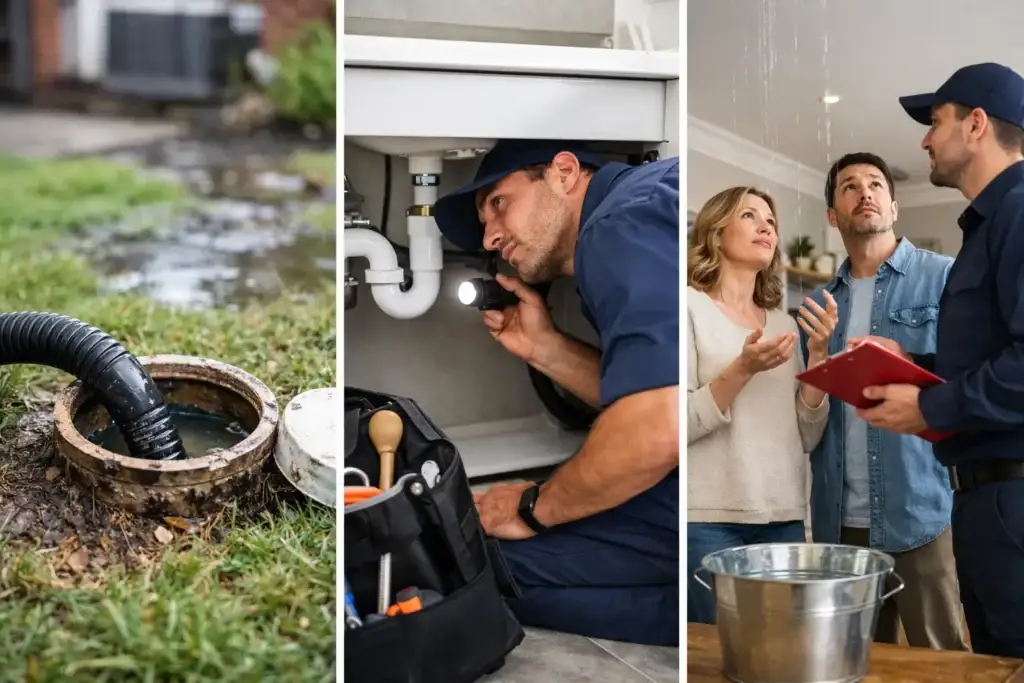
A single slow sink is often a drain issue. But when a toilet gurgles as the washing machine drains or water rises in a shower after flushing, the problem may be farther down the line. The best warning signs of sewer trouble usually involve more than one fixture, unpleasant odors, or water going where it should not.
Sewer problems can progress quickly, especially when a main line is partially blocked or damaged. Knowing what to watch for helps you schedule service before a backup affects flooring, walls, or personal belongings.
10 Best Warning Signs of Sewer Trouble
1. Multiple drains are slow at the same time
A slow bathroom sink can be caused by hair, soap buildup, or debris close to that fixture. When sinks, tubs, showers, and toilets throughout the house are draining slowly, the main sewer line deserves attention.
The key difference is the pattern. If several fixtures on different levels of the home are affected, a simple sink clog is less likely. A professional sewer inspection can identify whether buildup, a blockage, root intrusion, or a damaged line is restricting flow.
2. Your toilet gurgles or bubbles
A toilet should flush quietly and refill normally. Gurgling, bubbling water, or unusual movement in the bowl can mean air is being forced back through the plumbing system because wastewater cannot move freely through the sewer line.
This sign is especially concerning when it happens while another fixture is running. For example, flushing a toilet may cause a nearby tub drain to bubble, or a washing machine cycle may make the toilet gurgle. That connection points to a drainage issue beyond one fixture.
3. Water backs up into a tub or shower
Water appearing in a shower or bathtub after you flush the toilet is one of the clearest signs of a main sewer line problem. Wastewater follows the path of least resistance. In many homes, a lower-level tub or shower is where that water first shows up when the main line is blocked.
Stop using water fixtures if a backup begins. Running the dishwasher, doing laundry, or taking another shower can add more water to the system and make the situation worse. This is a situation where prompt professional service is the safer choice.
4. You smell sewage indoors or near the yard
Sewer gas has a strong, unpleasant odor that should not be present in a healthy plumbing system. A brief odor from a rarely used drain may be caused by a dry trap, but recurring smells around drains, in a basement, or near the sewer line outside need investigation.
Outdoor odors can also signal a break, blockage, or overflow underground. Do not assume the smell will pass on its own. A sewer issue that is releasing odors may also be allowing wastewater to escape where it should not.
5. Your yard has unusually wet or soft areas
A patch of soggy grass when there has been little rain can be a warning sign, particularly if it is near the route of the sewer line. Wastewater leaking below ground can saturate the soil and create a damp, sunken, or unusually green area of lawn.
Not every wet spot is a sewer failure. It could be a drainage issue, sprinkler leak, or groundwater condition. Still, a persistent patch paired with slow drains or sewer odors warrants a professional diagnosis instead of guesswork.
6. There are sewage backups in a floor drain
Floor drains in basements, laundry areas, and utility spaces are commonly the lowest opening in a home’s drainage system. When the sewer line cannot carry wastewater away, these drains may overflow first.
A floor drain backup should be treated as urgent, even if the water seems to clear after a few minutes. The blockage may be partial, which means it can return with the next heavy water use. Keep people and pets away from the affected area and arrange service as soon as possible.
7. Drain problems keep coming back after clearing
A drain that clogs once may have a local cause. A drain that repeatedly slows down after plunging or basic cleaning may have a deeper issue. Recurring problems can indicate grease accumulation, scale, roots, a pipe offset, or damage in the sewer line.
Repeatedly treating the same symptom without finding the cause can delay the repair you actually need. A camera inspection is often useful because it shows the condition of the line and helps determine whether cleaning, repair, or replacement is the appropriate next step.
8. Tree roots are growing near the sewer line
Mature trees add value to a property, but their roots naturally seek moisture. Small openings at pipe joints or existing cracks can attract roots, which then grow into the sewer line and collect paper, waste, and other debris.
Older homes may be more vulnerable, especially if they have aging pipe materials or large trees between the home and the street connection. Root intrusion does not always cause an immediate backup. It often starts with intermittent slow drains and becomes more noticeable over time.
9. Your cleanout is overflowing
A sewer cleanout is an access point to the main sewer line, often located outside or in a utility area. If wastewater is coming out of it, the main line is likely blocked downstream from that location.
Avoid opening or handling a cleanout that is under pressure. Wastewater can discharge quickly and create a messy, unhealthy situation. A trained technician can assess the blockage, clear the line when appropriate, and recommend next steps based on what the inspection shows.
10. You notice a sudden increase in plumbing problems after heavy rain
Heavy rain does not create every sewer issue, but it can expose an existing weakness. If your home experiences backups, gurgling, or slow drains during or soon after storms, there may be a problem with the sewer lateral, outside drainage, or a compromised pipe.
This is worth documenting. Note which fixtures were affected, when the issue began, and whether it happens only during wet weather. Those details help a technician diagnose the problem more efficiently.
What to Do When You Suspect Sewer Trouble
The best response depends on the severity of the symptoms. If there is active wastewater backing up into a tub, toilet, floor drain, or basement area, stop using plumbing fixtures right away. Do not run the washer, dishwasher, sinks, or showers until the issue has been assessed.
For a persistent but non-emergency concern, such as recurring slow drains or a sewer odor, schedule an inspection before the problem worsens. A proper diagnosis matters because sewer symptoms can overlap with other plumbing problems. Clearing a local drain may help temporarily, while a main line issue requires a different solution.
When service is needed, ask for clear information about what was found, the recommended repair options, and the price before work begins. At Transit & Flow, homeowners in Columbus and surrounding communities can expect straightforward communication, flat-rate pricing for approved work, and practical recommendations based on the condition of the system.
Why Waiting Can Cost More
A partial sewer blockage can seem manageable until a busy morning, laundry day, or family gathering puts more demand on the plumbing. Then the restriction becomes a backup. Beyond the immediate cleanup, wastewater can damage finishes, create odors that linger, and interrupt normal use of bathrooms and appliances.
That does not mean every slow drain requires a major sewer repair. Some issues are simple and limited to one fixture. The goal is to recognize the signs that point beyond a single drain, then get an accurate assessment early enough to preserve your options.
If several fixtures are acting up, sewage odors are present, or wastewater is coming back into the home, trust the pattern. Acting promptly can turn an uncertain plumbing problem into a clear plan for restoring your home’s drainage safely.
