
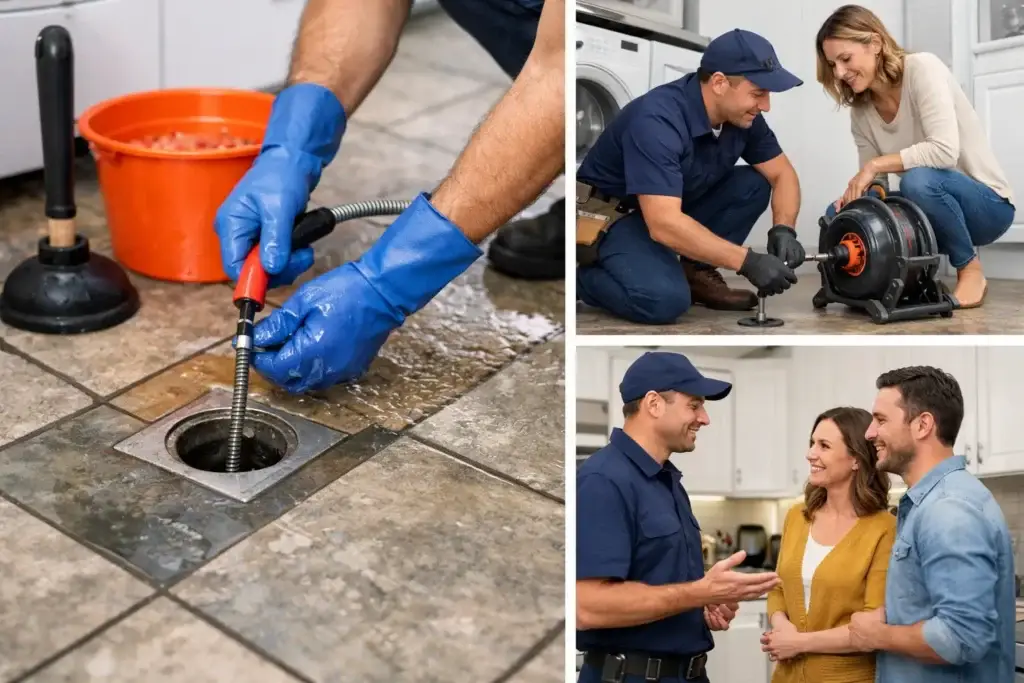
A floor drain that starts holding water can turn a small basement or laundry-room concern into a cleanup problem fast. Knowing how to clear a floor drain can help with a simple surface clog, but standing water, sewage odor, or repeated backups often point to a problem farther down the line.
Floor drains are designed to carry away water from places where spills, leaks, or appliance discharge may occur. In many Central Ohio homes, they are found in basements, utility rooms, garages, and laundry areas. Because they are used less often than sinks and showers, debris can sit unnoticed until water has nowhere to go.
Start by identifying what is in the drain
Before removing a cover or adding water, look closely at the floor drain and the surrounding area. Hair, dust, pet fur, dirt, laundry lint, leaves, and small objects can collect just below the grate. A visible buildup near the opening is usually the best-case scenario because it may be removed without going deep into the plumbing.
If the water in the drain is clear and only drains slowly, the restriction may be close to the surface. If the water is dark, has a sewage smell, or rises when you run a nearby sink, flush a toilet, or use the washing machine, stop there. That pattern can mean the blockage is in a shared drain line or sewer line rather than the floor drain itself.
Do not keep sending water into a drain that is backing up. More water can overflow onto the floor, damage finishes, and spread contaminated water through the area.
How to clear a floor drain with a simple clog
Start with basic protection. Wear gloves, keep children and pets away from the work area, and have towels or a shallow container ready. If there has been a sewage backup, avoid direct contact with the water and arrange professional help rather than trying to clean the line yourself.
Remove the drain grate if it can be lifted or unscrewed easily. Set the fasteners aside where they will not fall into the opening. Use a flashlight to check for debris at the top of the drain. Pull out hair, lint, dirt, or other material you can reach safely. A small hand brush or a bent plastic drain-cleaning tool can help with material caught just under the grate.
Next, use a wet-dry vacuum if you have one. With the vacuum set up for wet pickup, create a seal over the drain opening as well as possible and run it briefly. This can remove loose debris and standing water near the trap. Empty the vacuum carefully afterward.
If the drain still holds water, a hand-crank drain snake may reach a clog farther down. Feed the cable in slowly, turning the handle with light, steady pressure. Do not force it. If the cable catches hard, pulls back with heavy resistance, or will not advance, stop rather than pushing aggressively. Excessive force can damage parts of the drain or leave the cable stuck.
Once you have removed debris or pulled the snake back, flush the drain with a small amount of warm water. Watch how it responds. If it drains normally, add a few more cups of water to confirm it remains clear. Reinstall the grate when you are finished.
Avoid chemical drain cleaners. They can be harsh on plumbing components, create fumes in enclosed spaces, and make a future repair more hazardous for anyone working on the line. Never combine chemical products or add another cleaner after one has already been used.
Check the trap after clearing the drain
Most floor drains have a trap that holds a small amount of water. That water acts as a barrier against sewer gases. In an infrequently used basement drain, the trap can dry out and allow an unpleasant odor into the room even when there is no clog.
If the drain is open and flowing but smells musty or sewer-like, slowly pour about a gallon of water into it. Check again later to see whether the odor improves. A trap that repeatedly dries out or fails to hold water may need inspection because the issue could involve the trap, a drain primer, or the drain configuration.
Signs the floor drain has a deeper blockage
A surface cleaning will not solve every floor drain issue. The location of the backup matters, especially in a home with a basement laundry area, water heater, or sump equipment nearby.
Call for professional drain service when you notice any of the following:
- Water rises from the floor drain when a toilet, shower, sink, or washing machine drains.
- The drain backs up repeatedly after you remove visible debris.
- The water has sewage, toilet paper, or waste in it.
- Several drains in the home are slow or clogged at the same time.
- The drain is overflowing, or water is spreading across the basement floor.
- You hear gurgling from nearby fixtures when water is running.
These symptoms can indicate a blockage in a branch line, the main sewer line, or an outside sewer connection. Tree roots, grease buildup, damaged piping, settled soil, and accumulated debris can all affect older drain systems. The correct repair depends on where the obstruction is and what is causing it, which is why a proper evaluation is more useful than repeatedly trying temporary fixes.
What to do during a floor drain backup
When a floor drain is actively backing up, the priority is limiting additional water. Stop using fixtures that may drain into the affected line. That can include toilets, showers, sinks, dishwashers, and washing machines, depending on the layout of the home. If a washing machine is running and the drain begins to rise, pause the cycle if it is safe to do so.
Keep personal belongings, storage boxes, and electrical items away from the water. Avoid using a mop or household vacuum on water that may contain sewage. If you need to enter the area, wear appropriate footwear and avoid touching your face until you have washed thoroughly.
For homeowners in Columbus and surrounding communities, a drain technician can inspect the line, identify whether the problem is local to the floor drain or farther into the sewer system, and recommend the appropriate next step. Transit & Flow provides clear communication and up-front approval before work begins, so you can understand the condition of the line and the recommended repair before making a decision.
Prevent floor drain clogs before they start
Floor drains need occasional attention, even when they seem to be working. Sweep dust, leaves, and lint away from the grate instead of letting it collect around the opening. In a laundry room, keep an eye on lint and make sure appliance discharge is draining as it should. In a garage, avoid washing heavy dirt, oil residue, or debris toward the drain.
Pour water into rarely used floor drains every few months to keep the trap from drying out. This is particularly helpful in unfinished basements, seasonal spaces, and utility rooms where the drain may go untouched for long periods. If your home has a recurring odor or backup issue, maintenance alone may not be enough. An inspection can clarify whether the drain needs cleaning, repair, or further sewer evaluation.
A floor drain should quietly do its job in the background. When it does not, act early: remove obvious debris, avoid harsh chemicals and excess water, and get help promptly if the signs point beyond a simple clog.
