
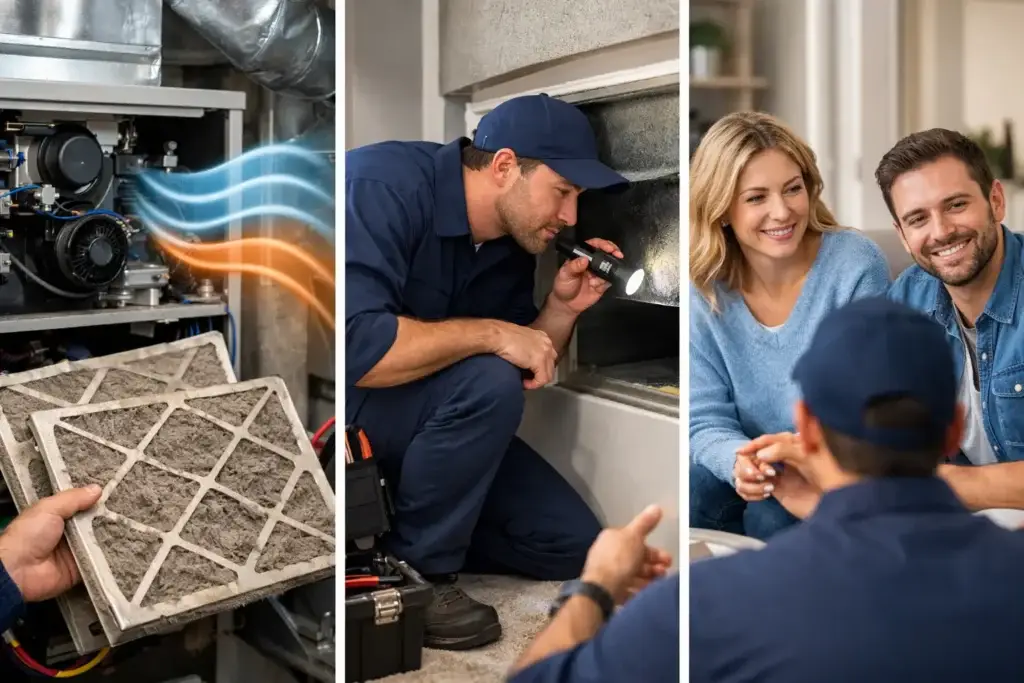
A furnace can be running, making its usual sounds, and still fail to make your home comfortable. One bedroom stays chilly, the living room feels stuffy, or air barely reaches the vents. Furnace airflow problems are often the reason. They can reduce comfort, raise heating costs, and put extra strain on equipment during a Central Ohio cold snap.
The good news is that airflow concerns are often identifiable before a complete heating breakdown occurs. The key is knowing which changes are minor maintenance issues and which ones call for a professional diagnosis.
Common Signs of Furnace Airflow Problems
Poor airflow does not always look the same from home to home. In some houses, every vent produces weak air. In others, the issue is limited to one floor, a single room, or the spaces furthest from the furnace.
A noticeable difference in room temperatures is one of the most common warning signs. If you keep adjusting the thermostat but certain rooms remain cold, heated air may not be moving through the duct system as it should. This is especially common in upstairs bedrooms, finished basements, additions, and rooms with long duct runs.
You may also notice that the furnace runs longer than usual without bringing the home to the set temperature. Longer cycles can happen for several reasons, including cold outdoor conditions, but restricted airflow is worth checking when it becomes a pattern. A system that cannot circulate air efficiently has to work harder to deliver heat.
Other warning signs include unusually loud return-air noise, whistling at vents, hot and cold spots, dusty rooms, and vents that have little or no air coming from them. Frequent furnace shutdowns can also point to a problem. When airflow is severely restricted, the furnace may overheat and turn off as a safety measure.
What Causes Restricted Furnace Airflow?
Airflow is a whole-system issue. The furnace blower, air filter, return vents, supply ducts, registers, thermostat settings, and even the condition of your home all affect how well warm air reaches each room. That is why a quick guess can lead to the wrong repair.
A dirty or incorrectly sized air filter
A clogged filter is one of the most common causes of restricted airflow. It captures dust and airborne debris, but eventually the buildup limits the amount of air that can pass through the system. A filter that is too dense for the equipment, installed backward, or the wrong size can create similar trouble.
Homeowners can visually check the filter and replace it according to the manufacturer’s guidance. If the filter is heavily loaded or airflow improves after replacement, it may have been part of the problem. If weak airflow continues, the cause may be elsewhere.
Closed or blocked vents and return grilles
Supply registers deliver warm air, while return grilles pull household air back to the furnace to be heated again. Both need clear paths. Rugs, furniture, drapes, storage bins, and pet beds can block airflow more than many homeowners realize.
Closing multiple supply vents to force heat into another room is usually not a good long-term solution. It can disrupt the balance of the system and raise pressure inside the ductwork. Leave vents open unless a heating professional recommends an adjustment for your specific system.
Blower, duct, or equipment issues
The furnace blower is responsible for moving air through the system. A worn component, a dirty blower wheel, or an incorrect blower setting can reduce airflow. These issues require a trained technician because they involve internal equipment and proper system operation.
Ductwork can also be responsible. Disconnected sections, crushed flexible ducts, gaps, leaks, or poor duct design may prevent heated air from reaching the rooms that need it. Older homes can be particularly challenging because additions and renovations sometimes change the home without updating the original heating distribution.
Return-air limitations
A furnace needs enough return air to operate properly. If there are too few return grilles, doors stay closed around rooms without adequate return pathways, or a return duct is obstructed, the system may struggle to circulate air evenly.
This issue can feel confusing because the furnace may still produce heat. The problem is not always heat production. It is the furnace’s ability to pull air back, heat it, and send it through the home in a balanced cycle.
Thermostat and zoning concerns
Sometimes the airflow itself is acceptable, but the system is not being directed properly. An inaccurate thermostat, poorly located thermostat, damper problem, or zoning issue can cause uneven temperatures that resemble restricted airflow.
For example, a thermostat located near a sunny window, exterior door, or frequently used kitchen may read a temperature that does not reflect the rest of the home. A technician can determine whether the concern is airflow, controls, furnace performance, or a combination of factors.
Safe Checks Before You Schedule Service
There are a few simple observations that can help you describe the issue clearly when you call for help. Check that the thermostat is set to heat and set above the current room temperature. Confirm that accessible supply registers and return grilles are open and not blocked by furniture or household items.
Then inspect the air filter if you can do so safely and easily. If it is visibly dirty, replace it with the correct type and size for your system. Do not remove the filter and run the furnace without one. The filter protects the equipment from dust and debris.
Pay attention to where the issue occurs. Is airflow weak throughout the home, only on the second floor, or only in one room? Does it happen all day or only after the furnace has been running for a while? Those details help narrow the diagnosis and avoid unnecessary work.
Avoid opening furnace panels, adjusting internal components, or attempting duct repairs yourself. A furnace includes electrical connections, moving parts, gas components in many homes, and safety controls that need to be handled correctly.
When Weak Airflow Needs Prompt Attention
Schedule professional service when filter replacement and clear vents do not improve the problem, or when the furnace repeatedly turns on and off without heating the home. A burning smell that does not quickly fade, banging or grinding noises, a furnace that will not stay on, or a carbon monoxide alarm should be treated more urgently.
If a carbon monoxide alarm sounds, move everyone outside to fresh air and follow the alarm manufacturer’s emergency instructions. Do not re-enter the home until it is safe to do so. Do not attempt to restart the furnace.
For less urgent but persistent concerns, a heating technician can inspect filter fit, blower performance, temperature rise, return air, duct condition, and controls. The right repair depends on the actual cause. It could be a straightforward adjustment or maintenance need, while other homes may benefit from duct repairs, system balancing, or a conversation about equipment capacity.
How Professional Diagnosis Protects Comfort and Costs
Replacing parts without identifying the source of airflow loss can waste time and money. A proper assessment looks beyond the vent where the problem is most noticeable. For instance, weak air in a back bedroom could stem from a restricted branch duct, inadequate return air, a blower concern, or heat loss from that part of the home.
This is also where clear communication matters. Before work begins, you should understand what was found, what options are recommended, and what the approved work will cost. At Transit & Flow, homeowners in Columbus and nearby communities can expect practical explanations and flat-rate pricing before approved repairs move forward.
Routine furnace maintenance can help catch airflow concerns early, especially before the heating season is in full swing. A maintenance visit is not a guarantee against every repair, but it gives a technician the opportunity to check system operation, identify developing restrictions, and help you plan rather than react to a no-heat call.
A comfortable home should not depend on turning the thermostat higher and hoping for the best. When airflow changes, a quick check of filters and vents is reasonable. When the problem persists, timely professional service can help restore even heat and prevent a small circulation issue from becoming a larger furnace repair.
