
A sewer line problem rarely starts with a dramatic backup. More often, it begins with small changes that are easy to dismiss: a toilet that bubbles, a drain that slows down again after clearing, or an unexplained sewer odor near the yard. The best signs of failing sewer lines usually involve more than one drain or fixture, which is what separates a possible main sewer issue from an ordinary sink or shower clog.
For Columbus homeowners, paying attention early can prevent a stressful mess inside the home and give you more time to make an informed repair decision. Here is what to watch for, what each symptom may mean, and when it is time to call for sewer service.
Best Signs of Failing Sewer Lines
Several drains are slow at the same time
One slow bathroom sink may be caused by hair, soap residue, or buildup inside that fixture’s drain. But when the shower, toilet, tub, and sink are all draining slowly, the blockage may be farther down the plumbing system.
Your home’s main sewer line carries wastewater from every indoor fixture to the municipal sewer connection or septic system. When it becomes restricted by roots, grease buildup, a damaged pipe, or a sagging section of line, water has fewer places to go. You may notice the problem most clearly in lower-level fixtures because they sit closest to the sewer line.
Repeated drain clearing without lasting improvement is also a warning sign. Clearing a local clog can help when the issue is close to one fixture. It will not correct a cracked pipe, root intrusion, or heavy obstruction farther out in the sewer line.
Toilets, tubs, or drains make gurgling sounds
Gurgling is more than an annoying sound. It can mean air is being trapped and pushed back through the plumbing because wastewater is struggling to move through the line.
You might hear a toilet bubble when the washing machine drains, or see water in the tub move when someone flushes a toilet. Those cross-fixture reactions are worth taking seriously. They often point to a restriction in the shared drain or main sewer line rather than a minor clog in one bathroom.
A single gurgle does not always mean the sewer line is failing. However, frequent noises, new bubbling, or gurgling paired with slow drains should be professionally evaluated before a backup occurs.
Water backs up into the lowest fixture
A backup in a basement shower, floor drain, tub, or first-floor toilet is one of the clearest signs of a main sewer problem. When wastewater cannot move through the sewer line, it may come back through the lowest opening in the house.
Treat this as urgent, especially if the water is discolored or has a sewage odor. Avoid running water, flushing toilets, taking showers, or using the dishwasher until the cause has been checked. Adding more water to the system can make the backup worse.
A professional diagnostic can identify whether the issue is a blockage, tree root intrusion, a broken section of pipe, or a problem outside the home. The right repair depends on what is actually found, not just the visible backup.
Sewer odors appear indoors or outdoors
A sewage smell inside the home is never something to ignore. Sometimes the cause is simple, such as a dry floor drain trap in an unused area. In other cases, the odor may indicate that sewer gases are escaping through a damaged pipe, loose connection, or failing sewer line.
Outside, a persistent sewer smell near the foundation, driveway, or yard can point to a leak underground. The odor may become stronger after heavy rain or when several appliances are draining at once.
If you cannot identify a simple source quickly, schedule an inspection. Sewer odors are unpleasant, but they can also signal a problem that will become more difficult and expensive if wastewater begins leaking into the soil or backing up into the home.
Wet patches or unusually green areas show up in the yard
A soggy spot in the yard without a clear reason deserves attention, particularly if the weather has been dry. An underground sewer line leak can allow wastewater to seep into the surrounding soil, creating wet ground, soft spots, or a patch of grass that grows faster and looks greener than nearby areas.
This symptom is not always caused by a sewer line. It could be an irrigation issue, poor drainage, or a water line leak. The location and timing matter. A wet area near the sewer route, combined with odors or indoor drain trouble, makes a sewer inspection the practical next step.
You see cracks, settling, or sinkholes near the sewer route
A damaged sewer pipe can wash soil away over time. That soil movement may lead to small dips in the lawn, new cracks in a walkway, or noticeable settling near the foundation or driveway.
These changes do not confirm a sewer failure on their own, but they should not be ignored when paired with other symptoms. Older homes can be especially vulnerable because the original sewer materials may have aged, shifted, or become invaded by tree roots over decades of use.
Why Sewer Problems Can Seem to Come and Go
Many homeowners wait because the drains improve for a few days. That is understandable, but intermittent symptoms are common with a developing sewer problem. A partial blockage may allow a small amount of water through, then slow down again after laundry, showers, or a busy morning at home.
Tree roots are a common example. Roots can enter through tiny openings in a pipe and gradually catch toilet paper and debris. At first, the drains may only slow occasionally. As the obstruction grows, backups become more frequent and more severe.
Pipe age and ground movement can create similar patterns. In Central Ohio, seasonal changes, soil movement, and older underground plumbing can all contribute to sewer line issues. A camera inspection helps show the actual condition inside the line so recommendations are based on evidence rather than guesswork.
When It May Be a Local Drain Clog Instead
Not every drain issue means your sewer line is failing. If only one sink, shower, or toilet is affected and every other fixture works normally, the problem may be limited to that individual drain.
For example, a bathroom sink that drains slowly while the tub and toilet are normal may have buildup close to the sink. A toilet that clogs repeatedly may have an obstruction in the toilet trap or branch line. Even then, recurring clogs are worth addressing rather than continually working around them.
The key distinction is scope. One fixture often suggests a local issue. Multiple fixtures, lower-level backups, gurgling, odors, or yard changes point more strongly to the main sewer line.
What to Do When You Suspect a Sewer Problem
If you notice several of these warning signs, reduce water use until the system can be checked. Do not try to force the issue by repeatedly flushing, running large amounts of water, or relying on chemical drain cleaners. Those steps can worsen a backup or fail to reach the source of a main-line problem.
Write down what you have seen, including which fixtures are affected and when the symptoms occur. This gives the technician useful context and can help the diagnostic process move faster. If there is active wastewater backing up inside, keep people and pets away from the area and request urgent service.
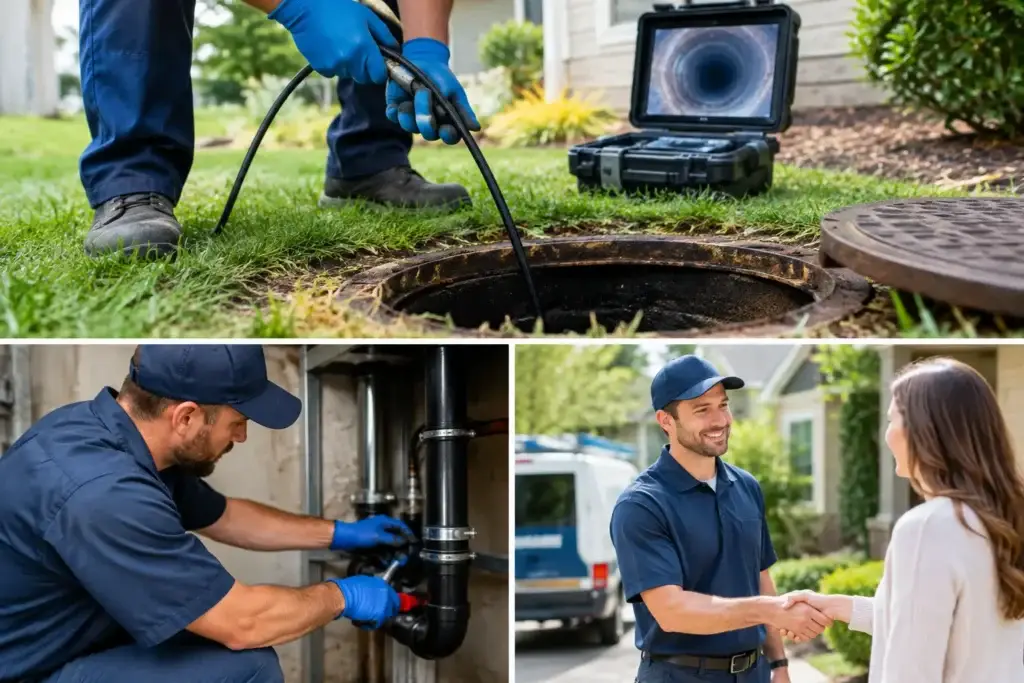
A proper sewer evaluation may include clearing the line and using a camera to inspect its condition. From there, the recommendation could range from drain cleaning to a targeted repair or replacement plan. The right option depends on pipe material, access, the location of the damage, and whether the line has a history of repeat problems.
You should also expect a clear explanation before work begins. A sewer repair is not a one-size-fits-all service, and pricing should be based on the findings, site conditions, and approved scope of work.
Get Clear Answers Before a Backup Gets Worse
Sewer problems are easier to manage when they are addressed at the first reliable warning sign rather than after wastewater enters the home. If multiple drains are slow, fixtures are gurgling, or a lower-level drain is backing up, arrange a professional evaluation promptly.
For homeowners in Columbus and nearby communities, Transit & Flow can help identify the cause, explain the available options in plain language, and provide up-front pricing before approved work begins. A timely inspection can replace uncertainty with a practical plan and help protect your home from a much larger sewer emergency.
