
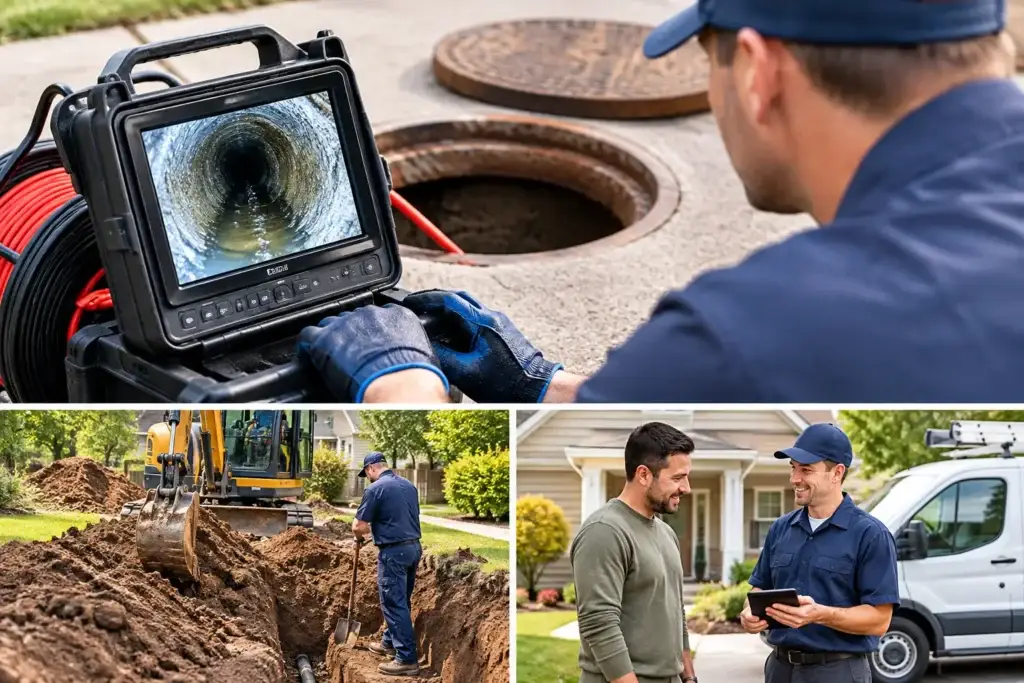
A sewer backup can make it feel like the only answer is digging up the yard. In many cases, though, the sewer camera vs excavation decision starts with finding out exactly what is happening inside the line. A video inspection gives homeowners a clear view of the problem before anyone recommends major work – and that can prevent unnecessary disruption to your property.
For Columbus-area homeowners, this matters because sewer issues can develop gradually and then become urgent after heavy rain, a stubborn drain clog, or repeated backups in a lower-level bathroom. The right repair depends on the line’s condition, location, and the cause of the blockage. A camera inspection is often the first practical step. Excavation becomes the right option when the evidence shows the pipe cannot be reliably restored from inside the line.
Sewer Camera vs Excavation: The Key Difference
A sewer camera inspection is a diagnostic service. A technician feeds a specialized camera through an accessible drain or sewer cleanout to see the inside of the pipe. The live video can reveal clogs, root intrusion, cracks, separated joints, bellies in the line, and collapsed sections. It can also help identify where the issue is located.
Excavation is a repair method. It involves carefully digging to access a damaged portion of the sewer line, then repairing or replacing that section. Depending on the problem and the pipe layout, excavation may involve part of a yard, driveway, sidewalk, basement floor, or other finished area.
One is not automatically better than the other. A camera tells you whether excavation is necessary and, if it is, helps narrow the scope of work. That information supports a more accurate plan, clearer expectations, and a recommendation you can evaluate before approving repairs.
When a Sewer Camera Inspection Makes Sense First
A camera inspection is especially useful when the symptoms point to a sewer-line issue but do not yet explain the cause. Repeated clogs affecting more than one fixture are a common example. If a toilet bubbles when a shower drains, or if water comes up through a floor drain when the washing machine empties, the restriction may be farther down the system than a single sink or toilet drain.
The inspection can distinguish between a blockage that may respond to drain cleaning and a structural defect that needs a different solution. Roots, for example, may be cleared in some situations, but the camera can show whether those roots entered through a small joint opening or through a pipe that is badly separated or crushed.
A sewer camera is also helpful before purchasing a home, after recurring sewer backups, or when a property has older piping. Many older Columbus homes have sewer lines that have been in service for decades. Age alone does not prove a line needs replacement, but it is a good reason to inspect before making a large repair decision.
Camera inspections are not just about avoiding digging. They are about avoiding guesswork. If a technician can locate a clear obstruction and determine that the pipe remains structurally sound, the solution may be far less involved than excavation.
What a Camera May Reveal
A video inspection can provide useful evidence, but its findings need to be interpreted in context. Common discoveries include root intrusion, grease or debris buildup, offset pipe joints, cracks, standing water caused by a low spot, and sections that have deteriorated or collapsed.
Not every visible imperfection requires immediate excavation. A minor offset or isolated roots may be manageable with cleaning and monitoring, depending on how often the line backs up and how much flow is restricted. A collapsed pipe, major separation, or recurring blockage at the same damaged location calls for a more permanent repair conversation.
When Excavation Is the Right Answer
Excavation is generally recommended when there is physical pipe damage that cleaning or internal repair methods cannot reliably address. A sewer line that has collapsed, shifted significantly, broken apart, or lost its proper slope may need direct access to restore dependable drainage.
It may also be necessary when a damaged section is not suitable for trenchless repair, when the line’s layout prevents another method, or when the problem is under an area where precise access is required. The details matter. Soil conditions, pipe depth, utility locations, access points, and the condition of the remaining sewer line can all affect the repair plan.
Excavation sounds disruptive because it can be. It may involve landscape restoration or repair to affected surfaces after the sewer work is complete. Still, when a sewer line is structurally failing, digging only where needed can be the most direct way to correct the issue rather than repeatedly paying for temporary relief.
A professional recommendation should explain why excavation is being considered, where the work is expected to occur, and what the repair is intended to solve. Homeowners should not be left with a vague statement that the line is “bad.” Video findings and site conditions should lead to a specific plan.
Why Starting With a Camera Can Protect Your Budget
The cost difference between an inspection and an excavation project is significant, which is why diagnosis matters. A camera inspection can help prevent a large repair from being recommended based only on symptoms. It can also keep a smaller repair from becoming an open-ended excavation because the problem location is better understood beforehand.
That said, a camera does not make every repair price final. Once a sewer line is exposed, technicians may find conditions that were not visible inside the pipe, such as surrounding soil movement or damage extending beyond the initial area. A trustworthy service process accounts for those possibilities, communicates them clearly, and gets customer approval before proceeding with changes.
The goal is not to force the least expensive option. It is to recommend the option that makes sense for the actual condition of the line. Repeatedly clearing a sewer that has a major break may cost less today, but it can lead to more backups, cleanup, and frustration later.
Questions to Ask Before Approving Sewer Work
Before agreeing to excavation or any major sewer repair, ask to understand the evidence behind the recommendation. You should know what the camera found, where the damaged area is located, whether the issue affects the full line or one section, and whether cleaning or another repair approach is realistic.
It is also reasonable to ask what portions of the property may be affected, what restoration is included, and what conditions could change the scope once work begins. Clear answers are especially important when the issue is near a driveway, mature landscaping, or a finished basement area.
At Transit & Flow, the focus is on explaining the findings in plain language and presenting a clear repair path before work begins. For urgent sewer concerns, same-day availability may be possible based on scheduling, access, and job conditions. Flat-rate pricing and customer approval help homeowners make decisions without added uncertainty.
What to Do While You Wait for Service
If sewage is backing up into a tub, floor drain, or lower-level fixture, stop using water throughout the home when possible. Running showers, flushing toilets, or using the dishwasher can add more water to a restricted sewer line and worsen the backup.
Keep children and pets away from affected areas, and avoid trying to force a blockage with harsh chemical drain products. Those products can create additional hazards and rarely solve a deeper sewer-line problem. If the backup is active or sewage is entering the home, request emergency plumbing service promptly.
A sewer problem is stressful, but the next step does not have to be a guess. A clear camera inspection can show whether the line needs cleaning, monitoring, targeted repair, or excavation – so you can move forward with the right work for your home.
