
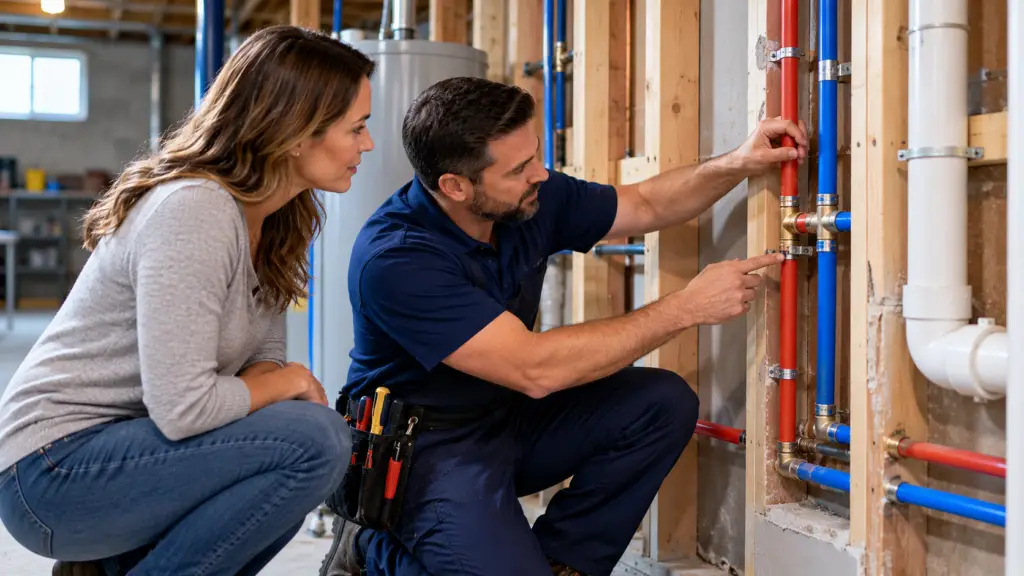
Whole-house repiping replaces all of the water supply lines in a home with new pipe, usually PEX or copper. Columbus homes with galvanized steel or polybutylene pipes, pipes over 50 years old, rusty water, low water pressure, or repeated leaks are common candidates. PEX is flexible and faster to install, while copper is rigid and long-proven. Transit & Flow provides whole-home repiping starting at $2,500 with a flat-rate quote, and leak repair for isolated problems.
What Is Whole-House Repiping?
Whole-house repiping removes the old hot and cold water supply lines and installs a new system that runs from the main shutoff to every fixture. Plumbers reach the pipes through small, planned openings in walls and ceilings, connect the new lines, pressure-test the system, and patch the access points. It is a planned project, not an emergency repair, and it ends the cycle of patching one leak after another.
What Are the Signs You Need New Pipes in Your Columbus Home?
- Leaks in several places within a few years
- Brown, yellow, or rusty water, especially first thing in the morning
- Low water pressure throughout the house
- Visible corrosion, flaking, or green stains on exposed pipes
- Pipes more than 50 years old
- Galvanized steel or gray polybutylene supply lines
- A home inspection report that flags aging or failing pipes
One leak does not always mean you need a repipe. Repeated leaks, discolored water, and falling pressure together usually point to a system-wide problem. If a pipe has burst, call our 24-hour emergency plumbers first.
Which Pipe Materials Are Common in Older Columbus Homes?
Galvanized Steel
Many older Columbus homes still have galvanized steel pipes. They rust from the inside, which narrows the pipe, lowers water pressure, and discolors the water. Once galvanized pipes start leaking in several places, more failures usually follow.
Polybutylene
Polybutylene is a gray plastic pipe used in many homes built from the late 1970s to the mid-1990s. It is no longer used in new construction, and it can fail without much warning, so many homeowners replace it proactively.
Older Copper
Copper lasts a long time, but older copper lines can develop pinhole leaks. Recurring pinholes in different spots are a common reason to repipe.
PEX vs. Copper: Which Is Better for Repiping?
PEX and copper are both approved for drinking water and both work well for a whole-house repipe. The right choice depends on your budget, your home’s layout, and where the pipe will run.
| Factor | PEX | Copper |
|---|---|---|
| Material cost | Lower | Higher |
| Installation | Flexible tubing, fewer fittings, faster install | Rigid pipe, cut and soldered at each joint |
| Wall access | Fewer and smaller openings | More openings to route rigid pipe |
| Freezing | Can expand slightly, more resistant to splitting | More likely to split when water freezes |
| Sunlight | Must be protected from direct sunlight | Handles outdoor and exposed use |
| Best fit | Most whole-house repipes and budget-focused projects | Exposed runs and homeowners who prefer metal pipe |
Benefits of PEX
PEX is flexible, so it bends around framing and runs long distances with fewer joints. That means less wall access, a faster install, and a lower total cost. It also handles freezing better than rigid pipe.
Benefits of Copper
Copper is rigid, durable, and has decades of proven use. It tolerates heat and sunlight, so it works well for exposed and outdoor runs, and many homeowners prefer its look in unfinished basements.
Which Should You Choose?
For most Columbus homes, PEX offers the best balance of cost, speed, and reliability. Copper is a strong choice when pipe will be exposed or when you want metal pipe throughout. Your plumber can recommend the right material after inspecting your home.
What Happens During a Whole-House Repipe?
- Your plumber inspects the system and maps the new pipe routes.
- You receive a written, flat-rate price and approve it before work begins.
- Permits are pulled where required.
- Small access openings are made in walls and ceilings.
- New supply lines are installed and connected to each fixture.
- The system is pressure-tested and checked for leaks.
- Access openings are patched and the work area is cleaned.
Most homes stay livable during a repipe, and water is usually restored at the end of each workday.
How Much Does Whole-House Repiping Cost in Columbus?
Whole-home repiping with Transit & Flow starts at $2,500, and most projects fall between $2,500 and $6,000. Your price depends on the size of the home, the number of bathrooms and fixtures, the pipe material, and how easy the pipes are to reach. Isolated pipe section repairs start at $349. A free whole-home plumbing assessment comes with any repair call, and plumbing financing is available. Have a toilet that keeps running too? Read why your toilet keeps running.
Frequently Asked Questions About Whole-House Repiping in Columbus and Dublin
What is the difference between repiping and pipe repair?
Pipe repair fixes one damaged section, while repiping replaces the water supply lines throughout the home or a large part of it. Isolated pipe section repairs with Transit & Flow start at $349. Repiping makes more sense when leaks keep returning in different places.
Can you repipe only part of a house?
Yes. Partial repiping replaces the worst sections, such as a bathroom group or the main supply line, when the rest of the system is in good condition. A plumber can inspect the pipes and recommend a partial or full repipe based on what they find.
What is polybutylene pipe, and should I replace it?
Polybutylene is a gray plastic water pipe installed in many homes from the late 1970s to the mid-1990s. It is no longer used in new construction and can fail without warning, so replacing it before it leaks is the safer choice for most homeowners.
Can PEX pipes freeze and burst?
PEX resists freeze damage better than copper because it can expand slightly, but it can still burst in a hard freeze. Insulate pipes in crawl spaces, garages, and exterior walls, and keep the heat on during cold Columbus winters.
Should I repipe my house before selling it?
Repiping before a sale can help when an inspection is likely to flag galvanized, polybutylene, or leaking pipes, since buyers often ask for repairs or credits. A plumbing inspection shows whether a full repipe or a smaller repair will address the concern.
How do I know if my house needs to be repiped?
Your house likely needs repiping if you have leaks in several places, rusty or discolored water, low pressure throughout the home, or pipes that are galvanized steel, polybutylene, or more than 50 years old. A plumbing inspection confirms whether a full repipe or a targeted repair makes more sense.
Is PEX or copper better for repiping a house?
PEX is the better choice for most whole-house repipes because it costs less, installs faster, needs fewer wall openings, and resists freeze damage. Copper is better for exposed or outdoor runs and for homeowners who want metal pipe. Both are approved for drinking water.
How much does it cost to repipe a house in Columbus, OH?
Whole-home repiping with Transit & Flow starts at $2,500, and most projects cost between $2,500 and $6,000. The final price depends on home size, the number of fixtures, pipe material, and access. You approve a flat-rate price before work starts.
How long does it take to repipe a house?
Most whole-house repipes take a few days. Larger homes, copper installations, and homes with difficult access take longer, and permit scheduling can add time. Your plumber will give you a timeline with your quote.
Can I stay in my home during repiping?
Yes. Most families stay home during a repipe. The water is shut off while the crew works and is usually restored at the end of each day, so you can still use your kitchen and bathrooms in the evening.
Will repiping damage my walls?
Repiping requires small access openings in walls and ceilings, but PEX keeps those openings to a minimum because it bends around framing. The openings are patched when the work is done, and final painting is usually handled separately.
Is PEX safe for drinking water?
Yes. PEX pipe made for potable water is approved by plumbing codes for drinking water and is widely used in new homes and repipes. Your plumber will install pipe and fittings rated for household water supply.
Should I replace galvanized pipes?
Yes, in most cases. Galvanized pipes corrode from the inside, which lowers water pressure, causes rusty water, and leads to leaks. Once they begin failing in more than one spot, replacing the system is usually more cost-effective than repeated repairs.
Does repiping improve water pressure?
Repiping often improves water pressure, especially when it replaces galvanized pipes narrowed by internal rust. New PEX or copper lines restore the full inside diameter of the pipe, so water flows more freely to every fixture.
Do I need a permit to repipe a house in Columbus?
A whole-house repipe typically requires a plumbing permit and inspection in Columbus and nearby cities. Your plumber should handle the permit as part of the project. Contact our Columbus plumbers to schedule an inspection and quote.
