
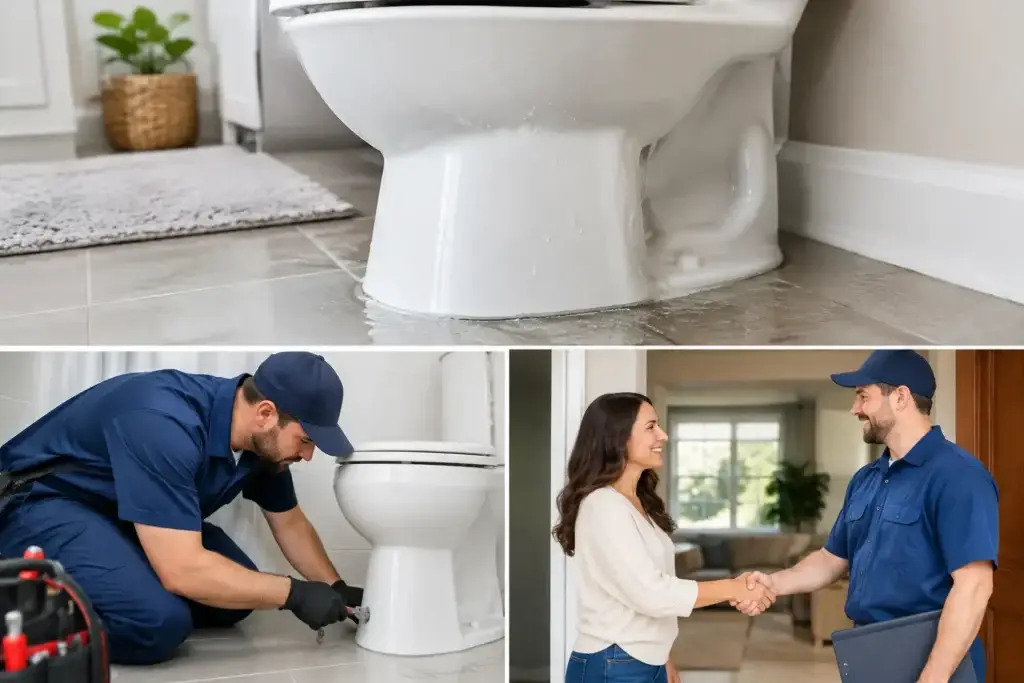
Water around a toilet is easy to ignore after a shower, a missed splash, or a busy morning. But a toilet leaking base is different. If water returns around the bottom of the bowl, especially after flushing, it can work beneath flooring, damage the subfloor, and create odors or staining that get worse over time.
The good news is that the source is often repairable. The key is identifying when the water appears, limiting further damage, and having the toilet inspected before a small leak becomes a larger flooring or drain problem.
What a Toilet Leaking Base Usually Means
A toilet does not normally hold water at its base. When moisture gathers there, the problem may be coming from the toilet itself, a nearby connection, or the floor around it. The timing gives a useful clue.
If the water shows up only after flushing, the toilet’s seal to the drain opening is a likely concern. That seal sits beneath the toilet and directs waste and flush water into the drain line. When it fails, water can escape underneath the fixture rather than moving fully into the pipe.
If water is present even when no one has flushed, look beyond the base. Condensation on the tank, a leaking supply connection, a loose tank bolt, or a slow crack in the bowl or tank can send water down the outside of the toilet and onto the floor. In some bathrooms, water from a shower, tub, or nearby plumbing line can also travel across the floor and make the toilet appear to be the source.
A professional inspection separates these possibilities without guesswork. That matters because replacing a seal will not solve a cracked fixture, and tightening a connection will not correct a toilet that is loose or improperly supported.
Common Causes of Water Around the Toilet Base
A failed toilet seal
The most common cause of a toilet leak at the base is a worn, compressed, or improperly seated seal beneath the toilet. The seal can deteriorate with age, but movement is often the bigger issue. A toilet that rocks slightly when someone sits down can gradually compromise the seal below.
This kind of leak may be small at first. You might see a narrow ring of water after flushing, notice a sewer-like odor, or find soft caulk and discoloration around the toilet’s edge. Left alone, each flush can introduce moisture below the finished floor.
A loose or unstable toilet
A toilet should sit firmly on the floor. If it shifts, rocks, or feels uneven, do not keep using it as usual. Movement can strain the seal and, in some cases, damage the toilet or the connection point below.
The cause may be an uneven floor, worn mounting hardware, an installation issue, or flooring changes made after the toilet was installed. The repair is not simply about making the toilet feel steadier. The seal and drain connection need to be checked as part of the work.
A cracked bowl or tank
Hairline cracks can be difficult to spot, particularly on older porcelain fixtures. A crack in the bowl may release water during a flush. A tank crack or failing tank component can produce a steady drip that runs down the back or side of the toilet before pooling at the base.
Cracked porcelain is not a repair to put off. Even a minor-looking crack can spread, and a broken fixture can release a significant amount of water quickly. If you see a visible crack or water coming directly through porcelain, stop using the toilet and arrange service.
A leaking supply line or tank connection
The clean-water line behind the toilet is another frequent culprit. A loose fitting, worn supply line, or dripping shutoff valve may wet the floor near the base. Water can also escape from tank bolts, the fill valve, or the connection between the tank and bowl.
These leaks often happen whether the toilet is flushed or not, although tank-related leaks may become more noticeable while the tank refills. Dry the area and watch where fresh water first appears. This observation can help a technician diagnose the problem efficiently.
Condensation or water from another fixture
In humid conditions, a toilet tank can sweat enough to drip onto the floor. This is typically clean water and may be more noticeable during hot weather or after repeated flushing. It still deserves attention, since persistent moisture can affect flooring and encourage mold growth.
A leaking shower door, tub overflow, vanity supply line, or pipe inside a nearby wall can create the same symptoms. Water follows the easiest path, so the puddle is not always located directly below the actual leak.
What to Do When You Notice a Toilet Leaking Base
Start by protecting the area. Place towels around the toilet, keep people from stepping in the water, and remove bath mats or items that can hold moisture against the floor. If the water appears after flushing or the source is unclear, avoid flushing again until the toilet has been checked.
If water is actively flowing from the supply line, tank, or toilet and continues to spread, turn the small shutoff valve behind the toilet clockwise if it moves easily. Do not force a corroded or stuck valve. If you cannot stop active water flow safely, shut off the home’s main water supply if you know its location and contact an emergency plumbing professional.
Take note of what you see: Does the leak happen only during a flush? Is the water clear? Does the toilet rock? Is there staining, odor, or soft flooring nearby? A few clear details help narrow down the likely cause.
Avoid repeatedly flushing to test the problem. Also avoid applying fresh caulk around a wet base to hide the leak. Caulk can trap water beneath the toilet and delay discovery of damage. A toilet may need to be removed and reset, and the floor and mounting area may need evaluation before the fixture goes back into service.
Why a Leak at the Base Should Not Wait
A small toilet leak can be deceptively damaging because much of the water may go where you cannot see it. Tile, vinyl, laminate, and finished flooring can conceal moisture underneath. Over time, that moisture can weaken the subfloor, loosen flooring materials, discolor ceilings below a second-floor bathroom, and create unpleasant odors.
There is also a sanitation concern when the leak occurs during flushing. Water escaping from beneath the toilet may have contacted the drain path, so it should be treated carefully. Keep children and pets away from the area, clean visible surface water appropriately, and arrange an inspection rather than assuming it is only condensation.
For homeowners and property managers, prompt diagnosis is often less disruptive than waiting. A repair may involve resetting the toilet and replacing the seal, but the right recommendation depends on the toilet condition, the floor, and what is found at the drain connection. No responsible plumber should quote a final repair without seeing those conditions first.
What to Expect From a Professional Toilet Repair Visit
A technician will typically inspect the toilet for movement, check visible supply and tank connections, and determine whether water is coming from the base or traveling there from another source. If the toilet needs to be lifted, the condition of the seal, mounting points, and surrounding floor can be assessed directly.
From there, you should receive a clear explanation of the cause and the available repair path before work begins. In some cases, a reset and new seal are appropriate. In others, the toilet may need replacement because of a crack, repeated instability, or damage that makes a dependable repair unlikely.
For Columbus-area homeowners, Transit & Flow can help evaluate toilet leaks with straightforward communication, up-front options, and customer approval before repairs begin. Same-day appointment availability may be available depending on scheduling, technician availability, and the condition of the repair.
When to Call for Urgent Help
A toilet leaking base should be treated as urgent when water is spreading quickly, the toilet is overflowing, sewage is visible, the floor feels soft, or the fixture has a visible crack. It also deserves prompt attention if it is located above a finished room, where water can reach the ceiling below.
Even without an active flood, schedule service soon if water returns after every flush, the toilet rocks, or you notice persistent odor around the base. Those are signs that the problem is unlikely to resolve on its own.
A dry bathroom floor is not just a comfort issue. It protects the structure beneath the toilet and helps keep a straightforward repair from turning into a flooring project. If water has returned to the base more than once, treat that pattern as your signal to have the source checked.
