
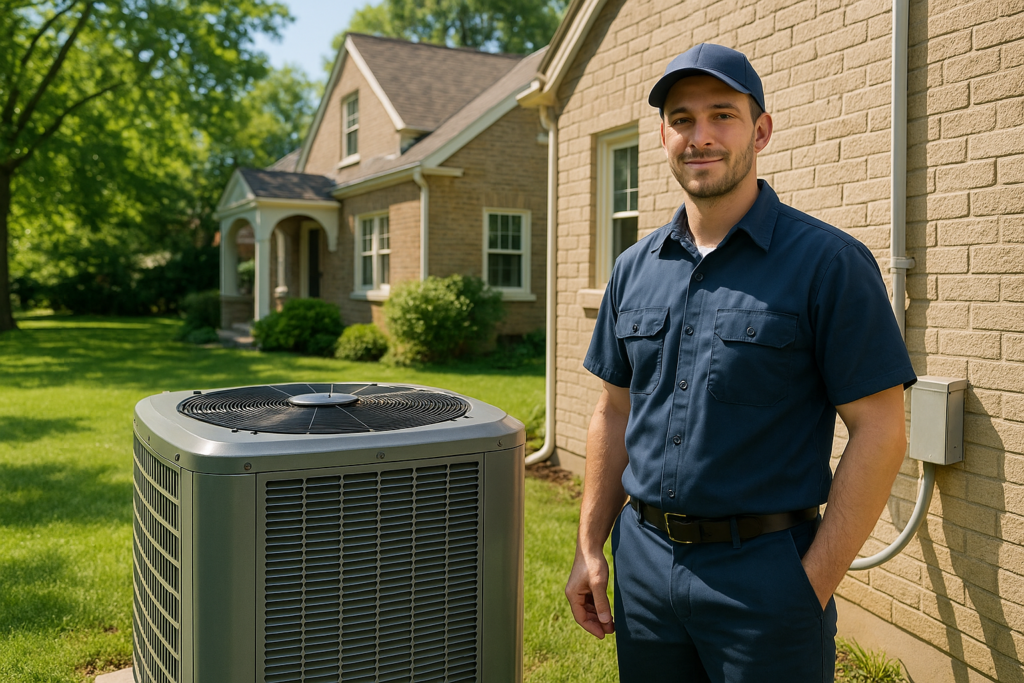
Quick Answer: Do You Need AC and Drain Service in Grandview Heights?
If your air conditioner is underperforming and your drains are slow or smelly heading into a Columbus summer, you likely need both AC service and drain cleaning addressed together. Summer heat and heavy rain put simultaneous stress on your cooling system and your home’s drainage, and in Grandview Heights, the aging infrastructure and mature tree canopy make these problems even more common. The best approach is to call a professional who handles both plumbing and HVAC so both systems are inspected and resolved in one visit.
Introduction: Summer in Grandview Heights Hits Your AC and Drains at the Same Time
Grandview Heights homeowners know the drill. June arrives, temperatures climb into the upper 80s and 90s, and suddenly the AC unit that hummed along just fine in May is struggling to keep the house cool. At the same time, the kitchen sink is draining at half speed and a musty odor is creeping up from the basement floor drain. These two problems are not a coincidence. Summer is the peak season for both AC failures and drain issues in the Columbus OH metro area, and homes in Grandview Heights face unique challenges due to older plumbing lines, clay tile sewer connections, and the dense root systems from the neighborhood’s signature tree-lined streets.
When your comfort and your plumbing both need attention, you do not want to schedule two separate companies on two separate days. Transit & Flow provides crossover AC and drain service for homeowners across Grandview Heights and Columbus. Call 614-333-8092 today to get both systems evaluated by a trained professional in a single appointment.
Key Takeaways
- Summer puts peak demand on both your air conditioning and your drain system at the same time.
- AC condensate lines can clog and cause water damage that mimics plumbing leaks.
- Drain odors in summer often signal biofilm buildup, partial clogs, or dried-out P-traps worsened by heat.
- Grandview Heights homes with older clay sewer lines are especially vulnerable to root intrusion during summer growing season.
- A professional crossover service call from Transit & Flow addresses cooling and drainage in one visit, saving time and money.
- Never attempt to handle refrigerant, electrical components, or sewer gas issues on your own.
How AC and Drain Problems Are Connected
Most homeowners think of their air conditioner and their plumbing as completely separate systems. In reality, your AC produces a significant volume of condensate water every day it runs. That water has to go somewhere, and it typically drains through a condensate line that connects to your home’s plumbing or exits through a dedicated drain. When that line clogs with algae, dust, or mold, water backs up into the drain pan and can overflow onto floors, into walls, and into ceilings.
Meanwhile, your home’s drains are under their own summer stress. Heavy use from more people at home, increased cooking, and Columbus’s summer storm patterns all contribute to drain slowdowns. In Grandview Heights specifically, the combination of older cast iron and clay tile drain lines with aggressive tree root growth creates conditions where partial blockages become full clogs seemingly overnight.
The Condensate Line Factor
Your AC’s condensate drain line is a small PVC pipe that carries moisture removed from the air in your home to an exterior drain or a floor drain. In a humid Columbus summer, a central AC unit can produce between 5 and 20 gallons of condensate per day. If this line develops a blockage, the water has nowhere to go. Many newer systems have a float switch that shuts down the AC when the drain pan fills up. Older systems may simply overflow. Either way, you end up with an AC that will not cool and potential water damage.
Floor Drains and Sewer Odors in Summer
Summer heat accelerates the evaporation of water in P-traps, especially in basement floor drains, guest bathroom drains, and utility sinks that do not see regular use. When the water seal in a P-trap dries out, sewer gas can enter your home. This is not just unpleasant, it can be a health concern. Hydrogen sulfide, methane, and other gases in sewer systems are not safe to breathe in concentrated amounts. If you notice a rotten egg smell in your home during summer, it may be a simple dry trap, but it could also indicate a larger drain venting issue or a cracked sewer line.
Warning Signs You Need AC and Drain Service
AC Warning Signs
- Your AC is running constantly but not reaching the thermostat set point.
- Water is pooling around the indoor air handler or furnace base.
- You hear gurgling from the condensate drain line.
- The system shuts off unexpectedly and restarts after a delay.
- Warm air blows from vents even though the system appears to be running.
- Ice is forming on refrigerant lines or the evaporator coil.
Drain Warning Signs
- Multiple drains in the home are slow at the same time.
- A foul or sulfur-like smell comes from floor drains, especially in the basement.
- Water backs up into the lowest drain when a washing machine or dishwasher runs.
- Gurgling sounds come from drains when toilets flush.
- Wet spots appear in the yard near the sewer line path.
- Fruit flies or drain flies are appearing around sinks or floor drains.
Root Causes of Summer AC and Drain Failures
Understanding why these problems happen helps you make better decisions about service and prevention.
AC Root Causes
- Clogged condensate lines: Algae, mold, and dust accumulate inside the line over the spring and accelerate once the system runs constantly in summer.
- Dirty evaporator coils: A layer of dust and debris on the evaporator coil reduces cooling efficiency and increases condensate production.
- Low refrigerant charge: A refrigerant leak causes the evaporator coil to freeze, which then thaws and overwhelms the drain pan. Refrigerant handling requires a trained professional and is never a DIY task.
- Aging equipment: Systems older than 12 to 15 years lose efficiency and are more prone to component failures during peak demand periods.
Drain Root Causes
- Tree root intrusion: Grandview Heights is known for its mature tree canopy. Roots from maples, oaks, and other large trees seek out moisture in sewer line joints and can infiltrate clay tile pipes.
- Biofilm and grease buildup: Summer cookouts and increased kitchen activity push more grease and organic matter into drain lines, feeding biofilm colonies.
- Shifted or bellied pipes: Older homes in Grandview Heights may have sewer laterals that have settled or shifted over decades, creating low spots where debris collects.
- Storm water infiltration: During heavy summer storms, groundwater can enter cracked sewer laterals and overwhelm the system.
What a Professional Service Visit Looks Like
When a Transit & Flow technician arrives at your Grandview Heights home for a crossover AC and drain service call, the process is thorough and methodical.
AC Service Process
- Visual inspection of the outdoor condenser unit for debris, damage, and proper clearance.
- Check thermostat settings and calibration.
- Inspect the condensate drain line, drain pan, and float switch.
- Evaluate the evaporator coil for ice buildup or dirt accumulation.
- Measure system airflow and temperature differential across the coil.
- Test electrical connections and capacitors for safety and function.
- Provide a clear recommendation: maintenance, repair, or replacement discussion.
Drain Service Process
- Run water through all drains to identify slow or blocked lines.
- Camera inspection of the main sewer line if symptoms suggest a deeper issue.
- Professional drain cleaning using appropriate equipment for the clog type.
- Check P-traps for proper water seals and inspect accessible vent connections.
- Evaluate sewer lateral condition and note any root intrusion or pipe damage.
- Provide options and next steps with transparent communication.
Cost Variables for AC and Drain Service
Every home is different, and several factors affect the cost of AC and drain service in Columbus OH and Grandview Heights. Transit & Flow does not quote prices without a proper evaluation because the scope of work varies significantly.
- Type of AC issue: A simple condensate line clearing costs far less than a compressor replacement or a full system swap.
- Age and condition of equipment: Older AC systems may need parts that are harder to source, and older drain lines may require more extensive repair methods.
- Drain clog location and severity: A kitchen sink clog near the trap is a different scope than a main sewer line blockage 50 feet from the house.
- Root intrusion extent: Minor root clearing differs significantly from a situation requiring sewer line repair or replacement.
- Access difficulty: Crawl spaces, finished basements, and limited exterior access all affect labor time.
- Parts and materials: Replacement parts, pipe sections, and fittings vary by brand and specification.
For a personalized evaluation and honest cost discussion, call Transit & Flow at 614-333-8092 or request an estimate online at https://transitflowplumbing.com/estimate/.
When to Call a Professional
Some situations demand immediate professional attention. Do not attempt to resolve the following on your own:
- Refrigerant issues: If you see ice on your AC lines or suspect a refrigerant leak, stop running the system and call a professional. Refrigerant is hazardous and requires specialized training and equipment to handle safely.
- Sewer gas odors: Persistent sewer smell, especially in multiple rooms, may indicate a broken vent stack, cracked sewer line, or failed wax ring. These require professional diagnosis.
- Standing water near electrical equipment: Water around your furnace, air handler, or electrical panel is a safety hazard. Do not attempt to mop it up while the system is powered on.
- Sewage backup: Any sewage coming up through floor drains or toilets is an emergency. Stop using water in the home and call immediately.
- Unusual sounds from the AC: Grinding, screeching, or banging noises can indicate a failing motor, loose component, or compressor issue that can worsen quickly.
When in doubt, call Transit & Flow at 614-333-8092. A quick phone call can help you determine whether your situation needs same-day service or can be scheduled for a convenient time.
Safe Homeowner Checks
There are a few simple, non-hazardous things you can check before calling for service. These are observation-only steps, not repairs.
- Check your thermostat: Make sure it is set to cool and the fan is set to auto. Verify the batteries are fresh if applicable.
- Look at your air filter: A visibly dirty or clogged filter restricts airflow and can cause the AC to underperform. Replace it if it has not been changed in the last 30 to 60 days.
- Pour water into unused floor drains: Slowly pour about a gallon of water into any basement or utility floor drain that does not see regular use. This refills the P-trap and may eliminate sewer odors.
- Check the outdoor condenser: Look for visible debris, overgrown vegetation, or anything blocking airflow around the outdoor unit. Keep at least two feet of clearance on all sides.
- Note which drains are slow: If only one drain is slow, the clog is likely local. If multiple drains are slow, the issue is likely in the main line. This information helps the technician arrive prepared.
Repair Versus Replace: Making the Right Decision
AC Systems
The general guidance is that if your AC system is under 10 years old and the repair cost is less than half the cost of a new system, repair is usually the better value. Once a system passes the 15-year mark, frequent repairs, declining efficiency, and the use of older refrigerant types often make replacement the smarter long-term investment. A Transit & Flow technician will present both options honestly and help you weigh the factors for your specific situation.
Drain Lines
For drain and sewer line issues, the repair versus replace decision depends heavily on the pipe material and condition. Homes in Grandview Heights with original clay tile sewer laterals may benefit from a full line replacement if camera inspection reveals widespread root intrusion, multiple cracks, or bellied sections. Isolated clogs or minor root intrusion can often be resolved with professional cleaning and may be maintained with periodic service.
Local Columbus and Grandview Heights Context
Grandview Heights is one of the most desirable neighborhoods in the Columbus metro area, known for its walkability, historic charm, and dense tree canopy. These same features, however, create specific challenges for homeowners when it comes to AC and drain maintenance.
Many homes in Grandview Heights were built between the 1920s and 1960s. These homes frequently have original cast iron or clay tile drain lines that are now 60 to 100 years old. The mature trees that line streets like First Avenue, Northwest Boulevard, and Grandview Avenue send roots deep into the soil where they find and exploit joints in aging sewer pipes.
Columbus’s summer weather also plays a role. The central Ohio climate brings high humidity alongside temperatures that regularly exceed 85 degrees from June through August. This humidity drives AC systems to work harder and produce more condensate, while summer thunderstorms saturate the soil and can push groundwater into cracked sewer laterals.
The City of Columbus and Grandview Heights have different municipal codes and sewer responsibility boundaries. A Transit & Flow technician familiar with the area understands these distinctions and can help you navigate what falls under homeowner responsibility versus municipal maintenance.
Frequently Asked Questions
What should I do first if my AC stops working and my drains smell bad at the same time?
Start by checking your thermostat settings and air filter, and pour water into any unused floor drains to refill P-traps. If the AC still does not cool or the odor persists, call Transit & Flow at 614-333-8092 to schedule a crossover service visit that addresses both systems.
What should I avoid doing when I have AC or drain problems?
Never attempt to recharge refrigerant, open electrical panels near standing water, or use chemical drain cleaners in a main line. Chemical cleaners can damage older pipes common in Grandview Heights homes and rarely resolve the underlying problem. Leave these issues to a trained professional.
What factors affect the cost of AC and drain service?
Cost depends on the type and severity of the issue, the age of your equipment and pipes, accessibility, parts needed, and whether the problem is isolated or system-wide. Transit & Flow provides honest evaluation and transparent options before any work begins.
When is an AC or drain problem considered an emergency?
Sewage backing up into your home, water pooling near electrical equipment, persistent gas or sewer odors, and a complete AC failure during extreme heat are all situations that warrant immediate professional attention. Do not wait to call.
When should I call a professional instead of trying to fix things myself?
If the issue involves refrigerant, electrical components, sewer gas, standing water near equipment, or a main sewer line, call a professional. These situations carry safety risks that are not appropriate for DIY troubleshooting.
How can Transit & Flow help with both AC and drain issues?
Transit & Flow is a crossover service provider handling both plumbing and HVAC for Columbus OH homeowners. That means one call, one visit, and one team that understands how your AC condensate system, your drain lines, and your home’s overall plumbing and cooling work together.
Maintenance Tips to Prevent Summer Problems
- Schedule AC maintenance in spring before peak summer demand begins.
- Change your air filter every 30 to 60 days during heavy cooling season.
- Pour a cup of distilled white vinegar into your AC condensate drain access port monthly to help prevent algae buildup.
- Run water through all drains in your home at least once a month, including basement floor drains and guest bathrooms.
- Keep the area around your outdoor condenser clear of plants, mulch, and debris.
- Schedule a camera inspection of your sewer lateral every two to three years if you have mature trees near your sewer line path.
- Know where your main water shutoff valve is located in case of an emergency leak.
Glossary of Key Terms
AC (Air Conditioning)
A mechanical system that removes heat and humidity from indoor air using a refrigerant cycle, distributing cooled air through ductwork. Central AC systems include an indoor evaporator coil and an outdoor condenser unit.
Drain Cleaning
The professional process of removing clogs, buildup, and obstructions from household drain and sewer lines using specialized equipment such as drain snakes, hydro-jetting machines, or camera inspection tools.
Condensate Line
A small PVC or copper pipe that carries moisture collected by the AC evaporator coil to a drain or exterior exit point. Clogs in this line are one of the most common causes of AC shutdowns and water damage in summer.
P-Trap
A U-shaped section of pipe beneath sinks and drains that holds a small amount of water to create a seal preventing sewer gas from entering the home. P-traps can dry out in unused drains, especially during hot summer months.
Sewer Line
The main underground pipe that carries wastewater from your home to the municipal sewer system. In Grandview Heights, many sewer laterals are original clay tile pipes that are vulnerable to root intrusion and deterioration.
Shutoff Valve
A valve that controls the flow of water to your home or to a specific fixture. Knowing the location of your main shutoff valve allows you to stop water flow quickly during a plumbing emergency.
Schedule Your AC and Drain Service in Grandview Heights Today
Summer in Grandview Heights is too short to spend it dealing with a broken AC and slow drains. Whether you are noticing warm air from your vents, foul smells from your basement, or both, Transit & Flow has the trained professionals and the crossover expertise to diagnose and resolve your issues in a single visit.
Call Transit & Flow now at 614-333-8092 to schedule your AC and drain service appointment. You can also request an estimate online at https://transitflowplumbing.com/estimate/. Serving Grandview Heights, Columbus OH, and surrounding communities with professional plumbing and HVAC service you can count on.
