
Quick Answer: AC and Drain Service in Columbus OH and New Albany
If your air conditioner is underperforming and your drains are slow or producing foul odors during a Columbus summer, the two problems may be more connected than you think. Clogged AC condensate lines can back up into drain systems, while overloaded household drains can create odors that circulate through your HVAC system. The best course of action is to call a professional who handles both plumbing and cooling services under one visit.
Introduction: Why New Albany Homeowners Need Combined AC and Drain Service in Summer
Summer in New Albany and greater Columbus, Ohio brings intense heat, high humidity, and heavy use of both your air conditioning system and your household plumbing. From June through September, your AC runs almost constantly while your family uses more water for showers, laundry, and outdoor activities. This double demand creates a perfect storm for problems: condensate drain clogs, slow-draining sinks, sewer odors rising through floor drains, and overtaxed plumbing systems.
The challenge is that most homeowners call one company for AC repair and a different company for drain issues. That means two service calls, two diagnostic fees, and two schedules to coordinate. Transit & Flow solves that problem by offering combined AC and drain service across the Columbus metro area, including New Albany, Westerville, Gahanna, and surrounding communities. If you are dealing with warm air from your vents, gurgling drains, or foul odors in your home right now, call Transit & Flow at 614-333-8092 for fast scheduling before the problem gets worse.
Key Takeaways
- AC condensate drain clogs are one of the most common summer HVAC failures in Columbus OH, and they directly affect your plumbing system.
- Drain odors during summer often stem from dried-out P-traps, biofilm buildup, or partial sewer line blockages aggravated by seasonal conditions.
- Addressing both AC and drain issues in a single service visit saves time, money, and prevents missed diagnoses.
- New Albany homes built in the last twenty years often have complex condensate routing that requires professional inspection.
- Never attempt to clear a refrigerant line, access electrical components, or enter a sewer cleanout without professional help.
Primary Service: Combined AC and Drain Service for Columbus and New Albany Homes
When we talk about combined AC and drain service, we mean a single professional visit that evaluates both your cooling system and your household drain performance. This crossover approach is especially valuable during Columbus summers because the two systems interact more than most homeowners realize.
How Your AC and Drains Connect
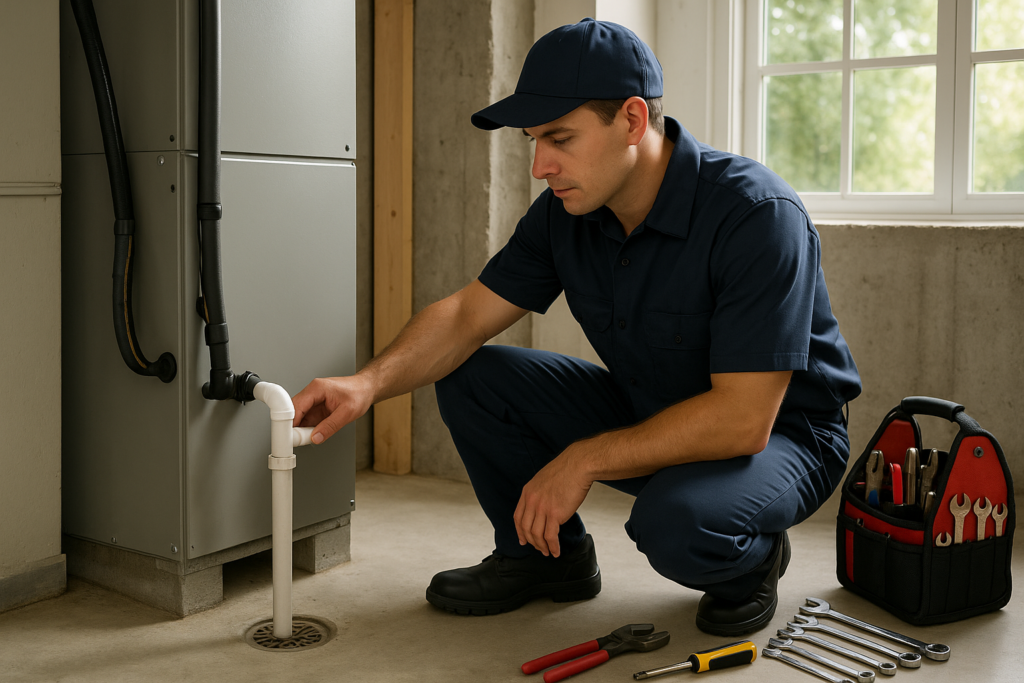
Your air conditioning system removes humidity from indoor air and channels that moisture through a condensate drain line. In a typical New Albany home, this line either connects to a nearby floor drain, runs to an exterior discharge point, or ties into the home plumbing waste system. When the condensate line clogs with algae, dust, or debris, water backs up. That backup can cause water damage around the air handler, trigger the AC safety float switch and shut down your cooling, or create standing water that feeds mold and bacteria.
Meanwhile, your household drains handle increased summer volume. Bathroom drains slow down from sunscreen and hair. Kitchen drains deal with more cooking grease and food waste. Basement floor drains can dry out and allow sewer gas to seep into the home. When your AC condensate also flows into the drain system, the added water volume can expose partial blockages that were not noticeable during lighter use months.
Why a Single Service Call Makes Sense
A trained technician who understands both HVAC and plumbing systems can diagnose interconnected issues that a specialist in only one trade might miss. For example, a musty smell in the home could be misdiagnosed as an AC evaporator coil issue when it is actually a partially blocked drain line beneath the air handler. Or a slow basement drain might be blamed on tree roots when the real cause is condensate water overwhelming a deteriorating fitting. Transit & Flow technicians are trained in both service lines, which means more accurate diagnoses and fewer repeat visits for New Albany and Columbus homeowners.
Warning Signs and Symptoms: When Your AC and Drains Need Attention
Catching problems early prevents water damage, health risks, and expensive emergency repairs. Watch for these indicators during the summer months.
AC-Related Warning Signs
- Water pooling around the indoor air handler or furnace base
- The AC unit shuts off unexpectedly and will not restart for several minutes
- A musty or mildew smell coming from the supply vents
- Reduced cooling performance even though the system runs continuously
- Visible moisture, dripping, or water stains on the ceiling near the air handler
Drain-Related Warning Signs
- Multiple drains in the home are slow simultaneously
- Gurgling sounds from drains when the washing machine runs or a toilet flushes
- Sewer or rotten-egg odors rising from floor drains, especially in the basement
- Water backing up into a shower or tub when another fixture is used
- Standing water around the basement floor drain that was not there before
If you notice any combination of these AC and drain symptoms occurring together, it is a strong signal that the issues are related and should be evaluated as a connected system.
Root Causes: What Creates Combined AC and Drain Problems in Summer
Understanding the root causes helps you make better decisions about service and prevention.
Condensate Line Clogs
Algae and biofilm thrive in the warm, moist environment inside AC condensate lines. Over the course of a Columbus summer, these organic materials can form a complete blockage. Dust and debris from the air handler can accelerate the buildup.
Dried-Out P-Traps
Floor drains and infrequently used fixtures have P-traps designed to hold water and block sewer gas. In summer, evaporation happens faster, especially in basements and utility rooms. When the water seal in a P-trap disappears, sewer odors enter the home and can be distributed by the HVAC system.
Increased Drain Load
More showers, more laundry, more dishes, and more outdoor water use during summer mean higher volume through your drain system. Partial blockages from grease, soap buildup, or root intrusion that caused no symptoms in spring can become fully symptomatic under heavier summer flow.
Aging Infrastructure in New Albany
Many New Albany homes built in the early 2000s development boom are now twenty or more years old. PVC fittings in condensate lines can loosen, drain pipe joints can settle, and sewer laterals can develop cracks that allow root intrusion. These age-related issues often surface during the high-demand summer season.
The Professional Process: What a Transit & Flow Technician Does
When a Transit & Flow technician arrives at your New Albany or Columbus home for a combined AC and drain service call, the process typically follows these steps.
- System Interview: The technician asks about your symptoms, when they started, and what you have noticed. This conversation provides critical diagnostic direction.
- Visual Inspection: The technician inspects the air handler area, condensate drain line routing, drain access points, and any visible water damage or moisture.
- Condensate Line Evaluation: Using appropriate tools, the technician checks for blockages, proper slope, and discharge point condition in the condensate drain system.
- Drain System Assessment: The technician evaluates affected household drains, checks P-trap water levels, and may use a camera inspection for deeper blockages.
- Diagnosis and Recommendation: You receive a clear explanation of what is wrong, what caused it, and your options for repair with transparent pricing.
- Service Completion: Approved repairs are completed during the same visit whenever possible, including condensate line clearing, drain cleaning, and system testing.
Cost Variables: What Affects the Price of AC and Drain Service
Transit & Flow does not quote fixed prices without a proper diagnosis, because every home and every problem is different. However, here are the primary variables that affect your cost.
- Severity of the blockage: A simple condensate line flush costs significantly less than a full sewer line clearing with camera inspection.
- Accessibility: Air handlers in attics or crawl spaces require more time and effort to service than those in accessible basements.
- Number of affected drains: A single slow drain is a simpler fix than a whole-house drain issue indicating a mainline problem.
- Parts and materials: Replacement of a condensate pump, P-trap, or drain fitting adds material cost to the service.
- Time of service: Emergency and after-hours calls may carry different pricing than scheduled weekday appointments.
- Age and condition of existing systems: Older systems in New Albany homes may require additional repair or replacement of deteriorated components.
For a personalized estimate based on your situation, call Transit & Flow at 614-333-8092 or request an estimate online.
When to Call a Professional
Some situations require immediate professional attention. Do not attempt to resolve these on your own.
- Water actively leaking from the air handler or ceiling: Shut off the AC system and call immediately to prevent water damage.
- Sewage odors or backup: Sewer gas contains methane and hydrogen sulfide. Evacuate the affected area, ventilate the space, and call for service.
- AC system will not turn on after a condensate overflow: The safety float switch may have tripped, but electrical diagnosis should be left to a trained technician.
- Multiple drains backing up simultaneously: This indicates a mainline issue that requires professional camera inspection and clearing equipment.
- Any situation involving standing water near electrical panels or gas appliances: Do not enter the area. Call Transit & Flow at 614-333-8092 for emergency guidance.
Safe Homeowner Checks: What You Can Do Before Calling
These checks are safe for any homeowner and can help your technician arrive better prepared.
- Check the thermostat: Confirm your system is set to cool and the fan is set to auto. A wrong setting can mimic a system failure.
- Look for visible water: Note where you see moisture, dripping, or staining so you can describe it accurately.
- Run water in unused drains: Pour a cup of water into basement floor drains and guest bathroom drains to refill P-traps and check for slow drainage.
- Check the exterior condensate discharge: If your condensate line exits through an exterior wall, check whether water is actively dripping during AC operation. No drip may indicate a clog.
- Note timing: Write down when symptoms started, whether they correlate with rain events, and whether they worsen at specific times of day.
Do not attempt to open the air handler, clear refrigerant lines, access electrical panels, or enter sewer cleanouts. These tasks involve safety hazards that require professional equipment and training.
Repair Versus Replace: Making the Right Decision
For AC condensate components and household drain systems, the repair-versus-replace question depends on several factors.
When Repair Makes Sense
- The condensate line has a single blockage and the line material is in good condition
- A single drain is slow due to a localized clog
- The AC system is under ten years old and otherwise performing well
- P-traps or fittings need simple replacement
When Replacement Makes Sense
- The condensate line is deteriorated, cracked, or improperly routed from original installation
- Multiple drain lines show corrosion or repeated blockages
- The AC system is fifteen or more years old and showing multiple failure points
- A sewer camera reveals structural damage to the lateral line
Your Transit & Flow technician will walk you through the options and provide honest guidance based on the condition of your specific systems.
Local Columbus Context: Why New Albany Has Unique Service Needs
New Albany sits in the northeast corridor of the Columbus metro area, a community known for its well-maintained homes, planned developments, and higher-than-average property values. Several local factors influence AC and drain service needs.
Water Quality: Franklin County water contains moderate mineral content that can contribute to sediment buildup in drain lines and condensate systems over time. Homes on well water in the rural edges of New Albany may experience even higher mineral deposits.
Soil Conditions: The clay-heavy soils common across central Ohio shift with seasonal moisture changes. This ground movement can stress sewer laterals and create low spots in underground drain lines where debris accumulates.
Development Age: Many New Albany subdivisions were built between 2000 and 2015. These homes are now reaching the age where original plumbing fittings, condensate line connections, and AC components begin showing wear.
Summer Climate: Columbus summers regularly produce temperatures above 90 degrees Fahrenheit with high humidity. This combination maximizes both AC runtime and condensate production, putting systems under peak stress from June through September.
Frequently Asked Questions
What should I do first if my AC stops cooling and my drains smell bad?
Turn off the AC system at the thermostat to prevent water overflow, run water into floor drains to refill P-traps, and ventilate the area by opening windows. Then call Transit & Flow at 614-333-8092 to schedule a combined diagnostic visit. Do not attempt to open the air handler or access electrical components.
What affects the cost of combined AC and drain service in New Albany?
The main cost factors are the severity and location of the blockage, accessibility of the air handler and drain lines, whether parts need replacement, and the number of drain lines affected. Each situation is unique, so Transit & Flow provides an honest assessment and clear pricing before any work begins.
When is a combined AC and drain issue an emergency?
It becomes an emergency when you have active water leaking from ceilings or walls, sewage backing up into the home, standing water near electrical equipment, or strong sewer gas odors that could pose a health risk. In these situations, evacuate the affected area and call a professional immediately.
What should I avoid doing if I suspect an AC condensate drain clog?
Avoid using compressed air or chemical drain cleaners on the condensate line, as these can damage the line or the evaporator coil drain pan. Do not open the air handler panel, and never attempt to clear the line near electrical connections. These tasks should be handled by a trained technician.
When should I call a professional instead of waiting?
Call a professional as soon as you notice water around the air handler, multiple slow drains, or persistent odors. Waiting allows water damage to spread, mold to establish, and minor drain blockages to become complete obstructions. Early service is almost always less expensive than emergency repair.
How can Transit & Flow help with summer AC and drain issues?
Transit & Flow provides combined AC and drain service in a single visit, staffed by technicians trained in both HVAC and plumbing systems. This crossover approach means faster diagnosis, fewer missed connections between problems, and less disruption to your schedule. Call 614-333-8092 or visit our website to book service.
Maintenance Tips: Preventing Summer AC and Drain Problems
- Pour a cup of white vinegar into the AC condensate drain access point monthly during summer to inhibit algae growth.
- Run water through every drain in your home at least once a month, including basement floor drains and guest bathrooms, to keep P-traps full.
- Change your HVAC air filter every 30 to 60 days during heavy summer use to reduce debris reaching the evaporator coil and condensate system.
- Keep the area around your outdoor AC unit clear of mulch, vegetation, and debris for at least two feet on all sides.
- Schedule professional maintenance for both your AC and your drain system before the peak summer season begins.
Glossary
Condensate Drain Line
A small-diameter pipe, typically PVC, that carries moisture removed from indoor air by the AC evaporator coil to a drain or exterior discharge point. Clogs in this line are one of the most common summer AC failures.
P-Trap
A U-shaped section of pipe beneath sinks, tubs, and floor drains that holds a small amount of water to create a seal preventing sewer gas from entering the home. P-traps can dry out during hot weather if fixtures are not used regularly.
Drain Cleaning
The professional process of removing blockages, buildup, and debris from household drain lines using mechanical tools such as drain snakes or hydro-jetting equipment. Professional drain cleaning restores full flow without damaging pipes.
Flat-Rate Pricing
A pricing model where the cost of a repair is quoted as a fixed amount before work begins, based on the job rather than hourly labor. This approach gives homeowners cost certainty and eliminates surprise charges.
AC Evaporator Coil
The indoor component of an air conditioning system that absorbs heat from indoor air. As warm air passes over the cold coil, moisture condenses on the coil surface and drips into the condensate drain pan below.
Schedule Your AC and Drain Service in New Albany Today
Summer in Columbus and New Albany does not slow down, and neither should your home comfort. If you are experiencing warm air from your vents, slow drains, foul odors, or water where it should not be, do not wait for a small problem to become an expensive emergency.
Transit & Flow provides professional combined AC and drain service across New Albany, Westerville, Gahanna, and the greater Columbus OH area. Our technicians are trained in both HVAC and plumbing systems, which means one call gets both problems solved.
Call Transit & Flow today at 614-333-8092 to schedule your service visit, or request your estimate online. We are here to keep your New Albany home cool, dry, and flowing right all summer long.
