
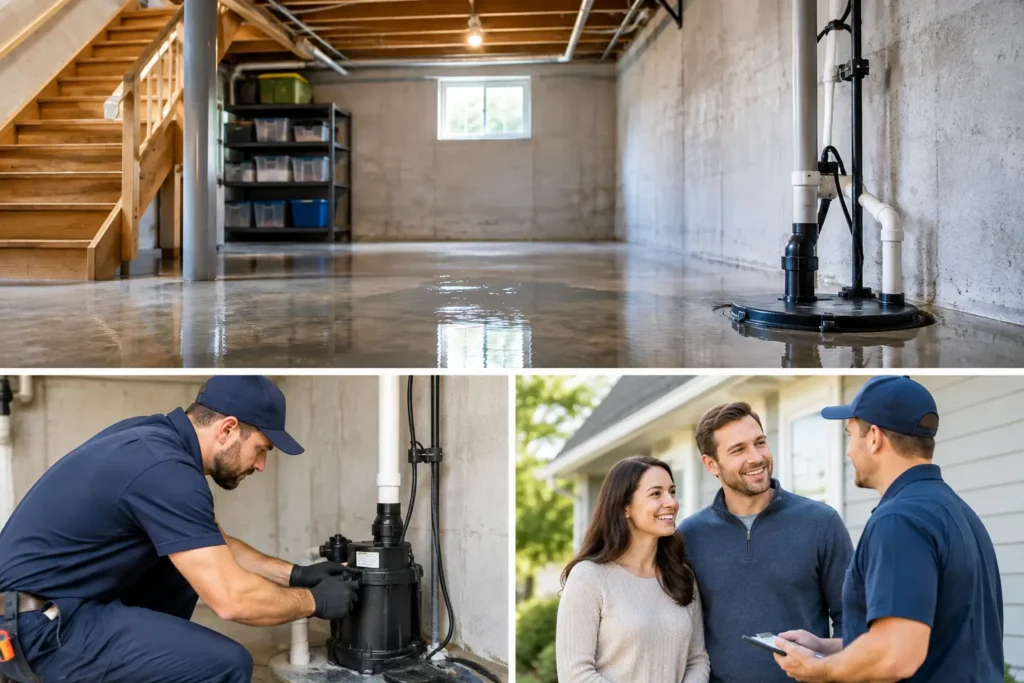
A wet basement rarely starts with a dramatic wall of water. More often, it begins with a damp corner after a storm, a musty smell near stored boxes, or a sump pump that runs longer than usual. This basement flooding prevention guide helps Columbus homeowners identify those early warnings and take practical action before a small water issue becomes damaged flooring, mold growth, or a stressful cleanup.
Central Ohio weather can put a home’s drainage system to the test. Heavy rain, rapid snowmelt, frozen ground, and aging sewer lines all create conditions where water can find its way below grade. The goal is not to guess where water might come from. It is to manage the most common pathways around your home and have a clear response plan when something changes.
Start Outside: Keep Water Moving Away From the Foundation
The best place to prevent basement water is outdoors. When rainwater collects near the foundation, it can work through cracks, window wells, utility openings, and porous concrete. Even a well-maintained basement can struggle if the soil beside the house stays saturated.
Walk around your home during or shortly after a steady rain. Look for puddles against the foundation, overflowing gutters, downspouts that empty beside the house, and soil that slopes toward the walls. These are straightforward clues that water is being directed to the wrong place.
Gutters should be clear enough to carry roof runoff without spilling over the edge. Downspout extensions should discharge water well away from the foundation and should not point toward a neighboring structure, walkway, or driveway where it can return toward the home. If an extension comes loose, reconnect it promptly. A minor adjustment can make a meaningful difference during the next storm.
Grading matters as well. Soil and landscaping should generally slope away from the home so surface water drains outward. Mulch beds can gradually build up against siding and change the slope over time, especially after repeated landscaping work. If you see standing water or soil that consistently stays wet along one wall, it may be time to have the drainage approach evaluated.
Check Window Wells and Exterior Openings
Below-grade windows are a frequent weak point. Keep window wells free of leaves, mulch, and debris so any built-in drain can work properly. A secure cover can reduce the amount of rainwater and debris entering the well, but it should still allow for proper drainage and safe window access where required.
Also inspect hose connections, exterior faucets, and pipe penetrations. Cracked caulk, loose fittings, or damaged exterior materials can create a route for water to enter. These small maintenance items are easier to address on a dry day than during an emergency.
Make the Sump Pump a Priority
For many homes with basements, the sump pump is the last line of defense against groundwater. It collects water from the drain system around the foundation and pumps it away before it rises into the basement. If it fails during a storm, the consequences can be immediate.
Test the pump regularly, particularly before spring rain and periods of severe weather. Pour enough water into the pit to raise the float and confirm that the pump starts, moves water through the discharge line, and shuts off afterward. If the pump hums but does not move water, runs continuously, makes unusual sounds, or cycles too often, schedule service before the next heavy rainfall.
A sump pump needs a clear discharge route. Check the outdoor end of the line for blockage, ice, crushed piping, or discharge that is too close to the foundation. Water that is pumped out but flows back toward the house can overwhelm the system.
Power outages are another concern. A battery backup sump pump can provide added protection when storms interrupt electrical service. It is not a substitute for maintenance, and battery capacity varies by system and conditions, but it can give homeowners valuable time during an outage. If your basement holds finished space, electronics, or stored belongings, a backup system is often worth discussing with a plumbing professional.
Prevent Plumbing Failures That Flood Basements
Not every basement flood begins outdoors. Burst pipes, failed water heaters, washing machine hose leaks, and drain backups can release a significant amount of water inside the home. Knowing where your main water shutoff is located can limit damage when a plumbing failure occurs.
Every adult in the household should know how to turn off the main water supply. The shutoff is often near the water meter or where the main water line enters the home, but its exact location varies. If the valve is difficult to operate, inaccessible, or you are not sure whether it works, have it inspected before an emergency makes it urgent.
Pay attention to aging supply hoses behind washing machines, corrosion around water heater connections, and unexplained moisture near pipes. A slow leak can damage framing and flooring long before it becomes visible in the finished part of the basement. Likewise, a water heater that is nearing the end of its service life deserves a planned conversation rather than an after-hours surprise.
Do Not Ignore Slow Drains or Sewer Odors
A basement floor drain that backs up, repeated slow drains, gurgling toilets, or sewer odors can indicate a developing drainage or sewer issue. During major rainfall, municipal sewer systems and private sewer lines can be under added pressure. Homes with lower-level fixtures may be more vulnerable to backups depending on the property and plumbing layout.
Avoid treating repeat backups as a simple clog. Clearing a drain may restore flow, but a camera inspection can help identify whether roots, scale buildup, pipe damage, or another issue is causing the problem. The right repair depends on what is actually inside the line. Clear diagnostics help avoid paying for work that does not address the source.
Protect the Basement Before the Forecast Changes
You do not need to empty your basement to reduce flood risk. Focus on keeping valuable items off the floor and away from likely water paths. Use sturdy shelving or elevated storage bins for photos, documents, seasonal items, and electronics. Avoid placing cardboard boxes directly on concrete, where they can absorb moisture even from a minor leak.
If you have a finished basement, consider where water would travel first. Rugs, furniture, and stored items near floor drains, exterior walls, water heaters, or sump pits may need extra attention. A moisture alarm near the sump pit, water heater, or laundry area can provide an early alert when you are upstairs or away from home.
Keep floor drains visible and reasonably clear. Do not cover them with storage or permanently block access. If a drain has a trap primer or needs occasional water to maintain its seal, ask a professional what maintenance is appropriate for your setup. Strong sewer odors or standing water around a floor drain should be addressed rather than masked.
What to Do When Water Is Already Entering
Safety comes first. Do not step into standing water if electrical outlets, appliances, panels, or cords could be involved. If you can safely do so, stop the water source by shutting off the main supply for a plumbing leak or moving runoff away from the foundation. Do not attempt to handle sewage-contaminated water yourself.
For a drain or sewer backup, avoid running water elsewhere in the home. That includes flushing toilets, using sinks, starting the dishwasher, or doing laundry. Adding more water to a blocked line can make the backup worse.
Take photos of the affected area for documentation, then contact a qualified service professional promptly. Fast action can help limit the spread of water, but the correct next step depends on whether the source is a failed sump pump, plumbing leak, drain blockage, sewer backup, or exterior drainage issue. A clear diagnosis protects you from repeating the same cleanup after the next storm.
When Professional Help Makes Sense
Some prevention tasks are simple homeowner maintenance. Others require an experienced assessment because the visible water is not always the real cause. A sump pump that fails, a recurring backup, water entering at the foundation, or a pipe leak behind a finished wall should not be left to trial and error.
For homeowners in Columbus and nearby communities, Transit & Flow can assess sump pump concerns, plumbing leaks, drain problems, and sewer-related symptoms with clear communication and up-front approval before work begins. If conditions allow, same-day availability may help when a developing problem cannot wait, but the recommended repair should always reflect the property, the source of the water, and what will provide lasting protection.
A dry basement is built on regular attention, not luck. Check the drainage around your home, test the sump pump before storms arrive, and address small warning signs while they are still manageable.
