
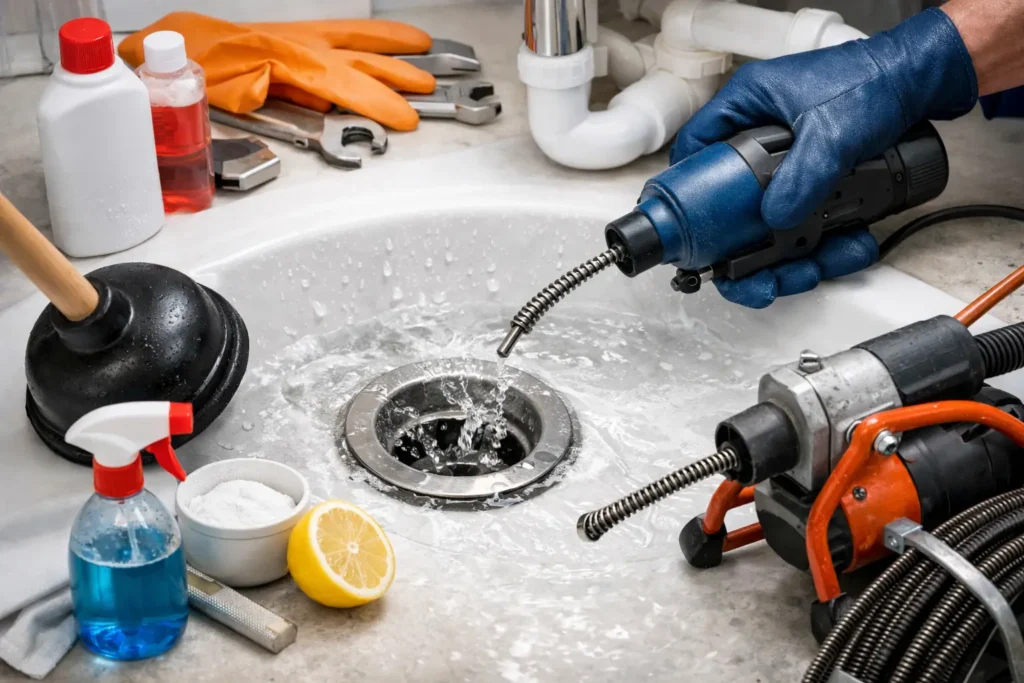
A drain that starts gurgling at breakfast can turn into standing water by dinner. When that happens, most people want a fast answer, not a chemistry lesson. The best drain cleaning methods depend on where the clog is, what is causing it, and whether the problem is isolated to one fixture or affecting the whole home.
Some drain issues are minor and respond well to simple cleaning. Others are warning signs of a deeper blockage in the line. Knowing the difference can save time, reduce mess, and help you avoid making the problem worse.
What makes one drain cleaning method better than another?
There is no single method that works best for every clog. A bathroom sink usually plugs up from soap residue and hair near the drain opening. A kitchen sink often collects grease, food particles, and sludge farther down the line. A floor drain or main sewer line may be dealing with buildup, wipes, roots, or a larger obstruction that basic tools will not reach.
That is why the best approach starts with the symptom. If one sink is slow but everything else is draining normally, the clog is probably local. If multiple fixtures are backing up, or a toilet bubbles when the shower runs, the issue may be farther down the system and needs a more complete inspection.
Best drain cleaning methods for everyday clogs
Manual cleaning at the drain opening
For sinks, tubs, and showers, the first step is often the simplest. Removing the stopper or drain cover and clearing out visible hair, soap scum, or debris can restore flow surprisingly often. This works best when the blockage is right near the top of the drain.
It is not glamorous, but it is practical. In bathroom drains especially, the clog is often a compact mat of hair and residue sitting just below the stopper assembly. If you can remove it cleanly, you may solve the problem without going any further.
The trade-off is that manual cleaning only reaches what you can access. If the line is still draining slowly after that, the clog may be deeper.
Plunging
A plunger is still one of the best drain cleaning methods for many common clogs because it uses pressure rather than chemicals. It can be effective on bathroom sinks, kitchen sinks, tubs, and some toilet-related drain blockages when used correctly.
The key is getting a proper seal and using controlled pressure. Too little force does nothing. Too much can create a mess or shift water where you do not want it. Plunging tends to work best on soft obstructions, not hardened buildup or long accumulations of grease.
If a fixture improves after plunging but slows down again within days, that usually means the clog was only partially moved. The line likely still needs a more complete cleaning.
Hand augers and drain snakes
When a clog sits farther down the branch line, a hand auger is often the next step. This is especially useful for bathroom sinks, tubs, and showers where hair and soap buildup collect beyond the trap area.
A drain snake can break through soft obstructions or pull out material that plunging cannot move. It is a strong option for recurring localized clogs because it reaches deeper into the line. For many homeowners, this is where DIY efforts should stop. An auger can help, but it can also scratch fixtures, get stuck, or fail to address the full blockage if the problem is more severe.
If you are managing a property with repeat complaints from the same unit or bathroom, recurring drain problems usually point to buildup that needs a more thorough professional cleaning rather than another temporary pass with a small snake.
Why chemical drain cleaners are usually not the best choice
Store-bought chemical cleaners are common, but they are rarely among the best drain cleaning methods if you care about long-term results. They may eat through part of a soft clog, but they often leave residue behind and do little for larger obstructions.
They also come with drawbacks. Harsh chemicals can sit in the line if the drain is fully blocked. That creates safety concerns for anyone opening the drain later, and it can complicate professional service. In some cases, repeated chemical use may also be hard on older piping or drain components.
For a one-time minor slowdown, some people try them anyway. But if the drain is fully stopped, backing up repeatedly, or affecting multiple fixtures, chemicals are more likely to delay the right fix than solve the actual problem.
Professional drain cleaning methods that solve deeper problems
Motorized snaking
Professional snaking uses stronger equipment than a basic hand auger and can clear clogs deeper in the line. This method is often effective for kitchen drain blockages, laundry line issues, and branch lines with compacted debris.
It is a practical choice when the blockage is solid enough that plunging and hand tools are not enough, but the line does not need full-scale jetting. In the right situation, it restores flow quickly and with less disruption than more involved methods.
The limitation is that snaking opens the path through the clog, but it may not fully clean the pipe wall. If grease, sludge, or scale has coated the inside of the line, the drain may start slow again unless the buildup is removed more completely.
Hydro jetting
When people ask about the best drain cleaning methods for stubborn or recurring clogs, hydro jetting is often part of the conversation. This process uses high-pressure water to clear debris and wash buildup from the inside of the pipe.
Hydro jetting is especially effective for grease, soap residue, sludge, and other material that coats the pipe over time. Instead of poking a hole through the blockage, it cleans the line much more thoroughly. That makes it a strong option for drains that have had repeated backup issues.
That said, hydro jetting is not automatically the first answer. The pipe condition matters. Older or damaged lines may need to be evaluated before high-pressure cleaning is recommended. A professional inspection helps confirm whether jetting is the right fit or whether another repair approach makes more sense.
Camera inspection with cleaning
Some clogs are symptoms, not the whole problem. A sewer camera inspection can show whether the issue is grease buildup, a sag in the line, root intrusion, wipes, or a break. This is often the smartest move when backups keep returning or when several drains in the home are acting up at once.
Camera work is not a cleaning method by itself, but it helps choose the right one. It also helps avoid guesswork. Instead of trying one tool after another, you get a clearer picture of what is in the line and how serious the problem is.
For homeowners and property managers, that clarity matters. It supports better decisions, cleaner communication, and approval of the right work before anything starts.
How to know when it is time to call for help
A slow drain does not always need emergency service. A sewer smell, recurring backup, or water rising in more than one fixture is different. Those signs usually mean the blockage is deeper or larger than a simple surface clog.
Call for professional help if the same drain keeps clogging, if multiple drains are slow at once, if a toilet bubbles when nearby fixtures run, or if water backs up into a tub or floor drain. Those are signs that the problem may involve the main line or a larger section of the drainage system.
This is also the right call if you have already tried basic steps and nothing changed. Continuing to force the issue can add mess, increase downtime, and make the eventual repair more difficult.
Choosing the right method for your situation
The best drain cleaning methods are the ones that match the actual cause of the clog. Manual cleaning and plunging make sense for simple, nearby blockages. Snaking helps with deeper localized clogs. Hydro jetting is often better for heavy buildup and recurring issues. Camera inspection becomes especially valuable when the symptoms point to a larger line problem.
For households in Columbus and nearby communities, the real priority is usually speed and clarity. You want to know what is wrong, what the next step should be, and what work is recommended before it begins. That is the standard Transit & Flow works to deliver, with clear communication and up-front approval based on the condition of the line.
If your drain is slowing down today, treat it early. Small clogs have a way of turning into bigger interruptions at the worst possible time. The right method, used at the right stage, can save you a much larger headache later.
