
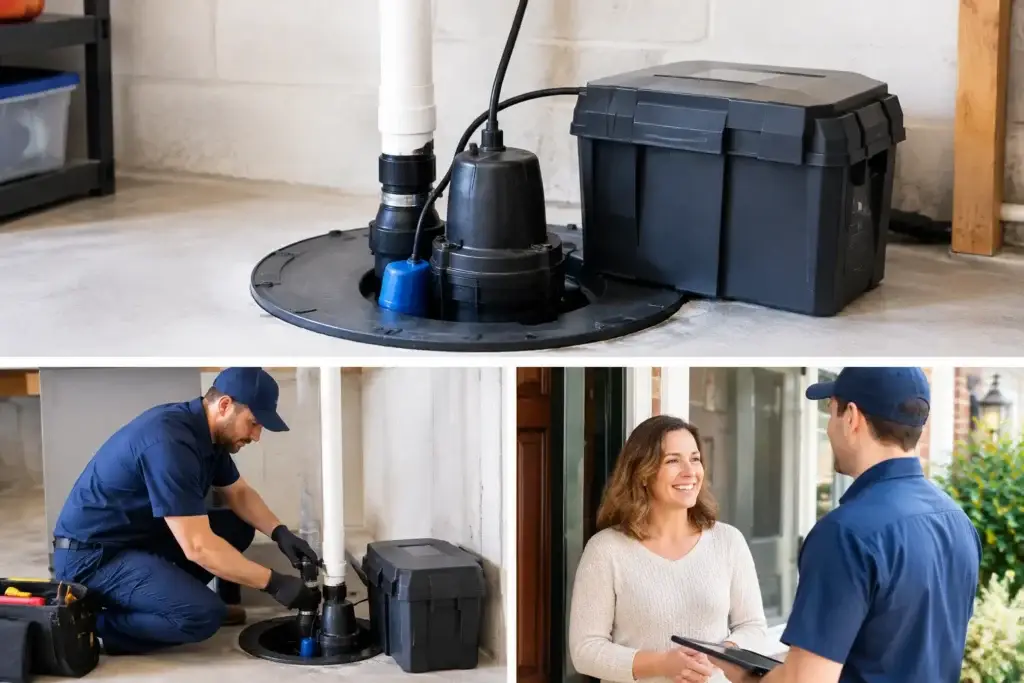
A sump pump can work perfectly for years, then face its toughest test during the same storm that knocks out power. That is why the best sump pump backup systems do more than add a second pump. They give your home another way to move water when the primary pump, electrical power, or both are unavailable.
For Columbus homeowners, a backup system is often a practical decision rather than an extra. Heavy rain, fast snowmelt, and aging drainage conditions can put pressure on a basement sump pit with little warning. The right system depends on your water source, the layout of your sump pit, how often it runs, and how much risk your basement holds.
What a Sump Pump Backup System Should Do
A backup system is designed to take over when the primary sump pump cannot keep up or cannot run. Most setups include a second pump in the pit, a separate power source or water supply, a check valve arrangement, and an alarm that signals trouble.
The goal is not simply to prevent a wet basement. A properly chosen backup can protect finished spaces, stored belongings, flooring, appliances, and the time-consuming cleanup that follows water damage. It also gives homeowners more time to respond during an outage instead of discovering the problem after water has already reached the floor.
No system is completely maintenance-free. Batteries age, water valves can be turned off, and discharge pipes can become blocked or frozen. A good backup plan pairs the right equipment with regular testing and clear warning alerts.
The Best Sump Pump Backup Systems by Situation
There is no single backup type that fits every home. The best choice comes down to the conditions that are most likely to cause a failure.
Battery-powered backups for most homes
A battery-powered backup is the most common option for homes with municipal water or a private well. It uses a separate battery to power a secondary pump when the primary pump loses power, fails, or cannot move water fast enough.
This setup is a strong fit for many Columbus-area homes because it continues working even when a storm disrupts electricity. It also does not rely on water pressure, which matters for homes on well systems where a power outage may stop the well pump.
Battery capacity is the main trade-off. A backup battery does not run forever, and its runtime depends on the battery size, how often the pump cycles, the vertical lift needed to discharge water, and the volume of incoming water. During a brief outage, a quality battery system may be exactly what a home needs. During a long outage combined with constant heavy water flow, the battery may be depleted before the risk has passed.
For that reason, pay attention to the stated pumping capacity and runtime rather than choosing only by price. An alarm that warns of low battery power, a failed pump, or high water in the pit is also worth having. The alert is what gives you a chance to act before a backup is exhausted.
Water-powered backups for homes with reliable city water
A water-powered backup uses municipal water pressure to create suction and remove water from the sump pit. It does not need a battery or electricity, so it can keep operating as long as city water pressure remains available.
This can be a useful choice for a home with dependable municipal water and a history of longer power outages. It avoids the limited runtime of a battery backup and eliminates the need to replace a backup battery every few years.
The trade-off is water use. These systems consume a significant amount of municipal water while pumping, and that can affect utility costs during a major event. They are also not the right answer for homes served by a well, because a power failure usually means the well pump cannot provide the water pressure the system needs.
Installation should be carefully planned. The unit needs proper plumbing connections, backflow protection where required, and enough water pressure to perform as intended. A professional assessment can confirm whether a water-powered unit is practical for your home before you commit to it.
Combination systems for added protection
Some homeowners prefer a combination approach: a battery-powered backup paired with a water-powered backup, or a high-capacity battery system supported by a portable generator during extended outages. This can provide more layers of protection, particularly in finished basements or homes where a flood would cause significant damage.
More protection also means more equipment to inspect and maintain. A combination system may make sense when the property has a high water table, a frequently active sump pit, or valuable finished space below grade. For a home with occasional sump activity and a short history of outages, a well-sized battery backup may be the more practical investment.
How to Choose the Right Backup for Your Home
Start with the reason you need a backup. If the primary concern is occasional power loss, a battery-powered system may be sufficient. If outages in your area tend to last longer and you have city water, a water-powered option may deserve a closer look. If your sump pump runs frequently even in ordinary rain, capacity and reliability matter more than the simplest setup.
The condition of the primary pump matters just as much. A backup system cannot make up for a failing main pump, a cracked discharge line, a blocked outlet, or a sump pit that is too small for the water volume entering it. If your primary pump is old, noisy, running constantly, or failing to keep up, evaluate the whole system rather than adding a backup to an existing problem.
Consider the vertical lift from the sump pit to the discharge point. The higher the water must travel, the harder the pump must work. Also consider where that water goes after it leaves the home. A discharge line that sends water too close to the foundation can allow it to return to the pit, creating a cycle that wears down both the primary and backup pumps.
The sump pit itself needs enough room for the equipment. Some older pits are too narrow or shallow for a reliable secondary pump installation. In those cases, adjusting the pit or reworking the plumbing may be part of the recommended solution.
Features That Are Worth Paying Attention To
A backup system should make problems visible, not hide them. Look for a system with a clear audible alarm and, if useful for your household, a remote alert feature. A warning about a high-water level, power loss, low battery, or pump problem is valuable only if someone receives it promptly.
Battery type matters as well. Many systems use maintenance-free deep-cycle batteries, while others use sealed batteries designed for easier placement and reduced upkeep. The correct option depends on the system manufacturer, available space, and expected runtime. The battery should be installed where it is protected from damage and can be inspected easily.
A separate check valve for the backup pump is another detail that affects performance. It helps prevent water from flowing back into the pit after pumping. The discharge configuration should also avoid restrictions that could reduce pumping capacity when you need it most.
Maintenance Keeps a Backup Ready
A backup system should be checked before the wettest parts of the year, not after a storm. Homeowners can verify that the alarm has power, look for warning lights, and make sure the discharge area is clear. For battery systems, follow the manufacturer guidance for battery testing and replacement.
It is also smart to have the primary pump, float switch, pit, check valves, and discharge line inspected as one system. A backup pump is most useful when every part of the drainage setup can do its job. If you hear unusual cycling, notice a damp basement, or receive a sump alarm, arrange service promptly instead of waiting for the next heavy rain.
For homeowners in Columbus and nearby communities, Transit & Flow can assess your existing sump setup, explain practical backup options, and provide clear recommendations before work begins. The right system should match your home’s water conditions and your comfort level with risk, not follow a one-size-fits-all answer.
A backup sump pump is easiest to overlook when the weather is calm. Taking care of it before the next outage or downpour gives your basement a better chance of staying dry when your primary pump needs help.
