
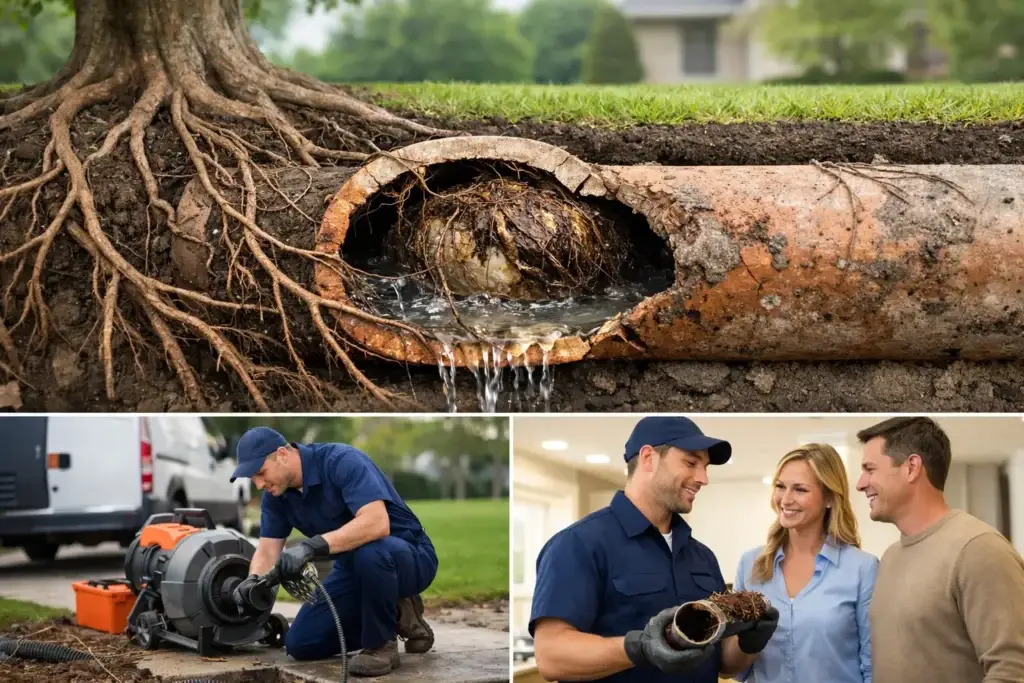
A sewer backup rarely starts with a dramatic break. More often, a homeowner notices one slow shower drain, a toilet that bubbles after the washer drains, or a faint sewer odor near a floor drain. Then the problem returns. Can tree roots damage sewers? Yes. Roots can enter small openings in an underground sewer line and gradually create a blockage that stops wastewater from leaving the home properly.
For Central Ohio homeowners, this is a common concern around mature trees, older neighborhoods, and homes with aging sewer pipes. The good news is that a root issue can usually be identified clearly before major repair decisions are made. The right next step is a professional evaluation that shows what is happening inside the line and explains the available options.
Can Tree Roots Damage Sewers or Just Clog Them?
Tree roots do not usually crush a sound, properly installed sewer pipe simply by growing nearby. Instead, roots are drawn to the moisture, nutrients, and oxygen that may escape through tiny gaps. A loose pipe joint, hairline crack, deteriorated section, or shifted connection can give a root a path inside.
Once roots reach the inside of the pipe, they continue to grow where water and nutrients are available. Fine strands can catch toilet paper, grease, soap residue, and other debris moving through the line. Over time, that buildup can turn a partial restriction into a full blockage.
Roots can also make an existing pipe defect worse. As they thicken, they may widen a crack or pull apart a weak joint. That is why clearing the blockage is sometimes only the first part of the solution. The condition of the pipe itself matters just as much as the material removed from it.
Why Sewer Lines Become Vulnerable to Roots
Any sewer line can develop a problem, but some conditions raise the likelihood. Older homes may have clay tile, cast iron, or other pipe materials with multiple connections along the route to the public sewer. Those joints can become vulnerable as the ground settles and materials age.
Newer lines can also have issues. Poor drainage around the home, ground movement, previous excavation, installation defects, or damage from nearby construction can leave a pipe slightly offset or cracked. Even a small opening may be enough for roots to enter.
The tree itself is only part of the picture. A healthy, mature tree located near a compromised sewer line can contribute to root intrusion, but removing a tree does not automatically repair the pipe. If there is a gap in the line, roots from other plants may still seek it out. A camera inspection helps separate assumptions from facts.
Warning Signs of Roots in a Sewer Line
One isolated slow drain may be a local clog close to that fixture. A sewer line issue is more likely when several plumbing fixtures are affected at the same time, especially those on the lowest level of the home.
Watch for recurring backups after a drain cleaning, slow drainage in multiple sinks or tubs, gurgling toilets, or water appearing in a basement floor drain. You may also notice that a toilet acts up when the washing machine, dishwasher, or shower is running. Those fixtures all send water through the main sewer line, so a restriction farther out can show up in more than one place.
A backup that occurs after heavy water use should not be ignored just because it clears on its own. Partial root blockages can allow a small amount of water through, then back up when the household sends a larger volume into the system. Waiting can raise the risk of wastewater coming back into the home.
How Professionals Confirm a Tree Root Sewer Problem
A proper diagnosis starts by finding the location and nature of the blockage. Drain cleaning equipment may be used to restore flow when possible, followed by a sewer camera inspection to view the inside of the pipe. The camera can reveal root growth, cracks, separated joints, standing water, collapsed sections, or other conditions that can cause similar symptoms.
This step matters because not every recurring clog is caused by roots. Grease buildup, flushed wipes, pipe bellies, scale inside an older line, and damaged sections can all restrict flow. Treating the wrong problem can mean spending money on a temporary fix without addressing the reason the backup keeps returning.
If roots are found, the service professional can explain how severe the intrusion is, where it is located, and whether the pipe is otherwise in workable condition. You should receive clear recommendations before repair work begins, along with up-front pricing based on the confirmed condition of the line.
Your Repair Options Depend on the Pipe Condition
When roots have entered a sewer line but the pipe remains structurally sound, professional drain cleaning may remove the intrusion and restore flow. This can be a practical option for a first-time issue or a line that needs maintenance while a homeowner plans for a longer-term repair.
However, clearing roots does not close the opening that allowed them in. If the pipe has cracked joints, deterioration, or significant shifting, the roots can return. The timing varies based on the type of tree, soil conditions, pipe material, and size of the defect, but repeat backups are a sign that cleaning alone may not be the best long-term answer.
For a localized defect, repairing a section of sewer line may make sense. If a camera inspection shows widespread deterioration or several root entry points, replacement may be more reliable. The best choice depends on the condition of the full line, access to the damaged area, and whether there are other issues that could cause future problems.
There is a trade-off between lower upfront cost and longer-term reliability. A cleaning service can restore use quickly, while a repair or replacement may address the damaged pipe that keeps attracting roots. A trustworthy recommendation should explain both options plainly rather than pushing a major repair without evidence.
What Homeowners Should Do When a Backup Starts
If wastewater is backing up into a tub, shower, floor drain, or toilet, limit water use right away. Avoid running the dishwasher, washing machine, showers, and additional flushes until the problem is assessed. More water entering a blocked sewer line can make the backup worse.
Do not rely on repeated plunging or chemical drain products for a suspected main sewer issue. These methods are unlikely to remove roots deep in the line, and they can complicate diagnosis or create safety concerns for anyone servicing the drain afterward.
For active backups or widespread drainage problems, schedule professional sewer service promptly. Transit & Flow provides responsive plumbing and sewer support for homeowners in Columbus and surrounding communities, with clear communication and customer approval before work begins. Availability, repair timing, and final recommendations depend on the site conditions and findings during the visit.
Can You Prevent Roots From Damaging Sewer Pipes?
You cannot stop trees from growing, and healthy trees add real value to a property. Prevention is more about protecting the sewer line than treating every nearby tree as a threat. If your home has an older sewer pipe, has experienced a root-related clog before, or has large mature trees near the line route, periodic sewer camera inspections can help catch changes before a backup occurs.
Be thoughtful before planting new trees. Knowing where the sewer line runs can help you avoid placing a fast-growing tree directly over or beside it. Still, distance alone is not a guarantee. Pipe condition, soil moisture, and existing openings all affect root behavior.
If a camera inspection identifies a damaged joint or cracked section before roots have caused a full blockage, repairing that defect can prevent a more disruptive emergency later. For many homeowners, that is easier to plan for than a weekend sewer backup.
A slow drain that keeps coming back is your home asking for a closer look. Addressing it while the line is still flowing gives you more time, more options, and a clearer path to protecting the home.
