
What if that bottle of liquid drain cleaner you just poured down the sink is actually eating away at your pipes instead of the blockage? It’s a stressful cycle many homeowners face. You notice the water pooling around your ankles in the shower, grab a quick chemical fix, and everything seems fine for a week or two. Then, the backup returns, often worse than before. If you’re tired of recurring clogs and worry about the integrity of your home’s older plumbing, you aren’t alone. Seeking out reliable clogged drain repair Columbus residents can trust shouldn’t feel like a gamble against high trip charges or pushy sales tactics.
We understand that your home is your biggest investment, and a slow drain is more than just an inconvenience. It’s a sign that your system needs a real, lasting solution. In this guide, we’ll debunk the common DIY myths that can lead to permanent pipe damage and explain why the local soil and aging infrastructure in central Ohio require a more methodical approach. You’ll learn how to choose a professional who prioritizes transparency and find a permanent fix that clears your lines without risking a total sewer collapse. Let’s get your plumbing back to peak performance with the honesty and expertise you deserve.
Key Takeaways
- Discover why common DIY “fixes” like chemical cleaners and boiling water often cause more harm than good to your home’s plumbing system.
- Understand how central Ohio’s temperature swings and heavy tree canopy make professional clogged drain repair Columbus a necessity for long-term pipe health.
- Learn the difference between mechanical snaking and hydro jetting so you can choose the right level of cleaning for your specific blockage.
- Spot the critical warning signs of a main sewer line backup, such as gurgling toilets, before a minor clog turns into a major emergency.
- Navigate the local market with confidence by learning how to identify transparent service providers and avoid common “trip charge” bait-and-switch tactics.
Common Myths About Clogged Drain Repair in Columbus Homes
It’s tempting to reach for a quick fix when your sink starts backing up. Many Columbus residents think a bottle from the hardware store is a permanent solution, but these DIY methods often hide deeper issues. When you’re looking for clogged drain repair Columbus homeowners can rely on, the first step is separating helpful advice from harmful myths. Believing that a slow drain is “fixed” just because the water eventually disappears is a recipe for a midnight plumbing emergency. Real solutions require understanding how your home’s unique plumbing system actually works.
The Hidden Danger of Chemical Cleaners on Columbus Pipes
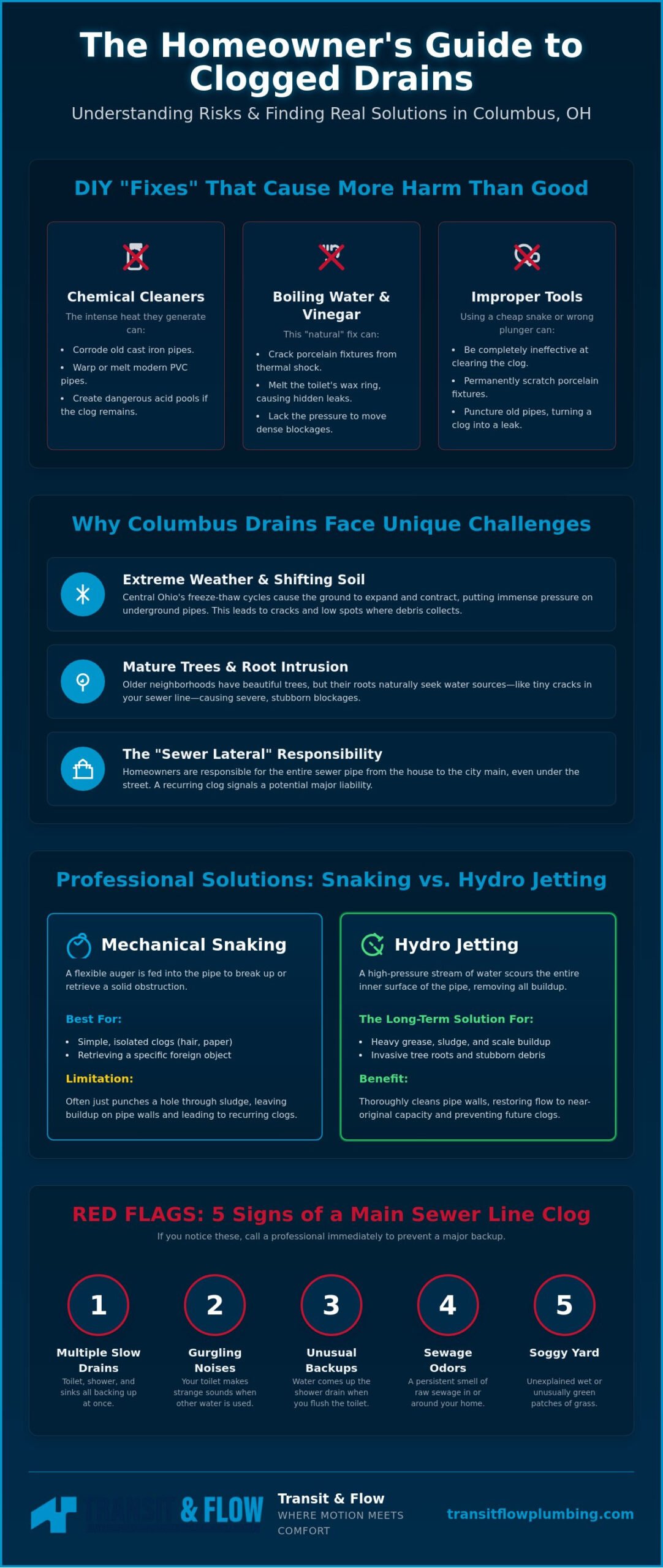
Caustic drain cleaners are often the first thing people grab, yet they’re frequently the most damaging. These chemicals work through an exothermic reaction, which means they create intense heat to dissolve organic matter. In many older Columbus neighborhoods, like Clintonville or German Village, homes still rely on original cast iron pipes. This heat accelerates corrosion in metal and can easily warp or melt modern PVC. If the cleaner doesn’t clear the blockage, it simply sits in your pipes, creating a pool of acid. This makes it incredibly dangerous for a professional to clear the line later, as the splash-back can cause severe chemical burns. Despite what the packaging claims, flushable wipes do not actually break down in your sewer system and are currently the leading cause of massive blockages in modern residential plumbing.
Why Boiling Water and Vinegar Are Often Overrated
You might have heard that boiling water is a natural way to melt grease, but it’s a risky gamble. If you have a porcelain toilet or sink, the extreme temperature shift can cause the fixture to crack instantly. Even worse, boiling water can melt the wax ring that seals your toilet to the floor, leading to hidden leaks and subfloor rot. While a mixture of vinegar and baking soda is excellent for refreshing a smelly garbage disposal, it lacks the physical pressure needed to move a heavy hair or root clog. It creates a “volcano effect” in your sink that looks impressive but rarely clears the actual obstruction deep in the line.
Using the wrong tool can also turn a minor issue into a pipe replacement. Not all plungers are the same; a flat sink plunger won’t create the necessary seal on a toilet. For tougher clogs, some homeowners try a cheap hand-cranked Plumber’s snake. Without professional training, it’s easy to scratch the porcelain or, worse, puncture a weakened section of an aging sewer line. If your water is moving slowly, the problem isn’t solved; it’s just waiting to become a total backup. Professional clogged drain repair Columbus services focus on removing the entire obstruction rather than just punching a small hole through it.
Why Columbus Drains Fail: Local Factors and the Root of the Problem
Columbus isn’t just a place where we live; it’s a specific environment that presents unique challenges to your home’s infrastructure. While a clog in a different part of the country might be a simple matter of hair or grease, central Ohio homeowners deal with shifting soil and extreme weather cycles. The dramatic swing between humid 90-degree summers and sub-zero winters causes the ground to expand and contract. This constant movement puts immense pressure on underground pipes, often leading to offsets or cracks that invite debris to collect. When you need clogged_drain_repair_Columbus residents can count on, it’s vital to work with someone who understands these local geological stressors.
One of the most common points of confusion for homeowners is the “sewer lateral.” This is the section of pipe that connects your home’s internal plumbing to the city’s main sewer line. In Columbus, the homeowner is typically responsible for the maintenance and repair of this entire lateral line, even the portion that runs under the sidewalk or street. This is why a recurring backup is more than a nuisance; it’s a potential financial liability. Whether you’re living in a historic German Village cottage with original cast iron or a New Albany new build with modern PVC, the cause of your failure is often tied to the age and material of these specific lines.
Root Intrusion: The Silent Clog in Older Neighborhoods
If you live in Clintonville, Worthington, or Upper Arlington, you likely enjoy a beautiful, mature tree canopy. Unfortunately, those trees have vast root systems that are “pipe seekers.” They follow the moisture and warmth radiating from your sewer line until they find a microscopic gap in a clay tile seam. Once inside, they grow into thick, woody masses that act like a net, catching everything you flush. Many people try “root killer” foaming products, but these are often just a temporary band-aid. They might kill the tips of the roots, but they don’t remove the physical obstruction. Mechanical removal is the only way to restore full flow and prevent a total pipe collapse.
Hard Water and Mineral Buildup in Central Ohio
Central Ohio is known for having mineral-rich hard water. Over time, calcium and magnesium settle out of the water and create a rock-hard “scale” on the inside of your pipes. This buildup narrows the diameter of the drain, much like a clogged artery. This scale also creates a rough surface that acts like sandpaper, snagging hair, soap scum, and food particles that would otherwise wash away. Regular Residential Drain Cleaning can strip away this buildup before it requires an emergency excavation. Before hiring a contractor for these larger repairs, it’s always wise to follow advice from the Federal Trade Commission regarding how to vet home improvement professionals. If your drains are slowing down, scheduling a professional inspection can save you from a much larger headache later.
Mechanical Snaking vs. Hydro Jetting: Which Is Right for Your Pipes?
Choosing the right tool for clogged drain repair Columbus homes isn’t just about clearing a backup quickly. It’s about ensuring your plumbing stays clear for years instead of weeks. When faced with a stubborn blockage, you’ll likely hear two terms: mechanical snaking and hydro jetting. Both have their place in a plumber’s toolkit, but they serve very different purposes. You wouldn’t use a sledgehammer to hang a picture frame, and you shouldn’t use a heavy-duty jetter for a simple hair clog in a bathroom sink.
When to Choose a Traditional Plumbing Auger
Mechanical snaking is the classic “punch through” method. A flexible steel cable with a specialized tip is fed into the pipe to physically break apart an obstruction. This is often the best choice for localized issues, such as a child’s toy stuck in a toilet or a dense ball of hair in a shower drain. It provides immediate relief and gets the water moving again without much setup. However, snaking has its limitations. A mechanical snake often simply corks a small hole through the center of a clog rather than scrubbing the debris away from the pipe walls. This means that while the water flows again, the sticky residue remains behind to catch new debris immediately.
The Power of Hydro Jetting for Long-Term Health
If you’re dealing with recurring clogs or heavy root intrusion from that beautiful Columbus tree canopy, hydro jetting is the superior solution. This process uses high-pressure water delivered through a specialized 360-degree nozzle to scour the inside of your pipes. It doesn’t just poke a hole; it restores the pipe to its original diameter. Grease buildup is a main cause of sewer backups that snaking often misses, but hydro jetting blasts it away completely.
There is a common myth that hydro jetting is too powerful for residential pipes and might cause them to burst. In reality, a professional technician adjusts the pressure based on the material and age of your lines. While it may cost more upfront than a standard snake, the long-term savings are significant. You’re paying for a truly clean pipe rather than a monthly visit for the same recurring issue. Before any tool touches your line, a video camera inspection is essential. It allows us to see exactly what we’re fighting, whether it’s a soft grease clog or a structural failure, so we can provide the most effective clogged drain repair Columbus residents can trust.
5 Warning Signs Your Main Sewer Line is Starting to Clog
A single slow sink is an inconvenience, but a main sewer line clog is a legitimate household emergency. Identifying these signs early can be the difference between a simple cleaning and a complete basement restoration. When it comes to clogged drain repair Columbus, homeowners often wait until there’s standing water in the laundry room to call for help. Don’t make that mistake. Your plumbing system usually gives you several warnings before a total failure occurs. Understanding these red flags helps you act before the “black water” starts rising.
- Simultaneous Backups: If you flush the toilet and water rises in the shower, or if the kitchen sink gurgles when you run the dishwasher, your main line is struggling.
- The Gurgling Sound: This happens when air is trapped in the pipes. It’s a classic sign that water is fighting to get past an obstruction deep in the system.
- Foul Odors: Sewer gas should stay in the pipes. If you smell it in your yard or through your floor drains, the seal is broken or the line is blocked.
- Basement Floor Drain Issues: Water pooling around the drain in your basement is a major red flag. This is the lowest point in your home’s plumbing and the first place a backup appears.
- Persistent Slowness: If every drain in the house is sluggish despite your best DIY efforts, the problem isn’t in your sink trap; it’s in the main lateral.
The “Gurgle Test” and What It Means
Have you ever heard a strange bubbling sound from the bathroom while the washing machine is draining? This is the “gurgle test” in action. Trapped air in the system indicates a blockage further down the line that’s preventing smooth airflow. When water can’t flow freely, it displaces the air in the pipes, pushing it back through your fixtures. You should never ignore a gurgling toilet or floor drain. It’s an early warning that a total backup is imminent. For more details on these symptoms, check out our guide on Signs Your Main Sewer Line Is Clogged or Blocked.
Basement Floor Drains: Your Home’s Early Warning System
Your basement floor drain is the “canary in the coal mine” for your plumbing. Since it sits at the lowest elevation, gravity sends any backed-up water there first. Distinguishing between a localized clog and a city-side backup is crucial here. If water is rising even when you aren’t running any appliances, the city’s main might be the culprit. However, if it only happens when you use water, the clog is in your line. If you see dark, foul-smelling water rising in your basement, stop using all water immediately and shut off your main valve. To prevent a messy cleanup, you can schedule a professional drain cleaning at the first sign of a slow floor drain.
Choosing a Reliable Plumber in Columbus Without the Stress
Finding clogged drain repair Columbus services shouldn’t feel like you’re entering a high-stakes negotiation. Many homeowners are rightfully wary of the “no trip charge” offers they see advertised on social media or local forums. Community threads on sites like Reddit are often filled with stories of technicians who arrive for “free” only to quote an astronomical price before they even unload their gear. True transparency means providing clear, upfront information so you know exactly what the investment in your home’s health will be. You deserve a partner who values your time and your budget as much as you do.
Hiring a local guide who understands the specific plumbing codes in central Ohio is essential. Columbus has its own municipal licensing and permitting requirements, particularly when a simple clog turns out to be a larger sewer line issue. A professional who knows these local regulations ensures that all work is performed safely and legally. This expertise is especially vital in historic areas where aging infrastructure requires a delicate, knowledgeable touch to avoid accidental damage to old clay or cast iron lines.
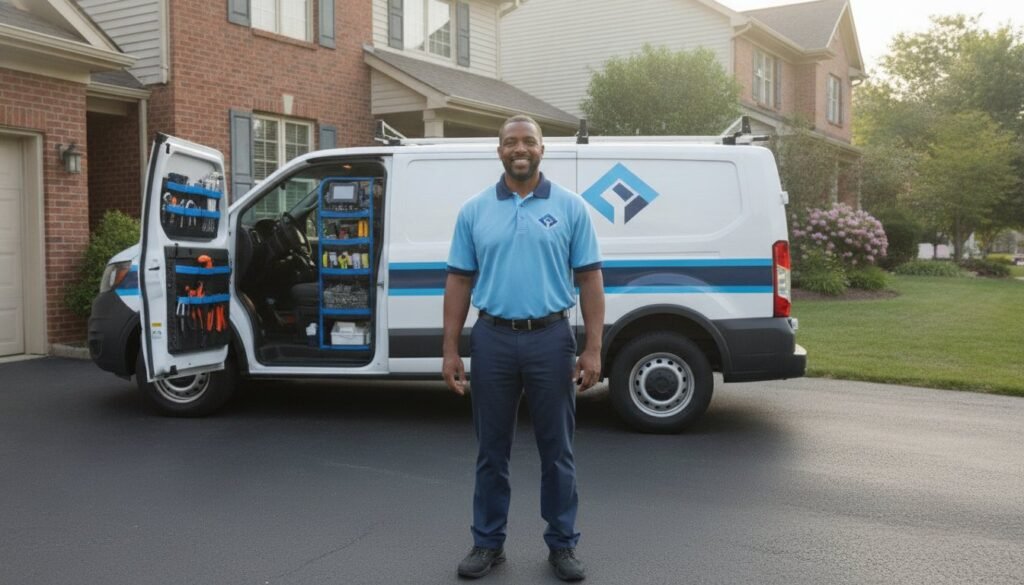
What to Ask Before They Unload the Van
Before a technician starts working on your pipes, ask a few clarifying questions to protect your home. A reputable service provider will be happy to provide these details. Make sure to cover these three points:
- Do you provide a camera inspection with the drain cleaning? Seeing the blockage is the only way to ensure the fix is permanent.
- Is there a guarantee on the work if the clog returns in 30 days? A reliable fix should last much longer than a few weeks.
- Are you licensed and insured for residential work in Columbus, Ohio? This protects you from liability if an accident occurs on your property.
The ProCare Advantage: Moving from Crisis to Comfort
The best way to handle a plumbing emergency is to prevent it from ever happening. Our ProCare Plumbing Maintenance Plans are designed to move your home from a state of crisis to a state of comfort. By performing regular inspections, we can catch mineral scale buildup or tiny root intrusions before they turn into a basement flood. This proactive approach saves you money and eliminates the stress of a midnight sewer backup. You gain the peace of mind that comes with having a “Reliable Local Guide” on speed dial who is already familiar with your home’s specific needs. Don’t wait for the water to start rising to find a solution you can trust. Schedule your professional drain inspection with Transit & Flow today.
Restore Your Home’s Flow with Confidence
Don’t let a slow drain turn into a major basement flood. We’ve seen how chemical cleaners and DIY myths can weaken your pipes, especially when dealing with the unique soil and root systems found in central Ohio. By choosing a professional solution like hydro jetting and relying on expert sewer line camera inspections, you aren’t just clearing a clog; you’re protecting your home’s long-term integrity. Whether you need 24/7 Emergency Plumbing & Drain Services or you’re ready to prevent future headaches with our ProCare Plumbing Maintenance Plans, we’re here to help.
Finding reliable clogged drain repair Columbus residents can trust shouldn’t be a stressful experience. Our team is committed to transparent service and permanent fixes that keep your plumbing running smoothly. You deserve the peace of mind that comes with a clear, healthy drainage system. Get Expert Clogged Drain Repair in Columbus – Schedule Now and get back to your routine without the worry of recurring backups. We look forward to being your reliable local guide for a worry-free home.
Frequently Asked Questions
Is it okay to use Liquid-Plumr or Drano on a clogged drain?
It’s best to avoid chemical cleaners like Liquid-Plumr or Drano. These products create an intense exothermic reaction to melt clogs, but that same heat can warp PVC pipes or accelerate corrosion in older cast iron lines. If the chemical fails to clear the blockage, it sits in your pipes as a caustic hazard. This makes it much more dangerous for a professional to clear the line manually later.
How much does professional clogged drain repair cost in Columbus?
The cost for a professional visit varies based on the severity and location of the blockage. Minor sink clogs are typically less expensive than main sewer line issues that require heavy equipment. While local industry averages often fall between $125 and $500, a transparent plumber will provide a specific quote after a visual inspection. This ensures you aren’t surprised by hidden fees or unexpected “trip charges” later.
Can I rent a plumbing snake and fix a sewer clog myself?
You can rent a motorized snake, but it’s often a risky choice for homeowners. Without professional training, it’s easy to damage the interior of your pipes or get the cable stuck in a thick root mass. If your home has older, weakened pipes, the force of a rental auger can cause a puncture or collapse. This often turns a simple cleaning into an expensive excavation repair.
How do I know if my clog is in the sink or the main sewer line?
Check if the problem is localized or widespread. If only one sink is backing up, the clog is likely in that specific drain trap. However, if multiple fixtures are backing up simultaneously, such as the shower filling when you flush the toilet, the issue is in the main sewer line. This requires the professional clogged drain repair Columbus homeowners trust to prevent a total household backup.
What is hydro jetting and is it safe for old Columbus pipes?
Hydro jetting uses high-pressure water to scour the inside of your pipes and remove grease or roots. It’s safe for older pipes provided a video camera inspection is performed first. This allows the technician to verify the pipe’s structural integrity and adjust the water pressure accordingly. It’s often the most effective way to restore an aging system to like-new condition without using any harsh or damaging chemicals.
Does a clogged drain count as a plumbing emergency?
A clogged drain becomes an emergency if it’s the main sewer line or if sewage is backing up into your home. Standing “black water” poses a health risk and can cause immediate structural damage to your floors. If you can’t use your toilets or sinks without a backup occurring, it’s time to call for emergency plumbing services to protect your property and your family’s health.
Why does my drain keep clogging even after I’ve cleared it?
Recurring clogs usually mean the original obstruction wasn’t fully removed. DIY methods like hand-snaking often just punch a small hole through a blockage rather than cleaning the pipe walls. Over time, grease and hair catch on the remaining residue or on rough mineral scale. In many Columbus neighborhoods, recurring issues are also a sign of persistent tree root intrusion that requires a more thorough, professional cleaning.
Will a clogged drain fix itself over time?
A clogged drain will not fix itself and will almost always get worse over time. While water might eventually seep through a partial blockage, the debris causing the clog will continue to catch new material. Ignoring the problem often leads to a total pipe failure or a messy sewage backup. Addressing a slow drain early is the best way to avoid the stress and expense of a major plumbing crisis.
