
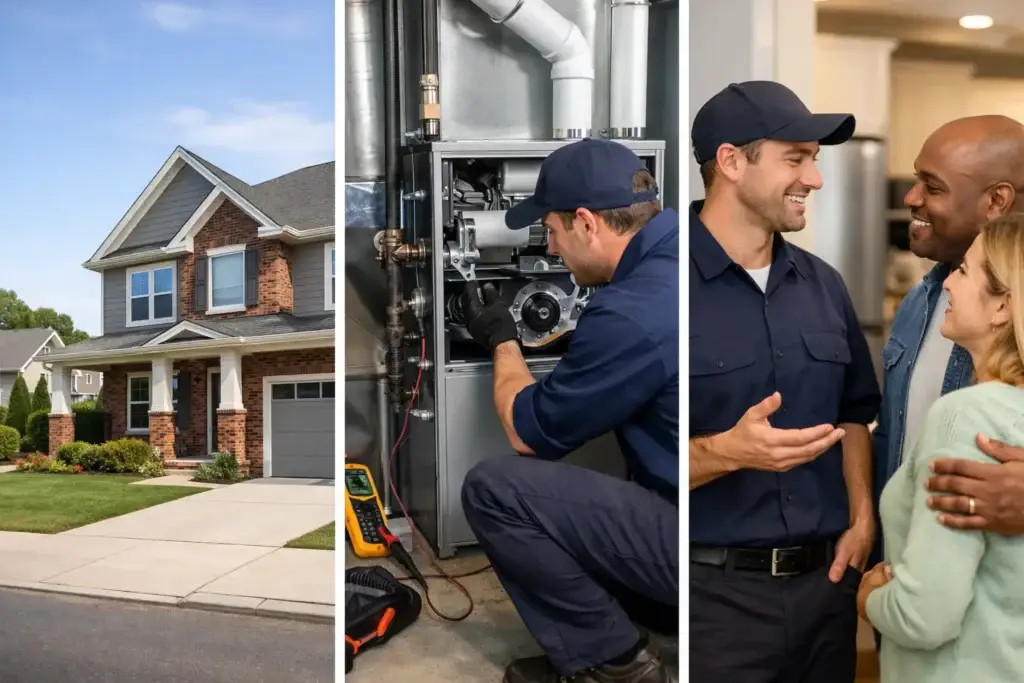
A furnace rarely picks a convenient time to fail. One day it is taking longer to warm the house, the next it is making an unfamiliar sound or cycling constantly. When repairs no longer make practical sense, furnace installation becomes a decision about comfort, operating costs, and getting dependable heat back before a Central Ohio cold snap.
For Columbus homeowners, the right replacement is not simply the newest or largest model available. A properly planned installation accounts for the home, the existing system, and the work required to make the new equipment operate safely and efficiently. Clear answers before work begins make the process much less stressful.
When Furnace Installation Is the Better Choice
Most furnace problems do not require immediate replacement. A failed igniter, worn blower component, dirty flame sensor, or thermostat issue may be repairable. A qualified technician can diagnose the specific issue and explain the available options.
Replacement becomes more reasonable when the furnace has a history of repeated breakdowns, is near or beyond its expected service life, or needs a major repair that does not make financial sense for its condition. Uneven heating, frequent cycling, rising utility bills, excessive noise, and trouble maintaining the thermostat setting can also point to a system that is no longer performing well.
Age alone does not decide the question. A well-maintained older furnace may still have useful life, while a newer unit with a major problem may need a closer evaluation. The useful comparison is the cost and likely reliability of repair against the benefits and total scope of replacement.
If the furnace stops during cold weather, timely diagnostics matter. In some cases, a repair can restore heat while you consider replacement. In others, replacing the system may be the more dependable path. Availability for an installation depends on scheduling, equipment access, materials, and site conditions, so it is best to get the process moving as soon as the need is clear.
Furnace Installation Starts With Proper Sizing
A common misconception is that a bigger furnace will heat a home better. An oversized unit can heat the air too quickly and shut off before it has distributed warmth evenly. That short cycling can create hot and cold rooms, add wear to components, and reduce comfort.
A furnace that is too small has the opposite problem. It may run for long stretches without keeping up when temperatures fall, especially in rooms with poor insulation, older windows, or difficult airflow. The goal is a system sized for the home rather than one chosen by a quick square-foot estimate alone.
During an estimate, a technician should consider the home’s size, layout, insulation, window exposure, number of levels, existing ductwork, and the performance of the current system. A finished basement, room addition, or recently renovated attic can change the heating needs of a home. These details help determine whether the existing furnace capacity and duct system are still appropriate.
This is also the time to discuss comfort concerns. If an upstairs bedroom has always been colder than the rest of the house, replacing the furnace may help, but it may not solve the issue by itself. Duct restrictions, return-air placement, insulation gaps, or thermostat location can all affect how heat moves through the home. An honest recommendation identifies what the new furnace can address and what may require separate improvements.
Efficiency Is About More Than the Rating
Higher-efficiency equipment can reduce fuel use, but it is not automatically the best value for every home. The right option depends on the home’s heating demands, the condition of existing venting and ductwork, the budget for the project, and how long you expect to stay in the home.
Some higher-efficiency furnaces may require changes to venting or condensate drainage. Those requirements can affect the installation scope and cost. A clear proposal should explain the equipment being considered, the work included, and any site-specific items that need to be addressed.
A properly installed standard-efficiency furnace may be a sensible choice in one home, while another homeowner may benefit from higher efficiency and additional comfort features. The best decision is based on the complete picture, not a single number on an equipment label.
What Happens During a Professional Installation
A dependable installation begins before installation day. After evaluating the home and confirming the recommended equipment, the service team should explain the expected scope, answer questions, and provide pricing for customer approval. Pricing should reflect the actual work needed after inspection, not a broad assumption about every home being the same.
On installation day, technicians typically protect the work area, remove the old furnace, and inspect the connections that support the new system. That may include the electrical connection, fuel supply, venting, drainage, thermostat wiring, and nearby duct transitions. If an unexpected condition is found, such as a damaged connection or an outdated component that affects the installation, it should be clearly explained before additional work proceeds.
The new furnace is then set in place and connected according to the requirements of the home and equipment. The final stage is not just turning it on. The system should be tested to confirm proper startup, heating operation, airflow, thermostat response, and safety controls. The team should also leave the work area clean and explain basic operation, including how to change the filter and what signs may call for service.
Installation length varies. Straightforward replacements can sometimes be completed in a single visit, while equipment changes, duct updates, venting work, or access challenges can extend the schedule. Asking what is included and what conditions could affect timing gives you a more realistic expectation.
Cost Factors to Discuss Before You Approve the Work
There is no responsible one-price answer for a new furnace. Equipment capacity and efficiency matter, but the installation details often matter just as much. A replacement that uses existing connections in good condition may have a different scope than one requiring venting changes, electrical updates, drainage work, or duct modifications.
Ask for a clear explanation of the recommended system and why it fits your home. You should understand what is included in the quoted work, what warranty information applies, and whether there are options at different price points. If financing is available, review the terms carefully so you can choose a payment option that fits your household budget.
Flat-rate pricing and approval before work begins help avoid uncertainty. If conditions change after the old equipment is removed or an issue becomes visible during the job, a professional service team should explain the finding and available options rather than moving forward without your approval.
Prepare Your Home for Installation Day
A little preparation can help the visit go smoothly. Clear a path from the entry door to the furnace area, and move stored items away from the equipment if it is safe to do so. Make sure pets are secured and that an adult decision-maker is available to review any questions that may come up.
If the furnace is in an attic, crawl space, basement utility room, or closet, accessible space matters. Let the service team know in advance about parking limitations, gate codes, unusual access, or recent water damage near the equipment. These details help the appointment start efficiently.
It is also helpful to write down any comfort concerns you have noticed. Mention rooms that feel cold, thermostat behavior that seems inconsistent, recent repair history, or changes made to the home. Those observations give the technician useful context that may affect the recommendation.
Protect the New Furnace After Installation
A new furnace benefits from regular attention. The simplest task is checking the filter on the schedule recommended for the filter type and your household. A clogged filter can restrict airflow, reduce comfort, and place unnecessary strain on the system.
Annual heating maintenance is also a practical way to catch developing issues before they become a no-heat call. Service can include inspecting key components, checking operation, and identifying wear that may need attention. Keep supply and return vents open and avoid blocking them with furniture or storage so the system can move air as designed.
For homeowners in Columbus and nearby communities, Transit & Flow can evaluate a failing furnace, explain replacement options in plain language, and provide a clear scope for approval. The right next step is not to rush into the first available unit. It is to schedule an assessment, ask direct questions, and choose an installation plan that gives your home reliable heat when it matters most.
