
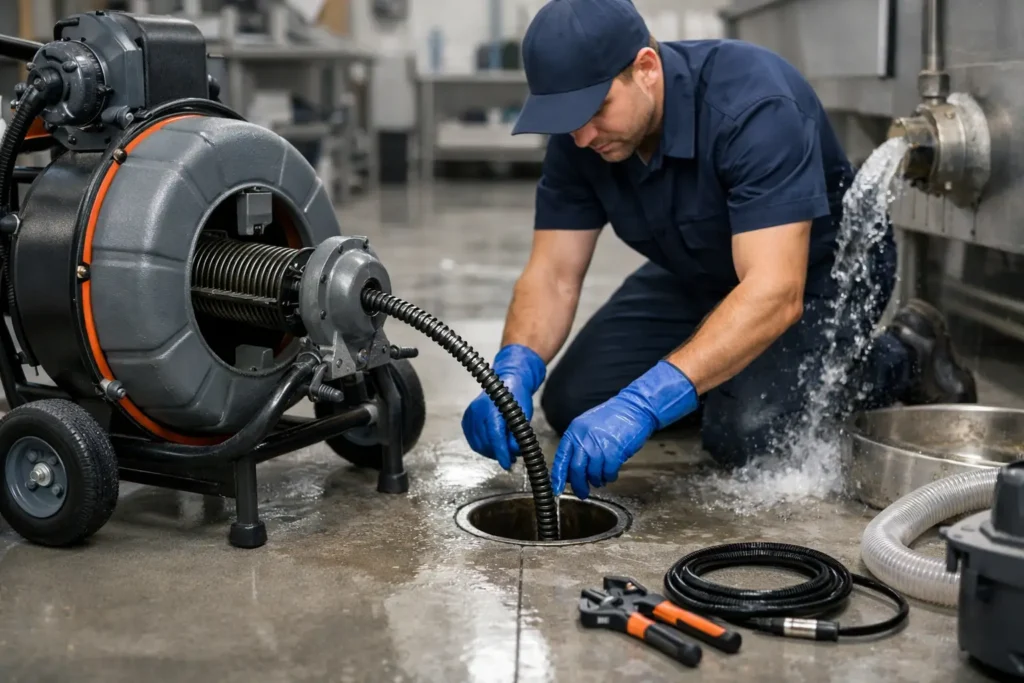
For multi-unit and managed properties, Transit & Flow coordinates service requests through properly licensed contractors where required by Ohio law.
A backed-up floor drain at a restaurant, a slow restroom sink in an office, or recurring clogs in an apartment laundry room can turn into a bigger problem faster than most property owners expect. For multi-unit and managed properties, drain cleaning is not just about clearing one blockage. It is about protecting daily operations, avoiding repeat service calls, and fixing the actual cause before it affects tenants, staff, or customers.
Drain issues in shared-use buildings rarely stay isolated for long. A small grease buildup in a kitchen line can lead to slow drainage across multiple fixtures. A recurring clog in a multi-unit building may point to a larger issue in the branch line or main drain. The right response depends on the type of property, how the drain system is used, and whether the problem is a one-time obstruction or part of a larger pattern.
What professional drain cleaning for multi-unit properties includes
When people hear drain cleaning, they often picture a basic snaking service. In some situations, that is enough. But for a high-use property, the best solution often involves more than one step.
A complete approach can include opening a blocked line, removing grease or sludge buildup, clearing scale from pipe walls, checking the line with a camera, and identifying whether the issue is in a localized drain or farther down the system. The goal is not just flow for today. The goal is reliable flow next week, next month, and through the busiest parts of the schedule.
That matters for offices, retail spaces, restaurants, apartment buildings, HOAs, and other shared-use properties because their drain systems carry higher volume and see more wear than most residential plumbing. A line that seems functional can still be narrowing over time. By the time odors, backups, or overflows appear, the underlying buildup may already be significant.
Common drain problems in multi-unit and managed properties
Shared-use properties deal with a wider range of drain conditions than most owners realize. In food service spaces, grease is the obvious issue, but soap residue, food particles, and sediment all contribute. In apartment buildings, wipes, paper products, and heavy daily use often create recurring stoppages. In offices and retail buildings, restroom drains and break room sinks can develop slow-flow issues that seem minor until they disrupt the whole space.
Floor drains are another common trouble spot. These drains are easy to ignore because they are not used the same way as a sink or toilet, but they collect debris, sludge, and standing water over time. When they fail, the result is often unpleasant odors, water pooling, or a messy backup in utility rooms, kitchens, or common areas.
Outdoor drains and main lines bring a different set of concerns. Tree roots, shifting soil, older pipe materials, and long-term buildup can all restrict drainage. If multiple fixtures are slow at once, or if backups occur in lower-level areas, the issue may be beyond a single sink or restroom line.
Choosing the right solution depends on the cause
Not every clog needs the same approach. A cable machine may break through a blockage and restore drainage quickly, which is useful when service needs to happen fast. But if a line is coated with grease, sludge, or scale, punching a hole through the obstruction may only provide short-term relief. The drain works again, but the buildup remains on the pipe walls and the problem returns.
That is where more thorough cleaning methods make a difference. Hydro jetting, for example, is often used when a line needs a deeper cleaning rather than a basic opening. It uses high-pressure water to remove accumulated debris from the interior of the pipe. This can be a strong option for grease-heavy lines, recurring clogs in busy buildings, and preventive maintenance in high-use systems.
Still, hydro jetting is not automatically the answer in every case. Pipe condition matters. Older or damaged lines may need inspection before higher-pressure cleaning is recommended. If there is a crack, collapse, or significant root intrusion, the cleaning method has to match the condition of the system. This is one reason a professional evaluation matters before work begins.
Why camera inspections matter with recurring clogs
If the same drain keeps causing problems, the smartest next step is often not another repeat cleaning. It is finding out why the blockage keeps coming back.
A camera inspection helps identify whether the issue is grease buildup, scale, root intrusion, a sag in the line, a foreign object, or a damaged section of pipe. That changes the recommendation. Without inspection, it is easy to spend money on repeat visits while the underlying problem stays in place.
For property managers and owners, that difference matters. A recurring drain problem is not just a plumbing inconvenience. It affects tenant satisfaction, staff productivity, cleanup costs, and scheduling. Clear diagnostics support better decisions, especially when balancing immediate service needs with longer-term maintenance planning.
Signs a property needs professional drain service now
Some drain problems are obvious, and some are easy to underestimate. If water drains slowly in more than one area, sewage odors are becoming noticeable, gurgling sounds are increasing, or backups have happened more than once, it is time to have the system checked. The same applies if tenants or employees are making repeated complaints about the same fixtures.
The biggest mistake is waiting until a line fully stops. Multi-unit and managed properties usually have more to lose when drainage fails – interrupted business, unhappy occupants, sanitation concerns, and emergency cleanup. Early service is usually easier to manage than a last-minute response after overflow or water damage.
Preventive drain maintenance saves time and money
Emergency calls are part of property management, but many drain issues can be reduced with a maintenance-based approach. Preventive drain maintenance is especially useful for buildings with known high-demand areas like shared restrooms, kitchen lines, laundry rooms, and floor drains.
A preventive schedule helps remove buildup before it turns into a blockage. It also creates a service history, which is useful when a property has older plumbing or recurring trouble spots. Instead of reacting to the same drain over and over, owners can track patterns, adjust cleaning frequency, and plan around business hours or tenant needs.
This is not about overservicing a property. It is about matching service to actual usage. A restaurant may need more frequent attention than an office suite. An apartment building with recurring stack or branch line issues may benefit from a different plan than a small retail property. The right schedule depends on what the building sees every day.
What to expect from a professional service visit
For most property owners and managers, the biggest concern is not just whether the drain can be cleared. It is whether the process will be organized, explained clearly, and handled without unnecessary confusion.
A professional drain service visit should start with questions about what is happening, where the issue is showing up, and whether it has happened before. From there, the technician can assess the affected area, determine whether the issue is localized or system-wide, and recommend the next step. In some cases that means a basic cleaning. In others, it may mean camera inspection, hydro jetting, or further evaluation before any larger repair decisions are made.
Clear communication matters here. Property owners and managers need to know what was found, what is recommended, and what requires approval before work moves forward. That is especially important in managed settings where access, tenant coordination, and timing all affect the job.
For Columbus-area properties, Transit & Flow coordinates this process end to end – practical recommendations, up-front communication, clear approval before work begins, and licensed contractor coordination where required by Ohio law.
A fast response helps, but accuracy matters too
When a drain problem interrupts normal operations, speed matters. Same-day availability can make a real difference, especially when restrooms, kitchens, or common-use drains are affected. But fast service should still lead to the right solution, not just the quickest temporary fix.
That is the balance multi-unit and managed properties need. If the line simply needs to be opened, the answer can be straightforward. If the issue points to buildup, structural damage, or repeated system stress, a more complete recommendation is the better investment. The most effective service is the kind that restores use now and helps prevent the same disruption from happening again.
If your building is showing signs of a drain problem, the best next step is to address it while the issue is still manageable. A clear diagnosis today is often what prevents a much more disruptive call tomorrow. To coordinate a service request for your property, call (614) 333-8092 or book online.
