
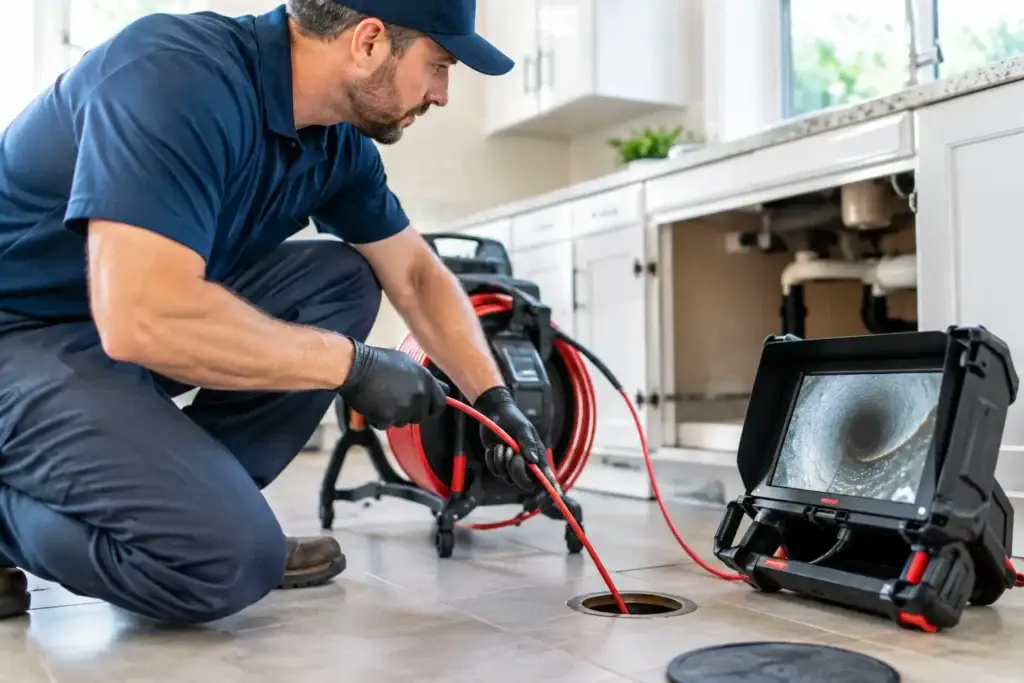
A drain that keeps backing up rarely gives a clear explanation. Water may drain slowly for weeks, then stop moving altogether after laundry day or a heavy rain. A drain camera inspection guide can help make sense of the problem before you agree to major drain cleaning or sewer repair work. Instead of guessing whether the issue is grease, roots, a damaged pipe, or a blockage farther down the line, a camera gives your plumber a direct view inside the pipe.
For homeowners, that visibility matters. It can turn a vague recommendation into a clear conversation about what is happening, where it is happening, and what repair options make sense for the condition of the line.
What Is a Drain Camera Inspection?
A drain camera inspection uses a small waterproof camera attached to a flexible cable. A technician feeds the camera through an appropriate drain access point, often a cleanout, and watches a live video feed as it travels through the line. The camera can show the interior condition of the pipe and help identify the location of a blockage or damage.
The inspection is commonly used for main sewer lines, but it may also help diagnose certain interior drain problems. The best access point depends on your plumbing layout, the symptoms you are seeing, and whether the line is currently blocked with standing water.
A camera does not physically clear a clog. It is a diagnostic tool. In some cases, drain cleaning is the logical first step because debris must be removed before the camera can travel through the pipe. In others, especially when a recurring backup points to a deeper issue, inspecting first or immediately after clearing the line can prevent repeated service calls based on assumptions.
When a Camera Inspection Is Worth Considering
One slow bathroom sink does not always call for a sewer camera. A localized clog near the fixture may be resolved with routine drain service. But certain warning signs point to a problem farther down the system, where a camera can provide useful answers.
Consider an inspection when multiple drains are slow, toilets bubble when water is used elsewhere, sewage backs up into a tub or lower-level drain, or the same drain problem returns soon after being cleared. Persistent sewer odors, wet areas in the yard near the sewer path, and a home with older underground piping can also justify a closer look.
For a home purchase, a sewer camera inspection can be especially practical. A standard home inspection may identify signs of drain trouble, but it generally cannot see the inside of an underground sewer line. A camera inspection may reveal conditions that are not visible from inside the home, including root intrusion, separated connections, or a pipe that has shifted over time.
It is not always necessary to inspect every drain. A professional should explain why the camera is recommended and what question the inspection is intended to answer. That keeps the service focused on your actual issue rather than adding work that does not change the repair decision.
What a Drain Camera Inspection Can Find
The value of a camera is not simply that it produces video. It helps distinguish between problems that can look identical from inside the house. A recurring backup may be caused by buildup in the line, but it may also result from roots or a section of pipe that no longer has the correct slope.
Common findings include grease and soap buildup, accumulated paper or debris, tree-root intrusion, cracked or broken pipe sections, separated joints, pipe bellies where water and waste collect, and offset or collapsed sections. In Central Ohio, older homes can have sewer materials or connections that deserve extra attention, particularly when drainage problems have become more frequent.
A camera can also identify the approximate location of a concern. Depending on the equipment and access available, the technician may be able to locate the camera from above ground. This helps narrow the repair area and can reduce unnecessary disruption if excavation or a more involved repair becomes necessary.
Still, camera footage has limits. Heavy buildup, murky water, or a fully blocked line can prevent a clear view past a certain point. The camera can show that a pipe is holding water, for example, but confirming the full extent of a belly or damaged section may require additional evaluation. Good recommendations account for what the camera clearly shows and what remains uncertain.
What Happens During a Drain Camera Inspection Guide Visit
A well-organized visit should start with questions. Your technician will want to know which fixtures are affected, when the problem began, whether a backup has happened before, and whether previous drain cleaning has helped. Those details guide where to inspect and whether immediate clearing is needed.
Next, the technician identifies a safe, workable access point. Cleanouts are often preferred because they allow access to the main line without going through a fixture. If access is limited, the approach may change. The technician should explain the plan before proceeding.
As the camera moves through the pipe, the technician watches for obstructions, changes in pipe condition, and locations where the line may be damaged or holding water. You may be shown the live feed or given a straightforward explanation of the findings. The useful part is not technical terminology. It is understanding whether the line needs cleaning, monitoring, repair, or replacement.
After the inspection, you should receive clear next steps. If work is recommended, ask what problem it addresses, whether there are more than one reasonable option, and what could happen if the repair is delayed. The right answer may be simple drain cleaning. A more serious finding may call for repair planning. Either way, the decision should be based on visible evidence and your approval before work begins.
Questions to Ask Before Approving Drain or Sewer Work
A camera inspection should make the next decision easier, not more confusing. Before approving recommended work, ask the technician to explain the location and condition of the problem in plain language. Find out whether the issue is a blockage that can be cleared or a pipe defect that is likely to cause ongoing backups.
It also helps to ask whether cleaning the line will solve the problem or only provide temporary relief. Root intrusion is a common example. Removing roots may restore flow, but damaged joints or openings can allow roots to return. The right choice depends on the condition of the pipe, how often the issue returns, and your plans for the property.
Ask whether the recommendation requires immediate action. Not every finding is an emergency. A small crack or early root growth may allow time to plan, while an active sewer backup, collapse, or severe blockage may need faster attention. A clear explanation helps you prioritize without being pressured into work you do not understand.
Finally, request up-front pricing for the approved scope whenever possible. Pricing can vary based on access, pipe condition, depth, materials, and what is found during the job. A dependable service provider should explain those factors and get your approval before moving forward with additional work.
How to Prepare for the Appointment
You do not need to take apart plumbing or attempt to clear the line yourself before a camera inspection. In fact, using harsh chemical drain cleaners can create safety concerns for anyone working on the drain and may not solve a main-line issue.
Clear personal items from around affected sinks, toilets, or floor drains, and make sure the technician can reach the basement, utility area, garage, or exterior cleanout if one is present. If you have records of past sewer repairs, drain cleaning, or a recent plumbing inspection, keep them available. Even a brief history of when backups occur can help narrow the diagnosis.
If sewage has entered the home, limit water use until the line is evaluated. Avoid running dishwashers, washing machines, showers, or additional toilet flushes, since more water can worsen the backup. If the situation is urgent, request emergency plumbing service rather than waiting for the problem to grow.
Use the Camera Findings to Make a Better Decision
A camera inspection is most useful when it leads to a practical plan. Sometimes that plan is straightforward: clear a blockage, restore normal drainage, and watch for recurrence. Other times, the video shows a structural issue that needs a longer-term repair strategy. Neither outcome is automatically good or bad. What matters is having enough information to choose wisely.
For Columbus homeowners dealing with repeat clogs, sewer odors, or a sudden backup, Transit & Flow can explain the findings clearly, provide flat-rate options for the approved scope, and help you decide what should happen next. The goal is not to make a drain issue sound more complicated than it is. It is to replace uncertainty with a clear, workable path forward.
