
Best Emergency Plumbing Services in Columbus Ohio
The best emergency plumbing services in Columbus Ohio and Westerville respond quickly, diagnose accurately, and offer transparent pricing around the clock. Transit & Flow provides professional 24/7 emergency plumbing throughout the Columbus metro, including Westerville, with trained technicians who handle burst pipes, water leak repair, emergency drain service, and sewer backups whenever they strike.
Introduction: When a Plumbing Emergency Hits Your Westerville Home
A plumbing emergency rarely announces itself at a convenient time. For homeowners across Westerville and the broader Columbus Ohio area, a burst pipe at two in the morning or a backed-up sewer line during a holiday dinner is more than an inconvenience. It is a threat to your home, your health, and your wallet. Fall in central Ohio brings its own risks: rapidly dropping overnight temperatures can stress aging pipes, leaves clog outdoor drains, and seasonal rains push sump pumps to their limits.
Knowing who to call before disaster strikes is one of the smartest decisions you can make. Transit & Flow offers fast-response emergency plumbing services throughout Columbus Ohio and Westerville, with trained professionals available day and night. Call 614-333-8092 right now if you are dealing with an active leak, flooding, or any plumbing crisis that cannot wait.
Key Takeaways
- Emergency plumbing situations include burst pipes, active water leaks, sewer backups, gas line odors, and non-functioning water heaters in cold weather.
- Transit & Flow serves Westerville and all of Columbus Ohio with 24/7 professional emergency plumbing response.
- Never attempt to repair gas lines, active sewage situations, or major flooding on your own. Call a professional immediately.
- Costs vary based on time of day, severity, materials, and the scope of repair or replacement needed.
- Locating your main shutoff valve now can save thousands of dollars in water damage later.
What Qualifies as an Emergency Plumbing Situation
Not every drip or slow drain qualifies as an emergency, but certain situations demand immediate professional attention. Understanding the difference protects your home and helps you communicate clearly when you call for service.
Burst Pipes
A burst pipe is the most urgent plumbing emergency a homeowner can face. When a pipe fails, water can flood a room in minutes, damaging floors, walls, electrical systems, and personal belongings. In Westerville, where many homes have basements, a burst pipe can cause catastrophic damage before you even notice the problem. If you hear rushing water behind a wall or see water pooling where it should not be, shut off your main water supply and call Transit & Flow immediately.
Active Water Leaks
A water leak repair situation becomes an emergency when water is visibly flowing, spreading, or accumulating in areas near electrical panels, appliances, or structural supports. Even a moderate leak left overnight can produce hundreds of dollars in damage and create conditions for mold growth.
Sewer Line Backups
Raw sewage backing into your home through floor drains, toilets, or bathtubs is a health hazard. Exposure to sewage carries risks including bacterial infections and contamination of living spaces. Do not attempt to clean a sewage backup yourself. A professional emergency drain service uses proper protective equipment and sanitation protocols.
Gas Line Odor Near Plumbing Fixtures
If you smell rotten eggs or sulfur near a water heater or any gas-connected plumbing appliance, evacuate your home, avoid operating any electrical switches, and call your gas utility and a professional plumber. Never attempt any gas line work yourself.
Complete Loss of Water
A total loss of water to your home may indicate a main line break, a failed pressure regulator, or a municipal supply issue. While not always dangerous, it requires prompt professional diagnosis to restore service.
Warning Signs That a Plumbing Emergency Is Developing
Many emergencies build gradually. Catching the warning signs early can prevent a full-blown crisis.
- Unexplained increases in your water bill, which may signal a hidden leak
- Water stains on ceilings or walls, especially in rooms below bathrooms or kitchens
- Gurgling sounds from drains when you flush a toilet or run a faucet
- Slow drains in multiple fixtures simultaneously, suggesting a main sewer line issue
- Foul odors coming from drains or near your water heater
- Visible corrosion, rust, or mineral buildup on exposed pipes
- A sump pump that cycles frequently or makes unusual noises
- Reduced water pressure throughout the house
If you notice multiple signs from this list, do not wait. Call 614-333-8092 to have a Transit & Flow professional assess your system before the situation escalates.
Root Causes of Plumbing Emergencies in Columbus Ohio
Understanding why emergencies happen helps homeowners make informed decisions about maintenance, repair, and replacement.
Aging Infrastructure
Many homes in Westerville and surrounding Columbus Ohio neighborhoods were built in the 1960s through 1990s. Galvanized steel pipes, cast iron sewer lines, and older copper joints have finite lifespans. As these materials degrade, they become vulnerable to cracks, corrosion, and sudden failure.
Fall and Winter Temperature Swings
Central Ohio experiences dramatic temperature changes in fall. A warm October day can give way to a near-freezing night, and these rapid swings stress pipe joints and fittings. Pipes in uninsulated crawl spaces, attics, and exterior walls are especially at risk of freezing and bursting.
Tree Root Intrusion
Westerville is known for its mature tree canopy. While beautiful, those root systems aggressively seek moisture and can penetrate sewer lines through tiny cracks, causing blockages and eventual pipe collapse.
Columbus Water Quality
Columbus water, sourced primarily from the Scioto River and Hoover Reservoir, contains naturally occurring minerals that contribute to scale buildup inside pipes and water heaters over time. This buildup restricts flow and accelerates corrosion at joints and fittings.
Improper Previous Repairs
Homes that have undergone DIY plumbing repairs or work by unqualified individuals frequently develop emergency situations. Improper fittings, incorrect pipe materials, and inadequate connections fail under stress.
What a Professional Emergency Plumber Does
When a Transit & Flow technician arrives for an emergency plumbing call in Westerville or Columbus Ohio, the process follows a systematic approach designed to stop damage, diagnose the cause, and implement a lasting solution.
- Damage Containment: The technician’s first priority is stopping active water flow. This may involve shutting off the main water supply, isolating the affected line, or deploying extraction equipment for standing water.
- Diagnostic Assessment: Using professional-grade leak detection equipment, camera inspection tools, and pressure testing, the technician identifies the exact location and cause of the problem.
- Transparent Communication: Before any repair work begins, the technician explains the findings, outlines the recommended solution, and provides a clear cost estimate.
- Professional Repair or Replacement: The technician completes the necessary work using quality materials and proven techniques, whether that means a targeted pipe repair, a full section replacement, emergency drain cleaning, or water heater service.
- System Verification: After the repair, the technician tests the system to confirm the issue is fully resolved and checks adjacent components for related concerns.
Cost Variables for Emergency Plumbing Services
Emergency plumbing costs vary widely depending on several factors. Transit & Flow never surprises customers with hidden fees, but providing exact prices without seeing your specific situation would be misleading. Here are the variables that affect cost:
- Time of service: After-hours, weekend, and holiday calls may carry different rates than standard business-hour appointments.
- Severity and scope: A simple shutoff valve replacement costs significantly less than a full burst pipe repair involving drywall access and multi-section pipe replacement.
- Materials required: Copper, PEX, and PVC carry different material costs. Specialty fittings or hard-to-source parts can add to the total.
- Access difficulty: Pipes buried in concrete slabs, hidden behind finished walls, or located in tight crawl spaces require more labor time and specialized equipment.
- Water damage mitigation: If the emergency has already caused water damage, extraction and drying services add to the overall project cost.
- Repair versus replacement: Patching an isolated failure is less expensive than replacing an entire deteriorated pipe run, but may not be the most cost-effective long-term solution.
For a transparent assessment of your situation, request an estimate online or call 614-333-8092.
When to Call a Professional
Call a professional plumber immediately in any of these situations:
- Water is actively flowing and you cannot stop it by closing a shutoff valve
- You smell gas or sewage inside your home
- Multiple drains are backing up at the same time
- Your basement is flooding or your sump pump has stopped working
- Your water heater is leaking, making popping sounds, or producing discolored water
- You see water stains spreading on walls or ceilings
- Your water supply has completely stopped
Attempting to repair active leaks, sewer backups, or anything involving gas lines on your own puts you and your family at risk. Transit & Flow technicians are trained and equipped for exactly these situations. Do not hesitate. Call 614-333-8092.
Safe Homeowner Checks
While you should never attempt hazardous repairs, there are a few safe steps you can take before a technician arrives:
- Locate your main shutoff valve: In most Columbus Ohio homes, the main shutoff valve is near the water meter, often in the basement or utility room. Know where yours is and confirm it turns freely. Shutting off the main water supply can stop a burst pipe from causing further damage.
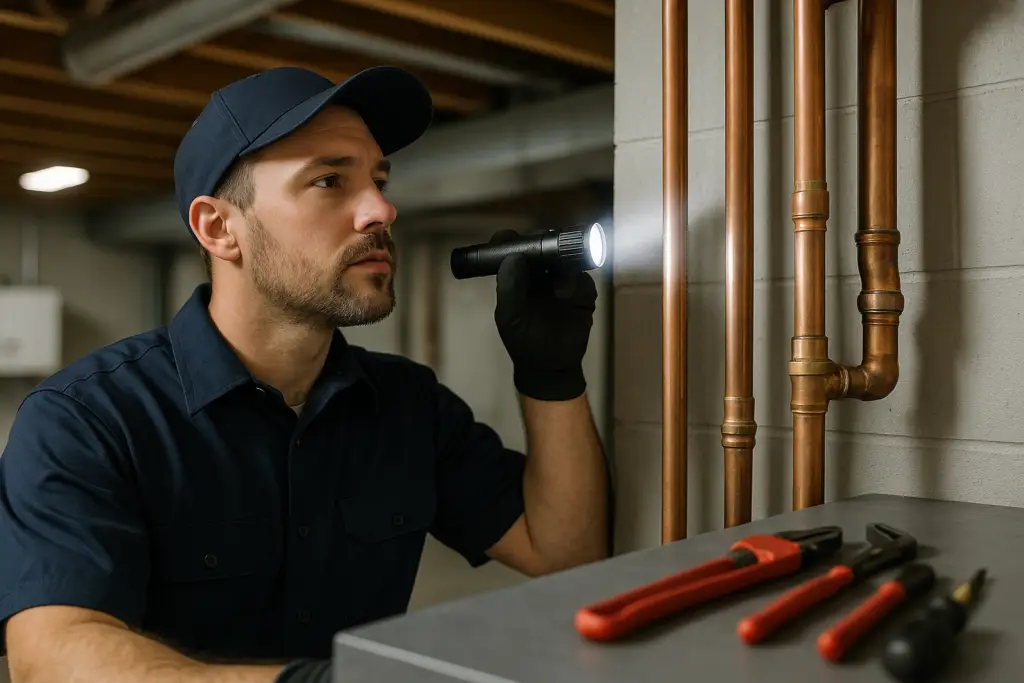
- Check exposed pipes visually: Look for obvious signs of moisture, dripping, or corrosion on accessible pipes in your basement or utility area. Do not touch or attempt to tighten any fittings.
- Clear the area: Move furniture, electronics, and valuables away from the affected area to minimize damage while you wait for service.
- Turn off electricity to affected areas: If water is near electrical outlets or your panel, shut off breakers to those areas from a dry location. If you cannot safely access your panel, wait for emergency services.
- Document the damage: Take photos and video of the situation for insurance purposes.
Repair Versus Replace: Making the Right Decision
In an emergency, the immediate priority is stopping the problem. But once the crisis passes, you may face a decision between repairing the failed section or replacing a larger portion of your plumbing system.
When Repair Makes Sense
An isolated failure in an otherwise sound system is usually a good candidate for repair. If your home has newer piping, the rest of the system is in good condition, and the failure resulted from a specific cause like a freeze or impact, a targeted repair is often the most practical choice.
When Replacement Is the Better Investment
If your home has galvanized steel pipes, a history of repeated leaks, or aging cast iron sewer lines with root intrusion damage, a more comprehensive replacement project may save you money over time. Repeated emergency calls and patch repairs add up quickly, and the disruption to your household compounds with each event.
A Transit & Flow technician can help you evaluate both options honestly and recommend the approach that makes the most sense for your home and budget.
Local Columbus and Westerville Context
Westerville sits in the northeastern portion of the Columbus metro area. Its housing stock ranges from historic homes near Uptown Westerville to newer developments in areas like Traditions at Westerville and Northstar. Each era of construction brings different plumbing materials, layouts, and common failure points.
The city draws water from the Columbus municipal system, which means the same mineral content and water treatment characteristics affect fixtures and pipes across the service area. Homes with original plumbing from the 1970s or 1980s are now entering the age range where failures become increasingly common.
Fall is a critical season for plumbing preparedness in central Ohio. The Ohio EPA and local building authorities recommend inspecting outdoor hose bibs, disconnecting garden hoses, and ensuring sump pumps are functioning before the first freeze. Westerville’s relatively flat topography and clay-heavy soils also contribute to drainage challenges that can stress sewer lines during autumn rainstorms.
Transit & Flow understands these local conditions because our team works in Columbus Ohio neighborhoods every day. That local expertise translates into faster diagnosis, more accurate recommendations, and solutions designed for central Ohio conditions.
Frequently Asked Questions
What should I do first during a plumbing emergency?
Shut off the main water supply to your home if you can do so safely. This stops the flow and limits damage. Then call a professional immediately. Transit & Flow is available 24/7 at 614-333-8092 for emergency plumbing services in Columbus Ohio and Westerville.
What should I avoid doing during a plumbing emergency?
Do not attempt to repair burst pipes, sewer backups, or gas-related plumbing issues yourself. Avoid using electrical appliances near standing water. Do not pour chemical drain cleaners into a fully backed-up system, as this can create hazardous conditions and damage pipes further.
What factors affect the cost of emergency plumbing services?
Cost depends on the time of service, severity of the problem, materials needed, accessibility of the affected pipes, and whether the situation calls for repair or full replacement. Transit & Flow provides a clear cost assessment before work begins so you can make an informed decision.
When does a plumbing issue become an emergency?
A plumbing problem is an emergency when it poses an immediate risk of property damage, health hazard, or loss of essential water service. Active leaks, sewage backups, gas odors near plumbing fixtures, and flooding all qualify as emergencies that require immediate professional response.
When should I call a professional plumber instead of waiting?
If you are unsure whether your situation is an emergency, it is better to call and describe it to a professional. Waiting even a few hours can turn a manageable problem into a major repair. Transit & Flow technicians can help you assess urgency over the phone.
How can Transit & Flow help with my plumbing emergency?
Transit & Flow provides 24/7 emergency plumbing services throughout Columbus Ohio and Westerville. Our trained technicians arrive equipped for burst pipe repair, water leak repair, emergency drain service, sewer backup resolution, and water heater emergencies. We diagnose the problem, explain your options, and complete the work efficiently.
Maintenance Tips to Prevent Plumbing Emergencies
- Schedule a professional plumbing inspection annually, especially for homes older than 20 years.
- Disconnect and drain garden hoses before the first fall freeze.
- Insulate pipes in unheated areas like crawl spaces, garages, and attics.
- Test your sump pump by pouring water into the pit and confirming it activates and drains properly.
- Avoid pouring grease, coffee grounds, or fibrous food waste down kitchen drains.
- Know where your main shutoff valve is located and confirm it operates smoothly.
- Have your sewer line professionally inspected with a camera if you experience recurring slow drains.
Glossary of Plumbing Terms
Shutoff Valve
A valve that controls the flow of water to a specific fixture, appliance, or the entire home. The main shutoff valve stops all water flow into the house and is the first thing to close during a burst pipe or major leak.
Sump Pump
A pump installed in a basement pit that activates automatically when water accumulates, pumping it away from the home’s foundation. Sump pumps are critical in Westerville and Columbus Ohio homes to prevent basement flooding, especially during fall and spring rains.
Drain Cleaning
The professional process of clearing blockages from drain and sewer pipes using mechanical augers, hydro-jetting equipment, or other specialized tools. Emergency drain service addresses complete blockages that cause backups into the home.
Water Heater
An appliance that heats and stores water for household use. Water heaters can become emergency situations when they leak, fail to produce hot water during cold weather, or show signs of internal pressure problems like popping or rumbling noises.
Sewer Line
The main pipe that carries wastewater from your home to the municipal sewer system. In Columbus Ohio, sewer lines are commonly made of clay, cast iron, or PVC depending on the age of the home, and are vulnerable to root intrusion and ground shifting.
Call Transit & Flow for Emergency Plumbing in Westerville and Columbus Ohio
When a plumbing emergency strikes your Westerville or Columbus Ohio home, every minute counts. Water damage compounds rapidly, sewage backups pose serious health risks, and a broken water heater in October can leave your family without hot water when temperatures are dropping.
Transit & Flow is here for you around the clock with professional emergency plumbing services. Our trained technicians respond quickly, diagnose accurately, and fix the problem right. Do not wait for a small leak to become a big disaster.
Call 614-333-8092 right now for immediate emergency plumbing service in Westerville and Columbus Ohio. You can also request your estimate online for non-emergency situations. Transit & Flow is your trusted partner for every plumbing challenge, from a midnight burst pipe to a planned system upgrade.
