
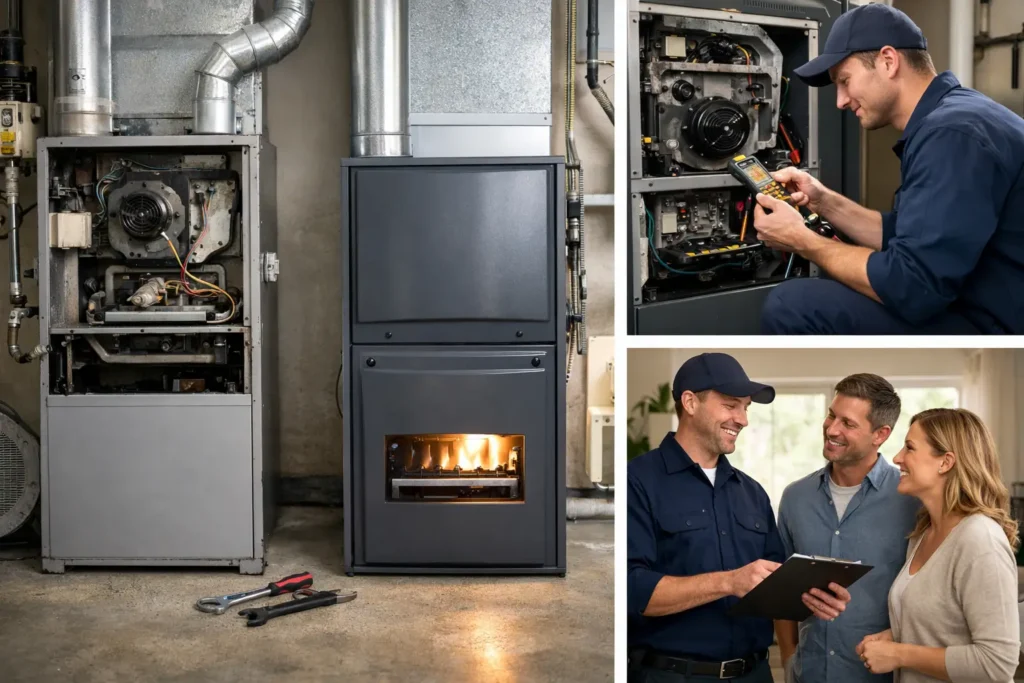
A furnace rarely quits at a convenient time. It starts making a strange noise on a cold morning, the house feels uneven from room to room, or the system keeps cycling without really warming anything up. When that happens, the furnace repair vs replacement question becomes less about theory and more about what gets your home comfortable again without wasting money.
For most homeowners, the right answer depends on four things: the age of the system, the cost of the repair, how the furnace has been performing lately, and whether the problem is isolated or part of a larger pattern. A good recommendation should be clear, practical, and based on what your system is actually doing – not on pressure.
Furnace repair vs replacement starts with the age of the system
Age does not decide everything, but it matters. Many furnaces can run well for 15 to 20 years with proper maintenance. That said, an older unit has more wear on core components, and parts failures tend to come closer together as the system gets deeper into its service life.
If your furnace is under 10 years old and the problem is limited to a single part, repair is often the most sensible option. A failing ignitor, blower issue, flame sensor problem, or thermostat-related fault may be frustrating, but those issues do not always mean the entire furnace is at the end.
If your furnace is 15 years old or more, the decision changes. Even if the immediate repair is possible, you have to look at the bigger picture. Is the system still heating consistently? Are utility bills rising? Has it needed more than one service call in the last couple of seasons? An older furnace may still run after a repair, but that does not always mean it is the better value.
When repair usually makes sense
Repair is often the right call when the system has been dependable overall and the issue is straightforward. If your furnace has heated the home well, has not needed repeated major service, and the repair cost is reasonable compared with replacement, keeping it in service can be the smart move.
This is especially true when the problem is caught early. A furnace that is blowing cool air, short cycling, or making a new rattling sound may only need targeted service before a small issue causes more wear. Addressing the problem promptly can extend equipment life and help you avoid a larger breakdown during colder weather.
Repair also makes sense when the rest of the system still has life left in it. If the heat exchanger is sound, airflow is good, and the furnace is operating safely, there may be no reason to replace a unit just because one component failed.
When replacement becomes the better investment
Replacement is usually easier to justify when repair costs keep stacking up or the system no longer delivers reliable comfort. A furnace that breaks down every winter, struggles to heat the home evenly, or runs constantly without keeping up is not just annoying. It is a sign that the system may be working harder than it should.
Safety concerns also change the conversation quickly. If there are signs of a cracked heat exchanger, combustion issues, or other conditions that affect safe operation, replacement may be the responsible next step. In those situations, the question is not only about cost. It is about protecting the home and avoiding ongoing risk.
Replacement can also make sense if you are planning to stay in the home for years and want fewer surprise repairs. A newer furnace may offer better efficiency, more consistent heating, and less stress during peak winter months. That does not mean every older system should be replaced on sight. It means recurring trouble, declining performance, and age together can make replacement the more practical long-term choice.
The repair cost rule people use – and where it falls short
You may have heard a common rule: if the repair cost is close to half the cost of replacement, replacement is worth considering. That rule can be useful as a rough checkpoint, but it should not be treated like a formula.
A major repair on a 17-year-old furnace is very different from the same repair on an 8-year-old unit. The older system may be one failure away from another large bill. The newer system may return to normal and keep going for years. Context matters more than any single percentage.
That is why homeowners benefit from a clear diagnosis first. Before making a decision, you need to know what failed, whether related parts are showing wear, and whether the furnace is otherwise in solid condition. A flat-rate repair quote and a replacement option presented side by side can make the choice much easier.
Comfort problems matter just as much as breakdowns
Many furnace decisions are not driven by a full shutdown. They come from a system that still runs, but does a poor job heating the home. Maybe the upstairs stays chilly, one room overheats, or the furnace gets louder every season. Those are not small details. They affect daily comfort and may point to a system that is no longer performing efficiently.
In some cases, the issue can be corrected with repair, maintenance, or airflow adjustments. In other cases, the furnace is simply aging out and no longer operating the way it should. If the equipment can technically be repaired but still leaves you with uneven heat and constant cycling, replacement may provide the better result.
For homeowners in Columbus, that matters. Winter comfort is not optional, and when temperatures drop, you need a heating system that starts reliably and keeps up without constant attention.
Signs your furnace may be nearing replacement
Some furnaces give clear warnings before they fail completely. If you are noticing several issues at once, it may be time to think beyond another repair.
Common signs include higher heating bills without a clear reason, frequent repairs, unusual noises, uneven temperatures, short cycling, yellow burner flames, or a furnace that runs for long stretches but still does not keep the home comfortable. Excess dust, dry air, or worsening indoor air quality can also show up when an older system is not operating well.
Any one of these issues can sometimes be repaired. A pattern of them usually means the system deserves a closer look.
How to make the decision without guessing
The best furnace repair vs replacement decision starts with a straightforward inspection. You want to know the condition of the system, the cause of the current problem, and what the next year or two is likely to look like if you keep the furnace.
A helpful service visit should answer simple questions in plain language. What failed? Is the repair likely to restore normal operation? Are there signs of broader wear? What are the available options, and what would each one mean for cost, comfort, and reliability?
This is where clear communication matters. Homeowners should not have to choose between repair and replacement based on vague language or pressure. They need honest recommendations, visible pricing before work begins, and enough detail to approve the next step with confidence.
If replacement is on the table, financing options can also change the timing of the decision. A homeowner may prefer to replace an unreliable furnace now rather than keep paying for repairs through the winter. That choice is easier when the process is organized and the numbers are explained clearly.
What a practical recommendation looks like
A practical recommendation does not start with the most expensive option. It starts with what your furnace needs and what you want from it. If a reasonable repair can restore safe, dependable heat, that may be the best answer. If the furnace is aging, unreliable, and costing more to keep alive, replacement may save frustration and money over time.
At Transit & Flow, that kind of conversation should feel straightforward. The goal is to help you understand the condition of your system, review your options, and move forward with customer approval before any work begins.
When your furnace is acting up, the right next step is not to guess. It is to get a clear diagnosis, ask direct questions, and choose the option that fits your home, your timeline, and your comfort level before the next cold night puts more pressure on the system.
