
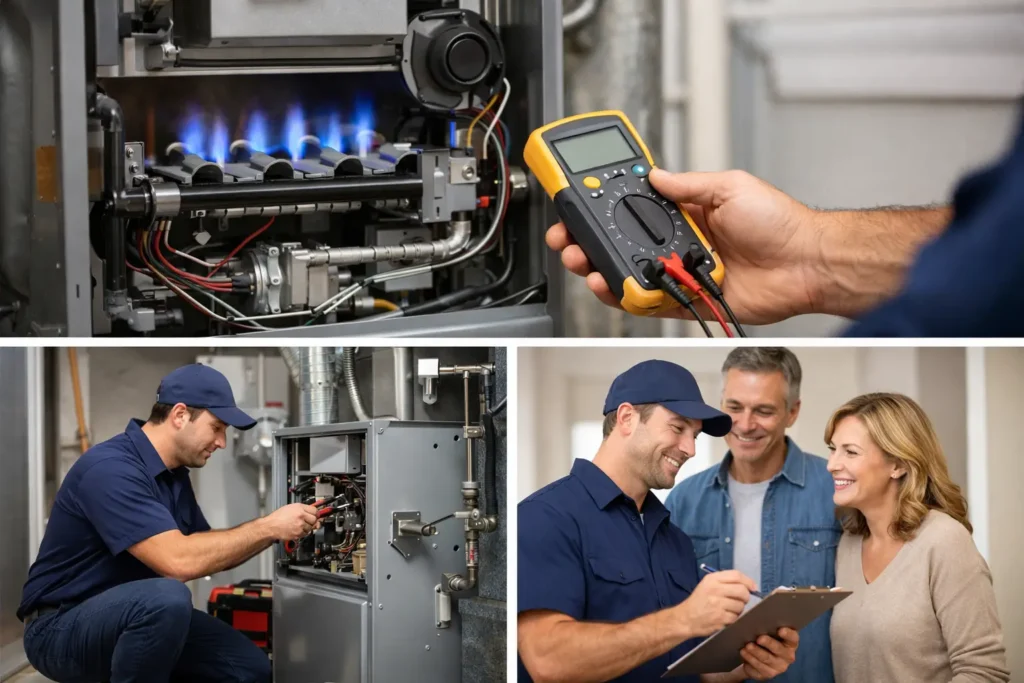
The first cold snap in Columbus has a way of exposing every weakness in a heating system. A furnace that seemed fine in October can suddenly start short cycling, blowing cool air, or making noises that were easy to ignore when the weather was mild. That is why furnace tune up benefits matter most before your system is under real winter demand.
A tune-up is not just a quick once-over. It is a practical maintenance visit that checks how your furnace is running, spots wear before it turns into a no-heat call, and helps you make informed decisions about repair versus replacement. For most homeowners, the value is less about one dramatic fix and more about avoiding the chain reaction that starts with a small issue and ends with an expensive, inconvenient breakdown.
Why furnace tune up benefits show up in real life
Most furnaces do not fail all at once without warning. They usually give smaller signs first – reduced airflow, longer run times, inconsistent temperatures, dusty operation, or rising utility bills. The problem is that these signs are easy to miss in daily life.
A seasonal tune-up creates a clear checkpoint. Instead of waiting until something stops working, you get a technician’s assessment of the system’s condition, performance, and any visible concerns. That kind of clarity helps homeowners plan ahead instead of making rushed decisions on the coldest day of the year.
In a climate like Central Ohio, where winter temperatures can swing from cool to bitterly cold, that timing matters. When your furnace is working harder, even a minor issue can become a comfort problem fast.
Lower energy use is one of the biggest furnace tune up benefits
When a furnace is dirty, out of adjustment, or struggling with worn components, it usually has to work harder to produce the same level of heat. That extra effort can show up as longer heating cycles and higher monthly utility costs.
A tune-up helps restore normal operation. Cleaning key components, checking airflow, inspecting the burner or ignition system, and verifying performance can all improve efficiency. Not every tune-up leads to a dramatic drop in your bill, because results depend on the age and condition of the unit, but a properly maintained furnace generally wastes less energy than a neglected one.
This is especially helpful for older systems that are still serviceable but no longer operating at their best. In many cases, maintenance buys time and better performance without forcing an immediate replacement decision.
Fewer surprise breakdowns during the coldest months
Emergency furnace problems rarely happen at a convenient time. They show up overnight, on weekends, or right before guests arrive. One of the most practical furnace tune up benefits is reducing the odds of that kind of disruption.
During a maintenance visit, a technician can catch loose electrical connections, early signs of part wear, airflow restrictions, and other issues that may not have caused a full shutdown yet. Fixing those problems early is usually simpler than dealing with the damage they can create later.
That does not mean a tune-up prevents every future repair. Some parts fail suddenly, and older equipment always carries more risk. But routine maintenance improves your chances of getting through the season with fewer surprises, which is what most homeowners want.
More consistent comfort from room to room
A furnace can still turn on and heat the house while doing a poor job of keeping temperatures even. Maybe the upstairs feels stuffy while the first floor stays chilly. Maybe some rooms warm up quickly and others never quite get there.
A tune-up can help identify why. Sometimes the issue is restricted airflow. Sometimes it is a dirty filter, a blower problem, or a system that is cycling incorrectly. In other cases, the furnace itself is only part of the problem and the ductwork or thermostat setup also needs attention.
That is where honest recommendations matter. Not every comfort issue has a quick maintenance-only fix, and a trustworthy technician should tell you that. But a tune-up often improves baseline performance and helps narrow down what is really causing uneven heat.
Cleaner operation and better indoor air quality support
Homeowners often think of indoor air quality as an air conditioning issue, but your heating system affects it too. As your furnace runs, it moves air through the home repeatedly. If the system is dirty or airflow is restricted, that circulation may carry more dust and irritants than it should.
One of the less obvious furnace tune up benefits is cleaner system operation. Maintenance can include checking the filter, inspecting buildup, and making sure the blower and related components are not contributing to unnecessary dust movement. If the furnace is burning fuel, proper inspection also helps verify that it is operating as safely and cleanly as possible.
This matters even more in winter, when homes stay closed up for longer periods and fresh-air exchange is lower. A tune-up is not a cure-all for indoor air quality, but it is an important piece of keeping the system clean, steady, and dependable.
Longer equipment life, with fewer rushed decisions
Replacing a furnace is a major home expense. Most homeowners want to get full value from the system they already have, as long as it is still safe and practical to keep repairing. Routine maintenance supports that goal.
Wear adds up faster when a furnace is running under stress. Dirty components, weak airflow, and unresolved small problems can all shorten equipment life over time. A tune-up helps reduce that strain and gives you a better sense of where the system stands.
Sometimes the most valuable part of maintenance is not extending life by years. It is giving you enough warning to plan. If a technician sees that a furnace is aging and likely to need more frequent repairs, you can start comparing options before a failure forces a same-day decision. That kind of planning usually leads to better choices and less pressure.
Safety checks are a serious part of the visit
For gas furnaces, safety is not a side benefit. It is a core reason to schedule maintenance. A proper tune-up includes checking the system for signs that it is not operating the way it should, including ignition issues, burner concerns, or other performance problems that need attention.
Homeowners are not expected to diagnose these conditions on their own. In fact, that is part of the value of professional service. If something looks off, you get a clear explanation of the issue, what it means, and what steps make sense next.
This is one area where delaying service is rarely worth it. If your furnace is making unusual noises, cycling irregularly, or showing signs of poor performance, it is better to have it checked before winter use increases.
Tune-ups can make repair decisions simpler
One reason homeowners put off maintenance is the worry that every visit will turn into a sales pitch. A good tune-up should do the opposite. It should give you a straightforward view of your furnace’s current condition so you can make decisions with confidence.
You may learn that the system is in good shape and just needed normal service. You may hear that one part is wearing out and should be addressed now to avoid a midseason problem. Or you may find that the furnace is reaching the point where repeated repairs no longer make financial sense.
None of those outcomes are bad if they are explained clearly. The goal is not to sell the biggest job. The goal is to help you understand what is happening with your heating system before the situation becomes urgent.
When furnace tune up benefits are most noticeable
Some homeowners notice the difference right away. The house heats faster, the system runs quieter, or the utility bill eases off. Others benefit more indirectly because their furnace simply keeps working through the winter without drama.
Tune-ups tend to matter most if your furnace is more than a few years old, has not been serviced recently, or has started showing small warning signs. They are also worthwhile before the cold season begins, when there is still time to address issues without the pressure of a no-heat emergency.
For homeowners in Columbus and nearby communities, that timing can make a real difference. Winter weather does not leave much room for delays when your heat is unreliable.
If you are unsure whether your system needs service, pay attention to the practical signs: higher energy bills, uneven heating, more dust, strange sounds, or longer run times. Those are often the moments when a routine appointment can prevent a bigger repair later.
A furnace tune-up is not about overcomplicating home maintenance. It is about keeping your heating system dependable, catching problems early, and giving yourself a clearer path forward before winter puts your equipment to the test.
Ready to protect your furnace before winter? Schedule our furnace tune-up service in Columbus and keep your system running at peak efficiency.
