
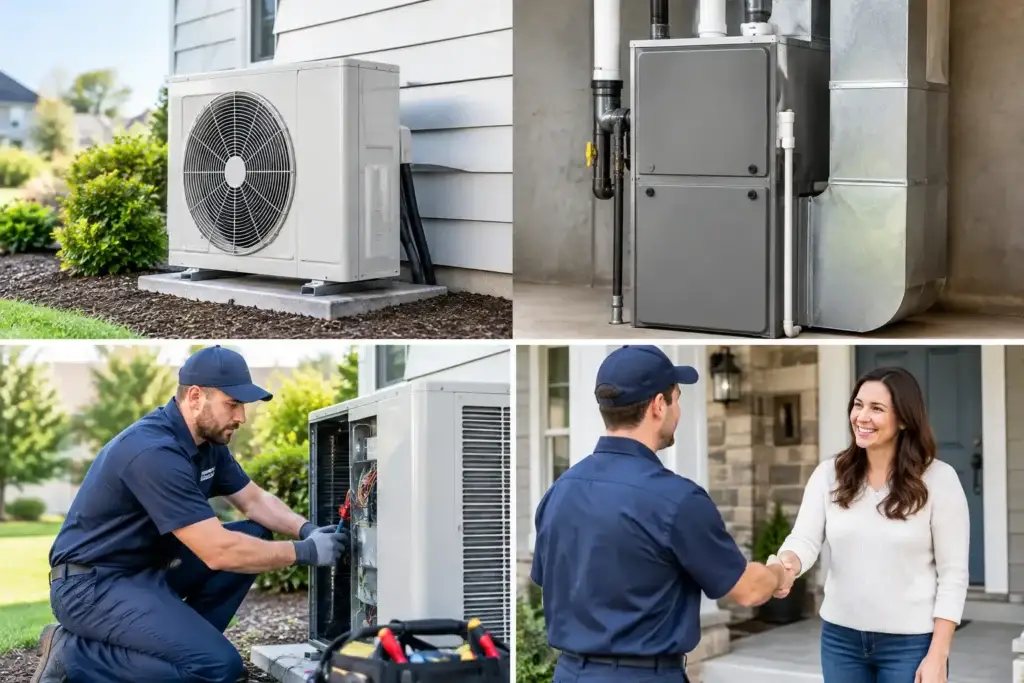
A heating replacement is not just a question of what will turn on when the temperature drops. It affects monthly utility costs, summer comfort, equipment lifespan, and how your home handles a cold Columbus winter. In the heat pump vs furnace decision, the best answer depends on your existing setup, insulation, fuel access, budget, and expectations for comfort during the coldest days.
A furnace remains a practical, proven choice for many Central Ohio homes. A heat pump can be an efficient all-electric option that also provides cooling. Neither system is automatically right for every house. A clear assessment of the home comes before a recommendation.
Heat Pump vs Furnace: The Basic Difference
A gas furnace creates heat by burning natural gas. It sends that heated air through your ductwork to warm the home. Furnaces are built for cold weather and can produce very warm supply air quickly, which is one reason they remain common throughout Columbus and surrounding communities.
A heat pump works differently. Instead of creating heat, it moves heat from outdoor air into your home during winter. In summer, it reverses direction and moves indoor heat outside, operating much like a central air conditioner. That means one heat pump system can provide both heating and cooling.
Modern cold-climate heat pumps can operate in low outdoor temperatures, but their output and efficiency change as the weather gets colder. During extended freezing conditions, a heat pump may rely on supplemental heat or work alongside a furnace, depending on the system design.
When a Furnace Makes More Sense
A furnace is often the straightforward choice when a home already has a natural gas line, working ductwork, and a separate central air conditioner that is not ready for replacement. Replacing only the furnace may reduce the upfront project cost compared with changing the entire heating and cooling setup.
Furnaces also offer strong heating capacity during Ohio cold snaps. If you prefer a system that delivers hotter air from the vents and reaches the thermostat setting quickly, a properly sized furnace can be a good fit. This can matter in older homes with more heat loss, drafty areas, or rooms that are difficult to keep comfortable.
Another factor is fuel cost. Natural gas has historically been a cost-effective heating fuel for many local homeowners, although utility rates can change. A technician can help compare the operating assumptions for your home rather than relying on broad national averages.
A furnace does require a separate cooling system. If your air conditioner is older or nearing the end of its useful life, it is worth looking at the full HVAC picture before replacing just one piece of equipment. A furnace and AC replacement may be the more sensible long-term plan in some situations.
Furnace advantages at a glance
A furnace can be a strong option if you want reliable high-output heat, have natural gas available, or need to replace heating equipment while keeping a newer air conditioner. It may also be the better match for a home with significant heat loss that has not been upgraded with insulation, air sealing, or duct improvements.
The trade-off is that it only handles heating. You will still need an air conditioner for summer, and the home will continue to depend on gas service for winter heat.
When a Heat Pump Makes More Sense
A heat pump can be especially appealing when both the heating system and air conditioner are due for replacement. Because it provides year-round comfort, it can simplify the equipment arrangement and reduce the need for separate heating and cooling units.
Heat pumps are generally most efficient in moderate temperatures. Columbus has plenty of spring and fall days where that efficiency can be valuable. In winter, a properly selected cold-climate heat pump can continue heating the home well below freezing, though its performance must be matched carefully to the building and local weather conditions.
For homeowners interested in moving away from gas, a heat pump is the primary all-electric option. It may also pair well with a well-insulated, properly sealed home and ductwork that delivers airflow evenly. Some homeowners value the more consistent, lower-temperature heat a heat pump provides, especially when the system runs longer, quieter cycles instead of short bursts of very hot air.
The trade-off is that heat pump installation is not a one-size-fits-all decision. Electrical capacity, duct condition, outdoor unit placement, drainage, thermostat controls, and backup heat all need to be reviewed. A low price without a careful evaluation can lead to comfort problems later.
What about backup heat?
Many heat pump systems include electric supplemental heat. It helps support the system during very cold weather or when the heat pump is in defrost mode. Electric backup heat can use more energy, so correct system sizing and control settings matter.
A dual-fuel system is another option for homes with natural gas. It combines a heat pump with a gas furnace. The heat pump handles heating during milder weather, while the furnace takes over when outdoor temperatures fall to a point where gas heat is the better choice. This approach can provide flexibility, but it usually involves more equipment planning and a higher initial investment.
Compare Upfront Cost and Long-Term Cost Carefully
Equipment price is only one part of the decision. Installation scope can change substantially based on the condition of the ducts, electrical panel, gas venting, refrigerant lines, thermostat, and outdoor pad. The final price should follow an on-site evaluation and your approval of the recommended work.
A furnace replacement can have a lower initial cost when the rest of the system is in good condition. A heat pump may cost more upfront, particularly if electrical upgrades or duct modifications are needed. However, it can replace both an aging furnace and air conditioner in one coordinated project.
Long-term operating cost is also specific to the home. It depends on electricity and gas rates, thermostat habits, insulation, window quality, equipment efficiency, and how much supplemental heat is needed. A good comparison looks at expected comfort and maintenance needs alongside estimated energy use, not just a single monthly-cost claim.
Your Home May Need Improvements Before Either Choice
No heating system can fully compensate for major air leaks, poorly insulated attic spaces, blocked registers, or undersized ductwork. If one bedroom is always cold or the second floor runs much warmer than the first, the issue may not be the furnace or heat pump alone.
Before recommending replacement equipment, an HVAC professional should consider the home’s size, layout, insulation level, window exposure, duct condition, and current comfort concerns. Bigger is not always better. Oversized equipment can cycle too often, create uneven temperatures, and add unnecessary wear.
This is also the time to discuss indoor air quality, humidity, filtration, and thermostat control. Small improvements in these areas can make a new system feel more effective and easier to manage.
Questions to Ask Before Choosing
Ask whether your current air conditioner is worth keeping, how much usable life remains in your furnace, and whether your electrical service supports the proposed heat pump setup. Ask how the system will perform during a typical Columbus cold spell, what backup heat is included, and what changes to ducts or controls may be needed.
You should also receive clear information about the scope of work, equipment options, expected maintenance, and pricing before work begins. A trustworthy recommendation should explain why a particular system fits your home, not simply steer every homeowner toward the same equipment.
For homeowners who want help sorting through those details, Transit & Flow can assess the existing system, explain practical options, and provide clear recommendations before you decide. The right heating choice is the one that keeps your home comfortable in January, manageable in July, and aligned with the way you plan to maintain the property over time.
