
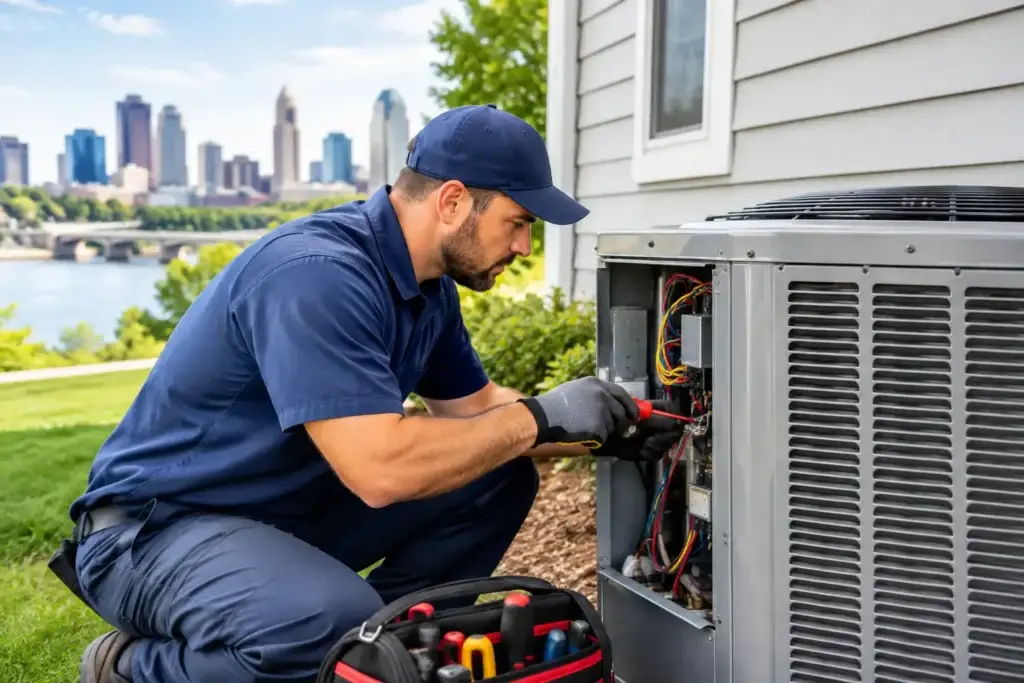
A furnace that quits on a cold Columbus morning or an air conditioner that cannot keep up during a humid July stretch rarely fails without warning. This home HVAC maintenance guide helps homeowners catch the small issues that can lead to uncomfortable rooms, higher utility bills, and avoidable repair calls.
Your heating and cooling system does not need constant attention, but it does need consistent attention. A few simple homeowner tasks, paired with regular professional service, can help your equipment run more reliably through Central Ohio’s changing seasons.
What HVAC Maintenance Actually Does
HVAC maintenance is not about trying to make an older system perform like a new one forever. It is about keeping the system clean, properly operating, and easier to diagnose before a minor issue becomes a no-heat or no-cooling situation.
Routine care can support steadier airflow, better indoor comfort, and more predictable operating costs. It can also give a technician the opportunity to identify worn components, drainage concerns, electrical issues, or combustion-related concerns while there is still time to plan the repair.
The payoff depends on the age and condition of the equipment. A well-maintained 15-year-old furnace may still need a major repair or replacement. Maintenance is practical risk reduction, not a promise that equipment will never break down.
Home HVAC Maintenance Guide: What You Can Do
Most homeowner maintenance is straightforward. The goal is not to take apart your furnace, air conditioner, or heat pump. It is to keep airflow clear, notice changes early, and avoid conditions that make the system work harder than necessary.
Check the air filter regularly
A dirty air filter is one of the most common and preventable causes of restricted airflow. When airflow drops, your system may run longer, rooms may heat or cool unevenly, and parts of the equipment can experience extra strain.
Check the filter monthly, especially during heavy heating or cooling use. Many homes need a replacement every one to three months, but the right schedule depends on the filter type, the number of occupants, pets, dust, and how often the system runs. Follow the airflow arrow on the filter frame when installing a new one.
Do not assume a more restrictive filter is always better. Some high-filtration filters can reduce airflow if the system is not designed for them. If you are unsure which filter is appropriate, ask during your next maintenance visit.
Keep supply and return vents clear
Walk through the home and look at every supply register and return grille. Furniture, rugs, curtains, and storage bins can block airflow without anyone noticing. Open vents fully unless a technician has advised otherwise.
Closing multiple vents to force more air into one room can create pressure and airflow problems. If one area of your home is consistently too warm or too cold, the answer may be a thermostat setting, duct issue, insulation gap, or equipment-sizing concern. It is better to have the cause evaluated than to keep adjusting vents blindly.
Check the thermostat and listen for changes
Make sure the thermostat is set to the correct mode and that programmed temperatures match your household schedule. If it uses batteries, replace them before they die rather than waiting for a no-heat or no-cooling call.
Pay attention to changes in how the system sounds and behaves. New rattling, buzzing, repeated cycling, weak airflow, unusual odors, or temperatures that do not match the thermostat setting are worth addressing early. A system that is still running can still be signaling a developing problem.
Keep the outdoor unit accessible
For air conditioners and heat pumps, keep leaves, grass clippings, mulch, and stored items away from the outdoor unit. Maintain open space around it so air can move freely. After storms, look for obvious debris or damage from a safe distance.
Avoid spraying the unit with harsh chemicals or attempting to straighten damaged fins yourself. The outdoor equipment contains sensitive electrical and mechanical components. If it is dirty, damaged, or making unusual noise, schedule service rather than risking a larger problem.
Schedule Service Before Peak Season
Spring and fall are the best times to plan routine HVAC maintenance because your cooling or heating equipment is usually under less demand. Spring service prepares the AC or heat pump for summer. Fall service checks the furnace before overnight temperatures drop.
A professional maintenance visit typically focuses on the parts homeowners should not service themselves. Depending on the system, that may include inspecting electrical connections, checking operating performance, examining safety controls, evaluating airflow, inspecting drainage, and looking for wear that could affect reliability.
For fuel-burning equipment, professional heating service matters for another reason: safe operation. If you notice a gas odor, soot, a burning smell that does not clear shortly after startup, or a carbon monoxide alarm, leave the area if needed and follow emergency guidance from local authorities or your utility provider. Do not keep restarting the system to see if the problem goes away.
A Practical Seasonal HVAC Checklist
Your maintenance schedule does not need to be complicated. Use the seasons as reminders.
Before summer, replace or inspect the filter, confirm the thermostat cools properly, clear the outdoor unit area, and schedule cooling maintenance. On the first warm day, run the system early enough to catch a problem before a heat wave.
Before winter, inspect the filter again, make sure supply and return vents are open, test the thermostat’s heating mode, and schedule furnace maintenance. If your home has carbon monoxide detectors, test them and replace batteries as needed according to the manufacturer’s instructions.
During the busiest months, check filters monthly and pay attention to comfort changes. If the system is running constantly, short-cycling, or producing noticeably weaker airflow, a prompt diagnostic visit is usually more useful than waiting for a complete breakdown.
When Maintenance Becomes a Repair Call
Some issues are not maintenance items. They need diagnosis and repair. Call for HVAC service if the system will not start, repeatedly trips a breaker, blows warm air in cooling mode, blows cool air in heating mode, leaks water indoors, freezes up, or produces persistent unusual odors or noises.
Rising energy bills can also be a reason to schedule an evaluation, particularly when your utility use has changed but your household habits have not. The cause could be simple, such as a clogged filter, or more involved, such as an airflow, thermostat, duct, or equipment problem. An inspection helps separate a practical repair from a guess.
If repair costs begin adding up on an older unit, ask for clear options. The right choice depends on equipment age, repair history, expected repair cost, home comfort needs, and the condition of related components. A replacement may make sense in some cases, while a targeted repair may be the better value in others.
Maintenance Plans Can Simplify the Schedule
For homeowners who do not want to track seasonal appointments, a maintenance plan can provide structure. The value is not just the appointment reminder. It is having a regular opportunity to identify concerns before the equipment is under maximum demand.
Before enrolling, ask what visits are included, what the technician checks, whether repair recommendations require your approval, and how pricing is handled if a repair is needed. Clear communication matters. You should understand the condition of your system and your options before work begins.
For Columbus homeowners, a scheduled heating check before winter and cooling check before summer can remove a lot of uncertainty. Transit & Flow provides straightforward HVAC support with clear recommendations and customer approval before repairs move forward. A little planned attention now can make the next hot afternoon or cold night much easier to handle.
