
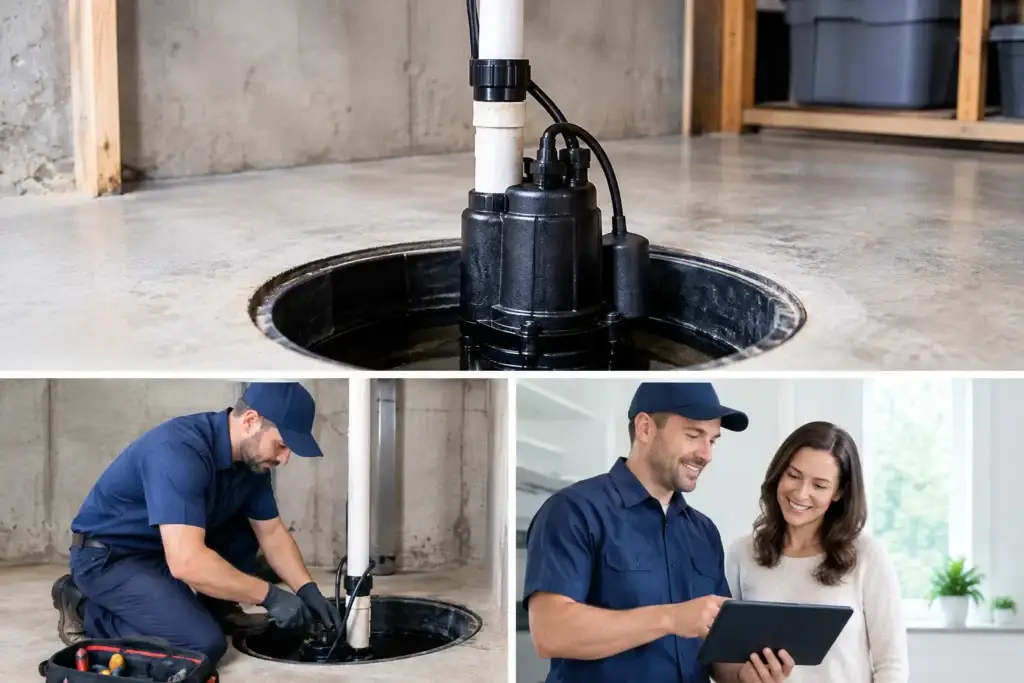
A sump pump is easy to forget about until a hard Central Ohio rain puts water at the bottom of the basement stairs. Knowing how to choose sump pump equipment before that moment can make a meaningful difference. The right unit should fit your home’s drainage needs, operate reliably during wet weather, and provide a clear plan if the power goes out.
The most expensive model is not automatically the best choice. A pump that is too small may not keep up with incoming water, while one that is oversized or improperly installed can cycle too often and wear out sooner. Start with your home, your basement, and the conditions that have caused water concerns in the past.
Start With Why Your Home Needs a Sump Pump
Some homes need a sump pump because groundwater naturally collects around the foundation. Others need one after a past basement leak, recurring standing water, or a drainage issue during prolonged rain. If your home already has a sump pit, look at it as part of a complete water-management system, not as a standalone appliance.
A sump pump collects water that enters the pit through drain tile or surrounding soil, then sends it away from the foundation through a discharge line. That means the pump’s performance depends on more than its motor. The pit needs to be the right size, the discharge path needs to be clear, and the water needs to exit far enough from the house that it does not return to the foundation.
Before choosing a replacement, consider a few practical questions. Has the existing pump struggled during storms? Does it run frequently even in moderate rain? Has the basement ever taken on water? Do you have a finished basement, stored belongings, or mechanical equipment that would be costly to replace? Your answers help determine whether a basic primary pump is sufficient or whether a stronger setup with backup protection is the better fit.
How to Choose Sump Pump Capacity
Pump capacity is usually expressed in gallons per hour, or GPH. It tells you how much water a pump can move under certain conditions. Higher capacity can be helpful, but capacity numbers only matter when you also consider the height the pump must push water.
That lifting distance is called head height. A pump that moves a large amount of water at a low lift may move much less when it has to push water several feet upward and out through a longer discharge pipe. This is why comparing a single GPH number on a box can be misleading.
For many homes, a professional assessment is the simplest way to match capacity to the actual pit, drainage conditions, and discharge route. A technician can inspect the current system, identify signs of undersizing, and explain whether a standard primary pump or a higher-capacity model makes sense. This avoids choosing based on guesswork after the old pump has already failed.
Horsepower is another specification homeowners often see. A one-third horsepower pump can work well in many typical applications. A one-half horsepower model may be appropriate where water enters the pit quickly, the discharge has a greater vertical lift, or the home has had repeated water problems. More horsepower is not a universal upgrade. The goal is dependable performance for your specific conditions, not simply the biggest motor available.
Choose a Reliable Primary Pump Design
The two common pump styles are pedestal and submersible. A pedestal pump has its motor above the pit and the pumping portion below. It can be easier to access for service and may fit a narrow pit, but it is typically more visible and can be noisier.
A submersible pump sits inside the sump pit. Because the motor is sealed, it is generally quieter and often preferred for finished or frequently used basement areas. It usually requires a properly sized pit and lid, but it offers a clean, contained setup.
Also pay close attention to the switch. The switch tells the pump when to turn on and off, and it is one of the most common points of failure. A vertical float switch is often a good choice for a smaller pit because it has less room to snag. A tethered float needs more open space to move freely. The right switch depends on the pit dimensions and layout, so it should be selected as part of the whole installation.
Materials matter, too. Cast-iron construction can help transfer heat from the motor and is often chosen for durability. Thermoplastic models can be appropriate in some settings, particularly when the home has lighter water demands. Rather than focusing on one material alone, consider build quality, expected use, service access, and the warranty provided by the manufacturer.
Do Not Overlook Backup Power
A primary sump pump runs on household electricity. Unfortunately, severe storms can bring both heavy rain and power outages at the same time. If your basement would be significantly affected by pump failure, backup protection deserves serious consideration.
A battery backup sump pump is a separate pump that can activate if the primary pump fails, becomes overwhelmed, or loses power. It is a practical option for homes with a history of water issues, finished basements, or valuable items stored below grade. Battery systems need periodic testing and battery replacement according to the equipment requirements. A backup that has not been maintained may not be ready when it is needed.
A water-powered backup pump is another option in homes with sufficient municipal water pressure. It does not rely on electricity or a battery, but it uses water to help remove water from the pit. It is not suitable for every home, and local plumbing conditions matter. A professional can explain whether this type of backup is feasible and appropriate for your property.
An alarm is also worth considering. A high-water alarm can alert you when the water level rises above normal, giving you an earlier warning that the primary pump is not keeping up. It will not replace a backup system, but it can give you time to respond before water reaches the basement floor.
Check the Pit and Discharge Line Before Replacing the Pump
Installing a new pump without checking the rest of the system can leave the original problem unresolved. The pit should allow the float to move freely and should have a secure cover to keep debris out. The check valve on the discharge line is also important because it prevents water from flowing back into the pit after the pump shuts off.
The discharge line should carry water away from the foundation and remain clear in cold weather. In Columbus, freezing temperatures can block an exposed or poorly routed discharge line. If water cannot leave the system, the pump may run without effectively lowering the water level. A proper inspection can identify routing issues, clogs, damaged piping, or a discharge point that sends water back toward the home.
Avoid relying on a quick replacement when there are signs of a larger drainage concern. Frequent pump operation in dry weather, a musty basement, visible foundation seepage, or repeated pump failures all call for a closer look at the system.
Know When Replacement Is the Safer Choice
Sump pumps do not last forever, even when they appear to work during a quick test. Age, frequent cycling, sediment, switch wear, and motor strain all affect service life. If your pump is older, runs unusually loud, cycles on and off rapidly, or has failed during a storm, replacement may be more practical than waiting for another emergency.
Routine testing helps reveal problems early. Homeowners can check that the pump activates as expected and listen for unusual operation, but avoid disassembling electrical components or making plumbing changes without the right experience. If the system does not respond normally, a service visit can confirm whether the issue is the pump, float switch, check valve, power supply, or discharge line.
Get a Recommendation Based on Your Actual Home
The best sump pump choice comes from matching equipment to real conditions, not from choosing a model based only on price or horsepower. A professional evaluation should include the pit size, pump condition, water history, discharge path, backup needs, and access for future maintenance. You should receive a clear explanation of the recommendation before any work begins.
For homeowners in Columbus and nearby communities, Transit & Flow can inspect an existing sump pump system, explain the options in straightforward terms, and provide up-front pricing before work is approved. Availability, materials, and site conditions can affect scheduling and final scope, but clear communication helps you make a confident decision.
A sump pump should give you peace of mind, not become another basement worry. Choosing the right system before the next heavy rain gives you time to protect the space below your home with a solution that fits how your property actually handles water.
