
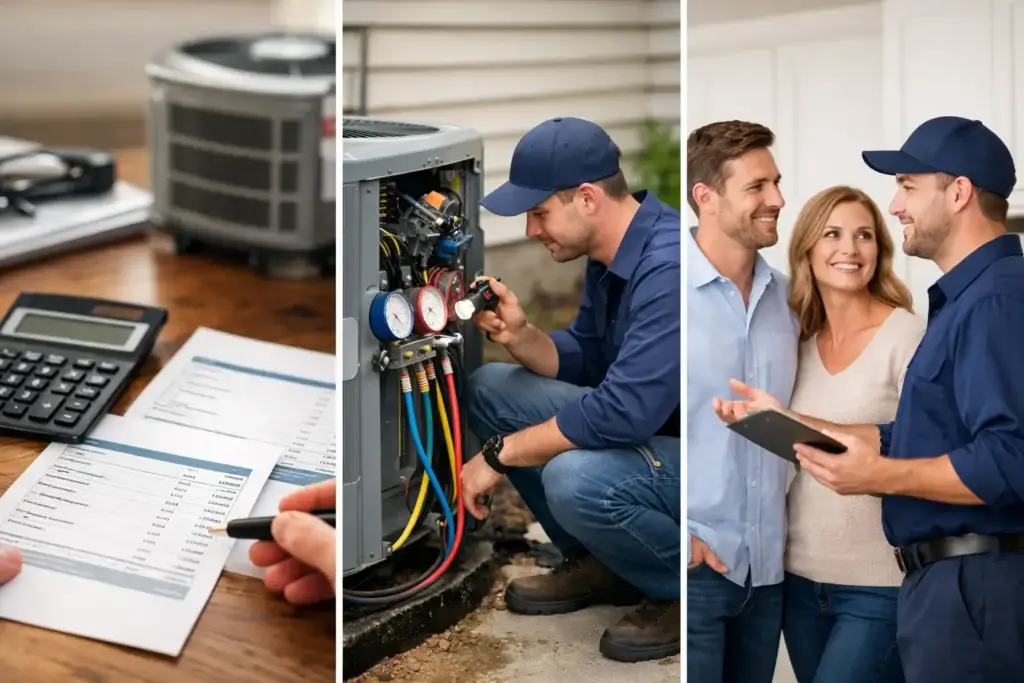
A new air conditioner is a major home decision, especially when a Columbus summer is already making your house uncomfortable. Knowing how to compare AC estimates helps you look past the bottom-line number and choose a proposal that fits your home, budget, and long-term comfort needs.
The lowest estimate is not always the least expensive choice over time. One quote may cover a properly sized system, electrical updates, permits, removal, and startup testing. Another may list only the equipment and add necessary work later. The goal is to compare the full scope of work, not just the price printed at the bottom.
Start by making the estimates comparable
Put each estimate side by side and verify that each contractor is proposing the same type of solution. If one estimate is for a basic single-stage AC unit and another is for a higher-efficiency variable-speed system, the prices should not match. That does not automatically make either recommendation wrong. They serve different comfort and efficiency goals.
First, identify the equipment in each proposal. You should be able to see the manufacturer, model numbers, cooling capacity, efficiency rating, and whether the estimate includes an outdoor condenser, indoor coil, thermostat, and any required accessories. If an estimate is vague, ask for clarification before comparing it to a more detailed proposal.
Also confirm whether each company is replacing the same components. In many homes, a new AC condenser may need a compatible indoor evaporator coil. Reusing an older coil can sometimes create compatibility, performance, or warranty concerns. Your technician should explain why a component is being kept or replaced rather than leaving you to guess.
Compare AC estimates by system size and home comfort needs
Air conditioner capacity is often described in tons, but bigger is not automatically better. An oversized system can cool the home too quickly, shut off before removing enough humidity, and cycle more often. An undersized system may struggle during prolonged heat. The right capacity depends on more than square footage.
A thoughtful recommendation considers your home’s layout, insulation, windows, sun exposure, ductwork, number of occupants, and existing comfort problems. A two-story home with an upstairs that stays warm may need a different approach than a single-level home of the same size.
When reviewing estimates, ask why that size was recommended and whether the contractor evaluated the home rather than matching the old unit automatically. Older equipment may have been incorrectly sized from the beginning. In Central Ohio, humidity control can matter just as much as peak cooling capacity during the warmest weeks of the year.
Pay attention to efficiency ratings
Efficiency is another area where estimates can look similar while offering different value. The SEER2 rating indicates seasonal cooling efficiency. A higher rating can reduce energy use, but it also usually increases the installed price.
The best choice depends on how long you expect to stay in the home, how heavily you use cooling, the condition of your ductwork, and your upfront budget. A high-efficiency system may make sense for a long-term home with high summer utility bills. A dependable mid-efficiency option may be the better fit for another homeowner. Ask the contractor to explain the expected trade-off in plain language instead of assuming the highest rating is always the answer.
Look closely at what the installed price includes
A clear estimate should explain the work included in the quoted price. This is where apparently lower estimates can become difficult to compare. Installation requirements vary by home, so final pricing should follow an on-site evaluation and customer approval.
Review whether the proposal addresses:
- Removal and responsible disposal of the existing equipment
- A new pad, line-set work, electrical disconnect, wiring, or condensate drainage as needed
- Permits, inspections, and code-related updates when required
- Startup, testing, and verification that the system is operating correctly
- Cleanup and protection of the work area
Not every home needs every item. For example, an existing line set may be usable in some situations, while another home may need it replaced because of condition, size, or compatibility. The key is not demanding identical line items. It is understanding what each contractor has included, excluded, or identified as a possible additional need.
If an estimate says additional charges may apply, ask what conditions could trigger them and how you would be notified. Clear communication before work begins is more useful than a low initial figure that leaves major questions unanswered.
Check ductwork, airflow, and thermostat recommendations
Your AC system can only perform as well as the airflow moving through it. If certain rooms are consistently warm, vents have weak airflow, or your current system is noisy, the issue may not be solved by replacing the outdoor unit alone.
Some estimates may include duct modifications, return-air improvements, filtration upgrades, or a thermostat replacement. Others may not mention them. That difference can be appropriate if the homes were evaluated differently, but it deserves a conversation.
Ask what specific problem each added item is intended to solve. A smart thermostat may offer convenience and scheduling control, while a new media filter may improve filtration. Neither should appear as a mystery charge. You should know whether it is required for the installation, recommended for comfort, or simply optional.
Separate required work from optional upgrades
A dependable estimate makes it easier to see the difference between necessary work and choices you can make. Required items are those needed to install and operate the system properly under the conditions found at your home. Optional upgrades may improve comfort, air quality, controls, or efficiency, but they should not be presented as mandatory without a clear reason.
This distinction matters because homeowners often receive estimates with multiple tiers. One option may include a standard system, while another adds variable-speed operation, enhanced filtration, a more advanced thermostat, or extended coverage. Compare each option against the same goal: What problem will it solve, what does it cost, and is that benefit valuable for your household?
There is nothing wrong with choosing a simpler system if it is properly sized and professionally installed. Likewise, paying more for comfort features can be reasonable when they address a real issue, such as uneven temperatures between floors. The right estimate is the one that is transparent about those choices.
Review warranty and service details
Equipment warranties can differ by manufacturer, model, and registration requirements. Workmanship coverage can also vary by contractor. Do not assume that a long equipment warranty covers labor, diagnostic visits, or every part involved in a future repair.
Ask each company to explain what warranty applies to the equipment, what applies to installation work, what actions you must take to maintain coverage, and whether any exclusions apply. Get clarity on the process if a problem occurs after installation. A clear answer reflects an organized service process.
It is also wise to ask about maintenance. Regular AC service can help identify drainage, electrical, airflow, and performance issues before they turn into a no-cooling call. Some homeowners prefer a maintenance plan for scheduled reminders and service benefits, while others prefer to schedule seasonal visits as needed. Either approach is better than waiting for the first heat wave to find a problem.
Ask about rebates, financing, and timing without assuming savings
One estimate may show manufacturer promotions, utility incentives, tax credits, financing options, or seasonal offers. These can affect the practical cost of replacement, but they should be presented carefully. Eligibility can depend on the specific equipment, installation date, household circumstances, program rules, and available funding.
Ask whether a listed incentive is already reflected in the price, whether it is a point-of-sale discount or something you apply for later, and what documentation you will receive. Do not choose a system solely because of a possible rebate. First confirm that it is a suitable solution for your home.
If your AC has failed during hot weather, timing matters too. Ask about appointment availability, equipment lead times, and what the installation process will look like. A company can often provide prompt options, but completion timing depends on access, equipment availability, job conditions, and scheduling.
Questions worth asking before you approve an AC estimate
Before making a decision, ask each contractor a few direct questions: Why is this system the right size for my home? What work is included in this price? What could change the price after the inspection? Which items are required, and which are optional? What warranty applies to the equipment and installation? How will you communicate with me if an unexpected condition is found?
The answers should be understandable and specific. You do not need a technical lecture. You need enough information to approve the work with confidence.
For homeowners in Columbus and nearby communities, Transit & Flow focuses on clear recommendations, up-front pricing, and customer approval before work begins. If two estimates still look difficult to compare, request an explanation of the scope in writing and give yourself room to choose the contractor who has made the process clearest. A properly explained proposal is often the first sign that your home will be treated with the same care after the installation is complete.
