
A water bill jumps, a floor feels slightly warm, or a wall starts showing a stain that was not there last week. That is usually how the search begins. If you are wondering how to find hidden water leak problems before they turn into drywall damage, flooring issues, or mold, the key is to look for patterns, not just puddles.
Hidden leaks are tricky because the water often travels away from the source. A pipe inside a wall can show up as a ceiling stain in the next room. A small slab leak can raise your water usage for weeks before you notice any visible damage. For homeowners and property managers in Columbus, that delay can mean a more expensive repair and more disruption for tenants or daily routines.
How to find hidden water leak signs early
The first step is to pay attention to changes that do not make sense. If your water use has increased but your habits have not, that matters. If paint is bubbling, flooring is warping, or you keep hearing faint running water when no fixture is on, those are not cosmetic issues to ignore.
Moisture often leaves clues before it leaves a full puddle. You may notice a musty smell in one room, soft spots near a tub or toilet, or a section of wall that feels cooler than the surrounding surface. In commercial spaces and apartment buildings, the signs can be more spread out – a complaint from one unit, a damp ceiling in another, and a utility spike on the same monthly statement.
A hidden leak also tends to create repeat symptoms. If you clean up moisture and it comes back, or if a stain keeps growing after dry weather, there is usually an active source feeding it.
Start with your water meter
One of the simplest ways to confirm a hidden leak is with the water meter. Turn off faucets, ice makers, washing machines, irrigation, and any other fixtures or appliances that use water. Then check the meter and wait 30 minutes to an hour without using any water in the building.
If the reading changes, water is moving somewhere. That does not tell you exactly where the leak is, but it tells you the problem is real. For single-family homes, this is often the clearest first checkpoint. For larger properties, you may need to isolate sections or compare unit usage patterns if separate metering is available.
If your meter has a leak indicator, watch that closely. Even a small movement can point to a slow but steady leak hidden behind finished surfaces or under the slab.
Check the most common leak locations
Most hidden plumbing leaks come from predictable areas. Supply lines under sinks, behind toilets, around water heaters, near washing machine connections, and inside walls shared with bathrooms or kitchens are common trouble spots. Start where water lines are most concentrated.
Look under cabinets with a flashlight. Check around shutoff valves, supply tubes, and drain connections for moisture, staining, corrosion, or cabinet floor swelling. Touch the pipes if they are accessible. Sometimes a slow leak leaves only a damp connection or a mineral crust before it starts dripping openly.
Bathrooms deserve extra attention. Toilet leaks can be silent, and tub or shower leaks may show up on the opposite side of the wall or on the ceiling below. Around a toilet base, watch for soft flooring, loose tile, or recurring moisture. Around tubs and showers, look for cracked caulk, peeling paint, or staining at nearby trim.
How to find a hidden water leak behind walls or ceilings
Leaks inside walls and ceilings are harder to confirm without opening materials, so the goal is to narrow the area first. Water stains, bubbling paint, sagging drywall, and musty odors are all useful clues. So is sound. In a quiet house, you may hear a faint hiss or trickle when everything is shut off.
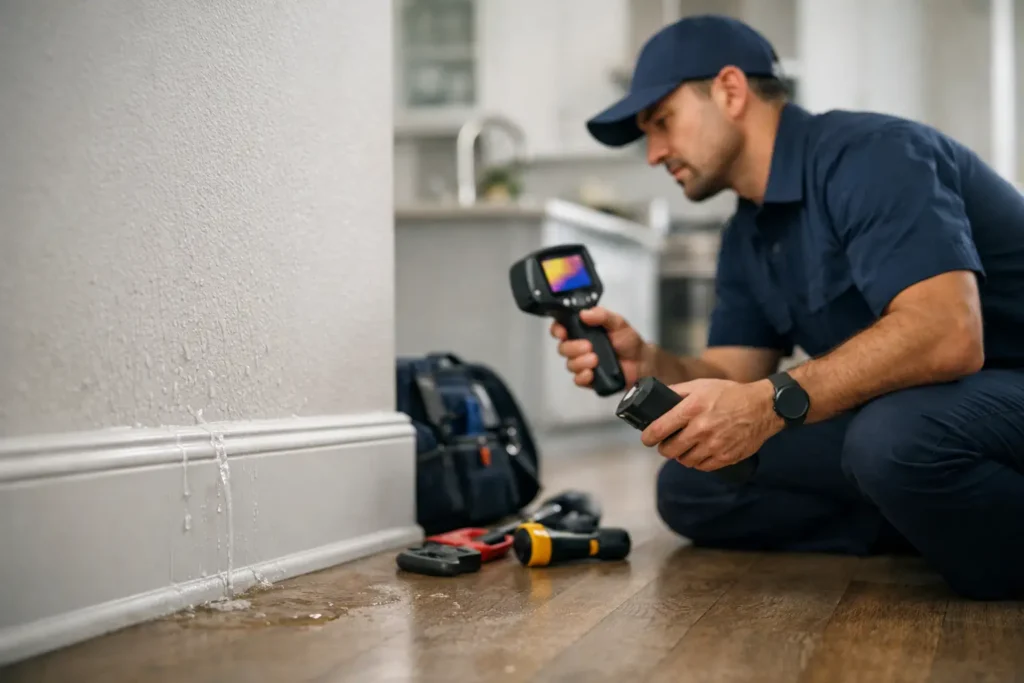
A moisture meter or thermal imaging tool can help identify cooler or wetter sections without unnecessary wall cuts. These tools are especially useful when the visible stain is not directly under the pipe that is leaking. Water follows gravity, framing, insulation, and the path of least resistance, so the visible damage is not always the source.
There is a trade-off here. Waiting for a stain to become obvious may feel easier in the short term, but it usually increases repair scope. On the other hand, opening walls too quickly without a clear diagnostic can create avoidable patchwork. A measured approach saves time and limits disruption.
If the leak appears near an upper floor bathroom, test one fixture at a time. Run the sink, then the shower, then flush the toilet, spacing each test out enough to see whether the moisture changes. That can help separate a supply leak from a drain or fixture leak.
Watch for slab leak indicators
In homes and commercial spaces with pipes under the concrete slab, leak signs are often subtle at first. You may notice warm spots on the floor, unexplained moisture along baseboards, flooring movement, or the sound of water running with no visible source. Sometimes the first clue is simply a water bill that keeps climbing.
Slab leaks are one of the clearest situations where professional testing makes sense early. The source is hidden, and guessing wrong can lead to unnecessary concrete removal or delayed repairs.
Do not ignore outdoor clues
Not every hidden leak is indoors. A service line leak between the meter and the building can keep the meter moving without obvious indoor damage. Check for soggy patches in the yard, greener strips of grass, erosion near the foundation, or water pooling in dry weather.
In Columbus-area properties, seasonal freeze and thaw cycles can stress buried piping and outdoor hose bib lines. If the leak seems to be outside, timing matters. Water near foundations, sidewalks, or parking areas can lead to larger property concerns if it is allowed to continue.
What you can check safely before calling
There are a few practical checks that help confirm the problem without turning the situation into a DIY repair project. You can compare recent water bills, test the meter, inspect accessible plumbing under sinks and around fixtures, and look for visible staining or damp materials.
You can also rule out fixture-specific issues. A toilet dye test, for example, can confirm whether water is leaking from the tank into the bowl. If the meter only moves after a toilet flush or appliance cycle, that narrows the search. If it moves continuously even when everything is off, the issue is more likely in a supply line or buried pipe.
What you should not do is start opening walls, removing flooring, or cutting into concrete based on suspicion alone. Hidden leaks are expensive enough when handled correctly. Guesswork usually adds repair costs without solving the actual source.
When professional leak detection is the better move
If you have meter movement, recurring stains, musty odors, slab leak signs, or suspected leaks in a multi-unit or commercial property, professional leak detection is usually the most efficient next step. The right diagnostic approach can help pinpoint the issue with less disruption to walls, flooring, or occupied spaces.
This matters even more when time is tight. Property managers may need to protect multiple units. Business owners may be balancing customer access and operating hours. Homeowners may simply want the problem explained clearly and repaired without a drawn-out search process.
A service company with organized diagnostics should be able to inspect the symptoms, confirm the likely source, explain the repair options, and provide clear approval before work begins. That kind of process reduces surprises and helps you make a decision based on the actual condition of the plumbing, not just the visible damage.
For Columbus-area homes and properties, Transit & Flow approaches leak concerns the same way customers expect any urgent service to be handled – with clear communication, practical recommendations, and up-front pricing before repair work moves forward.
The cost of waiting is usually higher than the cost of testing
A hidden water leak rarely stays hidden forever. It shows up in swollen trim, damaged drywall, warped floors, insulation issues, mold growth, or a water bill that keeps trending the wrong direction. The longer it runs, the more areas it can affect.
If you suspect a leak, the smartest move is not to panic and not to ignore it. Confirm what you can, document the signs, and get the right level of diagnosis for the situation. A small leak caught early is usually a much simpler conversation than a larger repair after the damage has spread.
When something feels off, trust the pattern. Water almost always leaves clues before it leaves a catastrophe.
