
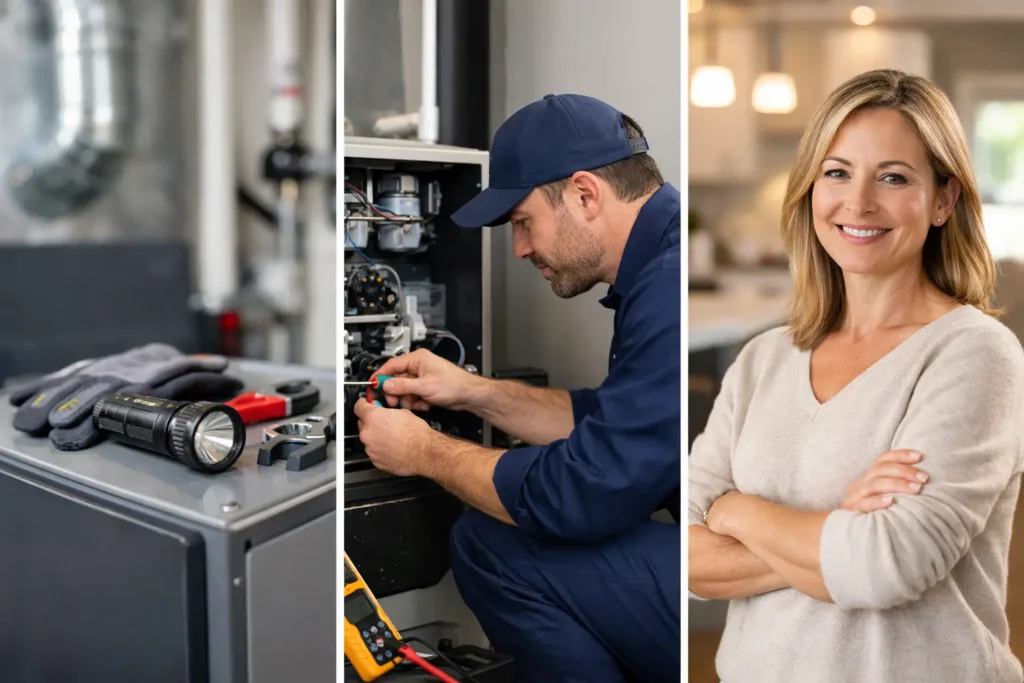
When your furnace appointment is on the calendar, a little preparation can make the visit faster, smoother, and easier on everyone in the house. If you are wondering how to prepare for furnace service, the goal is simple: make the system accessible, gather a few useful details, and be ready to discuss what you have noticed so the technician can get to the issue quickly.
For most homeowners, furnace service falls into one of two situations. Either the system is acting up and you want answers fast, or you are scheduling routine maintenance to avoid a breakdown later. The prep work is similar in both cases, but the details you share can help narrow down whether the visit is likely to be a basic tune-up, a repair discussion, or a recommendation for further testing.
How to prepare for furnace service before the visit
Start with access. Your technician should be able to reach the furnace, thermostat, and main work areas without moving around storage boxes, laundry baskets, or seasonal decorations. If your furnace is in a basement, utility closet, garage, or attic access point, clear enough space to work safely and comfortably. A crowded area does not just slow the visit down. It can also make it harder to inspect airflow, venting, drains, filters, and electrical components.
If you have pets, make a plan before the technician arrives. Even friendly dogs can become stressed when someone is moving through the house, opening doors, or working around loud equipment. Securing pets in another room helps the appointment stay on track and lowers the chance of distractions.
It also helps to make sure an adult decision-maker is available during the service window if possible. Furnace issues are not always obvious until testing begins. If a repair is recommended, it is easier to keep things moving when the person approving work is present and able to ask questions in real time.
Gather the details that actually help
You do not need to diagnose your own furnace before service. In fact, guessing at the problem usually is not helpful. What does help is a short, clear description of what you have experienced.
Before the appointment, jot down when the issue started and what you have noticed. For example, maybe the furnace is blowing cool air, cycling on and off too often, making a new rattling sound, or struggling to keep the house comfortable on colder Columbus mornings. Maybe the issue only happens at night, only in one part of the home, or only when the temperature drops below a certain point. Those patterns matter.
If the thermostat has shown an error message, write it down or take a photo. If you recently changed the filter, lost power, had electrical work done, or noticed a spike in utility use, mention that too. None of these details confirms the cause, but they can shorten the path to a solid diagnosis.
If you have records from recent HVAC visits, keep them handy. A technician may want to know what was repaired before, how old the system is, or whether recurring issues have already been addressed. That context helps avoid repeating steps unnecessarily.
Check the basics without taking on unsafe DIY work
There is a difference between preparing for service and trying to fix the furnace yourself. Preparation is useful. DIY repair is where people can get into trouble.
A few simple checks are reasonable. Confirm that the thermostat is set to heat and that the temperature setting is above the current room temperature. If your thermostat uses batteries, replace them if needed. Look at the air filter and note whether it is heavily clogged. Check whether the furnace switch appears to be on and whether a tripped breaker is visible at the panel.
That said, do not remove furnace panels, tamper with gas lines, test wiring, or try to force the system to run. If you smell gas, leave the area and follow proper emergency safety steps before worrying about the appointment. Furnace service should begin with a safe work environment, not a rushed attempt to investigate something hazardous.
Make the work area easier to inspect
The cleaner the path to the equipment, the easier it is to perform a complete service call. This does not mean your home needs to look perfect. It just means the service area should be reasonably accessible.
If your furnace is in a basement, make sure the floor around it is dry and clear. If it is in a garage, move stored items back enough to allow inspection on all service sides where practical. If the unit is in a closet, clear the doorway and remove anything stacked directly in front of the access panel.
Good lighting helps too. If the area is dim, turning on nearby lights or replacing a burned-out bulb can make the visit more efficient. In older homes, where utility areas can be tight, these small steps often matter more than homeowners expect.
How to prepare for furnace service if you want faster answers
If your main concern is getting a clear diagnosis quickly, focus on symptoms instead of assumptions. Saying “it sounds louder than usual when it starts” is more useful than saying “I think the blower motor is going bad.” Saying “the upstairs stays cold even when the furnace runs” is more useful than trying to guess whether the issue is the thermostat, ductwork, or the furnace itself.
It also helps to think about timing. Has the issue been constant, or did it begin after the first very cold day of the season? Did it start after a filter change, after a power outage, or after another home repair project? Did the system shut down completely, or is it still running but underperforming? These details help separate comfort complaints from mechanical failures, airflow restrictions, ignition problems, control issues, or thermostat concerns.
If some rooms are comfortable and others are not, mention that early. Uneven heating does not always point to the furnace alone. Sometimes the service call may reveal a broader airflow or distribution issue, which changes the conversation from a single repair to a larger comfort solution.
Expect questions about maintenance and system age
A technician will often ask when the filter was last changed, whether the furnace has had regular service, and how old the system is. If you know the approximate install date, have it ready. If you do not, that is fine. The model and serial information on the equipment can usually help fill in the gaps.
Be honest about maintenance history. Skipping service is common, and there is no advantage in pretending otherwise. Clear answers help set realistic expectations. A furnace that has not been serviced in years may simply need maintenance, but it may also have wear, dirt buildup, airflow issues, or safety concerns that take longer to evaluate.
This is also where trade-offs come into play. If your system is older, a repair might still make sense, especially if the issue is minor. In other cases, depending on condition, reliability, and parts availability, the more practical conversation may be about planning ahead instead of putting more money into repeated breakdowns. The right answer depends on the system, the problem, and your goals for the home.
Be ready for approval and next steps
Most homeowners want two things from a service appointment: a clear explanation and no surprises. You can help with both by being ready to discuss priorities once the inspection is complete.
Maybe your priority is restoring heat as soon as possible. Maybe it is understanding whether this is a one-time repair or a sign of bigger furnace trouble. Maybe you are trying to keep an older system running through the season and want the most practical recommendation without overcommitting. Those are all reasonable goals, and saying them upfront can make the conversation more useful.
A professional service visit should leave you understanding what was found, what is recommended, and what needs approval before work begins. If there are options, ask what changes with each one. Some repairs are straightforward. Others come with condition-based recommendations, especially when age, wear, or airflow issues are part of the picture.
A few last details people forget
Check that the thermostat is easy to access and not blocked by furniture or wall decor. If you use a smart thermostat, make sure you know how to wake the screen or unlock settings if needed. If your furnace shares space with a water heater, laundry area, or storage shelving, clear enough room for the technician to move around safely.
If anyone in the home has noticed unusual smells, dust, or noise but did not mention it when the appointment was scheduled, bring that up during the visit. Small observations often lead to better answers.
And if the furnace is still running, do not wait until the technician arrives to turn up the thermostat for the first time that day. Letting the system operate as it normally would can make symptoms easier to observe.
Preparing for furnace service does not take long, but it can make a real difference in how smoothly the appointment goes. A clear path, a few honest details, and a ready decision-maker usually set the stage for better communication and a more efficient visit. If your heat has been inconsistent or your system has been acting differently than usual, a little preparation now can make the next step feel much more manageable.
