
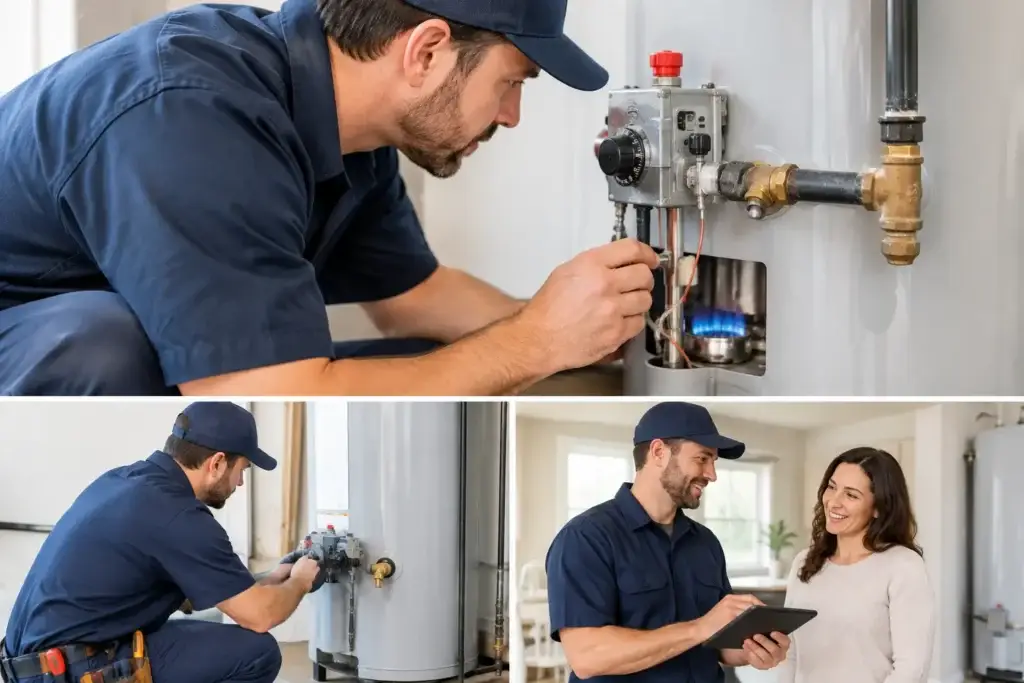
A cold shower often leads to one question: how to relight water heater equipment safely without making the problem worse? For many gas tank-style water heaters, a blown-out pilot light may be the cause. But not every water heater has a pilot, and a pilot that will not stay lit can point to a repair need rather than a simple reset.
Before turning any knob, identify the type of water heater you have and follow the safety instructions printed on the unit. If you smell gas at any point, stop immediately, leave the area, avoid operating electrical switches or appliances, and contact your gas utility or emergency services from a safe location.
First, confirm your water heater has a pilot light
Traditional gas tank water heaters commonly use a standing pilot light. Look near the bottom of the tank for a small access panel, a gas control valve, and a label with lighting instructions. The control typically has settings such as On, Off, Pilot, and sometimes Vacation.
Many newer gas water heaters use electronic ignition instead of a standing pilot. These models may not have a pilot to light manually. Tankless gas water heaters also generally use electronic ignition, while electric water heaters have no pilot light at all. If you do not see clear manufacturer instructions for lighting a pilot, do not guess. The issue may be a tripped breaker, a failed igniter, a gas supply problem, or another condition that needs diagnosis.
Safety checks before you relight a water heater
A pilot should never be relit if there is a gas odor around the water heater, near the floor, or elsewhere in the home. Natural gas is treated with a sulfur-like odor to make leaks easier to detect. Treat that smell seriously.
If there is no gas odor, make sure the area around the heater is clear of paint, gasoline, cleaning chemicals, boxes, and other flammable materials. Check that the water heater is not leaking heavily and that the floor nearby is dry enough to stand safely. A small amount of condensation can occur on some units, but active dripping or pooling water deserves attention before you attempt to restart the system.
It also helps to consider why the pilot went out. A brief interruption can happen, but a pilot that repeatedly goes out is not normal. Drafts, a dirty pilot assembly, a failing thermocouple, venting concerns, or problems with the gas control can all be involved.
How to relight water heater pilots step by step
The instruction label on your specific unit takes priority over general guidance. Controls and wait times vary by manufacturer and model. With that in mind, the usual process for a conventional gas water heater is straightforward.
1. Turn the gas control to Off
Locate the gas control knob on the front or side of the water heater. Turn it to Off. If the knob will not turn easily, do not force it.
Wait at least five minutes before trying to light the pilot. This gives any residual gas time to clear. During that waiting period, do not use a match, lighter, or any open flame near the heater.
2. Find the pilot lighting instructions and viewing area
Most tank-style models have printed instructions on the tank or gas control. There may be a small viewing window or an access door near the burner compartment where you can see whether the pilot flame is lit.
Some water heaters use a built-in piezo igniter button that creates a spark. Older models may require a long fireplace-style match, but only use a match if the manufacturer specifically directs you to do so. If the instructions are missing, unreadable, or different from the controls you see, it is safer to call for help than to improvise.
3. Set the control to Pilot and hold it down
Turn the control to Pilot. Depending on the model, you may need to press and hold the knob or a separate pilot button to allow gas to reach the pilot burner.
Keep steady pressure on the control while following the unit’s ignition instructions. On systems with a spark igniter, press the igniter button as directed until you see the pilot flame through the viewing window. It may take a few attempts, especially after the unit has been off for a while.
4. Hold the pilot control after the flame lights
Once the pilot is visible, continue holding the control for the time listed on the water heater label, often 30 to 60 seconds. This warms the safety sensor that keeps gas flowing to the pilot.
Release the control slowly. If the flame remains lit, turn the knob from Pilot to On. Then set the temperature to the recommended setting listed by the manufacturer. Many households use around 120 degrees Fahrenheit to balance comfort, energy use, and scald prevention.
5. Confirm the burner starts normally
After the pilot is relit and the control is set to On, the main burner may ignite if the tank needs heat. Look through the viewing window rather than opening any sealed burner area. A normal flame is generally steady and mostly blue.
Give the heater time to recover. A full tank can take an hour or more to heat, depending on tank size, incoming water temperature, and how much hot water was recently used. If the pilot stays lit but you still have no hot water after a reasonable recovery period, the issue may not be the pilot.
When the pilot will not stay lit
If the pilot lights but goes out as soon as you release the button, avoid repeated attempts. The most common reason is a failing or dirty flame-sensing component, often called a thermocouple on older equipment. Other possible causes include a blocked pilot opening, a weak gas control, combustion air issues, or venting problems.
A pilot that produces a weak, flickering, or yellow flame also needs attention. While flame appearance alone does not identify the exact repair, it can indicate that the burner system is not operating as it should. Do not try to clean gas components yourself with improvised tools or make adjustments to the gas valve.
Call for water heater service if the pilot will not light after following the manufacturer’s instructions, will not remain lit, or keeps going out over time. A trained technician can identify the cause, explain the repair options clearly, and help you decide whether repair or replacement makes more sense based on the heater’s condition and age.
Signs you should stop and call for help
Some water heater problems should not wait for another lighting attempt. Arrange professional service promptly if you notice a gas smell, soot or burn marks near the burner area, unusual rumbling or popping sounds, water leaking from the tank, rusty water, or visible corrosion around connections.
Age matters, too. Many tank water heaters last roughly eight to 12 years, although maintenance, water quality, usage, and installation conditions affect that range. If an older unit has recurring pilot trouble along with leaks or reduced performance, putting money into repeated repairs may not be the best long-term choice. A technician can inspect the system before presenting options, so you can approve work with a clear understanding of the scope and price.
A quick note for Columbus homeowners
Cold Central Ohio winters can expose water heater problems quickly, especially when a unit is located in a garage, basement, or utility area with drafts. Keeping the space around the water heater clear and scheduling maintenance before the heating season can help catch developing issues early.
For homeowners who want a clear answer without trial and error, Transit & Flow can inspect a water heater, explain what is causing the pilot issue, and provide straightforward recommendations before work begins. Availability, repair needs, and final pricing depend on the system and on-site conditions.
A relit pilot may restore hot water, but a reliable water heater should do more than work for one day. If yours keeps shutting down, trust the warning sign and get the underlying problem checked before the next cold shower becomes a bigger interruption.
