
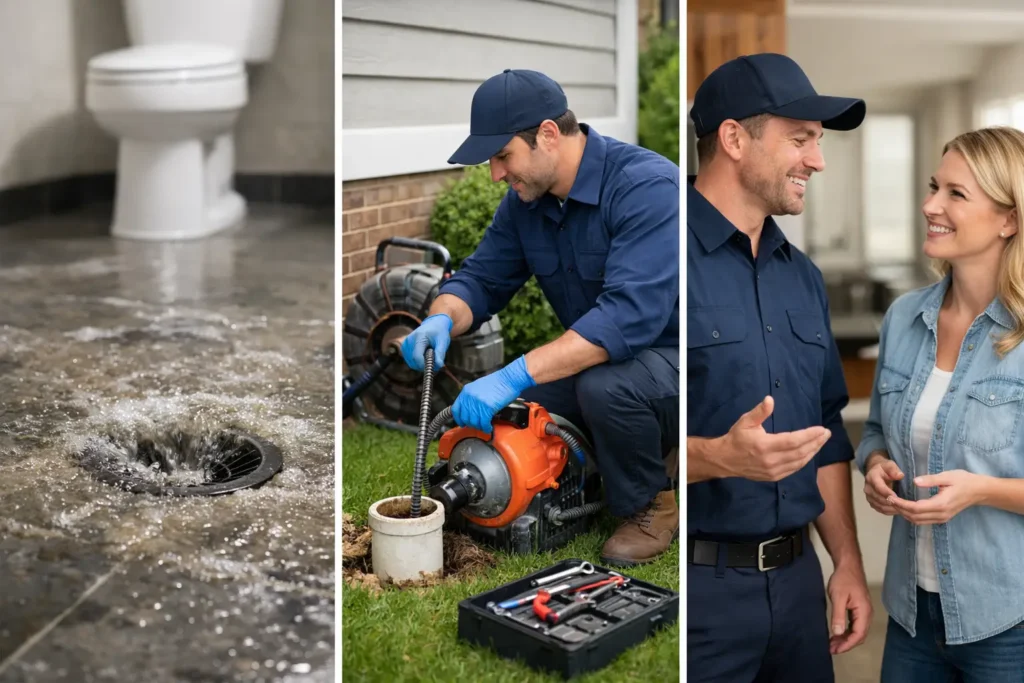
A sewer backup usually starts with a small warning people hope will pass – a floor drain gurgles, the toilet bubbles after a shower, or water drains slowly in more than one fixture at the same time. If you are searching for how to stop sewer backup, the most important thing to know is this: quick action can limit damage, but the right fix depends on where the blockage is and why it happened.
Some backups come from a localized drain clog. Others point to a main sewer line problem that needs professional equipment and inspection. Knowing the difference can save you time, protect your home, and help you avoid making a messy situation worse.
How to Stop Sewer Backup Without Making It Worse
The first step is to stop using water in the house. Do not flush toilets, run sinks, start the dishwasher, or do laundry. If the main sewer line is restricted, every gallon you send down a drain can push more wastewater back into tubs, showers, floor drains, or lower-level toilets.
Next, keep people and pets away from the affected area. Sewer water is not just dirty – it can carry bacteria and other contaminants. If the backup is in a basement or utility area, avoid tracking it through the house.
If it is safe to do so, shut off power to nearby outlets or appliances in the wet area. Water and electricity are a bad combination, and this is one place where caution matters more than speed. If you cannot safely access the panel, leave it alone and wait for a professional.
Then take a quick look at the pattern. Is one sink draining slowly, or are multiple fixtures affected? A backup showing up in the lowest drain in the home, especially after using water elsewhere, often points to a main line issue rather than a simple clog in one fixture.
Signs the Problem Is in the Main Sewer Line
A single clogged toilet is frustrating. A sewer line backup is different, and the signs usually show up across more than one drain. Toilets may bubble when a sink or washing machine drains. Water may rise in a shower when you flush. A basement floor drain may overflow first because it is the lowest exit point.
You may also notice recurring slow drains throughout the house, sewage odor near drains, or backups that return after temporary clearing. Tree root intrusion, pipe damage, heavy grease buildup, and wipes or hygiene products in the line are common causes.
In older Columbus-area homes, aging sewer lines can also play a role. Clay and cast-iron lines are more likely to develop cracks, scale buildup, or root entry over time. Newer homes are not immune either, especially if flushing habits or yard conditions put extra stress on the line.
What Not to Do During a Sewer Backup
This is where many homeowners accidentally add to the problem. If you suspect a sewer backup, do not keep testing drains to see whether they are getting better. That usually means more water entering an already blocked system.
Skip chemical drain cleaners. They rarely solve a main sewer line blockage, and they can create additional risks for anyone who has to work on the pipe later. They may also damage certain plumbing materials over time.
It is also best not to start taking apart cleanouts, removing toilets, or trying aggressive DIY clearing methods unless you know exactly what you are dealing with. A pressurized sewer line or an incorrectly opened cleanout can release wastewater fast. For a minor sink clog, a plunger may help. For suspected sewer line backup, caution is the better move.
When a Plunger Helps and When It Does Not
A plunger still has a place, but only in the right situation. If one toilet is clogged and no other drains are acting up, plunging may clear a localized blockage. The same goes for a single slow tub or sink if the issue is close to that fixture.
If several drains are backing up together, a plunger is unlikely to solve the real problem. At that point, the blockage is often farther down the system, beyond the reach of basic tools. You may get a little movement, but not a dependable fix.
That is why the pattern matters more than the fixture. Homeowners often focus on where the backup appears, but the source may be much deeper in the sewer line.
How Professionals Stop Sewer Backup Problems
For a true sewer line blockage, the right repair starts with diagnosis. A plumbing technician may begin by checking the cleanout and evaluating how the system is responding. If needed, they can use drain cleaning equipment designed for larger sewer lines, not just small branch drains.
In many cases, a sewer camera inspection is the key step. It shows whether the issue is grease buildup, roots, a collapsed section, offset pipe joints, or another obstruction. That matters because not every backup should be treated the same way. Clearing roots without addressing damaged pipe may only buy limited time. Snaking through a line with structural failure may not solve the recurring problem at all.
For homeowners, the practical benefit is clarity. Instead of guessing, you get a direct explanation of what is wrong, what can be done now, and whether a repair or replacement should be considered. That is especially important when you are trying to balance urgency, cost, and long-term reliability.
How to Stop Sewer Backup From Happening Again
Once the immediate backup is handled, prevention becomes the next priority. Some homes deal with one isolated event. Others have a repeat issue that points to habits, maintenance needs, or aging infrastructure.
The biggest preventable cause is what goes down the drain. Grease, food scraps, wipes, paper towels, hygiene products, and excess toilet paper can all contribute to blockages. Even products labeled flushable can create problems in real-world plumbing systems.
Regular drain and sewer maintenance can also help, especially if your home has a history of backups or root intrusion. That does not mean every home needs routine heavy cleaning. It means paying attention to recurring warning signs and acting before wastewater makes that decision for you.
Outside the house, be mindful of large trees near the sewer line path. Roots naturally seek moisture and can find small openings in older lines. If your home has had root-related issues before, periodic inspection may be worth discussing.
A backwater valve may also be an option in some homes. This device is designed to help prevent sewage from flowing backward into the house under certain conditions. Whether it makes sense depends on your plumbing layout and the source of the backup, so it is something to evaluate case by case.
When to Call for Help Right Away
If sewage is coming up through a basement drain, tub, or toilet, it is time to call. The same goes for multiple clogged fixtures, strong sewage odor, or repeated backups that keep returning. These are not situations where waiting usually works in your favor.
Fast response matters because sewer backups can damage flooring, drywall, trim, storage items, and nearby mechanical equipment. They can also interrupt normal use of bathrooms, laundry, and kitchens, which puts real pressure on a household.
A professional visit should give you more than a temporary clearing. You should expect clear communication about what was found, what was done, and what the next step looks like if the problem is likely to return. In Columbus and nearby communities, that kind of straightforward service matters when you are dealing with a plumbing issue that cannot wait.
A Practical Plan if You Suspect a Backup
If you think your sewer is backing up, stop water use immediately, avoid the affected area, and pay attention to whether the problem is isolated or showing up in multiple drains. That simple information helps determine whether you are dealing with a small clog or a larger sewer line issue.
If the signs point to the main line, the safest and most effective move is to get it checked before the backup spreads or returns. Sewer problems rarely improve from being ignored, but they are a lot easier to handle when the response is early, organized, and based on a real diagnosis.
The best next step is the one that protects your home from a bigger mess tomorrow.
