
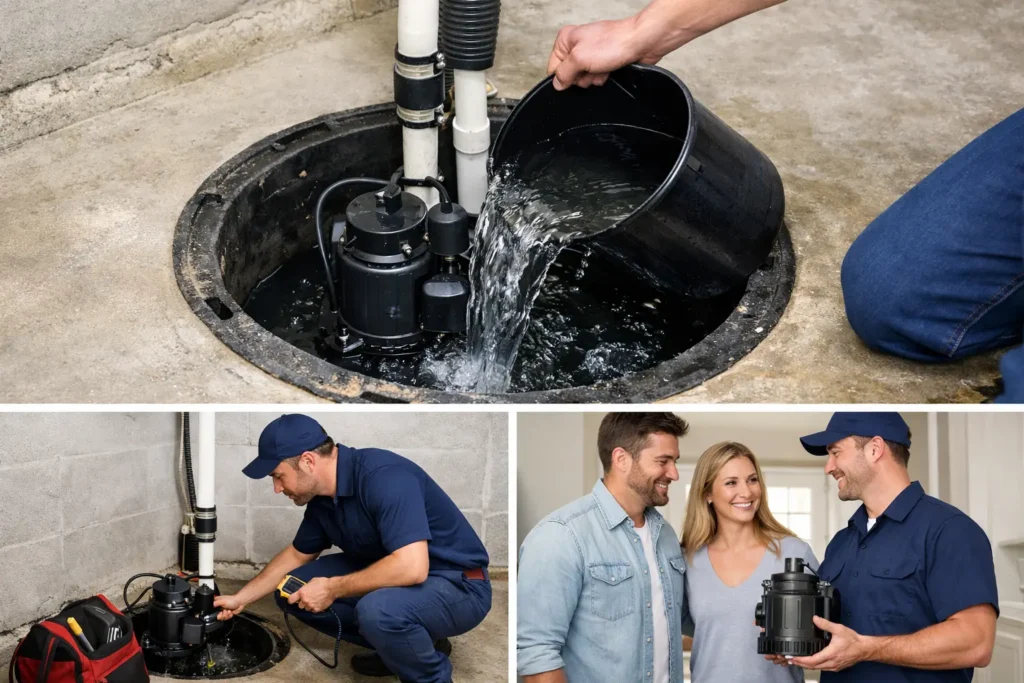
A sump pump usually stays out of sight until the day you really need it. That is why knowing how to test sump pump performance before a heavy rain matters. A quick check can tell you whether the pump starts when it should, clears water fast enough, and shows signs that it may be close to failing.
For many homeowners, the best time to test a sump pump is before spring storms, before a long trip, or any time you notice dampness near the basement floor. You do not need an advanced plumbing background to do a basic check. You do need to be careful around water and electricity, and you need to know what signs point to a simple maintenance issue versus a problem that needs professional repair.
How to test sump pump safely
Start with a visual inspection before you add any water. Make sure the area around the sump pit is dry enough to work safely and that the pump is plugged into a working outlet. If the cord looks damaged, the outlet seems loose, or there is standing water around the electrical connection, stop there and have it checked.
Next, remove the sump pit cover if your setup allows it. Use a flashlight and look inside the pit. You are checking for obvious debris, heavy sludge, or anything that could block the float. The float is the part that rises with the water level and tells the pump to turn on. If it is pinned against the side of the pit or tangled with the cord, the pump may not activate when the pit fills.
Once the pit looks clear, slowly pour water into it with a bucket. Do not dump water in too fast. You want the float to rise naturally. In a normal setup, the pump should switch on as the water level rises, then pump the water out and shut off once the level drops.
While the test runs, pay attention to the details. The pump should start without hesitation, sound steady while running, and remove water at a reasonable pace. If it hums but does not move water, starts and stops rapidly, or runs much longer than expected, that points to a problem.
What a normal sump pump test should look like
A good test is not just about hearing the motor kick on. You also want to see the full cycle work correctly.
First, the float should move freely. Second, the pump should turn on once the water reaches the trigger point. Third, the discharge line should carry water away from the house. Finally, the pump should shut off after the water level drops.
If one part of that sequence fails, the system is not fully dependable. A pump that turns on but cannot discharge water is still a problem. A pump that empties the pit but never shuts off can also wear itself out quickly.
If you can safely observe the discharge point outside, check that water is exiting there too. If the pump runs but little or no water comes out, the discharge line may be clogged, frozen, blocked, or installed with an issue that limits flow.
Common warning signs during a sump pump test
Some problems are obvious. Others show up as small changes in sound or timing. If you are learning how to test sump pump equipment at home, these are the warning signs worth taking seriously.
A loud rattling or grinding noise can mean the motor or impeller is wearing out. A delayed start can point to float trouble, electrical issues, or a weak motor. Short cycling, where the pump turns on and off repeatedly in a short span, may mean the float is misadjusted or the pump is not sized or positioned correctly.
You should also watch for visible rust, a musty odor, or muddy buildup in the pit. Those signs do not always mean the pump has failed, but they often suggest the system has not been cleaned or maintained in a while. That can shorten pump life and reduce reliability.
A breaker that trips when the pump starts is another sign to stop testing and get help. That is not a normal maintenance issue. It needs a proper diagnosis.
Why some sump pumps fail the test even when they still run
This is where many homeowners get caught off guard. A sump pump can still make noise and move some water, but that does not mean it is ready for the next major storm.
Older pumps often become inconsistent before they stop completely. The float may stick only sometimes. The motor may overheat after a few cycles. The discharge line may handle a small test but struggle under heavy groundwater conditions. In other words, a pump can pass a casual glance and still fail when the demand is higher.
That is why timing matters. If your pump is several years old, has run heavily during past storms, or has already needed repeated attention, the test results deserve a closer look. Reliability matters more than whether it turns on once during a dry week.
Battery backup pumps need testing too
If your home has a battery backup sump pump, test that system separately. This matters because many basement flooding events happen during storms that also knock out power.
Check that the backup unit has power, that the battery connections are secure, and that any status lights show normal operation. Many systems include a test button or indicator panel. Follow the manufacturer instructions for that specific unit.
If the battery is old, corroded, or not holding a charge, the backup system may not be ready when you need it. A backup pump is only helpful if it actually runs during an outage. If you are not sure how to confirm that safely, it is smart to schedule a professional inspection.
When to stop DIY testing and call for service
A basic water test is reasonable for many homeowners. Repairs are different. If the pump does not turn on, trips the breaker, leaks around fittings, smells like it is overheating, or leaves you unsure whether the system is really protecting the basement, it is time for service.
This is especially true if your home has a finished basement, stored belongings near floor level, or a history of water intrusion. In those cases, waiting for a total failure can become much more expensive than addressing the issue early.
A professional can check the pump, float switch, discharge line, check valve, pit condition, and backup setup as one system. That broader view matters because sump pump problems are not always caused by the pump alone.
For homeowners in Columbus and nearby communities, that kind of inspection is often most useful before the wet season starts or right after you notice inconsistent performance. Clear recommendations and up-front approval matter here. No one wants to guess about a water protection system.
How often should you test a sump pump?
For most homes, testing every few months is a practical schedule. It also makes sense to test before periods of heavy rain and after any repair or power issue. If your sump pump runs often, your basement has had water problems before, or your property sits in an area with higher groundwater, more frequent checks may be worth it.
There is a balance here. You do not need to overdo it, but you also should not treat the pump like an appliance you never think about. A five-minute test a few times a year is a lot easier than dealing with water cleanup later.
A few mistakes to avoid when testing
The biggest mistake is assuming the pump is fine because it has not failed yet. The second is testing only the motor and ignoring the float, discharge line, and backup power.
Another common issue is forcing parts by hand. If the float is stuck or the cover is difficult to remove, do not pry or yank on components. That can create a new problem. It is better to stop and have the system checked than to damage the switch or wiring.
And if anything about the setup feels unsafe, especially around electricity, trust that instinct. A sump pump test should give you confidence, not create a hazard.
A sump pump does not need much attention most of the year, but it does need proof that it is ready. If your test raises questions, getting clear answers before the next storm is the kind of small step that protects your home when it counts.
