
A kitchen sink that drains slowly is usually giving you a warning. Ignore it long enough, and a simple buildup of grease and food debris can turn into standing water, a dishwasher backup, or a drain that stops working completely. Knowing how to unclog kitchen sink safely can help with a minor blockage, but the method matters. The wrong tool, too much force, or a harsh chemical can make a manageable problem more complicated.
Start by looking at what the sink is doing. Does water drain slowly, or not at all? Is one basin affected or both? Does running the garbage disposal change anything? Those details can point to the location of the clog and help you decide whether a careful DIY attempt makes sense.
Before You Start: Know When to Stop
Do not begin by pouring chemical drain cleaner into the sink. These products can create heat, damage certain pipes or seals, and leave hazardous liquid behind if the drain remains blocked. They can also make later service more difficult and unsafe for anyone working on the line.
If you already used a chemical cleaner, do not plunge the sink or remove the drain trap until you know the product has been thoroughly flushed according to its label. Avoid mixing cleaners or adding other chemicals. If water is backing up into the dishwasher, coming up through another drain, or accompanied by a sewage odor, skip DIY work and arrange professional drain service.
You should also stop if you find a leak under the cabinet, see damaged pipes, or cannot safely access the plumbing. Standing water can damage cabinet materials quickly, so place towels around the base of the cabinet and use a bucket to remove enough water to work comfortably.
How to Unclog a Kitchen Sink Step by Step
Most kitchen sink clogs happen in the trap or the short drain line just beyond it. Grease that goes down warm can cool and harden farther along the pipe. Food particles, coffee grounds, eggshell fragments, and soap residue can collect against that buildup over time.
1. Remove standing water and check the sink strainer
Use a cup, small container, or wet/dry vacuum to remove standing water from the basin. This is not just for convenience. A plunger works better when you can control the water level, and you will have a clearer view of the drain opening.
Pull out the sink strainer and remove any visible debris. If you have a double-basin sink, inspect both strainers. A small buildup near the opening may be all that is slowing the drain. Clean the strainer, rinse it, and run a modest amount of warm water to see whether the drain improves.
Avoid forcing utensils, wire hangers, or sharp objects down the drain. They can scratch the sink, damage a disposal, or push the blockage farther into the line.
2. Try a sink plunger correctly
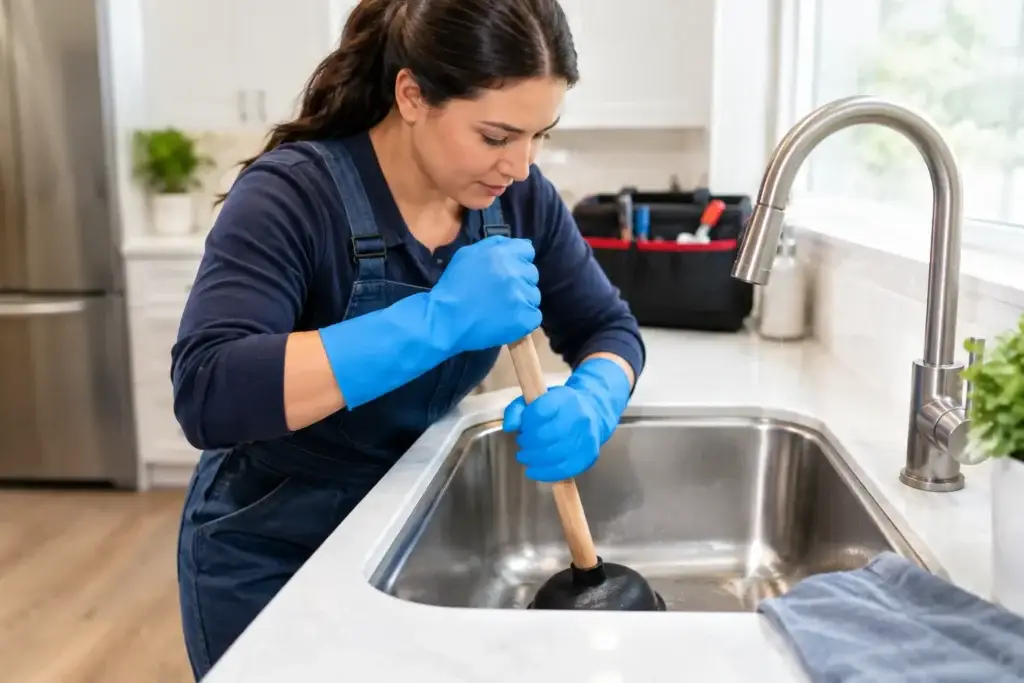
A standard cup plunger can clear many soft clogs. Add enough water to cover the rubber cup. For a double-basin sink, seal the unused drain opening with a wet rag or a stopper. Without that seal, pressure will escape through the other basin instead of working on the clog.
Center the plunger over the drain and make several firm, controlled strokes. Keep the cup sealed against the sink surface as you push and pull. After several strokes, lift the plunger and test the drain with a small amount of water.
Do not use excessive force. If the clog does not move after a few attempts, repeated plunging is unlikely to solve a heavier grease blockage or an obstruction farther down the line. It may also loosen an aging connection under the sink.
3. Check the garbage disposal, if you have one
If one side of a double sink drains poorly and the other side has a garbage disposal, the disposal may be contributing to the problem. First, turn off power to the unit at the breaker. Never put your hand into the disposal, even when it appears to be off.
Look into the sink opening with a flashlight and remove only items that are clearly visible and easy to reach with tongs. Many disposal units have a small reset button on the bottom and a manual turning socket underneath. Refer to the manufacturer instructions before using either feature.
If the disposal hums but does not turn, repeatedly trips, leaks, or still will not drain after a basic check, it needs professional attention. A disposal issue can be separate from a drain clog, and forcing the unit can cause more damage.
4. Clean the P-trap only if it is accessible and in good condition
The curved pipe under the sink is called the P-trap. It holds water to block sewer gases, and it is a common spot for debris to collect. If it is easy to reach, appears intact, and no chemicals have been used in the drain, you can carefully inspect it.
Place a bucket directly beneath the trap and keep towels nearby. Loosen the slip nuts by hand if possible, then lower the trap slowly. Expect water and debris to come out. Clean the trap, inspect the washers, and reassemble each connection snugly without overtightening.
Run water slowly afterward and check every joint for drips. If fittings are corroded, brittle, cracked, glued in place, or difficult to remove, leave the repair to a plumber. A small clog is not worth creating a cabinet leak or a broken drain connection.
5. Test with warm water, not a large rush of water
Once the sink begins to drain, test it gradually. Run warm water for a minute, then fill the basin partway and release it. This gives you a better indication of whether the line is truly clear.
For grease-related buildup, warm water and dish soap may help move minor residue after the clog has been released. It is not a solution for a fully blocked drain. Skip boiling water if you have concerns about older pipes, plastic drain components, or a porcelain sink that could be affected by rapid temperature changes.
Why Baking Soda and Vinegar Usually Have Limits
Baking soda and vinegar are often suggested for kitchen drains because they fizz, but fizzing is not the same as clearing a clog. They may help freshen a drain or loosen light residue near the opening. They are not reliable for packed grease, food debris, or an obstruction deep in the line.
If the sink is holding water, this approach is especially limited because the mixture may never reach the clog with enough force to do much. Use it as occasional maintenance only, not as a substitute for clearing a real blockage. Never follow it with a chemical drain cleaner.
Signs the Clog Is Beyond the Kitchen Sink
A kitchen clog can sometimes be part of a larger drain or sewer issue. Pay attention to what happens elsewhere in the home. If the kitchen sink backs up when the dishwasher drains, the blockage may be in the shared kitchen branch line. If water appears in a nearby tub or shower, multiple fixtures drain slowly, or you hear gurgling from other drains, the issue may be farther down the system.
Outdoor drain problems, root intrusion, a damaged sewer line, and heavy buildup are not problems to solve with more plunging. A professional can inspect the drain, identify the source of the blockage, and recommend the right next step rather than treating the symptom repeatedly.
When to Call for Kitchen Drain Service
Call for help when DIY steps have not restored normal drainage, when the sink repeatedly clogs, or when water backs up into the dishwasher or another fixture. Frequent clogs often mean there is a partial blockage farther down the line, not simply something caught in the sink strainer.
For homeowners in Columbus and surrounding Central Ohio communities, Transit & Flow can assess kitchen drain problems, explain what is causing them, and provide clear recommendations before work begins. Service needs vary by the location and condition of the clog, so the right repair and final cost should be confirmed after an on-site evaluation and customer approval.
A clean kitchen drain should handle everyday use without gurgling, pooling, or forcing you to plan around the sink. Addressing a slow drain early gives you the best chance of avoiding a messy backup when you need the kitchen most.
