
Direct Answer: What Causes Low Water Pressure in Canal Winchester?
Low water pressure in Canal Winchester homes is most commonly caused by a failing pressure regulator, corroded supply lines, mineral buildup in fixtures, or municipal supply fluctuations tied to seasonal demand. A professional plumber can diagnose the exact source in a single visit and restore whole home water pressure to normal operating levels.
Introduction: Why Canal Winchester Homeowners Are Dealing with Low Water Pressure This Spring
If you have noticed your shower losing pressure, your kitchen faucet trickling, or your washing machine taking forever to fill, you are not alone. Low water pressure is one of the most common plumbing complaints from homeowners in Canal Winchester and across Columbus, Ohio, especially during the spring months when municipal water systems experience increased demand from irrigation, construction flushing, and seasonal line maintenance. The frustrating part is that low water pressure rarely has a single obvious cause. It can stem from something as simple as a clogged aerator or as complex as a deteriorating main supply line running beneath your yard. Whatever the source, living with weak fixture flow affects your daily comfort and can signal deeper plumbing problems that worsen over time. Transit & Flow helps Canal Winchester homeowners identify and resolve water pressure issues quickly. Call us at 614-333-8092 for fast scheduling or keep reading to understand what may be happening in your home and when professional help is necessary.
Key Takeaways
- Low water pressure in Canal Winchester can result from municipal issues, internal plumbing corrosion, faulty pressure regulators, or fixture-level blockages.
- Spring is a peak season for water pressure complaints in Columbus OH due to increased municipal demand and system maintenance.
- A professional diagnosis is the fastest way to determine whether your low pressure is a localized fixture issue or a whole home water pressure problem.
- Cost variables depend on the root cause, ranging from minor fixture repairs to supply line replacement.
- Transit & Flow provides pressure testing and diagnostics for Canal Winchester homes. Call 614-333-8092 to schedule.
Understanding Low Water Pressure: The Primary Service Breakdown
Water pressure in a residential home is measured in pounds per square inch, commonly referred to as PSI. Most homes in Canal Winchester and the greater Columbus OH area operate between 40 and 80 PSI. When pressure drops below 40 PSI, you start noticing weak streams from faucets, poor shower performance, and appliances that struggle to operate efficiently. Whole home water pressure problems affect every fixture simultaneously, while localized issues may only impact a single faucet or bathroom.
The plumbing infrastructure in Canal Winchester includes a mix of newer subdivision construction and older homes built in the 1970s through 1990s. Older homes are more susceptible to galvanized steel supply lines that corrode internally over decades, slowly reducing the diameter available for water flow. Newer homes may still experience issues if the pressure regulator installed at the main line fails or if the home was built at a higher elevation relative to the municipal water source.
Your water enters the home through a main supply line, passes through a shutoff valve, and in many cases travels through a pressure regulator before being distributed to individual fixtures through a network of interior supply lines. A disruption, restriction, or failure at any point in this chain can result in diminished fixture flow. Understanding this system helps homeowners communicate effectively with their plumber and make informed decisions about repairs.
Transit & Flow technicians begin every water pressure evaluation with a full-system pressure test, measuring PSI at the main and at individual fixtures throughout the home. This diagnostic approach pinpoints whether the issue is upstream from your home, at the entry point, or within your interior plumbing network.
Warning Signs and Symptoms of Low Water Pressure
Whole Home Symptoms
- Every faucet and shower in the house produces a noticeably weaker stream than usual
- Multiple appliances, including the dishwasher and washing machine, take significantly longer to complete fill cycles
- Outdoor hose bibs produce weak flow even when fully open
- Water heater recovery time increases because incoming water volume is reduced
Localized Symptoms
- Only one faucet or showerhead has diminished flow while others operate normally
- Hot water pressure is low but cold water pressure is fine, or vice versa
- Pressure drops significantly when a second fixture is turned on simultaneously
- A specific bathroom or floor of the home consistently has weaker flow
Pay attention to whether the issue developed gradually or appeared suddenly. A sudden loss of pressure across the entire home may indicate a main line break, a municipal shut-off, or a catastrophic valve failure, any of which require prompt professional attention.
Root Causes of Low Water Pressure in Canal Winchester
Municipal Supply Issues
The City of Canal Winchester sources water through its own municipal system. Seasonal line flushing, main breaks in the distribution network, and peak demand periods during spring and summer can temporarily reduce pressure delivered to your home. Checking with neighbors to see if they are experiencing the same issue is a helpful first step.
Failing Pressure Regulator
A pressure regulator is a bell-shaped device installed on your main supply line that controls the PSI entering your home. These devices have a typical lifespan of seven to twelve years. When they fail, they can either allow dangerously high pressure or restrict flow to the point where fixtures barely produce water. Canal Winchester homes built in phases during the early 2000s commonly have regulators approaching the end of their service life.
Corroded or Deteriorating Supply Lines
Older galvanized steel pipes corrode from the inside out, building up layers of rust and mineral deposits that restrict water flow. This is one of the most common causes of gradually worsening low water pressure in Columbus OH homes built before 1990. A corroded supply line cannot be cleaned effectively; it requires replacement, typically with modern copper or PEX piping.
Mineral Buildup and Hard Water Deposits
Columbus and Canal Winchester water contains moderate levels of dissolved minerals. Over time, calcium and magnesium deposits accumulate inside pipes, valves, and fixture aerators. This buildup is especially problematic in hot water lines and within the water heater tank itself.
Partially Closed Shutoff Valve
After maintenance or a repair, a shutoff valve may not have been fully reopened. This is a surprisingly common and easily overlooked cause of reduced whole home water pressure.
Hidden Leaks
A leak in a supply line beneath a slab foundation or behind a wall can divert water away from your fixtures, reducing pressure. Hidden leaks often produce secondary symptoms including unexplained increases in your water bill, damp spots, or the sound of running water when all fixtures are off.
The Professional Diagnostic Process
When a Transit & Flow technician arrives at your Canal Winchester home for a water pressure evaluation, the process follows a systematic diagnostic approach.
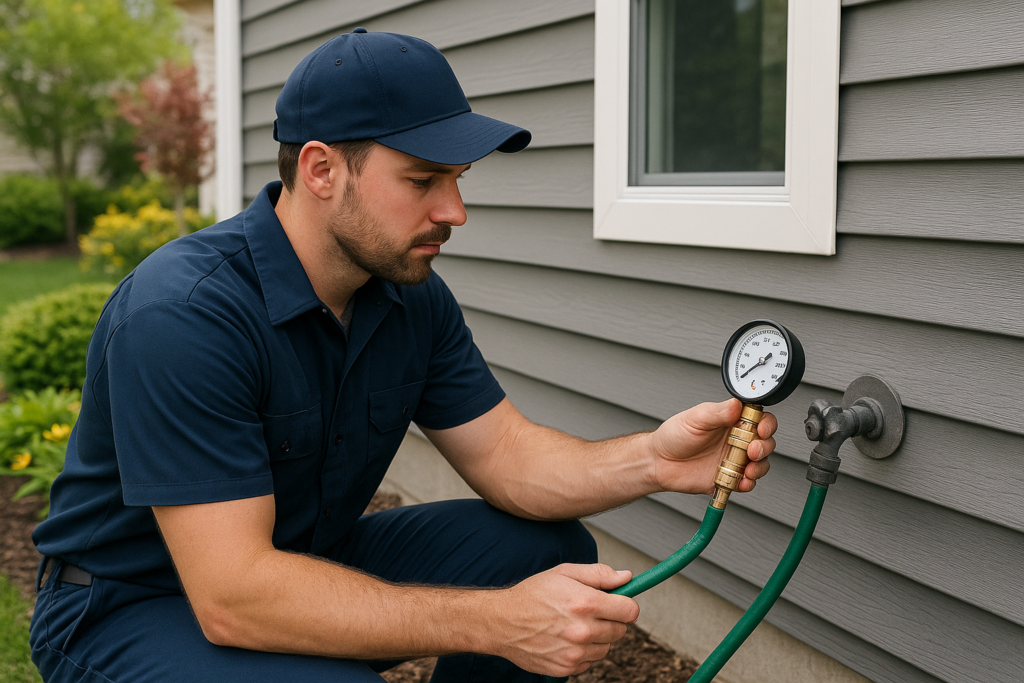
- Initial pressure reading at the main. The technician attaches a calibrated gauge to the hose bib nearest your main shutoff valve to establish a baseline PSI reading.
- Fixture-by-fixture flow testing. Each faucet, shower, and appliance connection is tested individually and simultaneously to identify whether the issue is whole home or localized.
- Pressure regulator inspection. If your home has a regulator, the technician tests it for proper function and adjusts or recommends replacement as needed.
- Visual and camera inspection of supply lines. Where corrosion or hidden leaks are suspected, the technician may use specialized inspection equipment to assess the condition of your pipes without unnecessary demolition.
- Findings report and options. You receive a clear explanation of what was found, what is causing your low water pressure, and what your repair or replacement options are, along with transparent cost information before any work begins.
Cost Variables: What Affects the Price of Fixing Low Water Pressure
The cost of resolving low water pressure varies widely based on the root cause. Transit & Flow never quotes a price without first completing a proper diagnosis, because the range of possible repairs is significant.
- Aerator or fixture cleaning: This is the most affordable resolution and involves minimal labor.
- Pressure regulator replacement: A moderate repair that includes the cost of the new regulator device and labor to install and calibrate it.
- Supply line repair or partial repiping: Costs increase when pipe sections need to be replaced, especially if they are located behind walls or beneath slabs.
- Whole home repipe: The most extensive option, necessary when corrosion is system-wide. Materials such as copper versus PEX, total linear footage, and number of fixture connections all affect the final cost.
- Leak detection and repair: If a hidden leak is the culprit, the cost depends on the location and accessibility of the damaged section.
Factors including the age of your home, number of stories, accessibility of plumbing, and whether permits are required all influence the total investment. Call Transit & Flow at 614-333-8092 for an honest assessment before any work is performed.
When to Call a Professional
Some water pressure issues resolve themselves, such as temporary municipal drops during scheduled maintenance. However, you should call a professional plumber if you experience any of the following situations.
- Pressure has been consistently low for more than 24 to 48 hours
- You notice a sudden and dramatic drop in pressure across all fixtures
- Your water bill has increased without a change in usage patterns
- You hear water running inside walls or beneath floors when no fixtures are in use
- Discolored or rusty water accompanies the pressure drop
- You suspect a slab leak or foundation-level pipe failure
Do not attempt to adjust or replace a pressure regulator yourself, as improper calibration can cause pipe bursts or damage to appliances and fixtures throughout your home. Call Transit & Flow at 614-333-8092 to have a trained technician handle the diagnosis and repair safely.
Safe Homeowner Checks
Before calling for service, there are a few safe, non-invasive checks you can perform to help narrow down the issue.
- Check with your neighbors. If they are experiencing the same low pressure, the issue is likely municipal and may resolve on its own.
- Inspect your main shutoff valve. Locate it and confirm it is fully open. Turn it counterclockwise until it stops. Do not force a stuck valve, as this can cause a break.
- Clean faucet aerators. Unscrew the aerator from the tip of any affected faucet and rinse out visible sediment or mineral deposits. Reattach and test flow.
- Check your water meter. If the meter is spinning when no water is being used in the home, you may have a leak. Note the reading and call a professional.
- Review recent work. If you recently had plumbing work performed, a valve may have been left partially closed.
These checks are safe for any homeowner and can help your plumber arrive prepared to address the most likely cause efficiently.
Repair Versus Replace: Making the Right Decision
When low water pressure is caused by aging infrastructure, homeowners face a decision between targeted repair and broader replacement. Here is a framework to help guide that decision.
When Repair Makes Sense
- The issue is isolated to a single fixture, valve, or short section of pipe
- Your overall plumbing system is relatively modern, less than 25 years old with copper or PEX piping
- A pressure regulator replacement restores full function
When Replacement Is the Better Investment
- Your home has galvanized steel pipes that are corroding system-wide
- You have experienced repeated pressure issues or leaks in multiple locations
- A home inspection or pressure test reveals widespread deterioration
- You are planning to sell your Canal Winchester home and want to protect its value
A whole home repipe is a significant investment, but it eliminates the cycle of recurring repairs and protects your property from water damage. Transit & Flow technicians provide honest assessments and never recommend replacement when a repair will solve the problem effectively.
Local Columbus Context: Why Canal Winchester Has Unique Pressure Challenges
Canal Winchester sits at the southeastern edge of the Columbus metropolitan area, and its rapid residential growth over the past two decades means the community includes a wide range of plumbing infrastructure ages and types. Subdivisions built during the housing boom of the early 2000s are now reaching the age where pressure regulators and water heater components begin to fail.
The area sits at a slightly higher elevation than much of central Columbus, which can contribute to marginally lower baseline pressure from the municipal supply. Additionally, the mineral content of Central Ohio groundwater accelerates internal pipe corrosion and fixture buildup. Spring is a particularly active season for pressure complaints because municipal systems increase flushing schedules, lawn irrigation systems come online, and seasonal temperature swings stress aging pipe joints.
Transit & Flow has extensive experience serving Canal Winchester homeowners and understands the specific plumbing conditions and infrastructure common to the area. Our technicians carry the parts and equipment needed to resolve the most common pressure issues in a single visit whenever possible.
Frequently Asked Questions
What should I do first if I notice low water pressure in my Canal Winchester home?
Start by checking whether the issue affects all fixtures or just one. Clean the aerator on any affected faucet and confirm your main shutoff valve is fully open. If the problem persists or affects the whole home, call Transit & Flow at 614-333-8092 for a professional pressure test and diagnosis.
What should I avoid doing when I have low water pressure?
Do not attempt to adjust your pressure regulator without professional training, as incorrect settings can cause pipe bursts and appliance damage. Avoid using chemical pipe-cleaning products in your supply lines, as they are designed for drain cleaning and can damage potable water piping.
What factors affect the cost of fixing low water pressure?
The primary cost variables include the root cause of the issue, the age and material of your pipes, the accessibility of the affected section, whether a pressure regulator needs replacement, and whether partial or whole home repiping is necessary. Transit & Flow provides transparent cost information after completing a thorough diagnosis.
When is low water pressure considered an emergency?
A sudden and complete loss of pressure, pressure loss accompanied by discolored water, or signs of an active leak such as water pooling or a spinning meter with all fixtures off should be treated as urgent. These situations may indicate a main line break or slab leak that can cause serious water damage if not addressed promptly.
When should I call a professional instead of troubleshooting on my own?
If your basic checks including aerator cleaning, valve inspection, and neighbor confirmation do not resolve the issue within 24 to 48 hours, it is time to call a professional. Persistent low water pressure almost always indicates an issue that requires diagnostic equipment and trained expertise to resolve.
How can Transit & Flow help with my low water pressure?
Transit & Flow provides comprehensive water pressure diagnostics for Canal Winchester and Columbus OH homeowners. Our technicians perform calibrated pressure testing, supply line inspections, pressure regulator evaluation, and full-system assessments. We explain our findings clearly and provide your repair or replacement options before any work begins. Call 614-333-8092 or visit https://transitflowplumbing.com/estimate/ to request your estimate.
Maintenance Tips to Protect Your Water Pressure
- Clean faucet aerators and showerheads every six months to remove mineral buildup
- Have your pressure regulator inspected every three to five years, especially if your home is more than ten years old
- Flush your water heater tank annually to reduce sediment accumulation that can affect hot water pressure and fixture flow
- Monitor your water bill for unexplained increases that may indicate a hidden leak
- Schedule a whole home plumbing inspection every five years to catch corrosion and deterioration before it causes emergencies
Glossary of Key Terms
Pressure Regulator
A valve installed on the main water supply line that controls the PSI entering a home. It prevents excessively high pressure from damaging pipes and fixtures and ensures consistent whole home water pressure.
Supply Line
The pipe or piping system that carries pressurized water from the municipal main or well into a home and distributes it to individual fixtures. Supply lines may be made of copper, PEX, galvanized steel, or other materials.
Shutoff Valve
A valve that controls water flow to a specific fixture, appliance, or the entire home. The main shutoff valve is located where the supply line enters the home and can be closed to stop all water flow during emergencies or repairs.
Fixture Flow
The rate and volume of water delivered from an individual plumbing fixture such as a faucet, showerhead, or toilet fill valve. Fixture flow is measured in gallons per minute and is affected by both water pressure and any restrictions in the fixture or its supply line.
Drain Cleaning
The process of removing clogs and buildup from waste and drainage pipes. While distinct from supply-side pressure issues, drain cleaning is sometimes confused with pressure problems when slow drainage gives the impression of low flow.
Schedule Your Water Pressure Evaluation Today
Low water pressure in your Canal Winchester home does not have to be something you just live with. Whether the cause is a failing pressure regulator, corroded supply lines, mineral buildup, or a hidden leak, Transit & Flow has the expertise and equipment to diagnose and resolve the issue efficiently. Our trained technicians serve Canal Winchester and the entire Columbus OH area with professional, transparent service.
Call Transit & Flow today at 614-333-8092 for fast scheduling, or request your estimate online at https://transitflowplumbing.com/estimate/. Do not let weak water pressure disrupt your daily routine any longer. We are here to help restore your home to full performance.
