
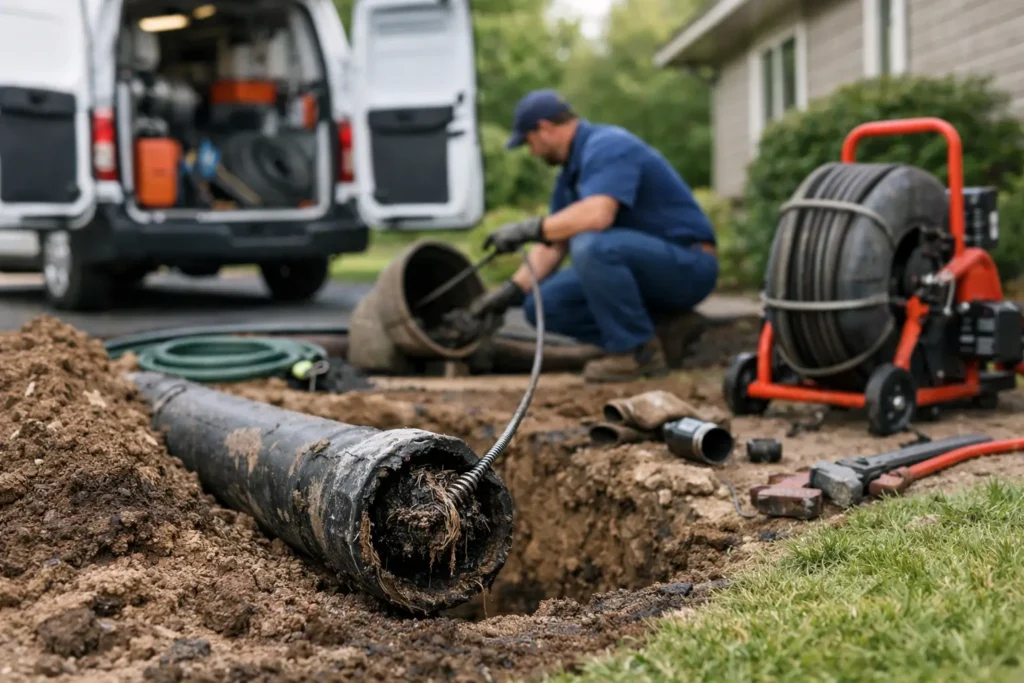
When wastewater starts backing up into a basement drain or the toilet bubbles every time the shower runs, this usually is not a simple drain issue. Main sewer line clog repair becomes the priority because the problem is affecting the pipe that carries wastewater away from the entire property, not just one fixture.
For homeowners and property managers in Columbus, this is the kind of problem that creates stress fast. It can interrupt daily routines, affect multiple units or restrooms at once, and raise understandable questions about cost, timing, and whether the line can be cleared or needs a larger repair. The good news is that a clogged main line can usually be diagnosed clearly, and the right next step becomes much easier once the source of the blockage is confirmed.
Signs you may need main sewer line clog repair
A single slow sink often points to a local drain clog. A main sewer line issue usually looks different. The warning signs tend to show up in more than one place at the same time.
You might notice toilets gurgling, tubs draining slowly, wastewater backing up into a floor drain, or sewage odors near a basement bathroom, utility area, or outside cleanout. In multi-unit buildings or commercial spaces, tenants may report repeated backups in lower-level fixtures first. That pattern matters because the lowest drains on the property are often where a main line problem becomes visible.
Another clue is when using one plumbing fixture affects another. If flushing a toilet causes water to rise in a shower, or running a washing machine leads to backup in a nearby drain, the issue may be deeper in the system. That is when professional drain and sewer diagnostics become more important than repeated use of a plunger or off-the-shelf chemicals.
What causes a main sewer line clog
Not every sewer clog has the same fix. Some can be cleared with professional equipment and normal service access. Others point to pipe damage, root intrusion, or buildup severe enough that cleaning alone will not hold for long.
Grease, wipes, paper products, scale, and debris can all narrow the line over time. In older properties, tree roots are a frequent cause because they can enter small openings in the pipe and keep growing. Clay, cast iron, and aging sewer materials are especially vulnerable to cracking, shifting, or collapse. In some cases, a belly in the line allows waste and paper to collect in the same area repeatedly.
That is why the best repair path depends on what is actually inside the pipe and what condition the pipe is in. A clog is one issue. A damaged sewer line with a clog is a different one.
How main sewer line clog repair is diagnosed
The first job is not guessing. It is confirming where the blockage is, how severe it is, and whether the line itself has a structural problem.
A professional visit usually begins with symptom review and testing at key fixtures or drain access points. From there, the technician may use drain cleaning equipment to open the line or use a sewer camera inspection to see the inside of the pipe. Camera work is especially helpful when backups keep happening or when there is concern about roots, broken pipe sections, offsets, or heavy buildup.
For customers, this part matters because it leads to a more accurate recommendation. Instead of hearing a vague answer, you get a clearer explanation of what is causing the backup and what the available options look like. That is also how flat-rate pricing and customer approval work better. The scope can be explained before work moves forward.
Main sewer line clog repair options
Main sewer line clog repair can range from clearing a blockage to correcting a deeper pipe problem. The right solution depends on the inspection findings.
If the clog is caused by buildup, sludge, paper blockage, or a smaller root intrusion, professional drain clearing may restore flow. In some situations, hydro jetting or mechanical cleaning is the best fit, especially when the goal is to remove more than a narrow opening through the blockage. A more thorough cleaning may help reduce repeat issues, but it still depends on the condition of the pipe.
If the camera shows a cracked line, severe root invasion, a collapsed section, or a major offset, clearing the blockage may only provide temporary relief. At that point, spot repair or sewer line replacement may be the more practical recommendation. For commercial properties and apartment buildings, this distinction matters because short-term clearing may not be worth repeated disruptions if the line is already failing.
There is always a trade-off. The least expensive immediate step is not always the best long-term value, and the biggest repair is not always necessary if the line is otherwise sound. A good service experience should make that difference easy to understand.
What to expect during service
When a sewer backup is active, speed matters. So does communication. Most property owners want to know three things right away: whether the issue can be contained, what testing is needed, and what happens before any repair is approved.
In a typical visit, the technician evaluates the symptoms, identifies access points, and determines whether the blockage can be reached through a cleanout or another service opening. If conditions allow, the next step may be clearing the line and checking for restored flow. If the cause is not obvious or repeat problems are likely, camera inspection helps confirm what is going on.
From there, you should expect a straightforward explanation. If cleaning is the right solution, the scope should be clear. If the findings suggest damage or recurring root issues, the technician should explain why a more involved repair may be recommended. For owners and managers juggling tenants, schedules, or business operations, that clarity helps reduce downtime and avoid unnecessary repeat visits.
When a sewer clog becomes an emergency
Not every slow drain is urgent, but some situations should move to the front of the line. Active sewage backup inside the building is one of them. So is wastewater coming up through a basement floor drain, especially if multiple fixtures are involved.
If a property has only one working bathroom, if a restaurant or small business cannot use its restrooms, or if an apartment operator is dealing with backups affecting occupied units, waiting too long can make cleanup more disruptive. In those cases, emergency response is often the right move.
Until help arrives, it is smart to stop using sinks, toilets, showers, dishwashers, and washing machines that feed the affected line. Continued use can push more wastewater into the backup point. That is a simple step, but it can limit damage.
How Columbus-area properties can differ
In Central Ohio, sewer conditions vary widely by neighborhood, property age, and the type of line material in the ground. Older homes may have aging sewer pipes more vulnerable to root intrusion or shifting. Larger multifamily properties may deal with heavier system demand and recurring misuse from wipes or grease. Commercial buildings often need faster coordination because downtime affects staff, tenants, or customers.
That is why a one-size-fits-all answer rarely works. The best approach for a single-family home in one Columbus suburb may not be the right approach for a mixed-use building or a multi-unit property elsewhere in the market. Transit & Flow focuses on giving customers clear next steps based on the actual condition of the line, not a generic script.
How to reduce future sewer line problems
No prevention plan can eliminate every sewer issue, especially in older systems, but a few habits can lower the odds of another major clog. Avoid flushing wipes, paper towels, hygiene products, or anything labeled flushable but slow to break down. Keep grease and food waste out of drains. If roots have been found before, periodic inspection or cleaning may make sense depending on the line condition.
For property managers and HOAs, recurring backup patterns are worth tracking. If the same building stack, unit group, or cleanout keeps showing the same symptoms, that history can help identify whether the problem is tenant use, buildup, or an underlying sewer defect. Consistent records often lead to faster decisions and better long-term planning.
A main sewer clog is disruptive, but it does not have to stay confusing. Once the line is inspected and the cause is confirmed, the next step usually becomes clear – clear the blockage, repair the damaged section, or plan for replacement based on the condition of the pipe and the needs of the property.
