
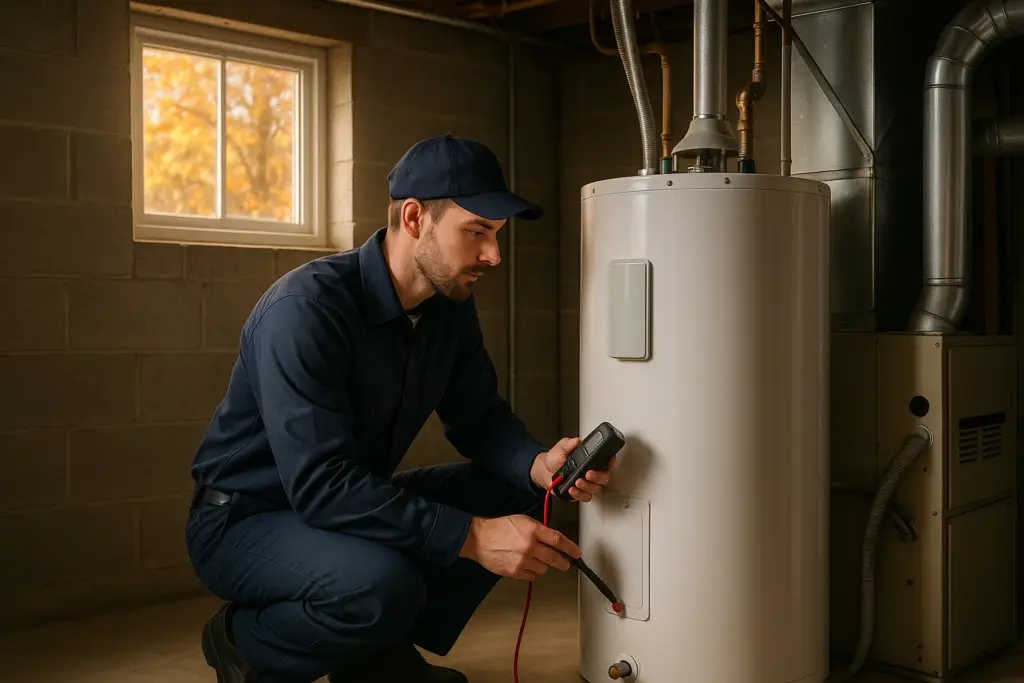
What Should I Do If My Water Heater Breaks in Columbus?
If your water heater breaks in Columbus, turn off the power supply (electricity at the breaker or gas at the shutoff valve), stop using hot water fixtures, and call a professional plumbing and HVAC team immediately. A broken water heater can cause flooding, water damage, and in rare cases, dangerous pressure buildup, so fast professional attention is essential. For Reynoldsburg homeowners, the best course of action is to call Transit & Flow at 614-333-8092 for same-day diagnosis and repair.
Introduction: Why Fall Maintenance Matters in Reynoldsburg
As autumn settles across the Columbus metro area, Reynoldsburg homeowners face a narrow window to prepare their plumbing and HVAC systems before Ohio’s harsh winter arrives. Temperatures in central Ohio can swing from the mid-60s in October to well below freezing by late November, and that rapid transition puts enormous stress on aging water heaters, furnaces, outdoor hose bibs, and drain systems throughout the home.
Fall maintenance is not simply about comfort. It is about preventing costly emergencies like burst pipes, furnace failures on the coldest night of the year, and water heater breakdowns that leave your family without hot water for days. Reynoldsburg homes, many built between the 1970s and early 2000s, are especially vulnerable to deferred maintenance issues that compound with each passing season.
Transit & Flow provides comprehensive plumbing and HVAC maintenance throughout Columbus and surrounding communities including Reynoldsburg, Pickerington, Bexley, and Whitehall. If you have not scheduled your fall tune-up yet, now is the time. Call Transit & Flow at 614-333-8092 or request your estimate online to get ahead of winter.
Key Takeaways
- Fall is the most critical time to service your water heater, furnace, and outdoor plumbing in Reynoldsburg.
- A professional water heater tune-up can extend the unit’s lifespan by several years and improve energy efficiency.
- Winterizing hose bibs and exterior faucets prevents frozen and burst pipes during Columbus winters.
- A furnace check before the heating season ensures safe operation and catches carbon monoxide risks early.
- Transit & Flow serves Reynoldsburg and greater Columbus OH with professional plumbing and HVAC maintenance year-round.
Comprehensive Fall Plumbing and HVAC Maintenance for Reynoldsburg Homes
Fall maintenance for your home is a crossover effort that spans both your plumbing and HVAC systems. These two systems are more connected than most homeowners realize. Your water heater, for example, is both a plumbing fixture and an energy-consuming appliance that interacts with your gas lines or electrical panel. Your furnace relies on drain lines, condensate pumps, and gas connections that overlap with your plumbing infrastructure.
Water Heater Tune-Up
A professional water heater tune-up is one of the most important fall maintenance tasks for any Reynoldsburg home. During a tune-up, a trained technician will inspect the anode rod for corrosion, flush sediment from the tank, check the temperature and pressure relief valve for proper operation, inspect gas connections or electrical elements depending on your unit type, and verify that the thermostat is calibrated correctly.
Sediment buildup is particularly common in the Columbus area due to the mineral content in central Ohio’s municipal water supply. Over time, sediment settles at the bottom of your tank, forcing the burner or heating elements to work harder. This reduces efficiency, increases energy bills, and accelerates wear on the tank itself. Flushing the tank annually can prevent these issues and extend the life of your water heater by three to five years.
Furnace Check and Inspection
Before you fire up your furnace for the first time in October or November, a professional inspection is strongly recommended. A furnace check involves testing the ignition system, inspecting the heat exchanger for cracks that could allow carbon monoxide to enter your living space, replacing or cleaning the air filter, checking the blower motor and fan belt, and verifying that the thermostat communicates properly with the system.
A cracked heat exchanger is a serious safety hazard. Carbon monoxide is odorless and colorless, and exposure can be life-threatening. This is not a component that should be inspected by a homeowner. A trained HVAC professional uses specialized tools and combustion analyzers to detect issues that are invisible to the naked eye.
Hose Bib Winterization
Outdoor hose bibs, also called exterior faucets or sillcocks, are among the most vulnerable fixtures in your plumbing system during an Ohio winter. When water freezes inside a hose bib or the pipe immediately behind it, the expanding ice can crack the pipe. The damage may not become apparent until the pipe thaws in spring, at which point water floods the wall cavity or basement.
Proper winterization involves disconnecting and draining all outdoor hoses, shutting off the interior valve that feeds each hose bib, and opening the outdoor faucet to let residual water drain out. If your home does not have dedicated shutoff valves for exterior faucets, a professional can install frost-proof hose bibs that dramatically reduce the risk of freeze damage.
Warning Signs and Symptoms to Watch For This Fall
Recognizing early warning signs can mean the difference between a simple maintenance visit and a major emergency repair. Watch for these indicators in your Reynoldsburg home.
- Discolored or rusty hot water coming from your faucets, which suggests internal corrosion in your water heater tank.
- Rumbling, popping, or banging sounds from your water heater, often caused by hardened sediment at the bottom of the tank.
- Cold spots or uneven heating in your home when the furnace is running, which may indicate ductwork problems, a failing blower motor, or a clogged filter.
- A sulfur or rotten egg smell near your furnace or water heater. Stop using the appliance immediately and call a professional. Do not attempt to diagnose a gas leak yourself.
- Pooling water around the base of your water heater, which may indicate a failing tank, loose fittings, or a deteriorated T&P relief valve.
- Higher than usual energy bills without a change in usage, suggesting your furnace or water heater is losing efficiency.
Root Causes of Fall Plumbing and HVAC Problems
Understanding why systems fail helps you make informed decisions about maintenance and replacement. Common root causes of fall breakdowns in Reynoldsburg homes include the following.
- Sediment accumulation in water heater tanks due to Columbus’s hard water supply.
- Corrosion of the anode rod, which is a sacrificial component designed to protect the tank lining. Once it is consumed, the tank itself begins to corrode.
- Deferred maintenance on furnaces, especially skipped filter changes that force the blower motor to overwork.
- Age-related wear on heat exchangers, ignition systems, and electrical components in furnaces over 15 years old.
- Improper winterization of hose bibs and outdoor plumbing from previous seasons.
- Clogged condensate drain lines on high-efficiency furnaces, which can cause the system to shut down or overflow.
What a Transit & Flow Professional Does During a Fall Maintenance Visit
When a Transit & Flow technician arrives at your Reynoldsburg home for a fall maintenance appointment, the process is thorough, transparent, and designed to cover both plumbing and HVAC systems in a single visit whenever possible.
- System assessment: The technician evaluates the age, condition, and performance history of your water heater, furnace, and related components.
- Water heater service: Includes tank flushing, anode rod inspection, T&P valve testing, thermostat calibration, and visual inspection of all connections.
- Furnace inspection: Includes filter replacement or cleaning, heat exchanger inspection, combustion analysis, ignition system testing, and safety control verification.
- Hose bib and exterior plumbing winterization: Includes shutoff valve testing, hose disconnection guidance, and frost-proof upgrade recommendations where needed.
- Drain and sump pump check: Ensures basement floor drains are clear and sump pumps are operational before winter rain and snowmelt season.
- Full report and recommendations: You receive a clear explanation of findings, priority items, and options for any needed repairs or replacements with no pressure and no hidden fees.
Cost Variables for Fall Plumbing and HVAC Maintenance
Costs for fall maintenance in the Reynoldsburg and greater Columbus area vary depending on several factors. Transit & Flow provides transparent estimates before any work begins, and no homeowner is ever pressured into a decision.
- Type of service: A standalone water heater flush costs less than a comprehensive plumbing and HVAC crossover maintenance package.
- Age and condition of equipment: Older systems may require additional parts or more extensive inspection time.
- Type of water heater: Tankless water heaters typically require different maintenance procedures and may involve descaling, which adds time and cost.
- Furnace type: High-efficiency condensing furnaces have additional components like condensate drains and secondary heat exchangers that require inspection.
- Needed repairs: If the maintenance visit reveals a failing anode rod, a cracked heat exchanger, or a faulty T&P valve, repair costs will vary based on part availability and labor.
- Access and location: Equipment in tight crawl spaces or attics may take longer to service than equipment in open basements.
For a personalized estimate, call Transit & Flow at 614-333-8092. We provide clear pricing before we begin any work.
When to Call a Professional
Some situations require immediate professional attention. Do not attempt to repair or troubleshoot any of the following on your own.
- You smell gas near your furnace, water heater, or gas lines. Leave the home and call your gas utility and a professional immediately.
- Your water heater is leaking from the bottom of the tank, which may indicate tank failure.
- Your furnace produces a burning smell that does not dissipate after the first few minutes of seasonal startup.
- You notice soot or discoloration around your furnace burner area, which can indicate incomplete combustion and carbon monoxide risk.
- Your carbon monoxide detector alarms.
- You have standing water in your basement and your sump pump is not running.
In any of these situations, call Transit & Flow at 614-333-8092 for fast, professional service in Reynoldsburg and throughout Columbus OH.
Safe Homeowner Checks You Can Do This Fall
While major repairs and inspections should always be handled by a professional, there are a few safe checks you can perform yourself.
- Visually inspect the area around your water heater and furnace for any signs of water pooling, rust stains, or unusual residue.
- Check your furnace air filter and replace it if it appears dirty or clogged. A clean filter should be replaced every one to three months during heating season.
- Walk the exterior of your home and disconnect any garden hoses still attached to outdoor hose bibs.
- Test your thermostat by switching from cooling to heating mode and verifying that the furnace starts within a few minutes.
- Ensure that all floor drains in your basement are not blocked by debris or storage items.
- Test your sump pump by slowly pouring a bucket of water into the sump pit and confirming the pump activates.
Repair vs. Replace: Making the Right Decision
Fall maintenance sometimes reveals that a water heater or furnace is nearing the end of its useful life. Here are some decision-support guidelines.
Water Heater
- Most tank water heaters last 8 to 12 years. If yours is over 10 years old and showing signs of corrosion, replacement is often more cost-effective than repeated repairs.
- If the tank itself is leaking, repair is generally not possible, and replacement is the only option.
- Upgrading to a high-efficiency or tankless model can reduce energy costs and provide continuous hot water.
Furnace
- Most furnaces last 15 to 20 years with proper maintenance. A furnace over 15 years old that requires frequent repairs is a strong candidate for replacement.
- A cracked heat exchanger in an older furnace is typically a replacement-level finding due to the high cost of the part and the safety risk involved.
- Newer high-efficiency furnaces can achieve 95 percent or higher AFUE ratings, compared to 80 percent or lower for many older models, resulting in meaningful savings on heating bills.
Local Columbus and Reynoldsburg Context
Reynoldsburg sits on the eastern edge of Columbus in Franklin and Licking counties, and its housing stock includes a significant number of homes built between the 1970s and 2000s. Many of these homes have original water heaters and furnaces that are at or past their expected lifespans.
Columbus municipal water is relatively hard, with mineral content that accelerates sediment buildup in water heater tanks. Homes on well water in the outer Reynoldsburg area may experience even higher mineral concentrations. This makes annual water heater flushing particularly important for local homeowners.
Central Ohio’s fall weather creates a compressed timeline for maintenance. Temperatures can remain comfortable through mid-October but drop sharply in November, with the first hard freeze often arriving before Thanksgiving. Homeowners who wait until cold weather sets in often find that professional availability is limited due to high demand for emergency heating and plumbing calls.
Transit & Flow has deep experience serving Reynoldsburg and the surrounding communities of Pataskala, Pickerington, Blacklick, and Whitehall. Our technicians understand the specific challenges that Columbus-area homes face, from the water quality to the soil conditions that affect sewer lines and sump pump performance.
Frequently Asked Questions
What should I do first if my water heater breaks?
Turn off the power supply to the water heater. For an electric unit, switch off the dedicated breaker in your electrical panel. For a gas unit, turn the gas valve to the off position. Then stop using all hot water fixtures and call Transit & Flow at 614-333-8092 for professional diagnosis and repair.
What should I avoid doing if I suspect a furnace problem?
Never attempt to open, repair, or adjust your furnace’s gas connections, heat exchanger, or combustion components. If you smell gas, leave the home immediately, avoid operating light switches or electronics, and call your gas utility followed by a professional HVAC technician.
What factors affect the cost of fall maintenance?
The primary cost variables include the type and age of your equipment, the scope of services needed, whether repairs or part replacements are identified during the inspection, and the accessibility of your furnace and water heater. Transit & Flow provides clear estimates before starting any work.
When is a water heater issue considered an emergency?
A water heater issue is an emergency if there is active flooding, a gas odor near the unit, or the T&P relief valve is discharging water or steam. These situations require immediate professional attention to prevent water damage, fire risk, or health hazards.
When should I call a professional for fall maintenance instead of doing it myself?
Any task involving gas connections, electrical wiring, combustion systems, refrigerant, or sealed system components should always be handled by a trained professional. Safe homeowner tasks are limited to visual inspections, filter changes, hose disconnection, and sump pump testing.
How can Transit & Flow help with fall maintenance in Reynoldsburg?
Transit & Flow provides comprehensive fall maintenance packages that cover water heater tune-ups, furnace inspections, hose bib winterization, drain checks, and sump pump testing. Our trained technicians serve Reynoldsburg and the greater Columbus area with same-day and next-day appointment availability. Call 614-333-8092 to schedule your visit.
Maintenance Tips to Protect Your Home This Fall
- Schedule your water heater flush and furnace inspection before November to avoid peak-season scheduling delays.
- Replace your furnace filter at the start of heating season and check it monthly throughout winter.
- Disconnect and drain all outdoor hoses before the first freeze.
- Clear debris from around your outdoor HVAC condenser unit to prevent airflow restrictions.
- Test your carbon monoxide detectors and replace batteries at the start of each heating season.
- Keep the area around your furnace and water heater clear of storage items, chemicals, and flammable materials.
Glossary of Key Terms
Water Heater
A plumbing appliance that heats and stores (or heats on demand, in the case of tankless models) water for domestic use, including bathing, cooking, and cleaning. Tank water heaters typically hold 40 to 50 gallons and use gas or electricity as a fuel source.
Shutoff Valve
A valve installed on a water supply line that allows you to stop the flow of water to a specific fixture, appliance, or the entire home. Knowing the location of your main shutoff valve is essential for responding to plumbing emergencies.
Furnace
A heating system that warms air and distributes it throughout your home via ductwork. Most Columbus-area homes use natural gas-fired forced-air furnaces. Furnace efficiency is measured by Annual Fuel Utilization Efficiency, or AFUE.
Hose Bib
An outdoor faucet or spigot, also called a sillcock, used to connect a garden hose. Hose bibs are vulnerable to freezing in winter and require proper winterization to prevent burst pipes inside the wall.
Sump Pump
An electrically powered pump installed in a basement sump pit that removes groundwater to prevent flooding. Sump pumps are essential in many Reynoldsburg homes due to the area’s clay-heavy soils and seasonal water table fluctuations.
Schedule Your Fall Maintenance With Transit & Flow Today
Do not wait until the first freeze to discover that your water heater is failing or your furnace is not operating safely. Reynoldsburg homeowners trust Transit & Flow for thorough, professional plumbing and HVAC maintenance that protects their homes and families throughout the winter season.
Call Transit & Flow today at 614-333-8092 to schedule your fall maintenance appointment. You can also request your estimate online at your convenience. Our trained technicians are ready to serve your home with the care, transparency, and expertise you deserve.
