
How to Find a Reliable Plumber for Sewer Line Repair Near Columbus Ohio
To find a reliable plumber for sewer line repair in Columbus OH or Grove City, look for a professional team that offers camera inspections before quoting work, provides transparent cost breakdowns without hidden fees, and has verifiable experience with both traditional and trenchless sewer repair methods. Transit & Flow serves Grove City and the greater Columbus area with trained technicians who diagnose sewer problems accurately before recommending repairs.
Introduction: Why Sewer Line Problems Demand the Right Team in Grove City
A damaged main sewer line is one of the most disruptive and costly plumbing problems a Grove City homeowner can face. Whether you have noticed a persistent sewer odor in your yard, slow drains throughout the house, or soggy patches of grass that never seem to dry, these symptoms often point to a failing sewer line beneath your property. Spring is an especially common time for sewer line failures in the Columbus OH area because seasonal rains saturate the soil, tree roots aggressively seek moisture, and freeze-thaw cycles from winter can leave behind cracked or shifted pipes.
Choosing the right plumbing team matters. A hasty decision can lead to unnecessary excavation, inflated costs, or incomplete repairs that fail within months. Transit & Flow provides professional sewer line repair across Grove City, Columbus, and surrounding Franklin County communities. If you suspect a sewer line issue, call Transit & Flow at 614-333-8092 to schedule a camera inspection and get an honest assessment before any work begins.
Key Takeaways
- Sewer odor, slow drains, and wet yard spots are the earliest warning signs of main sewer line damage.
- Camera inspection is the industry-standard first step before any repair or replacement.
- Grove City homes built before the 1980s may have clay or cast iron sewer lines that are more vulnerable to root intrusion and deterioration.
- Trenchless repair methods can often save your yard and reduce labor costs.
- Transit & Flow serves Grove City and Columbus OH with professional, transparent sewer line services.
Sewer Line Repair: What Grove City and Columbus Homeowners Need to Know
Your main sewer line is the single underground pipe that carries all wastewater from your home to the municipal sewer system. In Grove City and throughout Columbus OH, these lines typically run from the foundation of your house, beneath the front or back yard, to the city connection near the street. Because the line is buried, problems often go unnoticed until they cause visible damage or backups inside the home.
How Sewer Lines Fail
Sewer lines can fail gradually over years or suddenly due to a catastrophic event. The most common failure modes in the Columbus area include root intrusion from mature trees, pipe joint separation caused by soil settlement, corrosion in older cast iron or clay pipes, and bellied sections where the pipe sags and collects standing waste. Spring storms and heavy rain can also overwhelm aging sewer lines, especially in neighborhoods with older infrastructure.
Why Professional Diagnosis Comes First
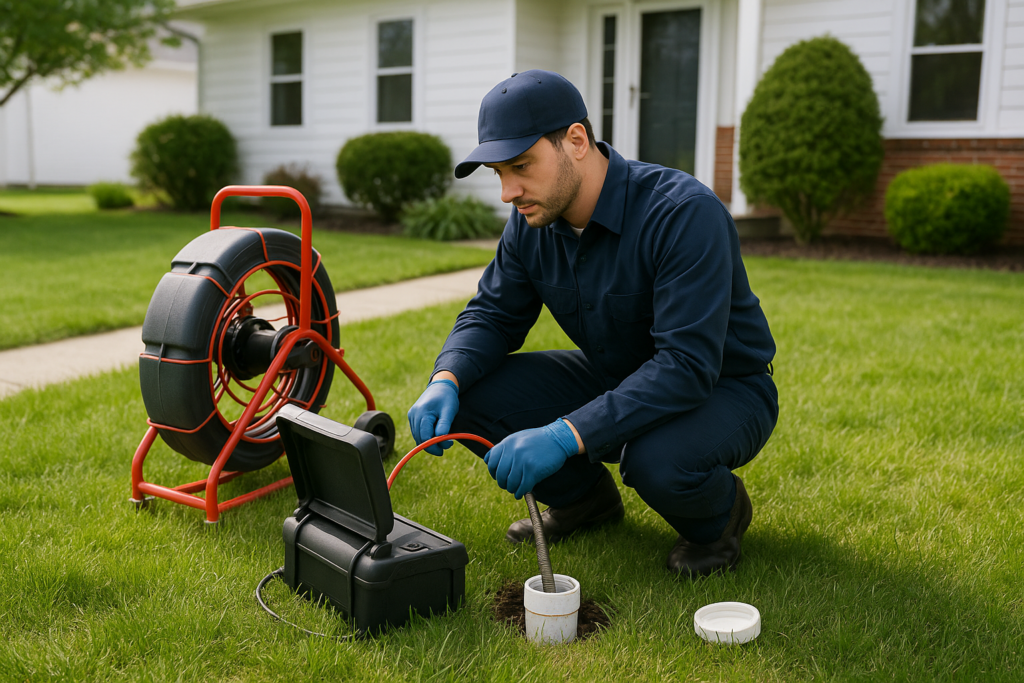
No reputable plumbing company should recommend excavation or replacement without first running a sewer camera inspection. This small, waterproof camera travels through the pipe and provides real-time video of the interior condition. It reveals the exact location and nature of the problem, whether it is a root blockage near the cleanout, a collapsed section in the middle of the yard, or a separated joint near the city connection. Transit & Flow always performs a camera inspection as the foundation of every sewer line repair project in Grove City and Columbus OH.
Warning Signs and Symptoms of a Failing Sewer Line
Recognizing the early warning signs can help you act before a minor issue becomes a full sewer backup. Here are the symptoms Grove City homeowners should watch for.
- Persistent sewer odor in the yard, basement, or near floor drains indicates sewer gas is escaping through a crack or break in the line.
- Multiple slow drains throughout the house, rather than just one fixture, suggest a blockage or restriction in the main sewer line rather than a single branch line.
- Gurgling sounds from toilets or drains when other fixtures are running point to air trapped in the sewer line due to a partial obstruction.
- Sewage backups through the lowest drain in the home, typically a basement floor drain or ground-floor shower, indicate a severe blockage or collapse.
- Unusually green or soggy patches in the yard, especially in a line from the house toward the street, can signal a leaking sewer pipe fertilizing the soil above it.
- Foundation cracks or settling in rare cases can be linked to a leaking sewer line eroding the soil beneath the home.
- Pest activity including rodents or insects near drain openings may indicate breaks in the sewer line creating entry points.
Root Causes of Sewer Line Damage in Grove City and Columbus OH
Understanding why sewer lines fail helps homeowners make informed decisions about repair versus replacement.
Tree Root Intrusion
Tree roots naturally seek moisture and nutrients. Even small cracks or loose joints in a sewer pipe release trace amounts of water vapor that attract roots. Once a root finds its way inside, it grows rapidly and can fill the entire pipe diameter. Grove City neighborhoods with mature oak, maple, and sycamore trees are especially vulnerable.
Aging Pipe Materials
Homes built before the 1970s in the Columbus area frequently have clay tile or cast iron sewer lines. Clay is brittle and prone to cracking, while cast iron corrodes from the inside over decades. Both materials have a typical lifespan of 50 to 75 years, which means many Grove City homes are reaching or exceeding that threshold now.
Soil Movement and Settlement
Central Ohio clay soil expands when wet and contracts when dry. This seasonal movement places stress on buried pipes, especially at joints. Over time, sections can shift, separate, or develop a belly where waste accumulates.
Improper Installation or Previous Repairs
Some sewer line problems stem from substandard original installation or poorly executed past repairs using incompatible materials or improper slope.
Heavy Rain and Stormwater Infiltration
Spring in Columbus brings significant rainfall. Stormwater can infiltrate damaged sewer lines through cracks and open joints, overwhelming the pipe and contributing to backups.
What a Professional Sewer Line Repair Looks Like
When you call Transit & Flow for sewer line repair in Grove City or Columbus OH, here is what the process typically involves.
- Initial Assessment: A trained technician discusses your symptoms, checks accessible cleanout points, and evaluates visible signs in the yard and basement.
- Camera Inspection: A high-definition sewer camera is inserted through the cleanout or an accessible opening. The technician records video and identifies the exact nature and location of the problem. This footage is shared with the homeowner.
- Diagnosis and Options: Based on the camera findings, the technician explains whether a spot repair, full line replacement, trenchless relining, or pipe bursting method is most appropriate.
- Transparent Estimate: Transit & Flow provides a detailed written estimate before any work begins. No surprises, no pressure.
- Repair Execution: The chosen repair method is completed by a trained crew using professional-grade materials and equipment.
- Post-Repair Inspection: A follow-up camera inspection confirms the repair is complete and the line is flowing properly.
- Site Restoration: If excavation was required, the crew restores the affected area of the yard.
Cost Variables for Sewer Line Repair in Columbus OH
Sewer line repair costs vary widely depending on several factors. Transit & Flow never quotes a fixed price without first inspecting the specific situation. Here are the main variables that influence cost.
- Length of the affected section: A localized spot repair on a short section costs significantly less than a full line replacement from house to street.
- Depth of the pipe: Deeper pipes require more excavation or specialized trenchless equipment, increasing labor and material costs.
- Repair method: Trenchless methods like pipe lining or pipe bursting typically fall in a different cost range than traditional open-trench excavation.
- Pipe material: Replacing clay or cast iron with modern PVC or HDPE involves material costs that vary by diameter and grade.
- Access and obstacles: Driveways, sidewalks, landscaping, decks, and mature trees in the repair path can add complexity and cost.
- Permits and inspections: Grove City and Columbus may require permits for sewer line work, especially for full replacements that connect to the municipal system.
- Emergency timing: After-hours or emergency repairs during active backups may carry different rates than scheduled work.
For an honest assessment of your situation, call Transit & Flow at 614-333-8092 or request an estimate online at https://transitflowplumbing.com/estimate/.
When to Call a Professional
Sewer line problems are never a DIY project. Raw sewage is a biological hazard, and improper repairs can cause environmental contamination, code violations, and property damage. Call a professional immediately if you experience any of the following.
- Sewage is backing up into your home through any drain.
- You smell sewer gas indoors or in your yard.
- Multiple drains are slow or gurgling at the same time.
- You see standing water or unusually soft ground above the sewer line path.
- You suspect a sewer line issue before selling or buying a home in Grove City.
Do not attempt to open, dig, or repair a sewer line yourself. The risks of exposure to sewage, collapse of an excavation, and damage to utility lines are serious. Transit & Flow has trained technicians equipped to handle these hazards safely. Call 614-333-8092 to schedule service.
Safe Homeowner Checks
While you should never attempt to repair a sewer line yourself, there are a few safe observations you can make before calling for professional help.
- Locate your cleanout: The sewer cleanout is typically a capped PVC or cast iron pipe sticking up from the ground near the foundation or in the basement. Knowing where it is helps the technician get started faster.
- Note which drains are affected: Write down whether the problem is limited to one fixture or affecting multiple drains throughout the house.
- Check for visible yard signs: Walk the path from your house to the street and note any soft spots, sinkholes, unusually lush grass, or standing water.
- Record when symptoms occur: Note if backups happen during rain, after heavy water use, or at random intervals. This information helps the technician narrow the diagnosis.
- Avoid using chemical drain cleaners: These products are ineffective against main sewer line blockages and can damage pipes.
Repair vs. Replace: Making the Right Decision
Not every sewer line problem requires a full replacement. Here is how to think about the decision.
When Repair May Be Sufficient
- The damage is limited to one localized section, such as a single root-clogged joint or a short crack.
- The rest of the pipe is in good condition based on camera inspection.
- The pipe material still has remaining useful life, such as PVC installed in the 1990s or later.
When Replacement Is the Better Long-Term Investment
- The pipe is clay or cast iron and showing widespread deterioration.
- Multiple sections are compromised, and spot repairs would only address part of the problem.
- The line has a significant belly or slope issue that cannot be corrected with relining.
- You are planning to stay in the home long-term and want to avoid repeated service calls.
Transit & Flow provides honest guidance on this decision. Our technicians share the camera footage with you so you can see the condition of the pipe for yourself.
Local Columbus and Grove City Context
Grove City sits in the southwestern portion of the Columbus metro area in Franklin County. Many of its residential neighborhoods were developed in phases from the 1960s through the 2000s, resulting in a wide range of sewer line materials and conditions across the community. Older sections near the historic downtown may have clay tile lines, while newer developments in the southern portions of Grove City typically have PVC.
Central Ohio receives an average of 39 inches of rainfall per year, with spring being the wettest season. April through June brings heavy downpours that saturate the region’s clay-heavy soil, placing added stress on underground pipes. Columbus area water is moderately hard, which can contribute to mineral buildup inside drain and sewer lines over time.
The City of Grove City and the City of Columbus both maintain responsibility for sewer mains in the public right-of-way, but the lateral line running from your home to the main connection is typically the homeowner’s responsibility. This is the section that Transit & Flow inspects and repairs.
Frequently Asked Questions
What should I do first if I suspect a sewer line problem?
Stop using water in the home as much as possible to prevent further backup, and call a professional plumber for a sewer camera inspection. Transit & Flow can be reached at 614-333-8092 for same-day and next-day scheduling in Grove City and Columbus OH.
What should I avoid doing with a potential sewer line issue?
Do not pour chemical drain cleaners into the line, do not attempt to dig or access the sewer line yourself, and do not ignore the symptoms. Chemical products are ineffective on main line blockages and can corrode pipe walls. Digging without utility locates is dangerous and potentially illegal.
What factors affect the cost of sewer line repair?
The main cost variables include the length and depth of the damaged section, the repair method used, pipe material and diameter, accessibility of the repair area, and whether permits are required. There is no one-size-fits-all price for sewer line work, which is why a camera inspection is always the essential first step.
When is a sewer line problem considered an emergency?
A sewer backup that is actively flooding your home with sewage, a strong sewer gas odor inside the house, or a visible sinkhole forming in your yard should all be treated as emergencies. These situations pose health and safety risks that require immediate professional attention.
When should I call a professional instead of waiting?
You should call a professional as soon as you notice any of the warning signs, including multiple slow drains, sewer odor, gurgling toilets, or wet spots in the yard. Sewer line problems do not resolve on their own and typically worsen over time, leading to more expensive repairs.
How can Transit & Flow help with my sewer line problem?
Transit & Flow provides comprehensive sewer line services including camera inspections, hydro jetting, spot repairs, trenchless pipe lining, pipe bursting, and full sewer line replacement. Every project begins with a camera inspection and a transparent estimate. We serve Grove City, Columbus, and surrounding communities in Franklin County.
Maintenance Tips to Protect Your Sewer Line
- Schedule a preventive sewer camera inspection every two to three years, especially if your home is older than 30 years.
- Avoid planting trees or large shrubs within 10 feet of your sewer line path.
- Never flush wipes, feminine hygiene products, grease, or other non-degradable materials.
- Consider root treatment through the cleanout if a camera inspection reveals early-stage root intrusion.
- Keep your yard drain and cleanout caps accessible and in good condition.
- Address slow drains promptly rather than waiting for a full backup.
Glossary of Key Terms
Sewer Line
The main underground pipe that carries all wastewater from a home to the municipal sewer system. In most residential properties, the homeowner is responsible for the lateral sewer line from the house to the city connection.
Cleanout
A capped access point on the sewer line, usually located near the foundation or in the yard, that allows plumbers to insert cameras and cleaning equipment into the pipe without entering the home.
Drain Cleaning
The process of removing blockages and buildup from drain and sewer pipes using mechanical cables, hydro jetting, or other professional methods. Regular drain cleaning can prevent sewer line backups.
Trenchless Sewer Repair
A category of sewer line repair methods, including pipe lining and pipe bursting, that minimize or eliminate the need for open-trench excavation. These methods can preserve landscaping and driveways.
Yard Drain
A surface-level drain installed in a yard to collect and redirect stormwater or standing water away from the foundation. Yard drains connect to a separate drainage system and should not be confused with the main sewer line.
Schedule Your Sewer Line Inspection in Grove City or Columbus OH
If you are dealing with sewer odor, slow drains, backups, or unexplained wet spots in your yard, do not wait for the problem to get worse. Transit & Flow provides professional sewer line repair and replacement across Grove City, Columbus, and the surrounding Franklin County area. Our trained technicians start every project with a camera inspection so you know exactly what you are dealing with before any work begins.
Call Transit & Flow today at 614-333-8092 to schedule your inspection, or request your estimate online at https://transitflowplumbing.com/estimate/. We are here to protect your home and give you honest answers about your sewer line.
