
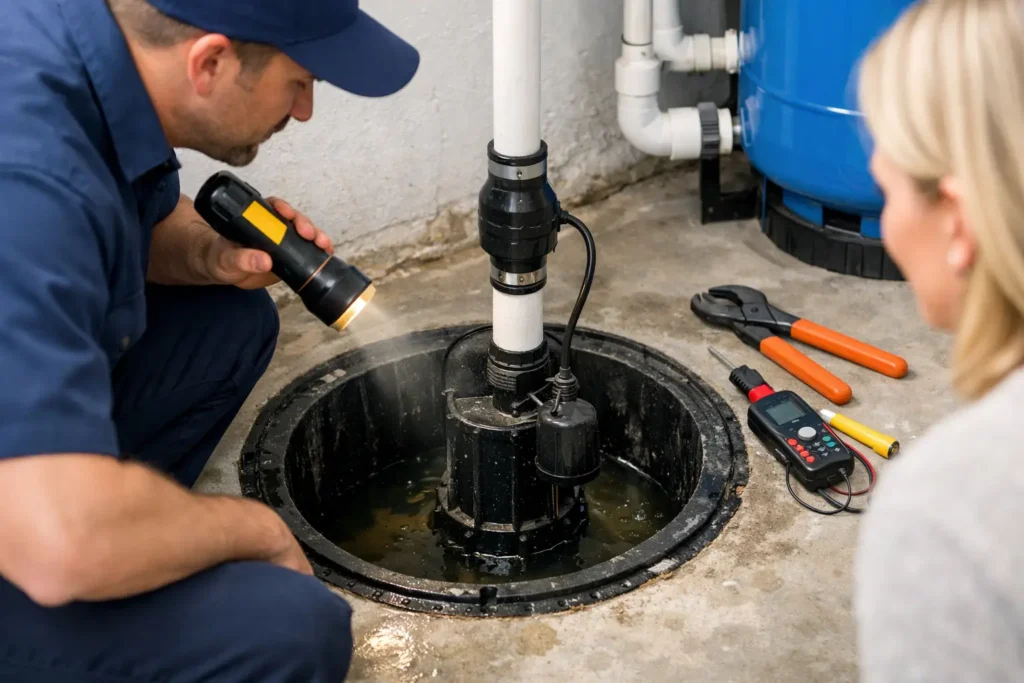
A sump pump usually gets ignored until the basement floor is wet, the pit is full, or the alarm starts going off. When a sump pump not working situation shows up during heavy rain, you do not need a complicated explanation. You need to know what might be wrong, what you can safely check, and when it makes sense to bring in a professional before water damage gets worse.
In Columbus and nearby communities, sump pump trouble often shows up at the worst time – during spring storms, long periods of rain, or when melting snow pushes groundwater up around the foundation. That timing matters because a pump that fails under pressure can turn a manageable repair into flooring damage, drywall replacement, or a cleanup issue for tenants and building staff.
Why a sump pump stops working
Most sump pump failures come down to a short list of problems. The unit may have lost power, the float switch may be stuck, the discharge line may be blocked, or the pump motor may simply be worn out. In other cases, the pump is technically running but cannot move water out fast enough to keep up with incoming groundwater.
That last point is worth paying attention to. Sometimes customers assume the pump has failed when the real issue is capacity, backup performance, or a drainage problem outside the home. A pump can be undersized, old, or overwhelmed by an unusually heavy storm. The result looks the same from the basement floor – water where it should not be.
Sump pump not working: what you can check first
Start with the power source. If the pump is plugged into a ground fault outlet, the outlet may have tripped. A breaker may also have flipped, especially after storms or power interruptions. If the unit has no power at all, restoring power may solve the issue quickly.
Next, look at the pump pit. If the basin is full but the pump is silent, the float switch may be stuck or the motor may have failed. If the pump turns on but little or no water leaves the home, the discharge line could be clogged, frozen, disconnected, or restricted.
You can also listen for clues. A humming sound with no pumping action may point to a jammed impeller or a motor issue. A pump that cycles on and off too often may have a switch problem, basin issue, or check valve problem. A pump that runs continuously can mean the system is struggling to catch up or the switch is not shutting off correctly.
Keep the inspection simple and safe. If there is standing water near electrical equipment, or if you are dealing with a flooded finished basement, it is better to stop and call for service rather than risk injury or make the damage worse.
Common problems behind a sump pump not working call
Power and electrical interruptions
This is one of the most common causes and one of the easiest to miss. A plug can get bumped loose. A GFCI outlet can trip. A breaker can shut off. During storms, brief outages can leave homeowners thinking the pump failed, when the real problem is that the home temporarily lost power.
This is also where backup protection matters. If your primary pump depends entirely on house power and there is no battery backup, a storm-related outage creates a very predictable risk.
Stuck or failed float switch
The float switch tells the sump pump when to turn on. If it gets obstructed by debris, tangled against the pump cord, or worn out with age, the pump may not activate when water rises. In some pits, the basin is so tight that the float does not have enough room to move freely.
A float issue can look minor at first, but it is a common reason systems fail right when they are needed most.
Clogged discharge line
The discharge line carries water away from the home. If it is blocked by debris, sediment, ice, or a line issue outside, the pump may run without actually moving water where it needs to go. That can make the system seem noisy but ineffective.
This is one of those problems where the visible symptom is indoors, but the actual restriction may be outside the foundation wall.
Aging pump motor
Sump pumps do not last forever. If the unit is older, has handled years of frequent cycling, or has had inconsistent maintenance, the motor can fail without much warning. Sometimes there is gradual performance loss. Other times it simply stops when demand is highest.
For property managers and owners of older homes, this is where proactive replacement can save money compared to emergency cleanup and restoration.
Overwhelmed system
A pump can be operational and still not protect the space. Heavy rain, poor drainage around the property, high groundwater, or an undersized unit can all create a situation where water enters faster than the pump can discharge it.
That is why a good diagnosis matters. Replacing a working pump with the same size model will not solve much if the actual issue is drainage design, backup setup, or system capacity.
When repair makes sense and when replacement is smarter
Not every failed sump pump needs full replacement. If the issue is a tripped outlet, a stuck switch, or a specific component problem, repair may be the practical option. If the unit is relatively new and the rest of the system is in good shape, that approach often makes sense.
Replacement becomes more reasonable when the pump is older, the motor is unreliable, the basin setup is poor, or the unit has already had repeated service issues. For many customers, the decision comes down to risk. If the basement protects finished space, stored belongings, office inventory, or tenant areas, reliability matters as much as immediate repair cost.
This is also where clear communication matters. A trustworthy service visit should explain what failed, what condition the rest of the system is in, and whether repair is likely to hold up during the next major rain. You should know the options before work begins, along with pricing and approval steps.
What not to ignore after the pump starts working again
Sometimes a sump pump starts running again after a reset or small adjustment. That does not always mean the issue is resolved. Intermittent failures are often the hardest problems to trust because the system may seem normal until the next storm puts it under stress.
If you noticed strange cycling, delayed startup, unusual noise, or a high water level in the basin, it is worth having the system checked. The goal is not just to get it moving today. The goal is to know whether it will respond correctly during the next heavy rain event.
For apartment operators, HOAs, and commercial properties, this is even more important. One unreliable pump can affect multiple units, common areas, storage spaces, or mechanical rooms. Waiting for a complete failure usually costs more in disruption than scheduling a proper diagnostic.
How professional sump pump service helps
A professional inspection should look beyond the pump itself. The pit, float, discharge line, check valve, power supply, and backup setup all matter. So does the condition of the surrounding drainage and the amount of water entering the basin.
That broader view is what helps separate a quick fix from a recurring problem. If the switch is stuck because the basin is too cramped, replacing only the switch may not solve much. If the pump burned out because it ran constantly against a blocked discharge line, replacing the motor alone may lead to another failure.
For Columbus-area property owners who want speed and clarity, the right service experience is not just about sending someone out quickly. It is about getting a clear explanation, up-front pricing before work begins, and practical recommendations based on the actual condition of the system. Transit & Flow focuses on that kind of service because urgent plumbing issues are stressful enough without vague answers.
Preventing the next failure
A sump pump is easy to forget when everything is dry. That is why many failures catch people off guard. A little preventive attention goes a long way, especially before rainy seasons.
Routine testing, checking the discharge path, and paying attention to pump age can help you avoid emergency surprises. If your property has a history of water intrusion, a finished basement, or a pump that is several years old, it is worth being more proactive. Backup protection may also be worth discussing if outages are part of the risk.
If your sump pump not working has already turned into standing water, or you are not sure whether the system can be trusted for the next storm, getting it checked now is usually the safer move. A dry basement depends on more than a pump turning on – it depends on the whole system working the way it should when the weather gets serious.
