
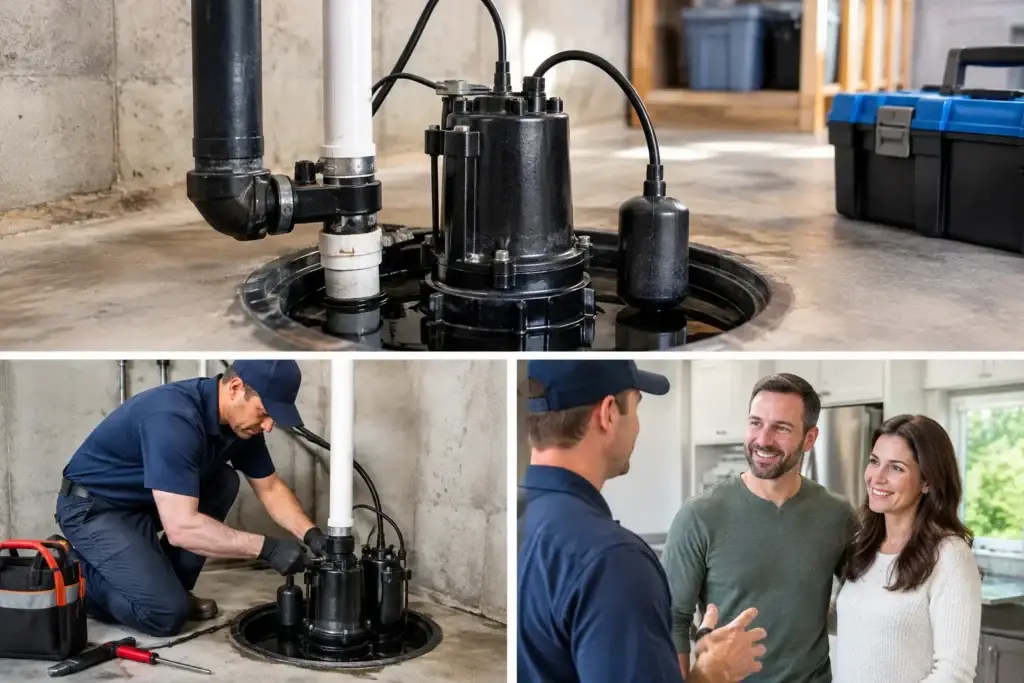
A sump pump can sit quietly for months, then become the most important appliance in your basement during a heavy Columbus rainstorm. When it starts making noise, running constantly, or failing to turn on, the question is urgent: should you choose sump pump repair or replace it before water reaches the floor?
The right answer depends on what failed, the pump’s age, its condition, and how much protection your home needs. A clear diagnosis matters more than a quick guess. Some problems are small and repairable. Others are warning signs that the pump may not be dependable when the next storm arrives.
Start With the Risk of Waiting
A working sump pump moves groundwater away from your foundation and helps keep the basement dry. When the system fails during wet weather, the damage can extend beyond a puddle around the pit. Flooring, stored belongings, drywall, and finished basement areas can all be affected.
If there is standing water near the pump, the unit will not run, or water is rising in the pit, treat it as a plumbing emergency. Avoid handling electrical equipment around standing water. A professional can inspect the pump, float switch, discharge line, check valve, and power supply to identify what stopped the system from working.
Even if the pump turns back on, do not assume the issue is resolved. An intermittent failure can be difficult to spot on a dry day and much more serious during a storm.
When Sump Pump Repair Makes Sense
Repair is often the practical option when the pump is relatively new, the motor is in good condition, and the problem is limited to one serviceable part. A stuck float, damaged check valve, loose discharge connection, clogged intake, or power issue may be repairable without replacing the full unit.
The pump is under 5 to 7 years old
There is no single expiration date for every sump pump. Run time, groundwater conditions, maintenance, and the quality of the original installation all affect its lifespan. Still, a pump that is only a few years old and has otherwise operated reliably may be worth repairing if the issue is isolated.
A technician should confirm that the motor is operating properly and that the pump can move water as expected. Replacing one small component does not help much if the pump itself is already weak or overheating.
The issue is outside the pump itself
Sometimes the pump is not the real problem. The discharge pipe may be blocked, frozen, disconnected, or routed in a way that allows water to return to the pit. A failed check valve can let pumped water flow backward, forcing the unit to work harder than it should.
Electrical problems can also look like pump failure. A tripped breaker, disconnected outlet, or failed backup power component needs to be addressed, but it does not automatically mean you need a new primary pump.
The repair solves a clear problem
A good repair recommendation should be easy to understand. You should know what failed, why it failed, whether the remaining pump is in reliable condition, and what the repair is expected to accomplish. If the diagnosis is uncertain or several components are failing at once, replacement may offer better value and greater confidence.
When to Replace a Sump Pump
Replacement is usually the wiser decision when the pump has reached the later part of its expected service life, has a failing motor, or has become unreliable. Basements do not flood on a convenient schedule, so a unit that only works sometimes is a real concern.
The pump runs constantly or cycles too often
A sump pump that runs continuously may be dealing with high water volume, but it can also point to a stuck float switch, undersized equipment, a discharge problem, or water returning to the pit. Constant operation puts extra strain on the motor and can shorten the pump’s remaining life.
Frequent short cycling deserves attention too. If the pump turns on and off repeatedly without moving much water, it may be working inefficiently or responding to a switch problem. In either case, a technician can determine whether a repair is dependable or whether replacement is the better long-term choice.
The motor sounds rough or the unit vibrates
Grinding, rattling, humming without pumping, or unusual vibration can signal internal wear. A noisy sump pump is not always at the end of its life, but those sounds should not be ignored. Internal motor repairs are often less practical than installing a new unit, particularly on an older pump.
The pump is old and has needed repeated service
A repair can be reasonable once. Repeated repairs on an aging pump can become more expensive than replacing it with a properly sized new system. More importantly, several small failures may be a sign that the unit is no longer dependable enough for a home with a finished basement or a history of water intrusion.
Your current setup does not meet your home’s needs
Replacement is also an opportunity to correct a system that was poorly matched to the home. A pump may be undersized for the amount of groundwater entering the pit, or it may lack a battery backup that would help during a power outage.
A backup system is not necessary for every property, but it deserves consideration when the home is prone to water issues, the basement contains valuable finished space, or outages are a concern. The best option depends on the property, the pit, the discharge setup, and the level of protection you want.
Sump Pump Repair or Replace: Compare the Real Costs
The lowest immediate price is not always the lowest cost over time. A small repair on a newer pump may be a sensible way to restore service. On an older unit with motor wear, recurring switch problems, or poor pumping performance, putting more money into repairs can leave you with the same risk when heavy rain returns.
Replacement pricing can vary based on the pump type, capacity, pit condition, discharge modifications, check valve needs, backup options, and access to the equipment. An inspection is the right time to review those factors. You should receive a clear explanation of the recommended work and pricing before approving it.
For homeowners who need to plan a larger replacement, financing options may help make the decision more manageable. The goal is not to replace equipment unnecessarily. It is to avoid spending on a short-term repair when the system is likely to fail again soon.
What a Professional Inspection Should Cover
A complete sump pump visit should look beyond whether the unit turns on. The pump needs to be evaluated as part of a drainage system. That includes the float operation, pump performance, pit condition, power source, check valve, discharge line, and the path water takes once it leaves the home.
The technician should also discuss the age of the equipment, signs of internal wear, and whether the pump is appropriately sized for the home’s needs. If replacement is recommended, ask why repair is not the better option. A straightforward answer helps you make a confident decision.
At Transit & Flow, homeowners in Columbus and nearby communities can expect clear communication, up-front options, and customer approval before work begins. Same-day availability may be available depending on scheduling, access, and the work required.
Keep the Next Decision From Becoming an Emergency
Routine attention can help uncover issues before the next stretch of wet weather. Periodic sump pump service can identify a sticking float, worn check valve, clogged discharge line, or pump that is no longer operating as it should. It also gives you time to consider replacement on your schedule rather than while water is entering the basement.
If your sump pump has become noisy, inconsistent, or overdue for inspection, acting now gives you more options. A practical diagnosis can tell you whether a targeted repair will restore dependable performance or whether replacement is the safer investment before the next storm tests the system.
