
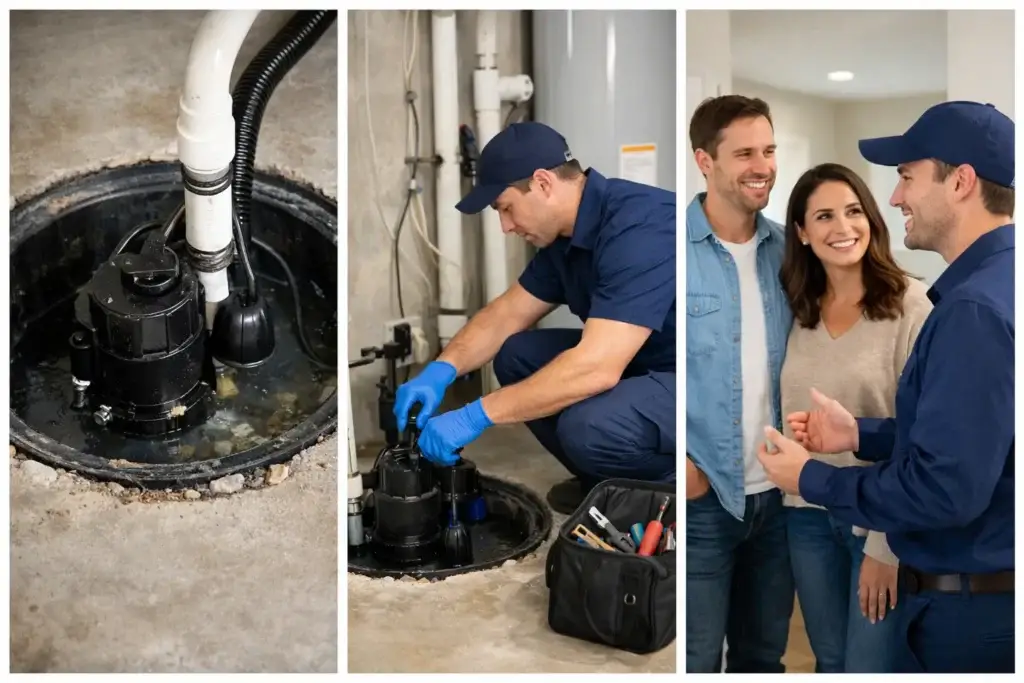
A sump pump often gets ignored until a hard Central Ohio rain puts water where it does not belong. If you are looking for sump pump service Worthington homeowners can rely on, the goal is simple: find the problem early, understand the repair options, and get clear approval before any work begins. A pump that runs when it should, drains correctly, and has a dependable backup plan can make a major difference during wet weather.
When to Call for Sump Pump Service in Worthington
A sump pump does not need to be completely silent or completely dry to be working properly. It may run after heavy rain, during snowmelt, or when groundwater rises around the foundation. The concern is when its behavior changes, especially if water is visible in the pit or basement.
Call for professional service if the pump runs continuously, cycles on and off every few minutes, makes grinding or loud vibrating noises, or fails to start when water reaches the float. A musty smell, damp carpeting near a finished basement wall, or new moisture around the sump pit can also point to a drainage problem that needs attention.
Homeowners should also take a closer look after a power outage. A primary pump may be in good condition but still be unable to run when the electrical supply is down. If your home has a battery backup system, warning alarms, a dead battery, or a backup pump that does not activate are reasons to schedule an inspection before the next storm.
Do Not Wait for Standing Water
Waiting can turn a manageable repair into cleanup, material replacement, and a stressful insurance conversation. A slow-discharge issue or worn float switch may be relatively straightforward to address when caught early. Once water reaches finished flooring, stored belongings, or mechanical equipment, the impact can grow quickly.
If water is rising in the pit and the pump is not keeping up, avoid handling electrical components around standing water. Move valuables to a dry area if it is safe to do so, then arrange urgent help. Transit & Flow offers 24/7 emergency plumbing response for homeowners who need clear next steps when a sump pump problem cannot wait.
What a Professional Sump Pump Visit Should Include
A useful service visit is more than switching the pump on and off. The technician should evaluate the system as a whole, because a sump pump can appear to operate while still failing to move water away from the home effectively.
The appointment commonly begins with a review of the sump pit, pump condition, float operation, power connection, check valve, and discharge line. The technician may test how the pump responds to water, look for debris that interferes with movement, and assess whether the pump is properly sized for the conditions at the property.
The discharge route matters just as much as the pump. Water needs a clear path away from the foundation. A blocked, frozen, disconnected, or poorly routed line can cause water to return toward the house or force the system to work harder than it should. In some cases, the pump itself is fine and the discharge setup is the source of the problem.
After the inspection, you should receive a simple explanation of what was found and what options make sense. That might mean a repair, cleaning, component replacement, backup system service, or a full pump replacement. The right recommendation depends on the pump’s condition, the age of the system, the amount of water it handles, and whether the existing setup has had repeated failures.
Repair or Replace? The Answer Depends on the System
Repair is often reasonable when the issue is isolated. A stuck float, failed check valve, loose connection, or obstructed discharge line may not require replacing the entire unit. A repair can be a practical choice when the pump has otherwise been dependable and is still in good overall condition.
Replacement may be the better value when a pump is older, has failed more than once, makes persistent mechanical noise, or cannot keep up with normal rainfall. It may also make sense if the pump was never correctly matched to the home’s drainage needs. Repeated service calls can cost more and create more risk than installing a dependable new system.
A professional should not treat every issue the same way. A small amount of water in the pit is normal, while frequent cycling can indicate a float setting issue, incoming groundwater, or a pump that is not operating efficiently. The best path is based on the actual condition of your system, not a one-size-fits-all answer.
Why a Backup Pump Can Be Worth Considering
Primary sump pumps depend on household power. That is a concern because strong storms can bring both heavy rainfall and power interruptions. A battery backup pump provides another layer of protection when the main pump cannot run or cannot keep up on its own.
A backup system is not necessary for every home, but it is worth discussing if your basement has finished space, stored belongings, a history of water intrusion, or a sump pit that receives significant water during storms. The battery, alarm, charger, and backup pump all need periodic attention. Installing one and forgetting it can leave homeowners with false confidence.
Maintenance That Helps Avoid Surprise Failures
Sump pump maintenance is not complicated, but it should be performed carefully and consistently. Homeowners can keep the area around the pit accessible and watch for changes in pump behavior. Keep the lid in place where applicable, and do not allow household items, loose debris, or stored materials to block access to the system.
A professional maintenance visit can check the details that are easier to miss: pump response, float movement, discharge performance, check valve operation, battery backup condition, and signs of wear. It is particularly useful before spring rain, after a major storm season, or when buying a home with an unfamiliar system.
For properties with a backup pump, battery testing is a priority. Batteries do not last indefinitely, and an alarm may be the first sign that charging or capacity has declined. Addressing that warning early is much easier than finding out the backup is unavailable during an outage.
What to Expect From the Service Process
A dependable sump pump service process should reduce uncertainty, not add to it. When you call, be ready to describe what you are seeing: whether the pump is running, whether water is rising, whether there has been recent rain, and whether your power is on. These details help determine how urgently the issue should be handled.
At the home, the technician should inspect the system, explain the findings in plain language, and discuss available options. Pricing should be presented clearly before work begins, with customer approval required for the recommended repair or replacement. Final cost can depend on access, system condition, materials, and what the inspection reveals, so an on-site evaluation matters.
For urgent issues, same-day availability may be possible depending on scheduling, technician availability, access, and the work required. For planned maintenance or replacement, scheduling ahead gives you time to consider your options without the pressure of an active water problem.
Protect the Basement Before the Next Storm
A working sump pump is one part of protecting your Worthington home from unwanted water. Pay attention to new sounds, frequent cycling, warning alarms, and moisture near the foundation. Those small changes are often the earliest signal that the system needs service.
If your sump pump has not been inspected recently, scheduling a check before the next stretch of heavy rain can provide the clarity you need to make a practical decision while the basement is still dry.
