
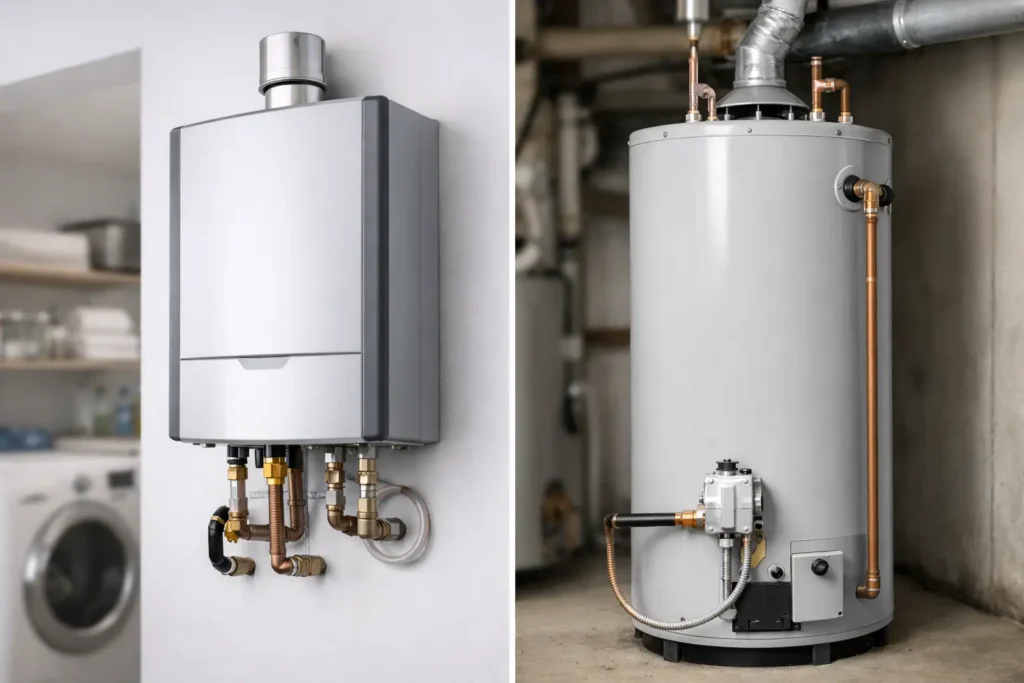
A water heater decision often becomes urgent when the old unit starts leaking, runs out of hot water, or stops working altogether. When comparing tankless vs traditional water heaters, the right choice is rarely about which system is universally better. It comes down to your household’s hot-water habits, available space, fuel setup, budget, and the condition of your existing plumbing.
For many Columbus-area homeowners, a standard tank water heater remains a sensible, dependable replacement. For others, a tankless system can offer the long-term convenience and efficiency they want. Understanding the real differences before installation helps you make a confident decision without paying for features your home does not need.
Tankless vs Traditional Water Heaters: The Main Difference
A traditional water heater stores a set amount of hot water in an insulated tank, commonly 40 to 80 gallons. The unit heats the stored water and keeps it ready for use. When someone showers, runs the dishwasher, or starts a load of laundry, hot water leaves the tank and cold water enters to be heated.
A tankless water heater, also called an on-demand water heater, heats water only when a fixture calls for it. Water passes through the unit, where a gas burner or electric heating element raises its temperature before it reaches the faucet, shower, or appliance.
That operating difference affects nearly every part of the decision: up-front installation cost, energy use, hot-water capacity, maintenance needs, and how well the system fits a busy household.
When a Traditional Tank Water Heater Makes Sense
Traditional tank water heaters are familiar, practical, and often the most straightforward option when replacing an existing tank unit. They usually cost less to purchase and install than a tankless system, especially when the replacement can use the home’s current connections, venting, and available space.
For a household with predictable water use, a properly sized tank can provide plenty of hot water. A family that takes showers at different times, for example, may never notice the limits of a 50-gallon or 75-gallon unit. Modern tank water heaters are also more efficient than many older models, particularly when the existing unit is nearing the end of its service life.
Tank systems do have a recovery period. Once most of the stored hot water is used, the household may need to wait while the unit reheats a new supply. This can be noticeable when several people take back-to-back showers or when a shower, washing machine, and dishwasher operate at the same time.
The tank itself also takes up more room. That may not matter in a basement utility area, but it can be a consideration in smaller homes, closets, or finished spaces where every square foot counts.
Where Tankless Water Heaters Stand Out
The most appealing feature of a tankless water heater is its ability to provide hot water continuously, as long as the unit is properly sized for the demand. You are not drawing from a limited tank of stored hot water. This can be especially useful for larger households, homes with multiple bathrooms, or families with overlapping morning and evening routines.
Tankless units are compact and mount on a wall, freeing up floor space. They can be a strong fit when homeowners are remodeling a utility room, replacing a water heater in a tight location, or looking for a cleaner equipment layout.
Because they heat water only when needed, tankless units can reduce standby energy loss. A traditional tank uses energy to maintain the temperature of water even when no one is using it. The actual savings from going tankless depend on household usage, energy source, unit efficiency, and installation conditions. It is reasonable to view efficiency as a long-term benefit, not an automatic reason to overlook a higher installation cost.
A tankless system may also have a longer service life than a typical tank water heater when it is maintained properly. However, longevity is not guaranteed. Water quality, installation quality, usage patterns, and regular service all play a role.
The Installation Cost Difference Is Often Significant
The price difference between a tank and tankless water heater is more than the equipment itself. A tank water heater replacement may be relatively simple when the new unit is similar in size, fuel type, and location to the old one.
Tankless installation can require changes that are not obvious until the home is evaluated. A gas tankless unit may need a larger gas line to supply enough fuel during peak demand. It may need updated venting, a new vent route, or outdoor installation if appropriate for the home. Electric tankless units can require substantial electrical capacity and panel upgrades in some properties.
Condensate drainage, water-line adjustments, mounting location, clearances, and local code requirements can also affect the scope of work. That is why an accurate recommendation should follow an on-site assessment rather than a one-size-fits-all price quote.
For homeowners replacing a failed unit quickly, a traditional tank can sometimes be the more practical path because the installation is often less involved. If you are planning ahead, a tankless upgrade may be easier to schedule around the work needed to prepare the home correctly.
Hot-Water Demand Matters More Than Household Size Alone
A common mistake is choosing a water heater based only on the number of people in the home. Household size is helpful, but the timing of water use matters just as much.
Consider a home with four people. If everyone showers one after another before work and school, and the dishwasher runs at the same time, the system needs to handle a high peak demand. A tankless unit needs enough flow capacity to heat the incoming water for multiple fixtures at once. A tank unit needs enough stored hot water and recovery capacity to keep up.
Columbus winters add another detail. Groundwater entering the home is colder during colder months, so a tankless unit has to work harder to achieve the desired temperature rise. A unit that performs well for one shower in mild weather may not deliver the same flow rate when incoming water temperatures drop. Proper sizing should account for local conditions, the number of fixtures, and the way your family actually uses hot water.
Maintenance Is Part of Either Choice
Neither type of water heater should be treated as install-it-and-forget-it equipment. Traditional tank water heaters benefit from periodic inspection and maintenance. Sediment can build up inside the tank over time, particularly in areas with mineral-heavy water. This buildup can affect efficiency, create noise, and contribute to wear.
Tankless units also need routine attention. Mineral scale can collect in the heat exchanger, reducing performance and placing extra strain on the system. Periodic flushing is often recommended, and homes with harder water may benefit from a treatment strategy based on their water conditions.
If you notice rusty or discolored hot water, inconsistent temperatures, rumbling sounds, a leak around the unit, or a sudden drop in hot-water supply, arrange a professional evaluation. Waiting can turn a manageable repair or maintenance visit into a more disruptive replacement.
Choosing Based on Your Home and Priorities
A traditional tank water heater may be the better fit if you want a lower initial investment, have adequate utility-room space, and need a straightforward replacement. It can also be a practical choice for homes where upgrading gas, electrical, or venting systems would add substantial cost.
A tankless water heater may be worth considering if your household regularly runs out of hot water, you want to reclaim floor space, or you are planning a longer-term upgrade and are prepared for the installation requirements. It can be particularly appealing for homeowners who expect to remain in the home long enough to value its potential efficiency and service-life advantages.
There is also a middle ground. A larger or higher-recovery traditional tank may solve a hot-water shortage without the added work of converting to tankless. In other homes, more than one tankless unit or a specialized system design may be necessary to serve multiple high-demand areas. The best answer comes from matching the equipment to the property, not forcing the property to fit a preferred product.
Get a Clear Recommendation Before Replacing Your Water Heater
Before choosing a model, have the existing water heater, fuel supply, venting, electrical capacity, installation location, and household demand reviewed. Ask for a clear explanation of the available options, the expected work involved, and the factors that could affect final pricing. You should know what is being recommended and why before approving the job.
For homeowners in Columbus and nearby communities, Transit & Flow can help evaluate whether a tankless or traditional replacement makes practical sense for the home. A careful assessment may reveal that the right solution is not the most expensive one, but the one that delivers dependable hot water for your daily routine with an installation plan you understand.
If your current water heater is showing signs of failure, do not wait for a small leak or inconsistent temperature problem to become a larger interruption. A timely evaluation gives you more choices and more control over the replacement decision.
Choosing between tank and tankless comes down to hot water demand, fuel type, and how your home is plumbed. Transit & Flow installs and services both tank and tankless water heaters across Columbus and can tell you which fits your household. Call (614) 333-8092.
